Your Meta Ads dashboard says 50 conversions. Your CRM shows 20. Your actual revenue data tells a third story entirely. If you've stared at these numbers wondering which one to believe, you're not alone and you're not doing anything wrong.
Inaccurate ad conversion data is one of the most widespread and costly problems in digital marketing today. It quietly distorts budget decisions, makes profitable campaigns look like failures, and causes marketers to double down on channels that aren't actually driving revenue. The frustrating part is that the numbers look real. They come from dashboards built by some of the most sophisticated technology companies in the world. And yet they're wrong.
The reasons behind this disconnect are layered. Ad platforms measure conversions using their own self-serving logic. Browser privacy changes have punched holes in pixel-based tracking. Attribution models assign credit in wildly inconsistent ways. And technical errors accumulate silently in the background, corrupting your data long before anyone notices. This article breaks down each of these causes clearly and shows you what an accurate tracking setup actually looks like.
How Ad Platforms Inflate Your Conversion Numbers
When Meta reports a conversion, it's not simply recording a purchase that happened after someone clicked your ad. It's applying its own attribution window, its own logic for what counts as a conversion trigger, and its own definition of credit. By default, Meta attributes a conversion to your ad if someone clicked it within the last seven days or viewed it within the last one day before converting. Google Ads, by contrast, uses a 30-day click window for most conversion types. These are documented settings, not hidden variables, but most marketers don't fully account for what they mean in practice.
What they mean is this: the same customer can be claimed by multiple platforms at once. A buyer who saw a TikTok ad on Monday, clicked a Google search ad on Wednesday, and converted on Friday after receiving a retargeting email will likely appear as a conversion in TikTok's dashboard, Google's dashboard, and possibly your email platform's reporting as well. None of those platforms know about the others. Each one operates in its own silo, applying its own attribution window, and each one claims full credit.
This is the double-counting problem, and it's one of the primary reasons why your total reported conversions across platforms can sum to a number far higher than your actual sales. Add up your Meta conversions, your Google conversions, and your TikTok conversions, and you may find a total that's two or three times your actual revenue-backed conversion count.
There's also the issue of view-through conversions, which are particularly prone to inflation. When a platform counts a conversion because someone saw your ad but never clicked it, the causal link between your ad and the conversion becomes speculative at best. A user might have seen your ad, ignored it, and then searched for your brand organically days later. The platform still claims the win.
The result is a fundamental disconnect between what your ad platforms report and what your CRM or payment processor actually recorded. Without a unified attribution layer that sits above all your platforms and reconciles their data against real business outcomes, you're essentially letting each platform grade its own homework.
The Privacy Shift That Broke Pixel Tracking
For most of the past decade, the pixel was the backbone of digital ad tracking. A small piece of JavaScript code placed on your website would fire when a user completed a conversion action, sending that data back to the ad platform. It was simple, effective, and almost universally adopted. Then the privacy landscape changed, and the pixel's reliability collapsed.
Apple's App Tracking Transparency framework, introduced with iOS 14.5, required apps to ask users for explicit permission before tracking them across other apps and websites. A significant portion of users declined. This broke the connection between ad clicks on iOS devices and downstream conversion events, leaving Meta and other platforms with a fragmented, incomplete picture of what their ads were actually driving.
Safari's Intelligent Tracking Prevention has been progressively tightening since 2017, restricting how long third-party cookies can persist and limiting the data that client-side pixels can collect. Firefox blocks third-party cookies by default as well. Even Chrome, which delayed its own cookie deprecation timeline, exists in a broader ecosystem where privacy-first browsing is becoming the norm rather than the exception.
The practical consequence for marketers is significant data loss. Picture a common scenario: a user sees your ad on their iPhone, clicks through to your site, but doesn't convert immediately. They come back two days later on their laptop, using Safari with ITP active, and complete the purchase. The pixel on your site may not fire correctly, or the cookie that would have connected this session to the original ad click may have already expired or been blocked. The conversion goes unrecorded. Your ad platform never knows it happened.
Client-side pixels were built for a different internet. They depend on the browser cooperating, cookies persisting, and users not blocking scripts. In today's environment, none of those assumptions hold consistently. Relying solely on pixel-based tracking means a growing share of your real conversions are simply invisible to the platforms you're paying to run your ads. Using tracking software for performance marketing that goes beyond client-side pixels is increasingly essential for accurate measurement.
This isn't a fringe issue affecting a small slice of your audience. Mobile users on iOS represent a substantial portion of most advertisers' traffic. When their conversions go untracked, your reported conversion volume drops, your cost-per-conversion appears to rise, and your optimization algorithms lose the signal they need to find more buyers like your best customers.
Why the Same Conversion Data Tells Completely Different Stories
Even if your tracking were perfect and every conversion were captured without loss, you'd still face a fundamental interpretive problem: attribution models. The model you use to assign credit for a conversion determines which campaigns, channels, and ads appear to be driving results. And different models, applied to the same underlying data, produce dramatically different conclusions.
Last-click attribution gives 100% of the credit to the final touchpoint before conversion. If a customer clicked a Google search ad as their last step before purchasing, Google gets all the credit, regardless of the Facebook ad that introduced them to your brand or the YouTube video that kept them engaged during the consideration phase. First-click attribution does the opposite, rewarding only the channel that made the initial contact. Linear attribution spreads credit evenly across all touchpoints. Time-decay models give more weight to touchpoints closer to the conversion. Data-driven attribution uses machine learning to assign fractional credit based on observed patterns.
None of these models is objectively correct. Each reflects a different assumption about how customers make decisions. The problem arises when your platforms apply different models by default, or when you compare results across platforms without accounting for the model each one is using.
Consider a buyer who discovered your brand through a Facebook video ad, clicked a retargeting ad on Instagram a week later, then searched for your brand on Google and clicked a branded search ad before purchasing. Under last-click attribution, Google gets all the credit. Under first-click, Facebook gets it. Under linear, the credit splits three ways. Each platform, reporting through its own lens, will show you a different version of which channel "caused" the conversion.
This creates a compounding problem for budget allocation. If you're using last-click attribution as your primary decision framework, you'll likely over-invest in bottom-funnel search campaigns and under-invest in the awareness and consideration channels that were actually building demand. Your campaigns at the top of the funnel will look unprofitable because they're never getting credit for the assisted conversions they helped create.
Choosing an attribution model that doesn't match your actual customer journey length and complexity is one of the most common reasons why ad conversion data leads marketers to make the wrong budget decisions, even when the underlying tracking is technically working.
Silent Technical Errors That Corrupt Your Data Over Time
Beyond platform logic and privacy restrictions, there's a third category of conversion inaccuracy that often goes undiagnosed: technical tracking errors. These are the misconfigured events, duplicate pixel fires, and broken scripts that quietly corrupt your data in the background, accumulating over weeks and months until your reporting is seriously unreliable.
Duplicate conversion tracking is surprisingly common. It happens when a conversion event fires multiple times for a single action, often because a pixel is placed both in a tag manager container and hardcoded directly on the page. Every time a user completes a purchase, the platform records two conversions instead of one. Your conversion count looks healthy. Your cost-per-conversion looks great. But the underlying data is inflated, and any optimization decisions based on it are built on a false foundation.
Website updates are another frequent culprit. A developer pushes a redesign, a checkout flow gets rebuilt, or a new landing page goes live, and in the process, the conversion tracking script that was embedded in the old template gets left behind. Nobody notices because the platform dashboard doesn't show a sudden drop in conversions right away. It shows a gradual decline that looks like a performance issue rather than a tracking failure. Following best practices for tracking conversions accurately can help you catch these issues before they compound.
Missing or broken UTM parameters create a different kind of problem. When ad links don't pass UTM data correctly, your analytics platform can't attribute traffic to the right source, medium, or campaign. Sessions show up as direct or organic when they should be tagged as paid. Your channel-level reporting becomes unreliable, and cross-referencing ad platform data with your web analytics becomes an exercise in frustration.
Tag manager errors compound all of these issues. A misconfigured trigger, a tag that fires on the wrong page, or a variable that pulls the wrong value can send incorrect event parameters to your ad platforms. If your purchase event is passing the wrong revenue value, your return on ad spend calculations are wrong. If your lead event is firing on a page that isn't actually a confirmation page, you're recording phantom conversions.
Without a system that validates conversion data at the server level rather than relying purely on what the browser reports, these errors go undetected. They accumulate silently, and by the time someone notices that the numbers don't add up, months of reporting have already been compromised.
Server-Side Tracking and Multi-Touch Attribution: The Fix That Actually Works
The solution to inaccurate ad conversion data isn't a single tweak. It requires addressing the problem at multiple levels simultaneously: capturing conversions more reliably, attributing them more accurately, and feeding better data back to the platforms that are optimizing your campaigns.
Server-side tracking is the foundation. Instead of relying on a browser-based pixel to fire when a user takes an action, server-side tracking sends conversion data directly from your server to the ad platform. It bypasses the browser entirely, which means ad blockers, iOS restrictions, Safari's ITP, and cookie limitations have no effect on it. When a purchase happens, your server knows about it and sends that event to Meta, Google, or any other platform you're running ads on, regardless of what the user's browser is doing.
Meta's Conversions API and Google's Enhanced Conversions are the platform-native implementations of this approach. They were built specifically to recover the conversion signal lost to privacy changes. When implemented correctly, server-side tracking can recover a meaningful portion of conversions that pixel-based tracking was missing, giving your ad platforms more complete data to optimize against.
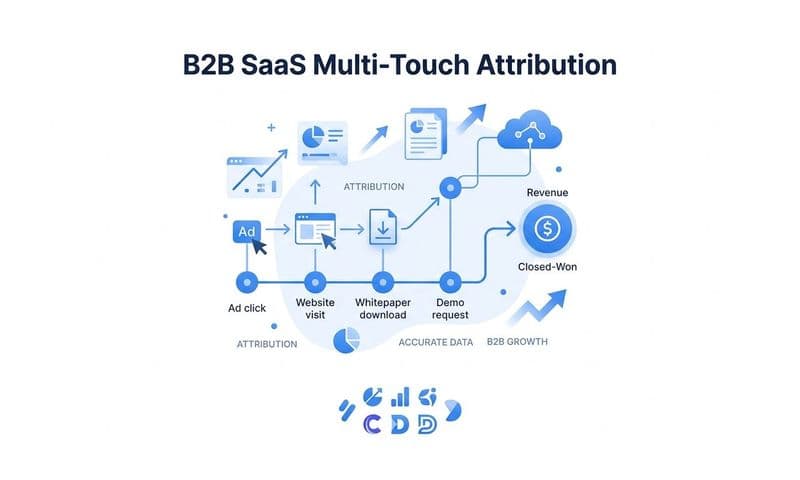
Multi-touch attribution addresses the credit assignment problem. Instead of letting each platform apply its own self-serving attribution logic, a multi-touch attribution system tracks every touchpoint in the customer journey from the first ad impression to the final conversion and assigns credit across channels based on a model that reflects how your customers actually behave. This eliminates double-counting and gives you a single, reconciled view of which campaigns and channels are genuinely driving revenue.
The two capabilities work together. Server-side tracking ensures that conversions are captured accurately. Multi-touch attribution ensures that credit is assigned correctly. Together, they give you a foundation of reliable data that you can actually make decisions from.
Cometly brings both of these capabilities together in a single platform. Its server-side tracking captures conversions that pixel-based methods miss, while its multi-touch attribution maps the full customer journey across every channel. The Conversion Sync feature feeds enriched, accurate conversion data back to Meta and Google, improving the quality of the signal their algorithms use for targeting and optimization. The AI Ads Manager and AI Chat capabilities then help you interpret that data and identify which campaigns are genuinely performing, removing the guesswork from budget decisions.
Auditing and Rebuilding a Tracking Setup You Can Trust
Knowing the causes of inaccurate conversion data is useful. Fixing them requires a structured approach to auditing what you have and rebuilding it on a more reliable foundation.
Start with a data reconciliation exercise. Pull your conversion counts from each ad platform for a defined time period, then compare those totals against your CRM records and your actual revenue data for the same period. The gap between these numbers tells you the scale of your tracking problem. If your ad platforms are collectively reporting three times more conversions than your CRM recorded, you have a significant double-counting or inflation issue. If your CRM shows more conversions than your ad platforms, you have a tracking loss problem where real conversions are going unrecorded.
Next, audit your technical setup. Check for duplicate pixel or tag implementations by reviewing your tag manager container alongside any hardcoded scripts on your site. Verify that your conversion events are firing on the correct pages and only once per conversion action. Confirm that UTM parameters are being passed correctly on all your ad links by checking your analytics platform for unexplained spikes in direct or organic traffic that coincide with paid campaign activity.
Then evaluate your attribution model. Consider whether the default model your platforms are using actually reflects your customer journey. If your average customer takes multiple touchpoints across several days or weeks before converting, a last-click model will systematically undervalue your upper-funnel campaigns. Moving to a multi-touch model that credits all contributing touchpoints will give you a more accurate picture of where your budget is actually having an impact. Reviewing a marketing attribution software comparison can help you identify the right solution for your needs.
Finally, implement a unified attribution solution that connects your ad platforms, CRM, and website into a single source of truth. This is where a platform like Cometly becomes genuinely valuable. Rather than manually reconciling data across disconnected tools, Cometly captures every touchpoint, attributes conversions accurately across channels, and presents the full customer journey in a single analytics dashboard. The AI-powered analysis surfaces which campaigns are driving real revenue and provides recommendations on where to shift budget for better returns.
The goal isn't perfection. It's having data you can trust enough to make confident decisions. When your conversion tracking is reliable, you stop second-guessing your dashboards and start using them to scale what's working.
Moving Forward With Data You Can Actually Use
Inaccurate ad conversion data is not a minor reporting inconvenience. It's a direct threat to your marketing ROI and your ability to allocate budget intelligently. Every decision you make about which campaigns to scale, which channels to invest in, and which ads to pause is only as good as the data behind it. When that data is inflated by platform self-attribution, eroded by privacy-driven tracking loss, distorted by attribution model mismatches, or corrupted by silent technical errors, you're making expensive decisions on a broken foundation.
The good news is that each of these problems has a real solution. Server-side tracking recovers the conversions that browser limitations are hiding. Multi-touch attribution replaces platform self-reporting with an accurate, unified view of the customer journey. Rigorous technical auditing eliminates the silent errors that accumulate over time. And a unified attribution platform ties all of it together into reporting you can actually act on.
Cometly was built to address all of these challenges in one place. From server-side tracking and conversion sync to multi-touch attribution and AI-powered campaign analysis, it gives marketers the complete, accurate picture they need to spend smarter and scale with confidence.
If your conversion data doesn't add up, don't keep guessing. Get your free demo today and start capturing every touchpoint to maximize your conversions.