Managing ad performance across Meta, Google, TikTok, LinkedIn, and every other channel you're running means dealing with a fragmented mess of native dashboards, each with its own metrics, attribution windows, and data gaps. If you've ever tried to reconcile your Meta Ads Manager numbers with Google Analytics and your CRM, you know the headache well.
A centralized ad performance analytics dashboard cuts through that noise. The right one moves you beyond click-through rates and impressions to answer the question that actually matters: which ads are driving revenue?
In evaluating the tools below, the focus was on cross-platform support, real-time data access, attribution capabilities, ease of use, and pricing transparency. Whether you're a solo marketer, an agency managing dozens of clients, or a DTC brand scaling aggressively, there's a dashboard on this list for your situation.
1. Cometly
Best for: Marketers who need AI-powered attribution and actionable revenue insights across all paid channels.
Cometly is an AI-powered marketing attribution and analytics platform that connects your ad platforms, CRM, and website to show exactly which ads and campaigns drive real revenue.
 9 Best Ad Performance Analytics Dashboards in 2026
Where This Tool Shines
Most analytics dashboards show you what happened. Cometly tells you why it happened and what to do next. Its AI layer analyzes performance across every paid channel and surfaces recommendations on which ads to scale, which to pause, and where your budget is being wasted. That kind of guidance is typically reserved for expensive consultants or analysts.
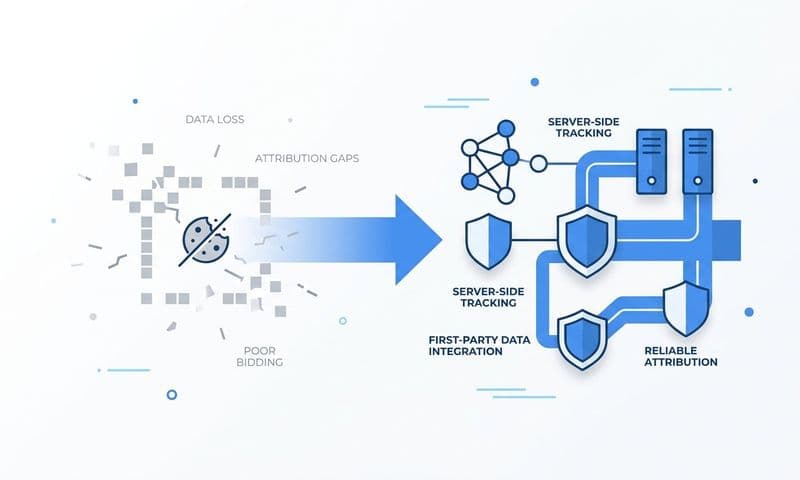
What sets Cometly apart technically is its server-side tracking. Browser-based tracking has become increasingly unreliable since iOS 14.5 introduced privacy changes that limit cookie-based attribution. Cometly's server-side approach captures conversion data that would otherwise go dark, giving you a more complete and accurate picture of your customer journey from first ad click to closed deal.
Key Features
Multi-Touch Attribution: Tracks every touchpoint across paid channels and lets you compare multiple attribution models side by side to understand the full conversion path.
Server-Side Tracking: Collects conversion data beyond browser-based limitations, improving accuracy in a post-iOS privacy environment.
AI-Powered Recommendations: Identifies your top-performing ads and suggests budget optimizations based on actual revenue data, not just surface-level metrics.
Conversion Sync: Sends enriched event data back to Meta, Google, and other ad platforms to improve their targeting algorithms and campaign optimization.
AI Chat: Lets you ask natural-language questions about your data and get instant insights without digging through reports manually.
Best For
Digital marketers, performance marketing teams, and agencies that want to connect ad spend directly to revenue, improve tracking accuracy, and use AI to make faster, smarter optimization decisions across every paid channel.
Pricing
Custom pricing based on ad spend volume. A free demo is available to explore the platform before committing.
2. Google Looker Studio
Best for: Teams heavily invested in the Google ecosystem who need free, flexible reporting.
Google Looker Studio is a free data visualization tool that lets you build custom dashboards by pulling data from Google Ads, GA4, BigQuery, and hundreds of third-party connectors.
 9 Best Client Reporting Dashboard Software Tools in 2026
Where This Tool Shines
If your stack is Google-heavy, Looker Studio is hard to beat on value. The native connectors for Google Ads, GA4, and Search Console are seamless, and the level of customization available through calculated fields, filters, and interactive controls is genuinely impressive for a free tool.
The tradeoff is that it requires setup time. Looker Studio is a canvas, not a plug-and-play solution. You'll need to know what you want to build and be comfortable connecting data sources. For teams with that capacity, it's one of the most powerful free options available.
Key Features
Native Google Integrations: Direct connectors to Google Ads, GA4, Search Console, and BigQuery with no additional cost.
Community Connectors: Hundreds of partner and community connectors extend reporting to Meta Ads, LinkedIn, Shopify, and more.
Calculated Fields: Create custom metrics and dimensions within the report builder without touching a database.
Shareable Reports: Easily share live dashboards via link or schedule automated email delivery of reports.
Embeddable Dashboards: Embed reports directly into internal wikis, websites, or client portals.
Best For
Marketing teams and analysts who want a highly customizable, free reporting tool and are comfortable with a moderate setup investment. Ideal for Google-centric ad stacks.
Pricing
Completely free with no usage limits on dashboards or reports.
3. Triple Whale
Best for: Shopify-based DTC brands that need first-party attribution and creative analytics.
Triple Whale is an e-commerce analytics platform built specifically for direct-to-consumer brands, combining a first-party pixel, attribution modeling, and creative performance data in one dashboard.
 7 Best Funnel.io Alternatives for Marketing Data Analytics in 2026
Where This Tool Shines
Triple Whale was built from the ground up for the DTC world, and it shows. The platform's first-party pixel handles server-side tracking on Shopify stores, giving brands a reliable data foundation even as browser-based tracking becomes less dependable. The real-time dashboard surfaces blended ROAS and customer acquisition cost in a format that DTC operators actually think in.
The creative analytics layer is a standout feature. Rather than just showing which campaigns perform, Triple Whale connects ad creative directly to revenue outcomes, helping creative teams understand what visual and copy elements actually move product.
Key Features
First-Party Pixel: Server-side tracking built for Shopify stores that captures conversion data more accurately than native platform pixels.
Creative Analytics: Ties ad creative performance directly to revenue, helping teams identify winning formats and messaging.
Blended ROAS Dashboard: Real-time view of blended return on ad spend and customer acquisition metrics across all channels.
Audience Segmentation: Segments customers based on purchasing behavior to inform targeting and retention strategies.
Multi-Platform Integrations: Connects to Meta, Google, TikTok, Snapchat, and Pinterest for consolidated reporting.
Best For
Shopify-based DTC brands running paid social and search campaigns that want first-party attribution, creative performance data, and e-commerce-native reporting in one place.
Pricing
Starts around $100/month and scales based on revenue volume.
4. Northbeam
Best for: High-spend performance marketers who need media mix modeling and incrementality testing alongside attribution.
Northbeam is a machine-learning attribution platform that combines multi-touch attribution with media mix modeling and incrementality testing for brands with complex, high-volume paid media programs.
 9 Best Attribution Modeling Tools for Enterprises in 2026
Where This Tool Shines
Northbeam goes deeper than most attribution tools by layering in media mix modeling, which uses statistical analysis to estimate how budget allocation across channels affects overall revenue. This is especially valuable for brands running significant spend across multiple paid channels who need to make strategic budget decisions, not just tactical ones.
The incrementality testing capability adds another layer of rigor. Rather than just attributing conversions to touchpoints, incrementality testing measures the true lift a campaign generates, answering whether a conversion would have happened anyway without that ad exposure.
Key Features
Multi-Touch Attribution: Customizable attribution models with flexible lookback windows to match your sales cycle.
Media Mix Modeling: Statistical budget allocation recommendations based on channel-level revenue contribution.
Incrementality Testing: Measures true campaign lift to separate genuine conversions from those that would have occurred organically.
Creative Analytics: Performance breakdowns by ad creative to connect visual assets to revenue outcomes.
Cross-Channel Visibility: Unified reporting across paid, organic, and direct traffic sources.
Best For
Performance marketing teams and brands spending significant monthly budgets on paid media who need sophisticated attribution, modeling, and testing capabilities to justify and optimize channel investment.
Pricing
Custom pricing; typically positioned for brands spending $50,000 or more per month on advertising.
5. Databox
Best for: Marketing teams that want a quick-to-set-up dashboard with goal tracking and automated KPI alerts.
Databox is a dashboard and reporting platform that aggregates metrics from over 100 integrations into a single view, with pre-built templates, goal tracking, and automated performance alerts.
 9 Best Ad Platform Reporting Tools to Sharpen Your Campaign Insights in 2026
Where This Tool Shines
Databox prioritizes speed to value. Pre-built dashboard templates mean you can connect Google Ads or Meta and have a functional dashboard running in minutes, not hours. For teams that don't have dedicated analysts or data engineers, that accessibility is a genuine advantage.
We compare the leading options in our WooCommerce Meta ad tool roundup.
The benchmark groups feature is particularly useful for context-setting. It lets you compare your metrics against aggregated, anonymized data from other businesses in your industry, so you can tell whether your click-through rate is actually competitive or just feels good in isolation.
Key Features
100+ Native Integrations: Connects to Google Ads, Meta Ads, HubSpot, Salesforce, and dozens of other marketing and CRM platforms.
For a deeper dive into this space, see our ecommerce Meta ad tool guide.
Pre-Built Templates: Ready-made dashboard layouts for common marketing use cases that reduce setup time significantly.
Goal Tracking and Alerts: Set KPI targets and receive automated notifications when performance goes off track.
Benchmark Groups: Compare your metrics against anonymized industry peers to add competitive context.
Mobile App: Monitor performance on the go with a dedicated mobile application.
Best For
Small to mid-sized marketing teams that want fast setup, multi-source reporting, and proactive KPI monitoring without requiring technical expertise to get started.
Pricing
Free plan available with limited connections; paid plans start around $59/month and scale with features and data sources.
6. Supermetrics
Best for: Data-savvy teams that want to pipe marketing data into spreadsheets, BI tools, or data warehouses for custom analysis.
Supermetrics is a data pipeline tool that extracts marketing data from over 100 sources and delivers it to your destination of choice, from Google Sheets to Snowflake, for custom dashboard and reporting builds.
 9 Best Ad Performance Analytics Dashboards in 2026
Where This Tool Shines
Supermetrics is less of a dashboard and more of the infrastructure that powers dashboards. If your team already has a preferred environment for analysis, whether that's Excel, Looker Studio, or a full data warehouse, Supermetrics handles the data extraction and delivery so you can focus on the analysis itself.
The flexibility here is significant. You're not locked into any particular visualization layer. Teams that want to combine Supermetrics data with proprietary business data in BigQuery or Snowflake can do so, making it a strong choice for organizations with mature data operations.
Key Features
100+ Data Source Connectors: Pulls from ad platforms, analytics tools, CRMs, and social media platforms into your destination of choice.
Flexible Destinations: Delivers data to Google Sheets, Excel, Looker Studio, BigQuery, Snowflake, and more.
Automated Data Refresh: Schedules automatic data updates on customizable intervals to keep reports current.
Data Blending: Combines metrics from multiple sources in a single query for cross-channel analysis.
Query Manager: Builds complex data pulls through a UI without requiring SQL or coding knowledge.
Best For
Analytics teams, data engineers, and technically proficient marketers who want full control over how marketing data is structured, stored, and visualized across their existing toolset.
Pricing
Starts around $39/month per destination; scales with the number of connectors and data volume.
7. Whatagraph
Best for: Agencies that need polished, white-label client reports with minimal manual effort.
Whatagraph is a cross-channel marketing reporting platform designed for agencies, featuring a visual report builder, white-label branding options, and automated report delivery to clients.
 9 Best Unified Marketing Reporting Tools in 2026
Where This Tool Shines
Whatagraph understands the agency workflow. Client reporting is often time-consuming and repetitive, and Whatagraph is built specifically to eliminate that friction. The drag-and-drop report builder produces visually polished outputs that clients can actually understand, not just raw data tables that require interpretation.
White-labeling is a first-class feature here, not an afterthought. Agencies can apply their own branding, use a custom domain, and deliver reports that look like proprietary tools rather than third-party software. For agencies where presentation and professionalism matter, that distinction is meaningful.
Key Features
Drag-and-Drop Report Builder: Creates visually polished reports with pre-built templates and customizable widgets.
White-Label Branding: Full agency branding including logo, colors, and custom domain for client-facing reports.
45+ Native Integrations: Connects to ad platforms, SEO tools, social media, and email marketing platforms.
Automated Report Scheduling: Delivers reports to clients automatically via email or shareable link on a set schedule.
Cross-Channel Widgets: Blends data from multiple sources into unified metrics within a single report view.
Best For
Digital marketing agencies managing multiple client accounts that need to produce professional, branded reports efficiently and at scale.
Pricing
Starts around $199/month and scales with the number of data sources and users.
8. Klipfolio
Best for: Teams that want a flexible, metric-centric dashboard with strong governance and data catalog features.
Klipfolio is a real-time analytics dashboard platform with a PowerMetrics data catalog that lets marketing teams define, curate, and visualize standardized KPIs across multiple data sources.
Where This Tool Shines
Klipfolio's PowerMetrics layer addresses a problem that grows as teams scale: metric inconsistency. When different team members pull the same KPI from different sources or calculate it differently, reporting becomes unreliable. PowerMetrics lets you define a single, authoritative version of each metric and share it across the organization.
The TV dashboard mode is a practical feature for teams that want performance data visible in the office. It formats dashboards for large display screens, making real-time metrics visible to the whole team without requiring everyone to open a browser tab.
Key Features
PowerMetrics Data Catalog: Defines, curates, and standardizes metrics across the organization for consistent reporting.
130+ Service Connectors: Pre-built connections to marketing platforms, ad tools, and analytics services.
Advanced Customization: Formula-based metric building and data blending for granular dashboard control.
TV Dashboard Mode: Formats dashboards for office display screens to keep team-wide metrics visible.
Role-Based Access Controls: Manages who can view, edit, or publish metrics across the team for data governance.
Best For
Marketing operations teams and growing organizations that need metric standardization, team-wide visibility, and customizable dashboards with strong access controls.
Pricing
Free tier available with limited features; paid plans start around $125/month.
9. AgencyAnalytics
Best for: Digital marketing agencies that need an all-in-one reporting platform covering PPC, SEO, social, and email in one client dashboard.
AgencyAnalytics is an all-in-one client reporting platform built for agencies, combining paid, organic, social, and email metrics with automated white-label reports and built-in SEO tools.
Where This Tool Shines
AgencyAnalytics differentiates itself by covering more of the marketing mix than most dedicated ad dashboards. Beyond PPC reporting, it includes rank tracking and site audit tools, which means agencies can manage SEO and paid reporting from the same platform. That consolidation reduces tool sprawl and simplifies client conversations.
The client and staff permission system is well thought out. Agencies can give clients access to their own dashboards with appropriate visibility, while keeping internal notes and settings separate. It's a detail that matters when you're managing dozens of client relationships simultaneously.
Key Features
80+ Integrations: Covers PPC, SEO, social media, email marketing, and call tracking platforms in one place.
Automated Client Reports: Generates and schedules branded reports for clients without manual assembly each month.
White-Label Dashboards: Custom branding, domain, and color schemes for a fully branded client experience.
Built-In SEO Tools: Includes keyword rank tracking and site audit capabilities alongside paid channel reporting.
Permission Management: Separate access levels for staff members and clients to control data visibility.
Best For
Digital marketing agencies offering a mix of paid media and SEO services that want a single reporting platform covering all channels with strong client-facing presentation features.
Pricing
Starts around $79/month for five client campaigns and scales with the number of campaigns managed.
Choosing the Right Dashboard for Your Team
The nine tools above serve genuinely different needs, and the right choice depends on where you are in your marketing maturity and what problem you're actually trying to solve.
If your core challenge is understanding which ads are driving revenue across channels, and you want AI to help you act on that data faster, Cometly is built for exactly that. The combination of server-side tracking, multi-touch attribution, conversion sync, and AI-powered recommendations makes it more than a reporting tool. It's an optimization layer that feeds better data back to ad platforms while surfacing insights you'd otherwise miss.
For Shopify brands in the DTC space, Triple Whale or Northbeam are worth evaluating depending on your spend level. Triple Whale is more accessible and creative-analytics-focused; Northbeam goes deeper with media mix modeling for higher-volume programs.
If you're running a Google-heavy stack and want a free, flexible reporting environment, Looker Studio is a strong starting point, especially when paired with Supermetrics to pull in non-Google data sources.
Agencies have two strong options in Whatagraph and AgencyAnalytics. Whatagraph leans harder into visual reporting and white-label polish; AgencyAnalytics adds SEO tools and broader channel coverage for agencies managing the full marketing mix.
For teams that want fast setup and proactive KPI monitoring without technical overhead, Databox delivers. And for organizations that need metric standardization across a growing team, Klipfolio's PowerMetrics layer is worth a close look.
The bottom line is that a great ad performance analytics dashboard should make you more decisive, not just more informed. It should connect spend to revenue, surface what's working, and give you confidence to act. Get your free demo of Cometly today and see how AI-driven attribution can change the way you optimize your campaigns.