
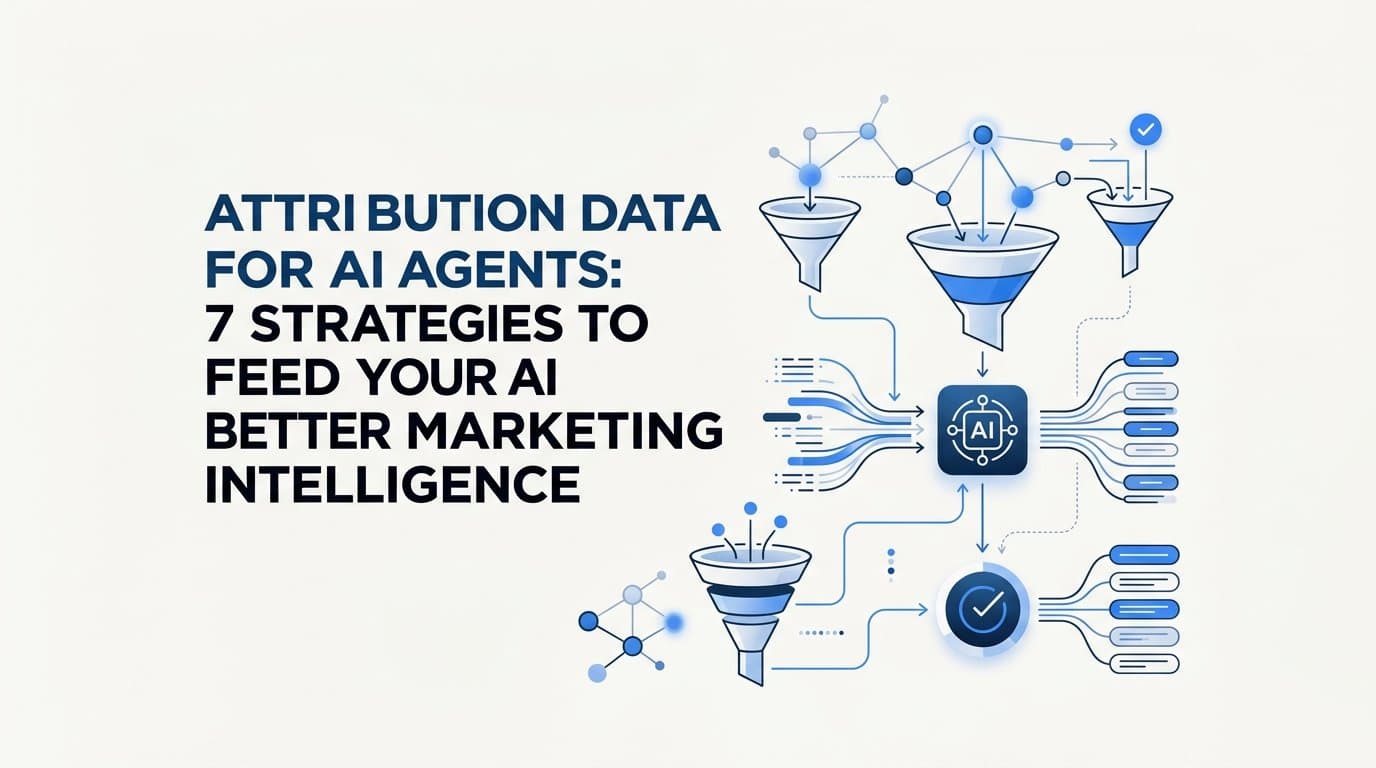
Attribution data for AI agents refers to the structured, multi-touch conversion data that AI systems use to understand which marketing touchpoints drive revenue, so they can optimize ad spend, predict outcomes, and recommend actions with accuracy. Without clean attribution data, AI agents operate on incomplete signals and produce unreliable recommendations that can quietly drain your budget.
For B2B SaaS teams, this problem is especially acute. Your sales cycle spans weeks or months, involves multiple decision-makers, and touches a dozen channels before a deal closes. If your AI agents are only seeing a fraction of that journey, they are optimizing toward a distorted version of reality.
Cometly is a strong starting point for teams in this position. It connects ad platforms, CRM events, and website behavior into a single data layer that AI agents can actually use, with 70+ native integrations and real-time pipeline attribution that ties first ad click to closed-won revenue. That kind of structured, enriched data is exactly what AI agents need to make decisions that move revenue rather than surface vanity metrics.
This article covers seven practical strategies for structuring, enriching, and delivering attribution data so your AI agents consistently produce reliable, revenue-focused recommendations.
1. Build a Single Source of Truth Before Connecting AI Agents
The Challenge It Solves
Most B2B SaaS teams pull attribution data from multiple disconnected sources: ad platform dashboards, a CRM, a website analytics tool, and maybe a spreadsheet or two. When AI agents pull from these fragmented sources, they encounter contradictory signals. One system credits LinkedIn for a conversion. Another credits Google. The AI cannot reconcile the conflict, so it makes a guess, and that guess shapes your budget.
The Strategy Explained
Before you connect any AI agent to your marketing data, consolidate your ad platform data, CRM events, and website touchpoints into one unified attribution layer. This single source of truth becomes the canonical record that every downstream system, including your AI agents, reads from.
Think of it like building a foundation before adding floors. You would not frame walls on unstable ground. Similarly, you should not let AI agents optimize on fragmented data. A unified layer eliminates contradictions, standardizes event definitions, and ensures that when the AI sees a "conversion," every system agrees on what that means.
Cometly is designed specifically for this consolidation step. It connects your ad platforms, CRM, and website into a single attribution dashboard where all touchpoints are normalized and deduplicated before any analysis happens.
Implementation Steps
1. Audit every data source currently feeding your attribution reports and identify overlaps or conflicts in conversion definitions.
2. Select a centralized attribution platform that natively integrates with your ad platforms and CRM, so data flows in automatically rather than through manual exports.
3. Standardize your event taxonomy across all sources, ensuring that "lead," "MQL," and "closed-won" mean the same thing in every connected system before activating AI agents.
Pro Tips
Document your event definitions in a shared reference that your marketing, sales, and data teams all sign off on. Attribution drift often starts with a naming inconsistency that goes unnoticed until the AI is already acting on bad data. Lock this down early and revisit it any time you add a new integration or campaign structure.
2. Use Multi-Touch Attribution Models That Match Your Sales Cycle
The Challenge It Solves
Last-click attribution is the default for many teams, and it systematically ignores every touchpoint that happened before the final interaction. For a B2B SaaS product with a 60-day sales cycle, that means the AI agent is being trained on a sliver of the actual conversion story. It will undervalue top-of-funnel channels, over-credit bottom-of-funnel channels, and recommend budget shifts that look logical on paper but hurt pipeline over time.
The Strategy Explained
The attribution model you choose determines how credit is distributed across touchpoints, and that distribution is the primary signal your AI agents use to rank channel performance. For longer B2B sales cycles, linear attribution distributes credit evenly across all touchpoints. Time-decay models give more credit to touchpoints closer to conversion. Data-driven attribution uses statistical modeling to assign credit based on actual conversion patterns in your data.
Data-driven attribution is generally the most accurate for complex B2B sales cycles because it learns from your specific customer journey rather than applying a fixed rule. However, it requires sufficient conversion volume to produce reliable weights. If your conversion volume is lower, linear or position-based models are often more practical starting points.
The key principle is that the model you choose should reflect the actual length and complexity of your sales cycle. A model that works for a direct-to-consumer brand with a one-day purchase cycle will produce misleading signals for a B2B SaaS team with a multi-month enterprise deal.
Implementation Steps
1. Map your actual customer journey by reviewing closed-won deals in your CRM and counting the average number of touchpoints and days from first touch to close.
2. Select an attribution model that distributes credit across the full journey length you identified, starting with linear or time-decay if your conversion volume is limited.
3. Compare model outputs side by side in your attribution platform to understand how channel rankings shift before committing the model's output to your AI agents.
Pro Tips
Avoid switching attribution models frequently. AI agents need consistent signal over time to learn effectively. If you change models, treat it as a reset and allow a full sales cycle length of data to accumulate before drawing conclusions from the new model's output.
3. Feed First-Party Conversion Events via Server-Side Tracking
The Challenge It Solves
Browser-based pixels are losing reliability. Safari's Intelligent Tracking Prevention, Firefox's Enhanced Tracking Protection, and the widespread use of ad blockers all interrupt pixel-based event collection. When those events are lost, the AI agents running Meta Advantage+ or Google Performance Max campaigns receive fewer conversion signals, which degrades their targeting quality and delivery optimization. This is a documented limitation that both Meta and Google address directly in their developer documentation for Conversions API and Enhanced Conversions respectively.
The Strategy Explained
Server-side tracking sends conversion events directly from your server to the ad platform's API, bypassing browser-level restrictions entirely. This approach, implemented through Meta's Conversions API (CAPI) or Google's Enhanced Conversions, ensures that the events your AI agents rely on for optimization are complete and deduplicated rather than partially captured through a browser that may have blocked or dropped the pixel.
The practical result is that your AI agents receive a more complete picture of which ads drove conversions, which improves their ability to find similar users, optimize delivery, and allocate budget effectively. Incomplete signals produce lower-quality AI decisions. Complete signals produce better ones. Server-side tracking is how you close that gap.
Cometly supports Conversion API integration natively, allowing B2B SaaS teams to route server-side events to Meta, Google, and other platforms without custom engineering work.
Implementation Steps
1. Audit your current pixel-based tracking to identify which conversion events are being lost due to browser restrictions or ad blockers by comparing pixel-reported conversions against CRM-confirmed conversions.
2. Implement server-side event delivery through your attribution platform's Conversion API integration, ensuring events are sent with the customer data fields required for high match rates.
3. Enable event deduplication logic so that events sent via both browser pixel and server-side API are not double-counted in your attribution reports or by ad platform AI.
Pro Tips
Prioritize the conversion events that matter most to your AI agents first: purchases, trials, and demo requests. Get those flowing cleanly via server-side before expanding to micro-conversion events. The quality of your most important signals has more impact on AI performance than the quantity of lower-value events.
4. Connect Revenue Data Directly to Ad Attribution
The Challenge It Solves
Most B2B SaaS teams optimize AI agents toward leads or MQLs because those are the events that happen earliest and most frequently. The problem is that leads are a proxy metric. A campaign that generates a high volume of low-quality leads looks great in your attribution dashboard but may produce little actual revenue. When AI agents optimize toward proxy metrics, they find more of what you measure, not necessarily more of what you want.
The Strategy Explained
Connecting closed-won revenue from your CRM or payment processor back to the originating ad touchpoint gives AI agents a fundamentally different optimization target. Instead of finding more leads, the AI learns which ad creative, audience, and channel combination produces customers who actually pay and retain.
This is a more advanced form of attribution, but the signal quality improvement it provides is significant. AI budget allocation tools that receive revenue-level data can make materially different and generally better budget decisions than those optimizing toward top-of-funnel events. Cometly's Stripe revenue integration connects payment data directly to ad attribution, giving B2B SaaS teams a clear line from ad spend to closed revenue without manual reconciliation.
Implementation Steps
1. Connect your CRM's closed-won stage or your Stripe payment data to your attribution platform so that revenue events are tagged with the original ad touchpoint that initiated the customer journey.
2. Define a revenue attribution window that matches your sales cycle length, ensuring that deals that close 60 or 90 days after the first ad touch are still credited to the originating campaign.
3. Create a reporting view that compares cost per lead against cost per closed-won revenue by channel, and use this view to inform how you configure your AI agents' optimization targets.
Pro Tips
If your sales cycle is too long to wait for closed-won data before making optimization decisions, consider using pipeline stage progression as an intermediate signal. Opportunities that reach a late pipeline stage are a stronger proxy for revenue than raw leads, and they arrive earlier than closed-won events, giving your AI agents faster feedback loops.
5. Enrich Attribution Data with Customer Journey Context
The Challenge It Solves
Raw click data tells AI agents that someone clicked an ad and converted. It does not tell them whether that person was a senior decision-maker or an intern, whether they visited your pricing page three times before converting, or whether they came from a company in your ideal customer profile. Without that context, AI agents build audiences and optimize delivery based on surface-level patterns rather than the behavioral and firmographic signals that actually predict revenue.
The Strategy Explained
Enriched attribution data layers session behavior, lead quality signals, and CRM stage events onto raw click data. When you send enriched conversion events to ad platforms, the AI has more data to work with when building lookalike audiences, optimizing delivery, and predicting which users are likely to convert at high value.
Enrichment also improves match rates on ad platforms. When your conversion events include hashed email addresses, phone numbers, or other customer identifiers, the ad platform can match those events to its user graph more accurately. Higher match rates mean the AI agent is working with a larger, more reliable training set, which generally produces better targeting outcomes.
Think of it like giving a new hire a job description versus giving them a job description, a team handbook, and a detailed brief on the customer. The second scenario produces better decisions faster.
Implementation Steps
1. Identify the behavioral signals that correlate with high-quality conversions in your business, such as pricing page visits, multiple session returns, or specific feature page engagement, and ensure these are captured as events in your attribution platform.
2. Pass CRM data fields (company size, industry, deal stage) alongside conversion events when sending data to ad platforms via server-side API, using hashed identifiers to protect privacy while improving match rates.
3. Use your attribution platform's customer journey analytics to identify the sequence of touchpoints that precede your highest-value conversions, then use those sequences to inform your AI agents' audience and creative targeting.
Pro Tips
Focus enrichment efforts on the conversion events closest to revenue. Enriching a trial start event with firmographic data and session depth signals gives your AI agents much stronger purchase intent context than enriching a top-of-funnel content download. Prioritize where the AI's decisions have the most budget impact.
6. Implement Cross-Channel Attribution to Prevent AI Tunnel Vision
The Challenge It Solves
When AI agents only receive attribution data from a single channel, they cannot account for the influence other channels had on the same conversion. A paid social AI agent that sees a conversion attributed to a LinkedIn ad does not know that the user also clicked a Google search ad two weeks earlier and read three organic blog posts in between. That missing context causes the AI to over-credit its own channel and recommend budget increases that are not fully justified by the underlying data.
The Strategy Explained
Cross-channel attribution captures touchpoint influence across paid search, paid social, organic, email, and direct channels, then presents that complete picture to your AI agents and to your team when making budget allocation decisions. The goal is to prevent any single channel's AI from operating in isolation while the rest of your marketing mix goes unrecognized.
This matters especially in B2B SaaS, where buyers research extensively across channels before making contact. A prospect might discover you through a LinkedIn thought leadership post, research you via Google, read your documentation, and then convert on a retargeting ad. If your attribution data only shows the retargeting ad, your AI agents will recommend scaling retargeting while starving the top-of-funnel channels that actually initiated the journey.
Cometly's multi-touch attribution and customer journey analytics are built to surface this kind of cross-channel influence, giving B2B SaaS teams a complete view of how channels interact rather than how each channel performs in isolation.
Implementation Steps
1. Ensure your attribution platform is receiving data from every active channel, including organic search, email, and direct traffic, not just paid channels.
2. Use a multi-touch attribution model that distributes credit across all contributing touchpoints rather than assigning 100% credit to a single interaction.
3. Review channel interaction reports regularly to identify which channel combinations appear most frequently in your highest-value customer journeys, and use those patterns to guide cross-channel budget decisions.
Pro Tips
When presenting cross-channel attribution data to stakeholders who are used to last-click reporting, show both views side by side. The contrast between last-click and multi-touch attribution often makes the strongest case for why cross-channel visibility matters, and it helps build organizational alignment around a more complete attribution approach before you ask AI agents to act on it.
7. Audit and Validate Attribution Data on a Regular Cadence
The Challenge It Solves
Attribution data quality degrades over time. Tracking codes break when developers update a website. CRM integrations drift when field names change. New campaigns launch without proper UTM parameters. Each of these issues introduces gaps or errors into your attribution data, and if your AI agents are acting on that data continuously, they are continuously optimizing toward a corrupted signal. The damage compounds quietly until a budget review reveals that something has gone wrong.
The Strategy Explained
A recurring data quality audit creates a structured checkpoint that catches attribution drift before AI agents act on it. The audit covers event deduplication (are the same conversions being counted twice?), source coverage (are all active channels sending data?), and conversion lag (are events arriving within the expected time window after they occur?).
Think of it like a regular maintenance check on a high-performance engine. You would not run a race car for months without checking the components that keep it performing at spec. Attribution data that feeds AI agents deserves the same discipline. A monthly or bi-weekly review cadence is generally sufficient for most B2B SaaS teams, though teams running high-spend campaigns may benefit from weekly checks.
Implementation Steps
1. Create a standard audit checklist that covers event volume consistency (comparing week-over-week conversion counts to catch sudden drops), source coverage (confirming all connected platforms are actively sending data), and UTM completeness (verifying that campaign, source, and medium parameters are present on all active campaigns).
2. Set up automated alerts in your attribution platform that notify your team when conversion volume drops below a defined threshold, which often signals a tracking issue before a manual audit would catch it.
3. Assign a named owner for the attribution audit process so that responsibility is clear and the cadence is maintained even when team priorities shift.
Pro Tips
After any significant change to your website, CRM, or campaign structure, run an unscheduled audit within 48 hours. Website updates and CRM migrations are the most common causes of sudden attribution data loss, and catching the issue within two days prevents AI agents from making budget decisions on a full week of corrupted data.
Putting It All Together: A Practical Attribution Data Roadmap for AI Agents
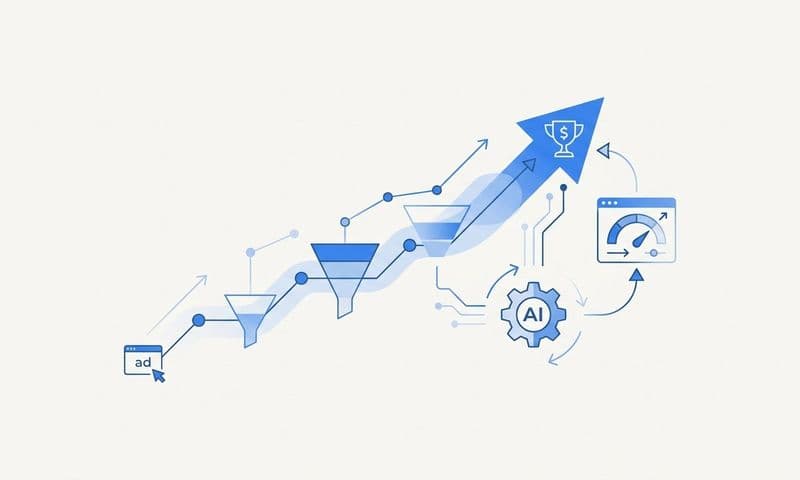
Each of these seven strategies builds on the one before it. Start with a unified data layer, then layer in the right attribution model for your sales cycle. From there, move to server-side event delivery to close the signal gaps that browser restrictions create. Connect revenue data directly to your attribution so your AI agents optimize toward what actually matters. Enrich your touchpoints with customer journey context to improve audience quality and match rates. Expand to cross-channel visibility so no single channel's AI operates with blinders on. And build a validation cadence that catches data quality issues before they compound into bad budget decisions.
Each step compounds the quality of signal your AI agents receive. A team that completes all seven is giving its AI agents a fundamentally different, and far more accurate, picture of what is driving revenue than a team still relying on last-click pixel data from a single channel.
Cometly is built to support this entire stack for B2B SaaS teams. From first ad click to closed-won revenue, Cometly connects your ad platforms, CRM, and website into a real-time attribution layer with 70+ integrations, server-side Conversion API support, and pipeline attribution that ties every touchpoint to actual revenue outcomes. Your AI agents get cleaner data. Your team gets clearer decisions.
Get your free demo today and see how clean attribution data changes what your AI agents can actually do.