
You're spending thousands on ads every month. Your dashboards show clicks, impressions, and conversions. But here's the problem: you can't confidently answer which campaigns actually drive revenue. When you try to scale, results become unpredictable. When you cut budget, you're not sure if you're killing a winner or finally dropping a loser.
This isn't a tracking problem. It's a visibility problem.
Most marketers optimize based on incomplete data. They see the last click before conversion but miss the five touchpoints that happened before it. They trust platform-reported conversions without knowing how many were actually captured. They make budget decisions based on surface-level metrics that don't connect to revenue.
Boosting conversion rates isn't about running more tests or writing better copy. Those tactics matter, but they're secondary. The real breakthrough comes from understanding the complete customer journey and making optimization decisions based on what actually converts.
This guide walks you through a 6-step framework that connects attribution data to actionable optimization strategies. You'll learn how to map every touchpoint, identify true revenue drivers, eliminate friction, and scale with confidence. This approach works whether you're running Meta ads, Google campaigns, or multi-channel strategies across a dozen platforms.
Let's start with the foundation that makes everything else possible.
Step 1: Map Your Complete Customer Journey
Before you can optimize anything, you need to see everything. Most marketing dashboards show you fragments of the customer journey. Facebook Ads Manager shows Facebook activity. Google Analytics shows website behavior. Your CRM shows deal progression. But these systems don't talk to each other in a way that reveals the complete path from first touch to conversion.
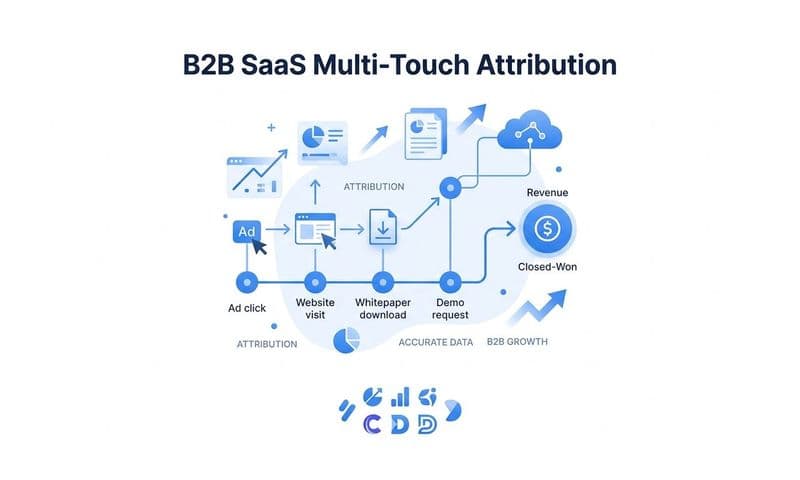
Start by identifying every touchpoint a customer encounters before converting. This includes the initial ad click, website visits, email opens, retargeting impressions, content downloads, demo requests, and any other interaction that happens along the way. For many businesses, this journey spans multiple sessions across several days or weeks.
The goal is to connect your ad platforms, CRM, and website tracking into a unified view. This means implementing tracking that captures cross-device behavior, links anonymous visitors to known contacts, and maintains identity across different systems. Server-side tracking has become essential here because browser-based tracking increasingly fails to capture the full picture due to privacy restrictions and ad blockers.
Document the typical paths your customers take before converting. You'll likely discover that different customer segments follow different journeys. Some might convert after a single touchpoint. Others might interact with your brand a dozen times across multiple channels before making a decision.
Pay special attention to the touchpoints that happen between the first and last click. These middle interactions often play a crucial role in moving prospects toward conversion, but they're invisible in last-click attribution models. A prospect might click a Facebook ad, visit your site, leave, see a retargeting ad, click through again, download a guide, receive follow-up emails, and finally convert through a Google search.
Success indicator: You can see the full journey for any conversion, not just the last click. When someone converts, you should be able to pull up their complete interaction history and understand exactly how they moved through your funnel. If you can only see the final touchpoint, you're still operating blind.
Step 2: Identify Your True Revenue Drivers
Now that you can see the complete journey, it's time to separate what actually drives conversions from what just gets credit for them. This distinction matters more than most marketers realize. The campaign that receives conversion credit in your ad platform might not be the campaign that influenced the buying decision.
Move beyond vanity metrics. Clicks and impressions tell you about reach and engagement, but they don't tell you about revenue. A campaign with 10,000 clicks might generate zero revenue if those clicks come from the wrong audience. Meanwhile, a campaign with 500 clicks might drive significant revenue if those clicks come from high-intent prospects at the right stage of their journey.
Compare performance across channels using multi-touch attribution. This approach distributes credit across all touchpoints that contributed to a conversion, not just the last one. Different attribution models weight touchpoints differently. Time decay gives more credit to recent interactions. Position-based emphasizes first and last touches. Linear distributes credit evenly.
The specific model matters less than the shift in perspective. When you analyze campaigns through a multi-touch lens, you often discover that your supposed winners aren't performing as well as you thought, and campaigns you considered underperformers are actually crucial parts of the conversion path.
Spot which campaigns actually drive conversions versus which just get credit. A common pattern: branded search campaigns show excellent conversion rates because they capture people who already decided to buy. They get last-click credit, but they didn't influence the decision. Meanwhile, the top-of-funnel content campaign that introduced prospects to your solution gets no credit despite doing the heavy lifting.
Look for campaigns that consistently appear early in high-value customer journeys. These are often your true revenue drivers, even if they don't show strong performance in last-click reporting. Similarly, identify campaigns that appear frequently in converting journeys but rarely as the final touchpoint. Understanding conversion window attribution helps you properly credit these influential touchpoints.
Success indicator: You can rank campaigns by actual revenue contribution, not just reported conversions. When you sort your campaigns by value, the list should reflect their true impact on revenue, accounting for their role across the entire customer journey. If your ranking still matches last-click attribution exactly, you haven't completed this step.
Step 3: Analyze Drop-Off Points in Your Funnel
Journey visibility reveals another critical insight: where you're losing potential customers. Every marketing funnel has friction points where prospects abandon. The key is finding which friction points cost you the most conversions and fixing those first.
Use your journey data to identify where potential customers abandon. Look at common paths that don't end in conversion. Do prospects consistently visit your pricing page and then disappear? Do they add items to cart but never complete checkout? Do they start your signup process but abandon before finishing?
Segment these drop-off points by traffic source. Different channels often exhibit different friction patterns. Prospects from Facebook ads might abandon at the pricing page because your targeting isn't aligned with your price point. Google search traffic might drop off during signup because your form asks for too much information. Email traffic might bounce from landing pages that don't match the message in your email.
Calculate the potential impact of fixing each friction point. Take the number of prospects who reach that point and multiply by a reasonable conversion rate if you eliminated the friction. This gives you a rough estimate of the conversions you're leaving on the table. Focus on friction points with high volume and high conversion potential.
Prioritize fixes based on these impact estimates. You likely can't address every friction point at once, so start with the three to five issues that would move the needle most. A friction point that affects 10,000 prospects per month deserves attention before one that affects 100 prospects, even if the smaller one seems easier to fix.
Success indicator: You have a prioritized list of specific friction points to address, with estimated impact for each. This list should be concrete and actionable. Instead of "improve the checkout process," you should have "reduce checkout form fields from 12 to 5 for mobile traffic from Meta ads" with an estimated impact of X additional conversions per month.
Step 4: Optimize Your Highest-Impact Touchpoints
With friction points identified, it's time to optimize. But don't spread your efforts thin across every touchpoint. Focus on the interactions that influence the most conversions. This targeted approach delivers better results than trying to improve everything at once.
Start with your highest-traffic, highest-influence touchpoints. These are typically landing pages that receive significant volume from your best-performing campaigns. If you can improve conversion rates on these pages by even a small percentage, the impact compounds across all your ad spend directed there.
Test landing page variations specifically designed for your top-performing traffic sources. A landing page that converts well for Google search traffic might not work for Facebook ad traffic because the intent and awareness levels differ. Create variations that match the message and promise from the ad that drove the click.
Align your ad messaging with the actual conversion path your customers take. If your attribution data shows that customers typically interact with your brand three to four times before converting, your ad creative should acknowledge that you're part of an ongoing conversation, not trying to close the deal in a single impression.
For campaigns that appear early in converting journeys, optimize for engagement and education rather than immediate conversion. These campaigns succeed by moving prospects to the next stage, not by generating instant sales. Your landing pages should offer value and build trust rather than pushing for an immediate purchase decision.
For campaigns that appear late in converting journeys, optimize for conversion. These prospects are ready to make a decision. Remove friction, provide clear calls to action, and make it easy to take the next step. They don't need more education at this point. Implementing proven conversion rate improvements at these critical touchpoints can significantly impact your bottom line.
Test one variable at a time so you can identify what actually drives improvement. Change your headline, measure results, then move to your call-to-action button. Changing multiple elements simultaneously makes it impossible to know which change created the impact.
Success indicator: You've implemented at least one test based on attribution insights, and you're measuring its impact on conversion rates. The test should be running, you should have a hypothesis about why it will improve performance, and that hypothesis should be based on what you learned from analyzing customer journeys.
Step 5: Feed Better Data Back to Ad Platforms
Here's something most marketers miss: improving your conversion rates isn't just about optimizing your website and ads. It's also about improving the data you send back to ad platforms. Meta, Google, and other platforms use conversion data to train their algorithms. Better data means better targeting, better optimization, and better results.
Ad platform algorithms work by identifying patterns in who converts and who doesn't. They use this information to find more people like your converters and show your ads to them. But this only works if the platform receives accurate, complete conversion data. When conversions go unreported due to tracking limitations, the algorithm trains on incomplete information and makes suboptimal decisions.
Set up server-side tracking to capture conversions that client-side tracking misses. Browser-based tracking fails for multiple reasons: ad blockers, privacy settings, cookie restrictions, and cross-device journeys. Server-side tracking bypasses these limitations by sending conversion events directly from your server to ad platforms, ensuring every conversion gets recorded.
The difference can be significant. Many businesses discover they're missing 20-30% of conversions in their platform reporting when they implement server-side tracking. That means ad algorithms have been optimizing based on incomplete data, potentially making poor targeting and bidding decisions. Learning how to feed conversion data back to ad platforms properly is essential for maximizing campaign performance.
Sync enriched conversion events to improve targeting and optimization. Don't just tell Meta that a conversion happened. Tell them the conversion value, the product purchased, the customer lifetime value estimate, and any other relevant data points. This enriched information helps the algorithm understand what makes a valuable conversion versus a low-value one.
For example, if you sell both a $50 product and a $5,000 product, you want the algorithm to optimize for the high-value conversions, not just conversions in general. Sending conversion value data enables this. Similarly, if you know that customers from certain industries have higher lifetime value, including industry data in your conversion events helps the algorithm find more of those customers. Understanding how to sync conversions to Facebook ensures your Meta campaigns receive the data they need.
Success indicator: Your ad platforms receive complete, accurate conversion data, including conversion values and relevant customer attributes. You should see your platform-reported conversions align more closely with your actual revenue, and you should notice improved campaign performance as algorithms optimize based on better information.
Step 6: Scale Winners and Cut Losers with Confidence
You've mapped journeys, identified true revenue drivers, eliminated friction, optimized key touchpoints, and improved your data quality. Now comes the payoff: scaling what works and cutting what doesn't, with confidence that you're making the right decisions.
Use AI-powered recommendations to identify scaling opportunities. Advanced attribution platforms can analyze patterns across thousands of customer journeys and surface insights that would take weeks to find manually. These systems can identify which campaigns consistently appear in high-value customer journeys, which ad creatives drive the most downstream conversions, and which audience segments show the highest conversion potential.
Look for campaigns that show strong performance in multi-touch attribution even if their last-click numbers seem mediocre. These are often your best scaling opportunities because they're already driving results but haven't received the budget they deserve. When you increase spend on these campaigns, you're amplifying something that already works.
Reallocate budget from underperforming campaigns to proven winners. This sounds obvious, but many marketers struggle with it because they're not sure which campaigns are truly underperforming. With complete attribution data, you can make these decisions confidently. If a campaign consistently appears in low-value journeys or rarely appears in converting journeys at all, it's a candidate for budget cuts.
Start with small shifts. Move 10-20% of budget from underperformers to winners, measure the impact, then adjust further. Dramatic budget changes can disrupt campaign performance, so make incremental moves and monitor results closely.
Set up ongoing monitoring to catch performance changes early. Conversion rates and campaign performance shift over time due to seasonality, competition, audience fatigue, and market changes. What works today might not work next month. Regular monitoring helps you spot these changes before they significantly impact results. Leveraging marketing analytics techniques ensures you're always working with actionable insights.
Create alerts for significant performance changes. If a campaign's contribution to revenue drops by more than a certain threshold, you want to know immediately so you can investigate and respond. Similarly, if a previously mediocre campaign starts showing up more frequently in converting journeys, that's a signal to test increased investment.
Success indicator: You're making budget decisions based on verified revenue data, not platform-reported metrics. When someone asks why you're increasing budget on Campaign A and cutting Campaign B, you can show exactly how each campaign contributes to revenue across the complete customer journey. Your decisions are driven by data, not intuition or platform recommendations.
Putting It All Together
Here's your quick-reference checklist for boosting conversion rates through data-driven optimization:
Step 1: Map your complete customer journey by connecting ad platforms, CRM, and website tracking into a unified view.
Step 2: Identify true revenue drivers using multi-touch attribution to see which campaigns actually influence conversions.
Step 3: Analyze drop-off points in your funnel and prioritize fixes based on volume and conversion potential.
Step 4: Optimize your highest-impact touchpoints with targeted tests based on attribution insights.
Step 5: Feed better data back to ad platforms through server-side tracking and enriched conversion events.
Step 6: Scale winners and cut losers confidently using verified revenue data and ongoing monitoring.
Boosting conversion rates isn't a one-time project. It's an ongoing process of measurement, optimization, and scaling. The marketers who consistently improve performance are the ones who build systems for continuous improvement rather than launching occasional optimization campaigns.
Start with Step 1. You can't optimize effectively without visibility into the complete customer journey. Everything else builds on that foundation. Once you can see how customers actually move through your funnel, the optimization opportunities become obvious. If you're struggling with visibility, an accurate conversion tracking solution is the first step toward data-driven optimization.
The framework works regardless of your budget size or industry. Whether you're spending $5,000 per month or $500,000 per month on ads, the principles remain the same: understand the complete journey, identify what drives revenue, eliminate friction, optimize high-impact touchpoints, improve your data quality, and scale with confidence.
Tools like Cometly accelerate this process by providing the unified data view and AI-powered insights needed for confident decision-making. Instead of manually stitching together data from multiple platforms and trying to identify patterns across thousands of customer journeys, you get a complete picture of how your marketing drives revenue, with recommendations on where to focus your optimization efforts.
Ready to elevate your marketing game with precision and confidence? Discover how Cometly's AI-driven recommendations can transform your ad strategy. Get your free demo today and start capturing every touchpoint to maximize your conversions.