Every marketer running paid campaigns across multiple platforms faces the same frustrating question: where exactly are prospects falling off before they convert? You can see the spend going in and the revenue coming out, but the middle part, the actual journey from first click to final purchase, often feels like a black box.
Traditional analytics tools make this harder than it should be. They track sessions, not people. They report on channels in isolation rather than showing how a Facebook ad, a Google retargeting click, and an email sequence all contributed to a single conversion. And as privacy changes have made pixel-based tracking less reliable, the gaps in funnel visibility have only grown wider.
This list covers the top conversion funnel analytics software available in 2026, spanning full-journey attribution platforms, product analytics tools, qualitative UX tools, and data aggregation platforms. Whether you're a performance marketer trying to connect ad spend to revenue, a product team optimizing in-app flows, or a data team unifying sources, there's a tool here that fits your stack and your goals.
1. Cometly
Best for: Ad-driven revenue attribution and full-funnel tracking across paid channels
Cometly is an AI-powered marketing attribution platform that connects your ad platforms, website, and CRM to track the complete customer journey in real time.
 9 Best Conversion Funnel Analytics Software for 2026
Where This Tool Shines
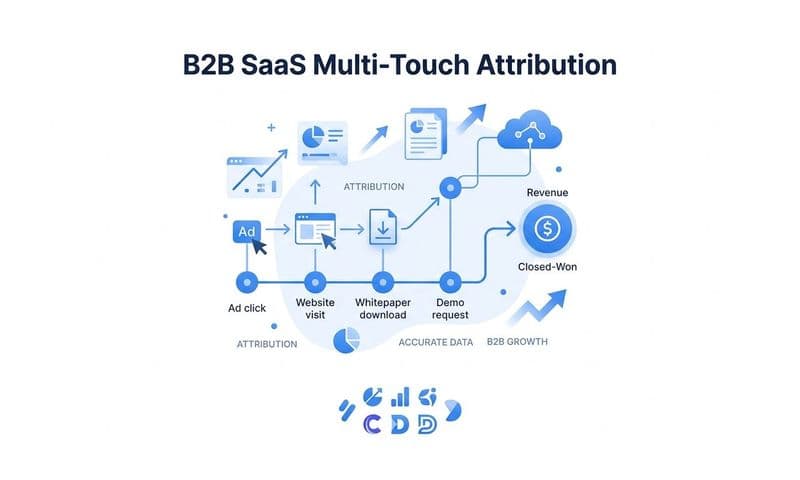
Most funnel analytics tools show you what happened on your website. Cometly shows you what your ad spend actually caused. It ties every touchpoint, from the first ad impression to a closed deal in your CRM, into a single attribution view, so you can see which campaigns and creatives are genuinely driving revenue rather than just clicks.
The server-side tracking architecture is a meaningful differentiator. As browser-based pixels become less reliable due to iOS privacy changes and cookie deprecation, Cometly's first-party data approach captures conversions that other tools miss. This makes funnel data more accurate and more actionable, especially for teams spending heavily across Meta and Google simultaneously.
Key Features
Multi-Touch Attribution: Tracks every paid and organic touchpoint across all ad channels and maps them to actual revenue outcomes using multiple attribution models.
Server-Side Tracking: Captures conversion events server-to-server, bypassing browser limitations and ad blockers for more complete funnel data.
AI-Powered Recommendations: The AI Ads Manager analyzes campaign performance and surfaces optimization suggestions, helping you scale what's working and cut what isn't.
Conversion Sync: Sends enriched, first-party conversion data back to Meta, Google, and other ad platforms to improve their machine learning algorithms and reduce wasted spend.
AI Chat: Lets you ask natural-language questions about your funnel data without needing to build reports manually, making analysis accessible for the whole team.
Best For
Performance marketers and growth teams running paid campaigns across multiple platforms who need to connect ad spend directly to pipeline and revenue. Particularly valuable for teams struggling with attribution gaps caused by iOS restrictions or cross-platform tracking challenges.
Pricing
Custom pricing based on ad spend volume. A demo is available on request at cometly.com.
2. Mixpanel
Best for: Event-based funnel analysis for web and mobile product teams
Mixpanel is a product analytics platform built around event tracking, funnel visualization, and user behavior analysis for digital products.
 9 Best AI Marketing Analytics Tools in 2026
Where This Tool Shines
Mixpanel's funnel reports are genuinely flexible. You can define any sequence of events as a funnel, filter by user properties, and instantly see where conversion drops off at each step. The interface is self-serve enough that non-technical marketers and product managers can build meaningful analyses without waiting on a data team.
Cohort analysis adds another layer of depth. You can compare how different user segments move through the funnel over time, which is especially useful for identifying whether a product change improved conversion for new users versus returning ones.
Key Features
Custom Funnel Reports: Build multi-step funnels with conversion rates and drop-off breakdowns across any event sequence you define.
Cohort Analysis: Group users by behavior or properties and compare how different cohorts progress through your funnel.
Retention Tracking: Measures whether users who convert at one funnel stage return and convert again over time.
Self-Serve Query Builder: Drag-and-drop interface that lets non-technical users explore data without writing SQL.
Data Warehouse Integrations: Connects with Snowflake, BigQuery, and other warehouses for flexible data pipelines.
Best For
Product managers, growth teams, and mobile app developers who need deep behavioral analytics within their product. Less suited for teams whose primary funnel challenge is connecting paid ad spend to downstream revenue.
Pricing
Free plan available for up to 20 million monthly events. Growth plan starts at $28/month with expanded limits and features.
3. Amplitude
Best for: Enterprise product analytics with predictive insights and experimentation
Amplitude is a behavioral analytics platform offering advanced funnel analysis, journey mapping, and built-in A/B testing for product and growth teams at scale.
 9 Best Conversion Funnel Analytics Software for 2026
Where This Tool Shines
Amplitude goes beyond standard funnel reporting by layering in predictive analytics. The platform can score users by their likelihood to convert or churn, which lets growth teams prioritize interventions rather than just diagnosing problems after the fact. For teams running continuous experimentation, the built-in A/B testing framework connects experiment results directly to funnel metrics.
The governance and taxonomy management tools are worth noting for larger organizations. When multiple teams are instrumenting events independently, data consistency tends to break down. Amplitude's governance layer helps enforce naming conventions and event structures across the organization.
Key Features
Behavioral Cohorting: Segment users by any combination of actions, properties, or funnel stages for granular analysis.
Journey Mapping: Visualizes the actual paths users take through your product, not just the paths you expect them to take.
Predictive Analytics: Scores users by conversion likelihood, enabling proactive engagement before drop-off occurs.
Built-In Experimentation: Run A/B tests and connect results directly to funnel conversion metrics without switching tools.
Governance Tools: Manage event taxonomy and data quality across large, distributed teams.
Best For
Mid-market and enterprise product teams that need sophisticated behavioral analytics, experimentation infrastructure, and governance controls. Best suited for organizations with dedicated data or analytics functions.
Pricing
Free Starter plan available. Growth and Enterprise plans use custom pricing based on data volume and feature requirements.
4. Google Analytics 4
Best for: Budget-conscious teams needing funnel reporting with native Google Ads integration
Google Analytics 4 is Google's event-based analytics platform offering funnel exploration reports, cross-platform tracking, and deep integration with the Google advertising ecosystem.
 11 Best Marketing Analytics Tools to Track and Optimize Campaign Performance in 2026
Where This Tool Shines
GA4's Funnel Exploration report is more powerful than many marketers realize. You can build both open funnels (where users can enter at any step) and closed funnels (where users must start at step one), apply segments, and visualize drop-off in a clean interface. For teams already running Google Ads, the native integration means conversion data flows directly between platforms without extra configuration.
The price point is hard to argue with. For most businesses, GA4 is free, and the BigQuery export lets you push raw event data into a warehouse for more advanced analysis. That combination of cost and flexibility makes it a logical starting point for teams building out their analytics stack.
Key Features
Funnel Exploration Reports: Build custom multi-step funnels with open or closed configurations and visualize conversion rates at each step.
Cross-Device Tracking: Uses Google signals to stitch together user journeys across devices and platforms.
Native Google Ads Integration: Imports conversion data directly into Google Ads for bidding optimization and audience building.
BigQuery Export: Free export of raw event data to BigQuery for custom SQL analysis and data warehouse integration.
Best For
Businesses of all sizes looking for a free, capable funnel analytics tool, especially those running Google Ads campaigns. Less effective for teams needing cross-channel paid attribution beyond the Google ecosystem.
Pricing
Free for standard use. GA4 360 enterprise tier is available with custom pricing for organizations requiring higher data limits and SLAs.
5. Heap
Best for: Retroactive funnel analysis without manual event instrumentation
Heap is an autocapture analytics platform that automatically records every user interaction, allowing teams to define and analyze funnels on historical data without pre-planning event tracking.
 9 Best Customer Journey Analytics Tools Compared for 2026
Where This Tool Shines
The autocapture model solves one of the most common pain points in product analytics: missing data because no one thought to track a particular event before it became important. With Heap, every click, form submission, and page view is captured by default. You can define a funnel retroactively and immediately see historical conversion data, even for events you never explicitly tagged.
The session replay integration adds useful context to funnel analysis. When you identify a high drop-off step, you can watch session recordings from users who abandoned at that exact point, which often reveals UX issues that quantitative data alone would never surface.
Key Features
Automatic Event Capture: Records every user interaction by default, eliminating gaps caused by missed manual instrumentation.
Retroactive Funnel Analysis: Define funnels on historical data without needing to have tracked events in advance.
Session Replay Integration: Watch recordings filtered by users who dropped off at specific funnel stages.
Effort Scoring: Data science layer that identifies high-friction moments in the user journey automatically.
Journey Mapping: Visualizes the actual paths users take before and after key funnel events.
Best For
Product and UX teams that want comprehensive funnel coverage without heavy engineering investment in event tracking. Particularly useful during early product development when the most important events aren't yet known.
Pricing
Free plan available for up to 10,000 monthly sessions. Growth and Pro plans use custom pricing based on session volume and feature needs.
6. Hotjar
Best for: Understanding the qualitative "why" behind funnel drop-off
Hotjar is a user experience analytics tool that combines heatmaps, session recordings, and on-site surveys with funnel tracking to reveal the behavioral reasons behind conversion drop-off.
 9 Best Tracking Tools for Digital Marketing in 2026
Where This Tool Shines
Hotjar occupies a unique space in the funnel analytics landscape. Most tools tell you that users are dropping off at a particular step. Hotjar helps you understand why. Heatmaps show where users are clicking and ignoring on a page. Session recordings let you watch real user journeys. Surveys let you ask visitors directly what stopped them from converting.
The combination of quantitative funnel data and qualitative behavioral context makes Hotjar especially valuable for conversion rate optimization work. It's not a replacement for a full analytics platform, but it's an excellent complement, particularly for landing page and checkout optimization.
Key Features
Heatmaps and Scroll Maps: Visualize where users click, move, and stop scrolling on any page in your funnel.
Session Recordings: Watch individual user sessions filtered by funnel stage or drop-off point.
On-Site Surveys: Trigger targeted surveys at specific funnel steps to collect direct user feedback.
Funnel Visualization: Track conversion rates across defined page sequences and identify the biggest drop-off points.
Best For
Marketing and CRO teams focused on improving landing page and website conversion rates through behavioral insights. Works best alongside a quantitative analytics tool rather than as a standalone funnel platform.
Pricing
Free basic plan available. Paid plans start at $32/month with higher session limits and additional features.
7. Kissmetrics
Best for: Connecting funnel activity to individual user revenue and lifetime value
Kissmetrics is a person-based analytics platform that ties every funnel interaction to an individual user profile, enabling revenue-level analysis for SaaS and e-commerce teams.
 9 Best Conversion Funnel Analytics Software for 2026
Where This Tool Shines
Where most analytics tools report on sessions or events, Kissmetrics reports on people. Every funnel step is tied to a persistent user identity, which means you can trace a specific user's journey from first visit through purchase and beyond. This person-centric model makes it much easier to calculate true revenue attribution at the individual and cohort level.
The campaign attribution and ROI analysis features are built for marketers who need to connect acquisition spend to customer lifetime value, not just first conversions. For SaaS teams tracking trial-to-paid conversion or e-commerce teams measuring repeat purchase behavior, this depth of revenue context is genuinely useful.
Key Features
Person-Based Tracking: Ties every funnel event to a persistent individual identity rather than anonymous sessions.
Revenue Attribution: Links funnel stages directly to revenue metrics at the user and cohort level.
Population Reports: Analyze how specific segments of users move through your funnel over defined time periods.
Campaign Attribution: Connects acquisition source to downstream revenue and customer lifetime value.
A/B Test Reports: Measure how experiments affect funnel conversion rates and revenue outcomes.
Best For
SaaS and e-commerce teams that need to connect funnel behavior to individual user revenue, lifetime value, and long-term retention metrics. Best for organizations where understanding revenue per user is as important as conversion rate.
Pricing
Plans start at approximately $299/month. Custom enterprise pricing is available for larger data volumes.
8. Funnel.io
Best for: Aggregating and normalizing funnel data from 500+ marketing sources
Funnel.io is a marketing data aggregation platform that connects spend, click, and conversion data from hundreds of sources into a unified view for reporting and analysis.
Where This Tool Shines
Funnel.io doesn't analyze your funnel so much as it assembles the raw ingredients for analysis. If your funnel data is scattered across Meta Ads, Google Ads, LinkedIn, your CRM, and three different analytics tools, Funnel.io pulls all of it into one place and normalizes it so the numbers are actually comparable. This is the unglamorous but essential work of making cross-channel funnel reporting possible.
The 500+ pre-built connectors mean you can typically get data flowing without custom engineering work. Once your data is unified, you can push it to a dashboard tool, a data warehouse, or a spreadsheet, giving your team flexibility in how they consume and act on funnel insights.
Key Features
500+ Data Connectors: Pre-built integrations for ad platforms, analytics tools, CRMs, and other marketing data sources.
Automated Data Normalization: Standardizes metrics and naming conventions across sources so data is directly comparable.
Flexible Export Options: Push unified data to dashboards, data warehouses, or spreadsheets based on your workflow.
Custom Metric Calculations: Define blended metrics that combine data from multiple sources, such as blended CPA across all ad platforms.
Best For
Marketing analysts and data teams managing campaigns across many platforms who need a reliable data pipeline before they can build meaningful funnel reports. Less suited as a standalone analytics tool; works best as a data layer feeding other reporting tools.
Pricing
Starts at approximately $1.00 per flexpoint, with custom plans available based on data volume and connector needs.
9. Adobe Analytics
Best for: Enterprise funnel analysis within the Adobe Experience Cloud ecosystem
Adobe Analytics is an enterprise analytics suite offering advanced funnel fallout reports, pathing analysis, and deep segmentation for large organizations running complex digital experiences.
Where This Tool Shines
Adobe Analytics is built for scale and complexity. The Fallout report visualizes where users exit a defined sequence of steps, while the Flow report shows the actual paths users take through your site without constraining them to a predefined funnel. Together, these tools give enterprise teams a comprehensive view of both expected and unexpected conversion journeys.
The real advantage of Adobe Analytics is its integration with the broader Adobe Experience Cloud. Teams using Adobe Target for personalization, Adobe Campaign for messaging, or Adobe's CDP can connect funnel insights directly to activation, creating a closed loop between analysis and action that is difficult to replicate with point solutions.
Key Features
Fallout Reports: Visualize drop-off at each step of a defined conversion sequence with granular segment comparisons.
Flow Visualization: Explore the actual paths users take through your digital experience, including unexpected routes.
Advanced Segmentation: Apply unlimited segment breakdowns to any report for deep funnel analysis.
Real-Time Data Processing: Access near-real-time data with anomaly detection to catch funnel issues as they emerge.
Adobe Experience Cloud Integration: Connect funnel data to Adobe Target, Campaign, and CDP for closed-loop personalization and activation.
Best For
Large enterprises with complex digital properties, dedicated analytics teams, and existing investment in the Adobe ecosystem. The cost and implementation complexity make it less practical for smaller organizations.
Pricing
Custom enterprise pricing. Typically suited for large organizations with significant analytics budgets and implementation resources.
Which Tool Is Right for Your Funnel?
The right conversion funnel analytics software depends entirely on where your biggest visibility gap sits. Here's a quick breakdown to help you decide.
Cometly: Best for performance marketers who need to connect paid ad spend across multiple platforms directly to pipeline and revenue, especially in a privacy-first tracking environment.
Mixpanel and Amplitude: Best for product and growth teams analyzing in-product behavior, retention, and feature-level conversion funnels.
Google Analytics 4: Best for teams that need capable funnel reporting at no cost, particularly those running Google Ads campaigns.
Heap: Best for teams that want comprehensive event coverage without heavy manual instrumentation, including retroactive funnel analysis.
Hotjar: Best for CRO and UX teams who need qualitative context to understand the behavioral reasons behind drop-off.
Kissmetrics: Best for SaaS and e-commerce teams that need to tie funnel behavior to individual user revenue and lifetime value.
Funnel.io: Best for data teams that need to unify and normalize marketing data from dozens of sources before analysis can begin.
Adobe Analytics: Best for large enterprises already invested in the Adobe ecosystem that need enterprise-grade funnel analysis and segmentation.
If you're unsure where to start, ask yourself one question: is your primary challenge connecting ad spend to revenue, understanding in-product behavior, or unifying data from multiple sources? Your answer points directly to the right category of tool.
For teams running paid campaigns across Meta, Google, and other channels, the attribution gap is usually the most urgent problem to solve. Get your free demo of Cometly to see how AI-powered attribution and server-side tracking can give you a complete, accurate view of your conversion funnel from first ad click to closed revenue.