
Conversion optimization analytics tools help marketing teams move beyond vanity metrics and understand what actually drives revenue. Whether you're analyzing ad performance, mapping customer journeys, or tracking which touchpoints push prospects to convert, the right tool transforms raw data into decisions that compound over time.
For B2B SaaS teams especially, the gap between a tool that shows clicks and one that shows pipeline is enormous. This list covers tools built for teams who want to optimize conversions with real data, not guesswork. Each was evaluated on attribution depth, integration breadth, ease of use, and how well it connects marketing activity to revenue outcomes.
Whether you're a growth marketer, a demand gen lead, or an agency managing multiple clients, there's a solution here that fits your workflow and your goals.
1. Cometly
Best for: B2B SaaS teams that need full-funnel attribution from ad click to closed-won revenue.
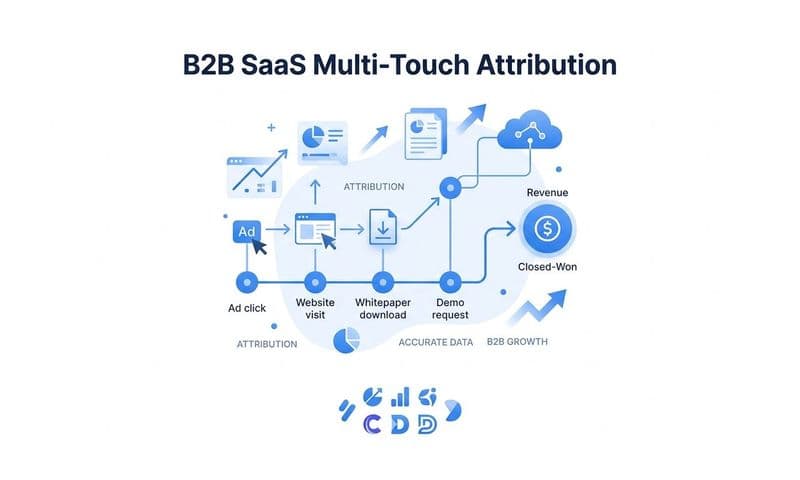
Cometly is a marketing attribution and analytics platform built specifically for B2B SaaS companies, connecting ad platforms, CRM data, and billing tools like Stripe to show which campaigns drive pipeline and revenue, not just clicks.
 9 Best Attribution Platforms for Agencies in 2026
Where This Tool Shines
Most analytics tools stop at the lead. Cometly goes further, tying every ad interaction to actual revenue events so you can see which campaigns are generating MRR, not just form fills. That makes it especially powerful for teams with longer sales cycles where the relationship between top-of-funnel spend and bottom-of-funnel outcomes is hard to trace.
The AI-powered recommendations layer adds another dimension. Instead of manually digging through dashboards to find what's working, Cometly surfaces high-performing ads and campaigns across channels so you can scale with confidence rather than instinct.
Key Features
Multi-Touch Attribution: Tracks every paid and organic touchpoint across the full customer journey so no interaction goes uncredited.
Server-Side Conversion Tracking: Uses Conversion API integration to capture accurate first-party data, even as browser-based tracking becomes less reliable.
AI Ad Recommendations: Identifies top-performing campaigns and surfaces actionable insights to help you allocate budget more effectively.
Pipeline and Revenue Attribution: Connects ad spend directly to closed deals and MRR by integrating with your CRM and billing platforms like Stripe.
70+ Native Integrations: Connects with major ad platforms, CRMs, and data tools so your attribution data flows without manual exports.
Real-Time Journey Analytics: Gives you a live view of how prospects move through your funnel from first touch to conversion.
Best For
Cometly is the right fit for B2B SaaS marketing teams, growth leaders, and demand gen managers who need to prove ROI on ad spend and connect campaigns to revenue. It's also well-suited for agencies managing multi-channel campaigns for SaaS clients where attribution accuracy is non-negotiable.
Pricing
Paid plans available with pricing based on usage and team size. Visit cometly.com for current pricing details.
2. Google Analytics 4
Best for: Teams that need a free, flexible baseline for web and app conversion tracking.
Google Analytics 4 is Google's event-based web and app analytics platform with native Google Ads integration and flexible conversion reporting built in.
 11 Best Marketing Analytics Tools to Track and Optimize Campaign Performance in 2026
Where This Tool Shines
GA4's event-based tracking model gives teams far more flexibility than its predecessor. You can configure almost any user action as a conversion event, which makes it adaptable to a wide range of SaaS funnel structures. The native connection to Google Ads is particularly valuable for teams running paid search, as campaign-level conversion data flows directly without additional configuration.
The funnel exploration and path analysis reports are genuinely useful for identifying where users drop off before converting. For teams that are just getting started with conversion analytics, GA4 provides a solid foundation at no cost.
Key Features
Event-Based Tracking: Replaces session-based logic with a flexible event model that lets you define conversions around any user action.
Google Ads Integration: Surfaces campaign-level conversion data directly inside the analytics interface.
Funnel Exploration: Visualizes user drop-off at each step of your defined conversion funnel.
Cross-Device Tracking: Follows users across devices and platforms for a more complete view of the conversion path.
Free Access: The standard tier covers the needs of most small to mid-size teams without any cost.
Best For
GA4 works well for teams that are heavily invested in the Google ecosystem and need a free, reliable baseline for conversion tracking. It's a strong starting point but often needs to be paired with a dedicated attribution tool for B2B teams that need revenue-level insights.
Pricing
Free for the standard version. Google Analytics 360 is available for enterprise teams at custom pricing.
3. Hotjar
Best for: CRO and UX teams that want to understand why visitors aren't converting.
Hotjar is a behavioral analytics platform that uses heatmaps, session recordings, and on-site surveys to reveal how visitors interact with your website and where they abandon the funnel.
 9 Best Tracking Tools for Digital Marketing in 2026
Where This Tool Shines
Hotjar answers the question that attribution tools can't: what's happening on the page after the click? Watching a session recording of a user who bounced from your pricing page often reveals friction points that no amount of quantitative data would surface. That qualitative insight is where Hotjar earns its place in a conversion optimization stack.
The combination of heatmaps and funnel reports is particularly effective for landing page optimization. You can see exactly where users are clicking, how far they scroll, and at which step they leave your conversion flow, then use that information to prioritize what to test or fix.
Key Features
Heatmaps: Visualizes click, scroll, and mouse movement behavior across any page on your site.
Session Recordings: Lets you watch real user sessions to identify friction and confusion in the conversion path.
Conversion Funnels: Shows drop-off rates at each defined step so you know where to focus optimization efforts.
On-Site Surveys: Collects qualitative feedback from visitors at key moments in the funnel.
Integrations: Connects with Google Analytics, Segment, HubSpot, and other common marketing tools.
Best For
Hotjar is ideal for growth marketers, CRO specialists, and UX teams who want to complement quantitative data with behavioral context. It works best as part of a stack alongside an attribution or product analytics tool.
Pricing
Free plan available. Paid plans start at $32/month, scaling with traffic and feature needs.
4. Optimizely
Best for: Enterprise and mid-market teams running rigorous, high-volume experimentation programs.
Optimizely is an enterprise experimentation platform designed for running A/B tests, multivariate tests, and feature experiments with statistical controls built in.
 9 Best Conversion Optimization Analytics Tools in 2026
Where This Tool Shines
Optimizely is built for teams that treat experimentation as a core discipline rather than an occasional project. The statistical significance controls and experiment reporting are sophisticated enough to support teams running dozens of concurrent tests, and the feature flagging capability extends testing beyond the front end into server-side product logic.
The personalization engine adds a layer beyond simple A/B testing, enabling dynamic content delivery based on user segments. For teams with the traffic volume and internal resources to support it, Optimizely can become the backbone of a mature optimization program.
Key Features
A/B and Multivariate Testing: Runs controlled experiments with built-in statistical significance thresholds to ensure reliable results.
Feature Flagging: Enables server-side experimentation for product teams testing new functionality safely.
Personalization Engine: Delivers dynamic content to different user segments based on defined rules and behavioral signals.
Analytics Integrations: Connects with data warehouses and analytics platforms to enrich experiment results with existing data.
Experiment Reporting: Provides detailed winner analysis and performance breakdowns across audience segments.
Best For
Optimizely is designed for mid-market to enterprise teams with dedicated experimentation resources and enough traffic to reach statistical significance quickly. It's overkill for smaller teams but a strong fit for mature optimization programs.
Pricing
Custom pricing. Designed for mid-market to enterprise teams. Contact Optimizely directly for a quote.
5. VWO (Visual Website Optimizer)
Best for: Teams that want behavioral analytics and A/B testing in a single platform.
VWO is an all-in-one CRO platform that combines A/B testing, heatmaps, session recordings, and funnel analysis without requiring separate tools for each capability.
 9 Best Conversion Optimization Platforms for B2B SaaS in 2026
Where This Tool Shines
VWO's biggest advantage is consolidation. Rather than stitching together a behavioral analytics tool and a testing platform, you get both in one interface. That makes it easier to move from insight to experiment: spot a drop-off in the funnel, review session recordings for context, then launch an A/B test, all without switching platforms.
The SmartStats Bayesian testing engine is worth highlighting. Unlike frequentist approaches that require waiting for a fixed sample size, SmartStats gives you continuous readouts of test performance, which helps teams move faster without sacrificing statistical rigor.
Key Features
A/B and Multivariate Testing: Supports split URL tests, element-level tests, and full multivariate experiments.
Heatmaps and Session Recordings: Built directly into the platform alongside testing, not added as a separate module.
Funnel Analysis: Identifies conversion bottlenecks across multi-step flows.
On-Site Surveys: Collects visitor feedback to inform test hypotheses.
SmartStats Engine: Uses Bayesian statistics to deliver faster, more interpretable test results.
Best For
VWO is a strong choice for growth and CRO teams that want the efficiency of a unified platform. It competes with both Hotjar and Optimizely by occupying the middle ground between behavioral analytics and enterprise experimentation.
Pricing
Testing suite starts at $199/month. Pricing scales with traffic volume and the features included in your plan.
6. Mixpanel
Best for: SaaS product and growth teams tracking in-app conversion events and user retention.
Mixpanel is an event-based product analytics platform focused on funnel analysis, retention tracking, and in-app user behavior for SaaS teams.
 9 Best Conversion Optimization Analytics Tools in 2026
Where This Tool Shines
Mixpanel excels at answering the conversion questions that live inside your product: What percentage of trial users activate within the first 48 hours? Which features correlate with users who upgrade to paid? Where in the onboarding flow do new signups drop off? These are the metrics that drive SaaS growth, and Mixpanel is purpose-built to surface them.
The user segmentation capabilities are particularly strong. You can slice funnel and retention data by plan type, acquisition source, company size, or any custom property, which helps growth teams identify which segments convert best and build strategies around those patterns.
Key Features
Event-Based Tracking: Captures granular in-app actions to build detailed conversion funnels.
Funnel Reports: Shows drop-off at each step of any defined user flow inside your product.
Retention and Cohort Analysis: Tracks how user behavior changes over time and which cohorts retain best.
User Segmentation: Breaks down metrics by behavioral properties, plan type, and custom attributes.
Real-Time Dashboards: Displays live metrics with customizable views for different team functions.
Best For
Mixpanel is ideal for SaaS product managers, growth engineers, and growth marketers who need deep visibility into in-app behavior. It's less focused on ad attribution and more focused on what happens after the click.
Pricing
Free plan available up to 20 million monthly events. Paid plans start at $28/month and scale with usage.
7. Heap
Best for: Product teams that need retroactive conversion analysis without manual event setup.
Heap is a product analytics platform with automatic event capture that allows teams to analyze any user interaction retroactively, even actions that weren't explicitly tracked at setup.
 9 Best Conversion Optimization Analytics Tools in 2026
Where This Tool Shines
The core differentiator for Heap is its autocapture model. Most analytics tools require you to decide in advance which events to track. Heap captures everything by default, which means you can go back and analyze a conversion path or drop-off point even if you didn't think to instrument it when you first deployed the tool.
This is especially valuable for teams that are still discovering which in-app behaviors predict conversion. Rather than waiting weeks to collect data on a newly identified event, you can often pull historical data on that interaction immediately.
Key Features
Automatic Event Capture: Records all user interactions without requiring manual tracking configuration for each event.
Retroactive Analysis: Allows teams to define and analyze events after the fact using already-collected data.
Funnel and Journey Reports: Maps conversion paths and identifies where users fall out of key flows.
Session Replay and Heatmaps: Available as add-ons for teams that want behavioral context alongside quantitative data.
Behavioral Segmentation: Uses data science tools to group users by behavioral patterns and conversion likelihood.
Best For
Heap works well for product and growth teams that want analytical flexibility without heavy upfront instrumentation work. It's particularly useful for early-stage SaaS teams that are still defining their key conversion events.
Pricing
Free plan available. Paid plans are custom-priced based on session volume. Contact Heap for a quote.
8. Crazy Egg
Best for: Smaller teams and solo marketers who need visual behavior analytics without enterprise pricing.
Crazy Egg is a lightweight CRO tool offering heatmaps, scroll maps, click reports, and basic A/B testing at an accessible price point.
Where This Tool Shines
Crazy Egg delivers the core behavioral analytics features most teams actually use at a fraction of the cost of enterprise alternatives. The visual reports are intuitive enough for non-technical stakeholders to interpret, which makes it easy to build alignment around CRO priorities without requiring data expertise to read the outputs.
The built-in A/B testing with a no-code visual editor lowers the barrier to running experiments. For teams that don't have developer resources to implement test variations, this is a meaningful advantage over platforms that require technical implementation for every test.
Key Features
Heatmaps and Scroll Maps: Shows where users click and how far they scroll on any page, segmented by traffic source or device.
A/B Testing: Runs page-level tests using a no-code visual editor without requiring developer support.
Session Recordings: Captures individual user sessions with filtering and tagging for easier review.
Traffic Analysis: Breaks down behavior by source, device type, and referral to identify audience-specific patterns.
Simple Setup: Deploys via a lightweight tracking script with minimal technical overhead.
Best For
Crazy Egg is a practical choice for small marketing teams, solo growth marketers, and early-stage SaaS companies that need behavioral insights and basic testing without committing to enterprise-level pricing or complexity.
Pricing
Plans start at $99/month. A 30-day free trial is available to test the platform before committing.
9. Triple Whale
Best for: Performance marketers who need unified ad spend, revenue, and attribution data in one dashboard.
Triple Whale is an attribution and analytics platform that unifies ad spend, revenue, and conversion data across channels, giving performance marketers a single view of blended ROAS.
Where This Tool Shines
Triple Whale's strength is consolidation at the channel level. Instead of logging into Meta Ads Manager, Google Ads, and TikTok separately to piece together performance, you get a unified dashboard that shows blended ROAS and conversion data across all your active channels simultaneously. That saves time and reduces the risk of misreading siloed metrics.
The creative analytics feature is particularly useful for teams running high volumes of ad creatives. Seeing which specific assets are driving conversions, not just which campaigns, helps creative and media teams make faster, more informed decisions about what to produce and scale.
Key Features
Pixel-Based Attribution: Collects first-party conversion data directly to reduce reliance on platform-reported numbers.
Unified Dashboard: Aggregates ad spend, revenue, and ROAS across Meta, Google, TikTok, and other channels.
Creative Analytics: Breaks down performance by individual ad assets to identify top-performing creatives.
Multiple Attribution Models: Lets teams compare first-touch, last-touch, and linear attribution side by side.
Channel Integrations: Connects natively with Meta, Google, TikTok, and Klaviyo among others.
Best For
Triple Whale suits performance marketing teams that run multi-channel paid campaigns and need a fast, consolidated view of what's working. It's particularly popular with teams managing significant ad budgets across multiple platforms.
Pricing
Plans start at $129/month. Pricing scales with revenue volume, so costs increase as your business grows.
Which Tool Is Right for Your Team
The right conversion optimization analytics tool depends on where your biggest blind spot is right now. If you don't know which campaigns are actually driving revenue, start with attribution. If you know where traffic is coming from but can't figure out why visitors aren't converting, behavioral analytics is the gap to close. If you're running tests but making decisions without statistical confidence, an experimentation platform fills that need.
For most B2B SaaS teams, the highest-leverage starting point is accurate attribution data. Understanding which channels and campaigns generate pipeline gives you a map for where to focus optimization efforts before you start testing. That's why Cometly belongs at the foundation of a SaaS marketing stack: it connects ad spend to revenue in a way that generic analytics tools simply aren't built to do.
From there, layering in a behavioral tool like Hotjar or Crazy Egg helps you understand the qualitative story behind your conversion data. And if your team is ready to run structured experiments, Optimizely or VWO can bring statistical rigor to your testing program.
Quick recommendations by use case:
Attribution-first B2B SaaS teams: Start with Cometly for revenue-connected attribution, then layer in behavioral tools as needed.
Behavior and UX focus: Hotjar or Crazy Egg depending on your budget and team size.
In-app product analytics: Mixpanel for structured tracking, Heap if you want retroactive flexibility.
Enterprise experimentation: Optimizely for large-scale programs, VWO for a more consolidated mid-market option.
Multi-channel performance marketing: Triple Whale for a unified view of blended ROAS across paid channels.
The best stacks combine one attribution tool with one behavioral analytics tool. That combination gives you the "where" and the "why" of conversion performance, which is what you need to make optimization decisions that actually move the needle.
If you're ready to stop guessing which campaigns drive revenue and start making decisions backed by complete attribution data, Get your free demo of Cometly today and see how every touchpoint connects to your bottom line.