You've spent thousands on Meta and Google ads this month. The platform dashboards are showing a healthy number of conversions. But when you open your CRM, the numbers tell a completely different story. Sound familiar?
This disconnect is one of the most frustrating experiences in modern paid advertising, and it's more common than most marketers realize. The gap between what ad platforms report and what your CRM actually records isn't just an analytics headache you can ignore. It's actively hurting your campaign performance in ways that compound over time.
Here's why: ad platform algorithms don't optimize based on what actually happened in your business. They optimize based on the conversion signals they receive. When those signals are incomplete, duplicated, or simply wrong, the algorithm trains itself on bad data and makes increasingly poor decisions about who to target, how to bid, and where to allocate your budget.
Conversion sync is the solution to this problem. It's the practice of sending verified, enriched conversion events from your first-party data sources back to ad platforms in real time, giving algorithms the accurate signals they need to perform at their best. In an era defined by privacy restrictions, cookie deprecation, and signal loss, conversion sync has shifted from a technical nice-to-have to essential infrastructure for any serious paid advertising program.
This article breaks down exactly what conversion sync does, why it matters, and the specific benefits that make it one of the highest-leverage investments a marketing team can make right now.
The Signal Loss Problem Quietly Killing Your Campaign Performance
Before you can appreciate what conversion sync solves, you need to understand the problem it's solving. And that problem starts with signal loss.
For years, marketers relied on browser-based pixels to track conversions. A user clicked an ad, landed on your site, completed a purchase, and a JavaScript pixel fired to tell the ad platform that a conversion occurred. Simple, reliable, and effective. Until it wasn't.
Apple's App Tracking Transparency framework, introduced in 2021, fundamentally changed the game. When users began opting out of cross-app tracking at scale, Meta and other platforms lost visibility into a significant portion of conversion activity on iOS devices. The result was a dramatic reduction in the volume and accuracy of conversion signals flowing into ad platform algorithms.
Then came cookie deprecation. With browsers increasingly blocking third-party cookies and users adopting ad blockers, even the pixel-based tracking that remained became less reliable. Events get missed. Sessions get misattributed. The challenge of tracking conversions without cookies has become a central concern for every performance marketing team.
The downstream effect on ad algorithms is severe. Platforms like Meta's Advantage+, Google's Performance Max, and TikTok's Smart Performance Campaigns are machine learning systems. They are trained on conversion data to understand which users convert, what behaviors predict purchase intent, and how to allocate budget for maximum efficiency. When the training data is incomplete or inaccurate, the model learns the wrong lessons.
Think of it like teaching someone to recognize great employees using only a fraction of the actual performance data, and some of that data is wrong. The resulting judgment calls will be consistently off.
This is the critical distinction that many marketers miss: there's a difference between tracking conversions for your own reporting and actively syncing conversion data back to platforms for optimization purposes. The first is about your dashboard looking accurate. The second is about feeding the algorithm the information it needs to spend your budget intelligently.
Most teams focus on the first. The ones consistently outperforming their competitors are focused on the second.
What Conversion Sync Actually Does Under the Hood
Conversion sync is the process of sending verified, server-side conversion events from your CRM or attribution platform back to ad platforms like Meta, Google, and TikTok via direct API connections.
The flow works like this. A user clicks your ad. They navigate your site, engage with your content, and eventually convert, whether that's making a purchase, submitting a lead form, or completing a trial signup. That conversion event is captured by your attribution platform, enriched with relevant customer data and attribution context, and then sent directly back to the ad platform through a server-to-server connection. No browser involved. No cookies required.
Platforms have built the infrastructure to receive this data. Meta's Conversions API, Google's Enhanced Conversions, and TikTok's Events API all exist specifically to accept server-side event data. But here's the thing most guides don't tell you: the quality of the data you send through these channels matters enormously.
Sending raw, unverified, or duplicated events through CAPI or Enhanced Conversions can actually hurt performance. If the algorithm receives the same conversion twice, it counts it twice. If it receives unverified events that don't correspond to real conversions, it optimizes toward phantom results. Understanding conversion API tracking at a deeper level is essential to avoiding these pitfalls.
This is where proper conversion sync differs from a basic CAPI setup. A genuine conversion sync solution enriches each event before sending it. That means deduplicating events to prevent double-counting, verifying that conversions are legitimate, appending attribution data so the platform understands which campaign and ad drove the result, and including customer match data like hashed emails to improve identity resolution.
Standard pixel tracking captures a fraction of conversions and sends raw event data. A basic CAPI integration improves volume but doesn't necessarily improve quality. A full conversion sync solution does both: it recovers missed conversions that pixel tracking would have lost and ensures every event sent is clean, enriched, and attribution-verified.
The result is that ad platforms receive a more complete and accurate picture of what's actually driving results in your business. And when algorithms have better data to work with, everything downstream improves.
Five Core Benefits That Change How Campaigns Perform
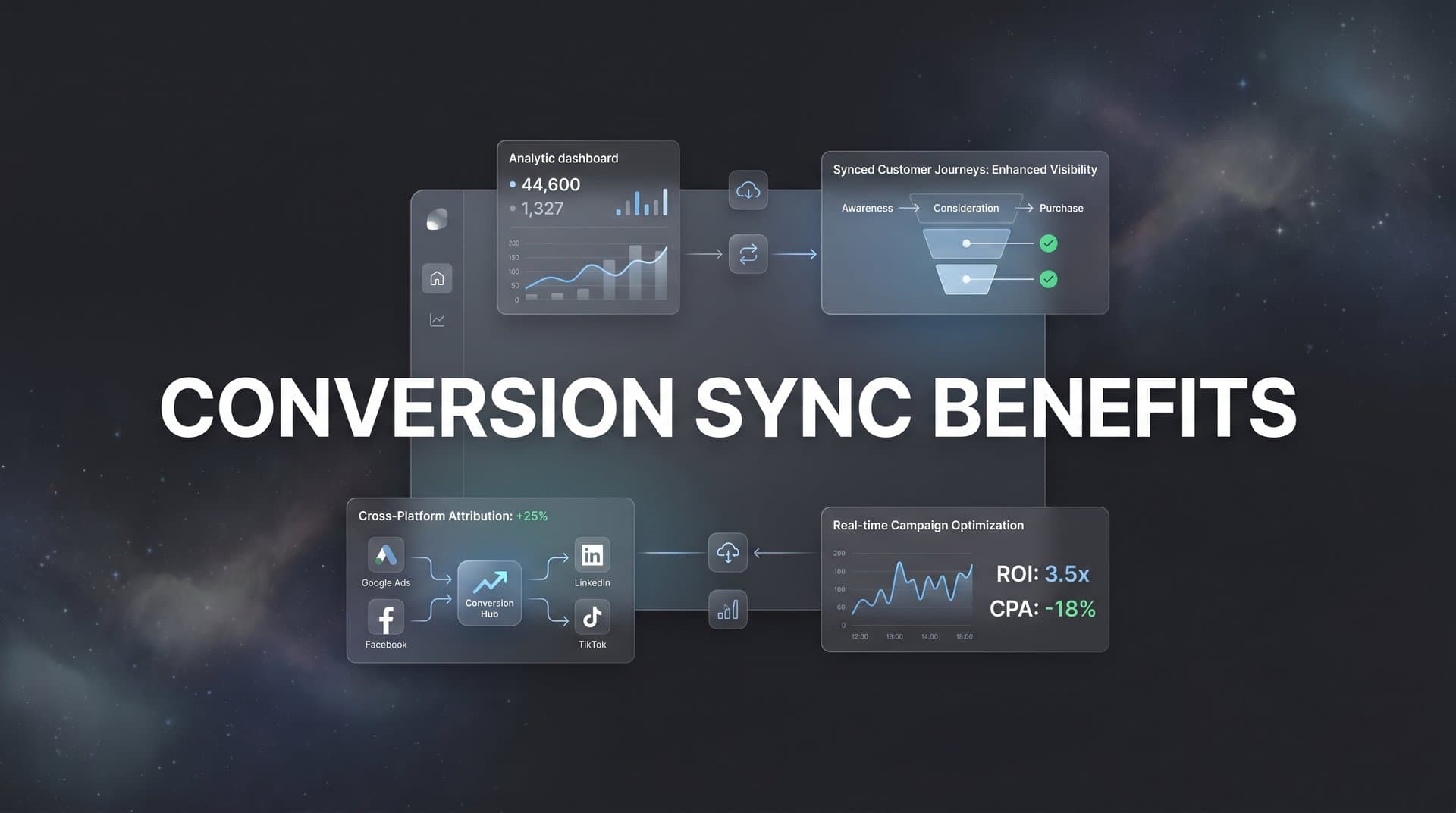
Understanding the mechanism is one thing. Understanding the practical impact on your campaigns is another. Here are the five core benefits of conversion sync that marketing teams experience once proper implementation is in place.
Smarter Algorithm Optimization: Ad platform algorithms are only as intelligent as the data they're trained on. When you sync enriched, verified conversion events back to Meta or Google, the machine learning models that power your campaigns get a more accurate picture of who converts and why. This translates to better lookalike audience generation, smarter bidding decisions, and more efficient spend allocation across placements and audiences. The algorithm stops chasing the wrong signals and starts finding the users who actually drive revenue.
Reduced Wasted Ad Spend: When platforms optimize based on incomplete or inaccurate conversion data, they often end up chasing low-quality leads or false positives. A form submission that never becomes a real customer still looks like a win to an algorithm that doesn't know better. This is the core reason ads show conversions but no sales in so many accounts. By syncing downstream conversion data, including qualified leads and actual closed revenue, you redirect the algorithm's optimization target toward what genuinely matters.
Better Audience Targeting and Retargeting: Enriched conversion data doesn't just help with bidding. It helps platforms build better audience models. When Meta or Google understands the characteristics of your highest-value converters with greater precision, your prospecting campaigns find better-fit users and your suppression lists stay cleaner. You stop paying to retarget people who already converted weeks ago, and you start reaching the users who look like your best customers.
Faster Exit from Learning Phases: Every campaign that enters or resets its learning phase costs you efficiency. Ad platforms need a minimum volume of conversion events within a defined window to exit learning and stabilize performance. When signal loss reduces the conversions your platform can see, campaigns stay in learning longer or never fully stabilize. Conversion sync recovers those missed events, increasing the visible conversion volume and helping campaigns reach the data thresholds needed to exit learning phases faster.
Cross-Platform Data Consistency: One of the most underrated benefits of conversion sync is what it does for your internal reporting and decision-making. When your CRM data, attribution reports, and platform-reported conversions start telling the same story, you gain confidence in your numbers. The ability to start tracking conversions across multiple ad platforms with consistency is foundational to running a data-driven marketing operation.
How Teams Are Using Conversion Sync to Scale With Confidence
The benefits above aren't theoretical. They play out in specific, practical ways depending on the type of business and marketing team implementing conversion sync.
Marketing agencies managing multiple client accounts face a persistent trust problem. Clients see platform-reported conversions and then look at their CRM and see different numbers. That discrepancy creates doubt about where budget is actually going and whether campaigns are performing. The issue of conversion tracking numbers being wrong is one of the fastest ways to erode client confidence. When agencies implement conversion sync, they close that gap. Platform data and CRM data align, and the conversation with clients shifts from defending data discrepancies to discussing how to scale what's working.
For e-commerce and direct-to-consumer brands, the specific application centers on revenue optimization. Without conversion sync, platforms typically optimize toward add-to-cart events or even just landing page views because those are the signals they can see most reliably. With conversion sync, you can send actual purchase events with order value back to Meta and Google in real time. Understanding purchase conversion value and feeding it back to algorithms is what shifts optimization from browse behavior toward actual buyers.
SaaS companies and lead generation teams face a different version of the same challenge. The conversion that matters most, a closed deal or a qualified opportunity, happens days or weeks after the initial ad click. Standard pixel tracking captures the form fill and calls it a conversion. But a form fill that never becomes a paying customer is not a conversion worth optimizing toward.
Conversion sync enables these teams to close the loop by syncing downstream CRM events back to ad platforms. When a lead becomes a qualified opportunity, that event gets synced. When a deal closes, that event gets synced. The ability to track offline conversions from online ads is what allows the algorithm to learn what a real customer looks like, not just what someone who filled out a form looks like. Over time, this moves optimization toward the leads that actually convert to revenue, improving both lead quality and cost efficiency.
In all three cases, the common thread is the same: conversion sync gives teams the ability to make confident scaling decisions because the data driving those decisions is accurate and complete.
Setting Up Conversion Sync for Maximum Impact
Knowing that conversion sync matters is one thing. Getting it set up correctly is another. There are a few foundational requirements and best practices worth understanding before you dive in.
The core infrastructure requirement is server-side conversion tracking. Browser-based pixels alone can't support a proper conversion sync setup because they're subject to the same blocking and degradation issues you're trying to solve. You need a server-side tracking layer that captures conversion events reliably, independent of what's happening in the user's browser.
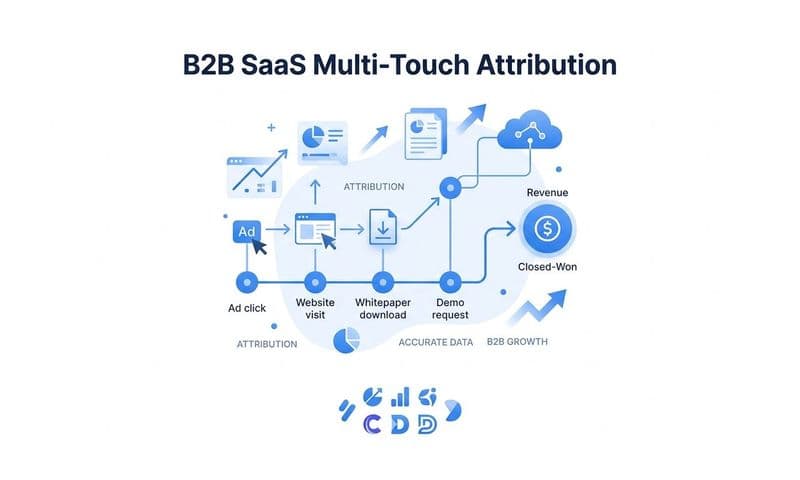
You also need a reliable attribution source. The whole point of conversion sync is sending enriched, attribution-verified events back to platforms. If your attribution data is incomplete or unreliable, you're just moving the problem upstream. Your attribution platform needs to be accurately connecting ad clicks to conversion events across the full customer journey with multiple touchpoints before you start syncing those events back to ad platforms.
Finally, you need proper integration between your CRM, attribution platform, and ad accounts. This is where many teams run into friction. Building and maintaining custom integrations between multiple systems is technically complex and time-consuming, and gaps in those integrations mean gaps in your conversion data.
On the best practices side, the most important decision is which conversion events to sync. More is not always better. Syncing every micro-event back to platforms creates noise and can confuse the algorithm. Focus on the events that represent real business value: purchases, qualified leads, closed deals, or whatever downstream action represents a genuine customer for your business. Top-of-funnel events like page views or button clicks are generally not worth syncing for optimization purposes.
Data freshness also matters. Real-time or near-real-time sync is significantly more valuable than batch uploads. Algorithms work with recency signals, and delayed conversion data is less useful for in-flight optimization decisions.
This is exactly where a platform like Cometly simplifies the entire process. Cometly connects your ad platforms, CRM, and website into a single system that automatically captures, enriches, and syncs conversion data back to Meta, Google, and other channels. Rather than building and maintaining custom integrations, you get a unified pipeline that handles deduplication, enrichment, and real-time sync out of the box. The result is that your ad platforms receive the clean, accurate, attribution-verified signals they need to optimize effectively, without your team spending weeks on technical implementation.
Putting It All Together: Why Conversion Sync Is Now Table Stakes
The benefits of conversion sync don't exist in isolation. They compound. Better data leads to better algorithm performance. Better algorithm performance leads to improved targeting. Improved targeting reduces wasted spend. Reduced wasted spend improves ROI. And better ROI gives you the confidence to scale budgets further, which generates more data, which makes the algorithm even smarter.
This is the flywheel that conversion sync sets in motion. And in a privacy-first advertising landscape where signal loss is the baseline condition, the marketers who feed the best data to ad platforms will consistently outperform those who rely on default tracking alone.
Default tracking, meaning browser pixels and basic platform integrations, was designed for a different era. An era before ATT, before cookie deprecation, before the algorithmic complexity of modern ad platforms. Relying on it today means accepting that your campaigns are optimizing on incomplete information, and that your competitors who've solved this problem have a structural advantage over you.
Conversion sync is no longer a sophisticated edge case for enterprise marketing teams. It's the foundation that every serious paid advertising program needs to function correctly. The question isn't whether you should implement it. It's how quickly you can get it right.
Ready to close the gap between your CRM data and your ad platform performance? Cometly's Conversion Sync feature sends enriched, conversion-ready events back to Meta, Google, and more, giving your algorithms the accurate signals they need to optimize with confidence. Get your free demo today and start capturing every touchpoint to maximize your conversions.