
When your conversion tracking breaks down, every marketing decision you make becomes a guess. Ad platforms optimize toward the wrong signals. Attribution models produce skewed data. Budget gets allocated to campaigns that appear to perform but actually do not.
For B2B SaaS marketing teams, this is not a minor inconvenience. It directly impacts pipeline visibility, revenue attribution accuracy, and the quality of data feeding your ad platform algorithms.
Conversion tracking errors range from simple pixel misfires to complex server-side event duplication issues. The challenge is that many of these errors are silent. They do not throw obvious error messages. Instead, they quietly corrupt your data over days or weeks before someone notices the numbers look off.
This guide walks you through a structured, step-by-step process to identify, diagnose, and fix the most common conversion tracking errors. Whether you are running campaigns on Meta, Google, LinkedIn, or TikTok, the same diagnostic framework applies.
You will learn how to audit your current setup, isolate where data breaks down, fix the root cause rather than the symptom, and verify that your tracking is working correctly before scaling spend.
By the end of this guide, your conversion data will be clean, your attribution will be accurate, and your ad platforms will receive the enriched signals they need to optimize effectively. Let us start with the foundation: understanding what your tracking setup should look like before you can identify what is wrong with it.
Step 1: Audit Your Current Tracking Setup Before Diagnosing Anything
Most teams make the mistake of jumping straight into fixes when they notice something looks off. They tweak a tag here, reinstall a pixel there, and wonder why the numbers still do not add up. The reason is almost always the same: they skipped the audit.
Before you can fix a conversion tracking error, you need a complete picture of what you are actually tracking, where it fires, and what it is supposed to measure. Without this map, you will fix one issue and miss three others.
Start by listing every conversion event you are currently tracking across all ad platforms. That means Meta, Google Ads, LinkedIn, TikTok, and any other channels in your stack. For each event, document whether it fires via a browser pixel, a server-side Conversion API, or both. This distinction matters enormously for diagnosing duplication and data quality issues later.
Next, categorize each event by its business value. Ask yourself honestly: does this event represent an actual business outcome? Form submissions, trial signups, demo requests, and closed-won deals belong in one category. Page views, scroll depth events, and button clicks that do not lead to a conversion belong in another. Many B2B SaaS teams are tracking vanity metrics with the same priority as revenue-driving events, which distorts optimization signals across every platform.
Then verify pixel installation coverage. Your tracking pixel should be present on every relevant page in the conversion funnel, not just the homepage. Check your pricing page, landing pages, thank-you pages, and any post-signup onboarding screens. A pixel that is missing from your thank-you page means your most valuable conversion event is never recorded.
Finally, review your event naming conventions across platforms and your CRM. If Meta is receiving an event called "Lead" while your CRM records the same action as "form_submission" and Google calls it "generate_lead," you have fragmented data that makes cross-channel attribution nearly impossible. Consistent naming is not a nice-to-have. It is a prerequisite for clean attribution.
Common pitfall: Many teams discover during this audit that they have legacy events still firing from old campaigns, duplicate pixels installed by different team members, or events that were set up for a product feature that no longer exists.
Success indicator: You have a documented list of every conversion event, its trigger method, the platform it reports to, and whether it maps to a real business outcome. This document becomes your tracking architecture reference for every step that follows.
Step 2: Check for Duplicate Conversion Events Inflating Your Data
Here is a scenario that plays out regularly in B2B SaaS marketing teams: your ad platform shows 200 conversions for the month, but your CRM shows 80 new leads. The gap feels too large to explain by attribution differences alone. Duplication is almost certainly involved.
Duplicate conversion events are one of the most common and most damaging tracking errors. They inflate your reported conversion volume, make your cost per acquisition look lower than it actually is, and feed your ad platform algorithms with false signals that distort future optimization.
Duplication typically happens when both a browser pixel and a server-side Conversion API event fire for the same user action without proper deduplication logic in place. The platform receives two signals for one conversion and counts both. Without a mechanism to identify that these two events represent the same action, you end up with inflated data that quietly compounds over time.
To check for duplication on Meta, open Events Manager and look at your event volumes. If a specific event is reporting significantly higher than expected, click into the event details and review the event match quality and deduplication status. Meta will flag events that appear to be duplicated when it can detect overlapping browser and server signals without a shared identifier.
For Google Ads, use Tag Diagnostics within your account to identify conversion actions that may be firing multiple times per session. Also open your Google Tag Manager container and audit every tag tied to conversion triggers. Redundant tags firing on the same trigger are a frequent source of inflated Google conversion data.
The fix for duplication is straightforward in principle but requires careful implementation. Every conversion event needs a unique event ID, sometimes called an event_id or transaction_id depending on the platform. This ID must be identical in both the browser pixel event and the server-side Conversion API event for the same user action. When the platform receives two events with the same ID, it deduplicates them and counts only one conversion.
For Meta CAPI, this means generating a unique event_id at the moment of conversion, passing it in your browser pixel's fbq() call, and sending the exact same ID in your server-side event payload. For Google Enhanced Conversions, the deduplication approach uses order IDs or transaction IDs tied to the conversion action.
Tip: If your reported conversions are consistently and significantly higher than your CRM records, duplication is almost always the cause. Start there before investigating other potential issues.
Success indicator: Conversion volume in your ad platform dashboards aligns closely with actual CRM conversion records. A small variance is normal due to attribution window differences, but a large, consistent gap indicates ongoing duplication.
Step 3: Diagnose Pixel Firing Failures and Tag Trigger Issues
A pixel that does not fire is actually worse than having no pixel at all. Here is why: it creates the illusion of tracking. Your dashboard shows data, your events appear to be set up, but the underlying signal is incomplete or entirely missing. You make decisions based on partial data without realizing it.
Pixel firing failures are more common than most teams expect, and they almost never announce themselves with an error message. They happen silently during site updates, CMS migrations, theme changes, or when a developer modifies the JavaScript load order on a page.
The most reliable way to diagnose pixel firing issues is to use your browser's developer tools. Open the Network tab, filter by the pixel domain (for example, "facebook.com/tr" for Meta or "googletagmanager.com" for Google), and manually walk through the conversion flow on your site. Watch for the pixel request to fire at the exact moment the conversion action occurs. If the request is absent, delayed, or returning an error status, you have found your problem.
For a faster diagnostic approach, install the Meta Pixel Helper and Google Tag Assistant browser extensions. These tools run in the background and surface pixel events in real time as you navigate your site. They will flag missing events, duplicate fires, and configuration errors with clear visual indicators. Understanding how a tracking pixel works at a technical level makes these diagnostic signals far easier to interpret.
Pay close attention to JavaScript errors on your site. Open the browser console while walking through your conversion flow. Any JavaScript error that occurs before your pixel code executes can silently block the pixel from firing. A single unrelated script error higher in the page can cascade and prevent your tracking code from running at all.
If your site is built on a single-page application framework like React, Vue, or Angular, you are likely dealing with a specific and common problem. Standard page-view triggers in Google Tag Manager fire on traditional page loads, but SPA frameworks navigate between views without triggering a full page reload. This means your GTM tags may never fire on route changes after the initial page load.
The fix for SPA tracking requires configuring a history change trigger in GTM. This trigger listens for changes to the browser's history API, which is how SPA frameworks handle navigation. Once configured, your tags will fire correctly on every route change, not just the initial load.
Also verify that your thank-you pages and confirmation screens are actually being reached by users completing conversions. Form validation errors, redirect loops, or broken post-submission logic can prevent users from ever reaching the page where your conversion pixel fires.
Common pitfall: Assuming a pixel is working because it was set up correctly at launch. Pixels break regularly during routine site maintenance. Treat pixel verification as an ongoing task, not a one-time setup check.
Success indicator: Pixel fires are confirmed in real time using browser developer tools and diagnostic extensions, and they match the specific user actions you expect to track at each stage of the funnel.
Step 4: Fix Server-Side Tracking and Conversion API Configuration Errors
Browser pixels were once sufficient for conversion tracking. That era is effectively over. Cookie restrictions, intelligent tracking prevention in Safari, and the widespread use of ad blockers have all reduced the reliability of browser-side tracking. Server-side tracking via Conversion APIs is now a necessary component of any accurate B2B SaaS attribution setup.
But CAPI introduces its own category of configuration errors, and they are often more difficult to diagnose because they happen on the server side, away from the browser tools most marketers are comfortable with.
The most common Meta CAPI errors involve missing required parameters. Every server event sent to Meta's Conversions API must include event_time, event_name, action_source, and at least one customer information parameter. Missing any of these fields will either cause the event to fail entirely or reduce its event match quality score, which directly limits how effectively Meta can match the event to a user in its system.
Customer information parameters are particularly important for Meta CAPI. These include hashed versions of the user's email address, phone number, and client IP address. The more of these parameters you include, the higher your event match quality score will be. A low match quality score means Meta cannot reliably connect your server events to real users, which weakens the signal you are sending to its optimization algorithm.
For Google Enhanced Conversions, the key requirement is sending hashed email data alongside your conversion hits. Google uses this hashed data to match conversions to signed-in Google users, improving attribution accuracy beyond what cookie-based tracking alone can provide. If your conversion action IDs are mapped incorrectly or your hashed data is formatted improperly, Google will report enhanced conversion errors in your diagnostics.
To test your Meta server events, use the Test Events tool inside Meta Events Manager. This tool lets you send test events and confirm in real time that Meta is receiving them, processing them correctly, and matching them to the expected event type. Any configuration errors will surface here before they affect your live data. For a detailed walkthrough of this process, the Conversion API implementation tutorial covers each configuration step in depth.
For Google, use Tag Assistant to verify that your Enhanced Conversions setup is sending data correctly. Also review your server event logs directly. Look for failed API requests, timeout errors, and authentication failures related to your API access token. An expired or incorrectly scoped access token is a surprisingly common source of CAPI failures that can go undetected for extended periods.
Tip: A low event match quality score in Meta Events Manager is one of the clearest signals available that your CAPI setup is missing key user data parameters. Do not ignore it. Improving match quality directly improves the performance of your Meta campaigns by giving the algorithm better data to work with.
Success indicator: Event match quality scores in Meta Events Manager are rated Good or Excellent. Google reports no enhanced conversion errors in your diagnostics. Server event logs show consistent successful API responses with no authentication or parameter errors.
Step 5: Resolve Attribution Window Mismatches Across Platforms
You have probably experienced this: you add up the conversions reported by Meta, Google, and LinkedIn for the month, and the total is nearly double what your CRM actually shows. Every platform is claiming credit for conversions, but the math does not add up. This is the attribution window problem, and it affects virtually every multi-channel B2B SaaS marketing team.
Each ad platform defaults to a different attribution window. Meta may apply a 7-day click and 1-day view window by default. Google Ads defaults to a 30-day click window for many conversion actions. LinkedIn uses its own default settings. When a user clicks an ad on Monday and converts on Friday, every platform that touched that user during the window claims the conversion. The result is that your aggregate reported conversions significantly exceed your actual conversion count.
This is not a bug. It is how platform-reported attribution is designed to work. Each platform is built to show itself in the most favorable light possible. Understanding conversion window attribution is the first step toward resolving the problem.
The practical fix starts with standardizing attribution windows across all platforms. Most B2B SaaS teams align on a 7-day click, 1-day view model as a reasonable baseline. This reduces the overlap between platforms and creates a more comparable basis for cross-channel analysis. You can adjust these settings within each platform's conversion action configuration.
But standardizing windows within each platform only partially solves the problem. Platform-reported data is still self-reported, meaning each platform applies its own attribution logic to its own data. The only way to get a genuinely consistent view across channels is to use a centralized attribution platform that applies a single attribution model to all your data simultaneously.
A centralized attribution approach, whether first-touch, last-touch, or multi-touch, takes your actual conversion events and distributes credit across the touchpoints that contributed to each conversion based on a consistent set of rules. This is fundamentally different from adding up each platform's self-reported numbers.
For B2B SaaS companies with longer sales cycles, multi-touch attribution is particularly valuable. A prospect might click a Google ad, engage with a LinkedIn retargeting campaign, and then convert through a Meta ad two weeks later. Linear or time-decay attribution models can distribute credit across all three touchpoints rather than awarding it entirely to the last click.
Tip: Never use platform-reported conversion data alone to make budget allocation decisions. Use it as one input among several, and always cross-reference against your CRM and a centralized attribution source.
Success indicator: Your centralized attribution tool shows conversion counts that align with CRM data, and cross-channel credit is distributed in a way that reflects the actual customer journey rather than each platform's self-serving reporting.
Step 6: Validate Your Fixes and Establish Ongoing Monitoring
Fixing a tracking error and assuming it is resolved are two very different things. Without a structured validation process, you will not know whether your changes actually worked until the data looks wrong again weeks later.
Start with end-to-end testing. Complete actual form submissions, trial signups, or test purchases and watch each conversion event fire in real time across all platforms. Use your browser developer tools, Meta Pixel Helper, and Google Tag Assistant simultaneously during these tests. Confirm that the right event fires, that it fires only once, and that it includes all the required parameters.
After end-to-end testing, establish a regular cadence of comparing your ad platform conversion data against your CRM records. A weekly comparison is practical for most teams. You are looking for consistency, not perfect alignment. A small variance is expected due to attribution windows and data processing delays. A large, persistent gap is a signal that something is still broken or that a new issue has emerged.
Set up automated alerts within your analytics or attribution platform to flag sudden drops in conversion volume. A conversion event that drops to zero overnight almost always indicates a broken tag, an expired API token, or a site change that disrupted your tracking setup. Catching this within hours is far less damaging than discovering it at the end of the month. Following best practices for tracking conversions accurately gives your team a repeatable framework for maintaining data integrity over time.
Document your tracking architecture and commit to keeping it current. Every time you make changes to your site, update landing pages, or modify ad platform integrations, update your tracking documentation. This documentation is what allows your team to diagnose future issues quickly rather than starting from scratch each time.
Build a monthly tracking audit into your team's regular workflow. Treat it the same way you treat a monthly performance review. Check pixel coverage, review event match quality scores, compare platform data against CRM records, and verify that your CAPI configurations are still sending correctly.
Success indicator: Conversion data is consistent across platforms and CRM week over week, automated alerts are in place for anomaly detection, and your team has a documented, repeatable process for catching and resolving tracking issues before they corrupt meaningful amounts of data.
Building a Foundation for Confident Marketing Decisions
Conversion tracking errors are not just a technical problem. They are a business problem. When your data is wrong, your ad spend decisions are wrong, your attribution is wrong, and your growth strategy is built on a shaky foundation.
The six steps in this guide give you a structured path from broken tracking to clean, reliable conversion data. Start with a full audit of your current setup. Eliminate duplicate events. Confirm your pixels are firing correctly. Tighten your server-side Conversion API configuration. Standardize attribution windows across platforms. And put ongoing monitoring in place so errors get caught early rather than discovered late.
Each step builds on the previous one. The audit gives you the map. The duplication check cleans the volume. The pixel diagnosis confirms the browser-side signal. The CAPI work strengthens the server-side signal. The attribution standardization makes cross-channel comparison meaningful. And the monitoring process ensures the work you did this month still holds up next month.
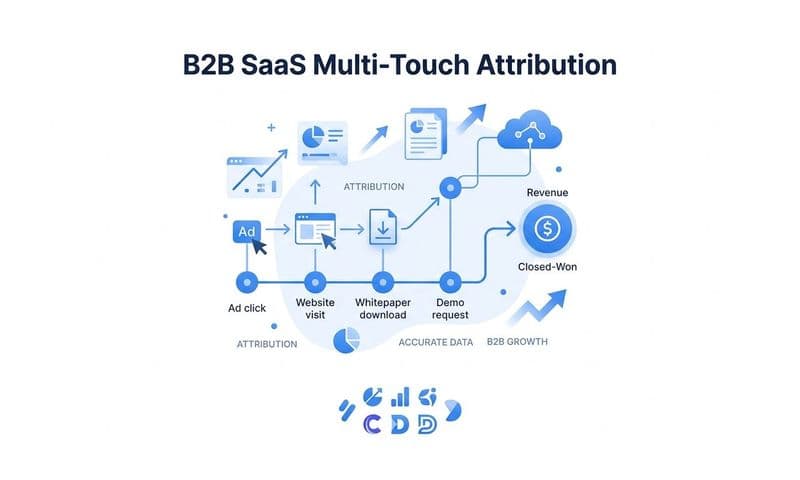
For B2B SaaS teams that need accurate attribution across the full customer journey, from first ad click to closed-won revenue, Cometly connects your ad platforms, CRM, and website into a single source of truth. It captures every touchpoint, feeds enriched conversion data back to Meta and Google to improve ad platform AI, and surfaces clear insights about which channels and campaigns actually drive pipeline and revenue.
Clean tracking is the foundation of every confident marketing decision you will make. Fix the errors, verify the data, and scale from a position of certainty rather than assumption.
Ready to stop guessing and start scaling with accurate attribution? Get your free demo today and see how Cometly captures every touchpoint to give your team the clean, reliable conversion data it needs to grow.