
For years, the tracking pixel was the default tool for measuring ad conversions. Drop a snippet of JavaScript on your thank-you page, connect it to your ad platform, and call it done. But that model is breaking down fast.
Browser privacy updates, ad blockers, iOS changes, and cookie deprecation have all chipped away at pixel reliability. For B2B SaaS companies running paid campaigns, this is not a minor inconvenience. It means your ad platforms are optimizing on incomplete data, your attribution models are skewed, and your budget decisions are based on a partial picture.
The good news is that pixel-based tracking was never the only option. It was just the easiest one to set up. Today, marketers have access to more reliable, more accurate, and more privacy-resilient alternatives that capture conversion data at the server level, through CRM integrations, and across the full customer journey.
This article covers seven proven strategies to replace or supplement your conversion tracking pixel with approaches that give you cleaner data, better signal quality, and more accurate attribution. Whether you are running campaigns on Meta, Google, LinkedIn, or TikTok, these strategies will help you build a tracking foundation that holds up in a cookieless, privacy-first world.
1. Server-Side Tracking via Conversion APIs
The Challenge It Solves
Browser-based pixels are increasingly unreliable. Ad blockers, privacy-focused browsers, and iOS privacy settings all interfere with pixel firing before conversion data ever reaches your ad platform. The result is a growing gap between conversions that actually happen and conversions your ad platform can see. That gap directly impacts how well your campaigns optimize.
The Strategy Explained
Server-side tracking via Conversion APIs moves the data transmission from the user's browser to your server. Instead of relying on a pixel to fire in the browser, your server sends conversion events directly to the ad platform. Meta's Conversion API (CAPI) and Google's Enhanced Conversions both operate this way.
Because the event originates from your server rather than the user's device, it is not affected by browser restrictions, ad blockers, or iOS privacy settings. The signal quality improves significantly, and your ad platform receives a more complete picture of what is actually converting.
When running both a pixel and CAPI simultaneously, deduplication is critical. Both Meta and Google provide event ID matching to prevent the same conversion from being counted twice. Set this up correctly from the start to keep your data clean.
Implementation Steps
1. Identify the conversion events that matter most to your campaigns, such as form submissions, demo requests, or trial signups.
2. Set up your server to send these events to Meta CAPI or Google Enhanced Conversions using the platform's API documentation.
3. Implement event ID deduplication to ensure browser-fired and server-fired events are matched and not double-counted.
4. Test your setup using each platform's event testing tools before going live.
Pro Tips
Start with your highest-value conversion event rather than trying to migrate everything at once. A clean, reliable signal on your most important conversion is worth more than incomplete data across every event. Platforms like Cometly simplify server-side event setup by connecting your ad platforms and CRM in one place, reducing the technical lift significantly.
2. First-Party Data Collection with UTM Parameters
The Challenge It Solves
Cookies expire. Browser storage gets cleared. Third-party tracking degrades with every new privacy update. If your campaign attribution depends on a cookie surviving long enough to be read at the moment of conversion, you are building on an unstable foundation. This is especially problematic in B2B SaaS, where the time between first click and form submission can span days or weeks.
The Strategy Explained
UTM parameters are a free, platform-agnostic way to tag your campaign URLs with source, medium, campaign name, content, and term. When a prospect clicks your ad and lands on your site, those parameters are visible in the URL. The key is capturing and storing them in your CRM or database at the exact moment a form is submitted.
Once stored server-side, that attribution data persists indefinitely. No browser update can erase it. You know which campaign, channel, and ad drove that lead, regardless of what happens to cookies after the fact.
Consistent UTM naming conventions are essential here. Many teams struggle with inconsistent tagging across campaigns, which makes aggregating data by channel or campaign nearly impossible. A shared taxonomy document and a UTM builder tool can solve this quickly.
Implementation Steps
1. Define a standardized UTM naming convention for your team covering source, medium, campaign, content, and term fields.
2. Add hidden form fields to every lead capture form that automatically populate with UTM parameter values from the URL.
3. Configure your CRM to capture and store these hidden field values as contact or lead properties.
4. Audit existing campaigns to ensure all paid traffic URLs include properly formatted UTM tags.
Pro Tips
Store both the first-touch and last-touch UTM values in your CRM. First-touch tells you what originally brought the prospect in. Last-touch tells you what prompted them to convert. Having both gives you a more complete picture of the journey without requiring complex attribution modeling.
3. CRM-Based Revenue Attribution
The Challenge It Solves
For B2B SaaS companies with longer sales cycles, the conversion that actually matters, which is closed-won revenue, often happens weeks or months after the initial ad click. A pixel cannot track that. By the time a deal closes, the cookie is long gone, the session has ended, and the ad platform has no idea it played a role. Your reported ROAS looks weak even when your campaigns are performing well.
The Strategy Explained
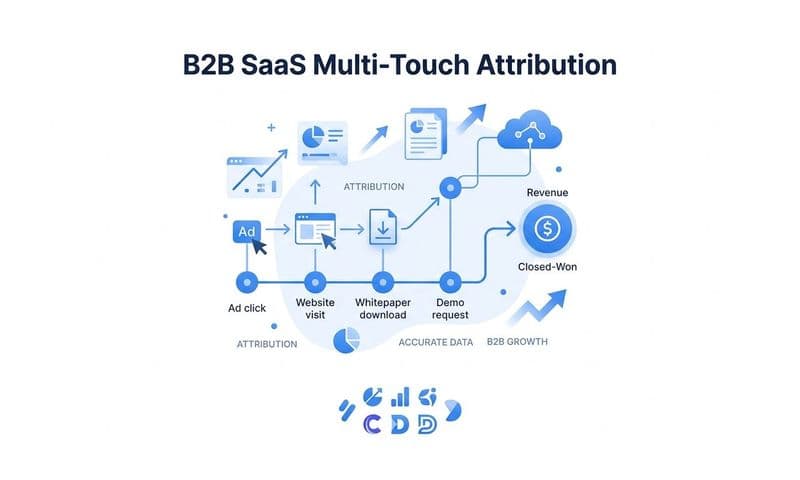
CRM-based revenue attribution solves this by storing the original lead source at the point of entry and then mapping it forward to deal outcomes. When a lead converts to an opportunity and then to closed-won, the original ad touchpoint travels with it through the CRM pipeline.
This approach becomes even more powerful when you integrate billing data. Connecting Stripe or a similar payment platform to your CRM creates a direct line from ad spend to actual revenue. You can see not just which campaigns generated leads, but which ones generated paying customers with real LTV.
Platforms like Cometly are built specifically for this type of end-to-end attribution, connecting your ad platforms, CRM, and revenue data so you can see the full picture in one place rather than stitching it together manually.
Implementation Steps
1. Ensure your CRM captures lead source data at the point of form submission, ideally tied to UTM parameters as described in the previous strategy.
2. Map lead source fields through your pipeline stages so the original attribution data is visible at the opportunity and deal level.
3. Integrate your billing platform with your CRM to connect revenue data to lead source fields.
4. Build reports that show pipeline and closed-won revenue by original campaign source.
Pro Tips
Do not rely solely on marketing-assigned lead source. Cross-reference it with sales notes and CRM activity to validate accuracy. The more your marketing and sales teams align on how source data is captured and maintained, the more trustworthy your revenue attribution becomes.
4. Multi-Touch Attribution Modeling
The Challenge It Solves
B2B buying journeys rarely involve a single touchpoint. A prospect might see a LinkedIn ad, read a blog post, attend a webinar, and then click a retargeting ad before finally requesting a demo. If you are using last-click attribution, all the credit goes to that final retargeting click. The LinkedIn ad, the blog, and the webinar get nothing. That skews your budget decisions and causes you to underinvest in the channels doing the heavy lifting earlier in the funnel.
The Strategy Explained
Multi-touch attribution distributes conversion credit across every touchpoint in the customer journey rather than assigning it all to one. Different models do this in different ways. Linear attribution splits credit equally across all touches. Time decay gives more weight to touchpoints closer to conversion. Position-based models give the most credit to the first and last touch, with the middle touches sharing the remainder. Data-driven models use algorithmic weighting based on actual conversion patterns.
For B2B SaaS, where awareness channels like LinkedIn and display often drive initial interest but rarely get credit under last-click models, multi-touch attribution reveals their true contribution. This leads to more informed budget allocation and a more accurate understanding of how your channels work together.
Implementation Steps
1. Audit your current attribution model and identify which channels are likely being systematically under or over-credited.
2. Choose a starting multi-touch model based on your sales cycle length and funnel structure. Position-based is a common starting point for B2B teams.
3. Implement a platform capable of tracking all touchpoints across channels and applying the chosen model consistently.
4. Compare results across models to understand how credit shifts and use that insight to inform budget conversations.
Pro Tips
No single attribution model is universally correct. The goal is not to find the perfect model but to use a consistent model that gives you a directionally accurate view of channel contribution. Switching models too frequently makes it impossible to identify trends over time.
5. Offline Conversion Tracking and Event Syncing
The Challenge It Solves
Ad platform algorithms optimize toward the conversion events they can see. If the only conversion you are sending back is a form fill, the algorithm will optimize for form fills, not for qualified pipeline or closed-won revenue. For B2B SaaS companies, this means your campaigns get better at generating leads that may never become customers, while the outcomes that actually matter remain invisible to the platform.
The Strategy Explained
Offline conversion tracking closes this loop by uploading CRM milestones back to your ad platforms as conversion events. Google Ads and Meta both support this natively. You match CRM records to ad clicks using Google's GCLID or Meta's click ID, then upload events like qualified lead, opportunity created, and closed-won deal.
When the ad platform sees these downstream events, its bidding algorithms can optimize toward them directly. Instead of chasing form fills, your campaigns start optimizing toward the lead quality signals that predict revenue. Over time, this improves the caliber of leads your campaigns generate without requiring manual bid adjustments.
Implementation Steps
1. Configure your CRM to capture and store GCLID and Meta click IDs at the point of lead creation, alongside UTM parameters.
2. Define the CRM milestones you want to sync back to your ad platforms, prioritizing events that correlate strongly with revenue.
3. Set up an automated sync between your CRM and each ad platform using native integrations or a tool like Cometly.
4. Monitor conversion volume in each platform and adjust your sync frequency to ensure the algorithm receives enough signal to optimize effectively.
Pro Tips
Conversion volume matters for algorithm performance. If you upload too few offline conversions, the platform's smart bidding may not have enough data to function well. Consider syncing earlier-stage pipeline events, such as marketing qualified leads, to supplement the volume of later-stage events like closed-won deals.
6. Server-Side Tag Management
The Challenge It Solves
Traditional tag management runs in the user's browser. Every tracking script, every analytics tag, every ad pixel fires client-side, which means every one of them is vulnerable to ad blockers, browser restrictions, and user privacy settings. Beyond the data loss, loading multiple tracking scripts also adds weight to your pages, which can slow load times and hurt conversion rates.
The Strategy Explained
Server-side tag management moves the data processing layer from the user's browser to a server you control. When a user takes an action on your site, the event is sent to your server first. Your server then decides which tags to fire and which data to send to which platforms. The user's browser never directly loads the third-party tracking scripts.
This approach has several advantages. Ad blockers cannot block server-to-server communication. Browser privacy restrictions do not apply. Your page load performance improves because fewer scripts run in the browser. And critically, you control exactly what data is collected and how it is shared with ad platforms, giving you genuine first-party data ownership.
Implementation Steps
1. Set up a server-side tag management container using a platform that supports server-side deployment.
2. Configure your website to send events to your server container rather than firing tags directly in the browser.
3. Map your existing tags and pixels to server-side equivalents, starting with your highest-priority tracking events.
4. Test thoroughly using your tag management platform's preview and debug tools before switching off client-side tags.
Pro Tips
Server-side tag management requires more technical setup than client-side alternatives, but the investment pays off in data reliability and performance. If your team does not have the technical capacity to manage this internally, consider a managed server-side solution or a platform that abstracts the complexity for you.
7. Unified Attribution Platforms as a Single Source of Truth
The Challenge It Solves
Every ad platform measures conversions using its own attribution logic. Meta claims credit for conversions using a 7-day click window. Google uses a different window. LinkedIn uses yet another. When you add up reported conversions across all platforms, the total is almost always higher than the number of actual conversions that occurred. This overlap makes it impossible to know which channels are genuinely driving results and which ones are just claiming credit.
The Strategy Explained
A unified attribution platform sits above all your ad platforms and applies a consistent attribution model across every touchpoint and channel. Instead of trusting each platform to grade its own homework, you have one system applying the same rules to all your data.
For B2B SaaS teams, this is particularly valuable because deals involve multiple channels over a long time-to-close. A unified platform can show you how LinkedIn, Google, and email nurture sequences each contributed to a closed deal, using consistent logic rather than each channel's self-reported numbers.
Cometly is built specifically for this use case. It connects your ad platforms, CRM, and website data in real time, applies consistent attribution modeling across all channels, and gives your team a single, reliable view of what is actually driving pipeline and revenue. Instead of reconciling conflicting dashboards, you make decisions from one source of truth.
Implementation Steps
1. Audit your current reporting setup and document where attribution overlap is occurring across platforms.
2. Select a unified attribution platform that integrates with all your active ad channels and your CRM.
3. Connect your data sources and configure the attribution model that best reflects your sales cycle and buying journey.
4. Establish this platform as the authoritative source for performance reporting across your marketing team.
Pro Tips
The biggest organizational challenge with unified attribution is getting buy-in from stakeholders who are used to seeing platform-reported numbers. Set expectations early that unified attribution numbers will differ from what ad platforms report, and explain why the unified view is more accurate. The goal is better decisions, not higher reported conversions.
Putting It All Together
Pixel-based tracking is not disappearing overnight, but relying on it as your primary conversion measurement method is increasingly risky. The strategies covered here represent a more durable approach: one that captures conversion data at the server level, ties revenue back to the original ad touchpoint through your CRM, and uses attribution modeling to give every channel fair credit.
The most effective B2B SaaS marketing teams are not choosing one of these methods over another. They are layering them. Server-side tracking feeds cleaner signals to ad platforms. UTM parameters and CRM data provide first-party attribution that no browser update can break. Offline conversion syncing closes the loop between pipeline activity and ad optimization. And a unified attribution platform ties it all together into a single, reliable view of what is actually driving revenue.
If you are ready to move beyond pixel dependency, start with server-side tracking and CRM integration. Those two steps alone will dramatically improve your data quality. Then build from there, adding multi-touch modeling, offline conversion syncing, and a unified platform as your infrastructure matures.
Cometly is built specifically for B2B SaaS companies that need this kind of end-to-end visibility. It connects your ad platforms, CRM, and website to track every touchpoint in real time, so you can make budget decisions based on actual pipeline and revenue data, not guesswork. Ready to elevate your marketing with precision and confidence? Get your free demo today and start capturing every touchpoint to maximize your conversions.