Paid advertising is one of the fastest ways to drive pipeline for B2B SaaS companies. But spending money on ads without knowing what is actually working is one of the most common and costly mistakes marketing teams make. You might be generating clicks, leads, and even demos, yet have no clear answer to the question your CEO keeps asking: which ads are actually driving revenue?
This guide walks you through exactly how to track paid ad performance from the ground up. Not just impressions and click-through rates, but the full picture from first ad click to closed-won deal.
You will learn how to set up the right tracking infrastructure, choose the metrics that matter, connect your ad data to revenue, and use attribution to make smarter budget decisions. Whether you are running campaigns on Meta, Google, LinkedIn, or TikTok, these steps apply across every channel.
By the end, you will have a repeatable system for measuring paid ad performance that your entire growth team can rely on. Each step builds on the last, so work through them in order for the best results.
Step 1: Define What "Performance" Actually Means for Your Business
Before you touch a single tracking tag or dashboard, you need to answer a deceptively simple question: what does success actually look like for your paid campaigns?
Most teams default to measuring impressions, clicks, and click-through rates because those numbers are easy to find inside every ad platform. The problem is that these metrics tell you how an ad performed in the auction, not whether it drove any real business value. A campaign with a stellar CTR can still be a budget drain if the clicks never convert to qualified pipeline.
For B2B SaaS companies, the metrics that actually matter are tied to revenue. Think cost per qualified lead, cost per demo booked, cost per opportunity created, and ultimately customer acquisition cost. These are the numbers that connect your ad spend to your growth targets.
Start by setting one primary KPI before you audit or launch any campaign. Ask yourself what conversion event is most closely tied to revenue at your current stage. For many B2B SaaS teams, that is cost per demo booked or cost per marketing-qualified lead. For teams with shorter sales cycles, it might be cost per trial signup. Choose one and make it the anchor metric your team reports against.
From there, map out the full conversion funnel so every stage has a defined event you can track:
Ad click: The first measurable signal of intent from a prospect.
Form fill or landing page conversion: The moment a visitor becomes a known lead.
Demo request or trial signup: A high-intent action that indicates genuine interest.
Opportunity created: The point at which sales confirms a lead is qualified and worth pursuing.
Closed-won deal: The only event that represents actual revenue.
One of the most common pitfalls in B2B SaaS advertising is optimizing for cost per lead without ever checking whether those leads convert to revenue. A channel that generates leads at a low cost can look like a winner in your weekly report while quietly producing the lowest-quality pipeline in your CRM. Without tracking all the way to closed-won, you will never know the difference.
Align your tracking goals with your sales cycle length. B2B deals often involve multiple stakeholders and weeks or months of consideration. Performance measurement needs to account for that lag, which means your reporting windows and attribution windows should be set accordingly. Understanding how to evaluate marketing performance metrics at each stage will help you build a more accurate picture of campaign effectiveness.
Step 2: Set Up Your Conversion Tracking Infrastructure
Once you know what you are measuring, the next step is making sure you can actually measure it. This is where most teams either skip steps or rely on incomplete setups that quietly undercount conversions.
Start by installing the tracking tags for each ad platform you use. That means the Meta Pixel, Google Ads conversion tag, LinkedIn Insight Tag, and TikTok Pixel if applicable. Each of these tags fires in the browser when a user takes an action on your site, and they feed conversion data back to the respective ad platform to power optimization and reporting.
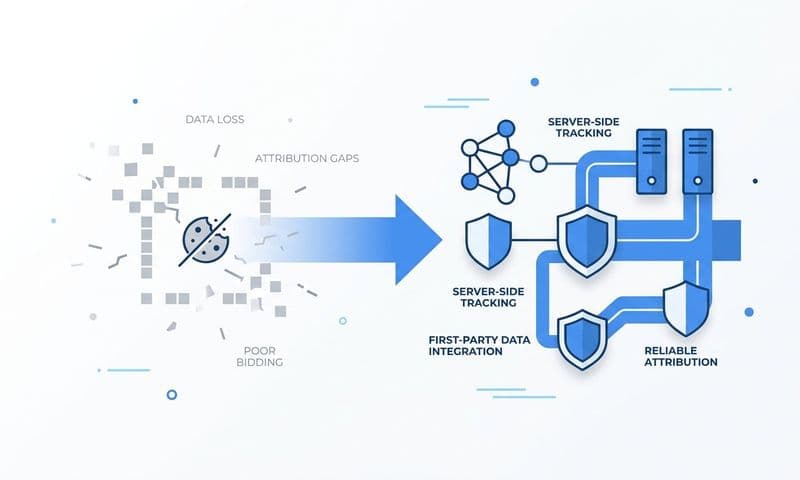
Here is the problem: browser-based pixels are increasingly unreliable. Ad blockers, Safari's Intelligent Tracking Prevention, and the downstream effects of iOS privacy changes all limit what client-side pixels can capture. In practice, this means a meaningful portion of your conversions may go unrecorded if you rely on pixels alone. If you want to understand exactly what a tracking pixel is and how it works, it helps to know its limitations before building your stack around it.
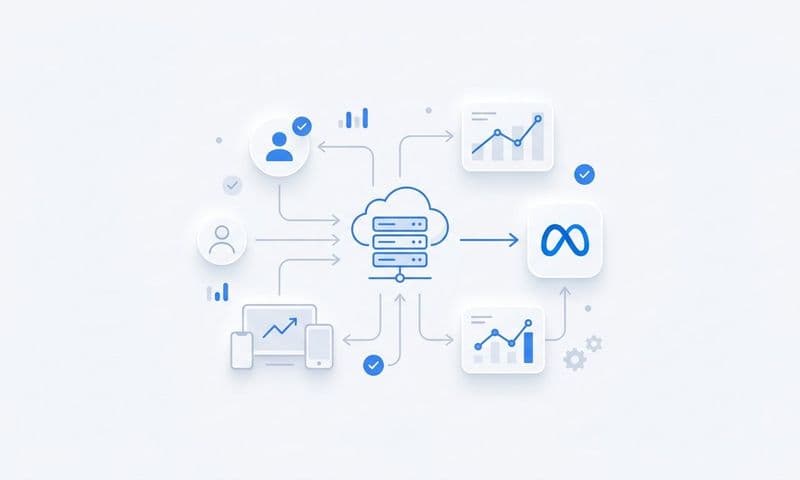
This is why server-side tracking has become essential for any serious paid advertising program. Meta's Conversion API (CAPI) and Google Enhanced Conversions allow you to send conversion data directly from your server to the ad platform, bypassing browser restrictions entirely. The result is more complete conversion data and better optimization signals for the ad algorithm.
Implementing server-side tracking does require some technical setup, but the accuracy gains are significant. Work with your engineering team or use a platform like Cometly that handles server-side event sending natively, so you do not have to build and maintain the infrastructure yourself.
Alongside your pixels and server-side events, configure UTM parameters on every ad URL. UTMs are the query string parameters appended to your destination URLs that tell your analytics platform where a visitor came from. A consistent UTM structure looks like this:
utm_source: The ad platform (meta, google, linkedin)
utm_medium: The channel type (paid-social, paid-search, display)
utm_campaign: The campaign name using a consistent naming format
utm_content: The specific ad creative or variation
utm_term: The keyword or audience segment, where relevant
Create a shared UTM naming convention document and distribute it to everyone who touches campaign setup. Inconsistent naming is one of the most common causes of fragmented attribution data. If one person uses "LinkedIn" and another uses "linkedin" and another uses "LI," you end up with three separate traffic sources in your analytics that should all be the same thing. Learning what UTM tracking is and how it helps your marketing will make it easier to enforce a consistent naming standard across your team.
Before scaling any spend, verify that your conversion events are firing correctly. Use the Meta Events Manager, Google Tag Assistant, and LinkedIn Insight Tag helper to confirm events are being received. Check your browser developer tools to watch network requests in real time. A broken conversion tag that goes unnoticed for two weeks can corrupt weeks of optimization data.
Step 3: Connect Your Ad Data to Your CRM and Revenue Source
Tracking clicks and form fills gives you the top of the funnel. But for B2B SaaS companies, the top of the funnel is only part of the story. The real question is which campaigns generate pipeline that actually closes.
To answer that, you need to connect your ad data to your CRM. When a prospect fills out a form on your site, the UTM parameters from their original ad click should be captured and passed into the lead record in your CRM, whether that is HubSpot, Salesforce, or another system. This way, every lead carries the original source attribution with it as it moves through the sales process.
Most form tools support hidden fields that automatically capture UTM values from the URL. Set these up for every form on your site and verify they are populating correctly in your CRM by submitting test leads and checking the resulting records. Following a structured process to track sales leads from source to close will help you validate that your CRM data is reliable before you start making budget decisions based on it.
Once UTM data is flowing into your CRM, you can start to see which campaigns are generating not just leads, but qualified opportunities. Your sales team can filter the pipeline by source and you can begin to understand which channels produce the deals that actually close.
The next layer is connecting your revenue data. For B2B SaaS companies using Stripe, Chargebee, or a similar billing platform, integrating that revenue data with your attribution system allows you to see which ad campaigns drove paying customers, not just leads or demos. This is the step that makes it possible to calculate true ad ROI rather than estimated or proxy metrics.
This is also where most B2B SaaS teams fall short. They invest in ad tracking and CRM setup but never close the loop between marketing activity and actual revenue. Without that connection, you are always estimating rather than knowing. Understanding how SaaS revenue attribution works is the key to making that final connection between marketing spend and closed deals.
Cometly is built specifically to solve this problem. It connects your ad platforms, CRM, and revenue data into a single source of truth, so you can trace the path from first ad click to closed-won deal without stitching together data from five different tools. Every touchpoint is captured, every conversion is attributed, and the full customer journey is visible in one place.
Step 4: Choose the Right Attribution Model for Your Sales Cycle
Attribution models are the rules that determine how credit gets assigned to the touchpoints along a customer's journey. The model you choose has a direct impact on how you evaluate channel performance and where you decide to invest budget.
Here is a quick breakdown of the most common models and when each one is useful:
First-touch attribution: Gives 100% of the credit to the first interaction a prospect had with your brand. This is useful for understanding which channels are creating awareness and bringing new prospects into your funnel. If you want to know what introduced a buyer to your product, first-touch is the model to use.
Last-click attribution: Gives all the credit to the final touchpoint before a conversion. This is the default model in most ad platforms, and it is also the most misleading for B2B SaaS. A prospect might have seen your LinkedIn ad three weeks ago, clicked a retargeting ad last week, and then converted after a branded Google search today. Last-click gives all the credit to Google and none to LinkedIn, even though LinkedIn started the entire journey.
Linear attribution: Distributes credit equally across every touchpoint in the customer journey. This gives a more balanced view of how channels work together and is often a good starting point for B2B teams moving away from last-click.
Time-decay attribution: Gives more credit to touchpoints that occurred closer to the conversion event. This can be useful when you want to weight the interactions that sealed the deal more heavily than early awareness touches.
Data-driven attribution: Uses algorithmic weighting based on actual conversion patterns in your data to assign credit. Where available, this is typically the most accurate model, but it requires a sufficient volume of conversion data to produce reliable results.
For B2B SaaS companies with long sales cycles and multiple stakeholders involved in a buying decision, multi-touch or data-driven attribution typically produces the most actionable insights. These models reflect the reality that no single ad or channel is responsible for a closed deal. Reviewing the best software for tracking marketing attribution can help you find a tool that supports the model that fits your sales cycle.
A practical approach is to run two models side by side. Use first-touch to understand where demand is being created, and use multi-touch linear to understand how channels work together across the full funnel. Comparing both gives you a richer picture than either model provides alone.
The most common pitfall here is choosing an attribution model because it makes your favorite channel look good rather than because it reflects how your buyers actually behave. Let the data guide the model selection, not the other way around.
Step 5: Build a Centralized Ad Performance Dashboard
If you are pulling data from Meta, Google, LinkedIn, and TikTok separately, you are working with four different reporting interfaces, four different attribution windows, and four platforms that each claim credit for the same conversions. This creates blind spots and makes it nearly impossible to make confident cross-channel budget decisions.
A centralized ad performance dashboard solves this by aggregating all of your key metrics into a single view. Instead of toggling between platforms, you can see spend, impressions, clicks, leads, pipeline generated, and revenue attributed by channel and campaign in one place. Understanding how to analyze multi-channel ad performance is what makes this kind of unified view genuinely actionable rather than just a data aggregation exercise.
When building or configuring your dashboard, include both top-of-funnel and bottom-of-funnel metrics together. Top-of-funnel metrics like CTR and cost per click tell you how efficiently your ads are capturing attention. Bottom-of-funnel metrics like cost per opportunity and revenue per dollar spent tell you whether that attention is translating into business outcomes. You need both in the same view to make well-rounded decisions.
Segment your dashboard by channel, campaign, ad set, and individual creative so you can drill down from the big picture to the specific ads that are driving or dragging results. Knowing that your LinkedIn campaigns are underperforming is useful. Knowing that one specific ad creative within one specific campaign is the culprit is actionable.
Cometly provides a real-time marketing dashboard that aggregates data across more than 70 integrations. Growth teams can compare attribution models, analyze ad performance across every channel, and identify optimization opportunities without switching between platforms. The AI ads manager surfaces patterns and recommendations that are not obvious when you are looking at platform-level data in isolation.
Set a regular review cadence and stick to it. Check campaign-level performance weekly to catch budget inefficiencies before they compound. Review ad creative performance every two weeks, since creative fatigue and underperformance can develop quickly, especially on social platforms. The discipline of a consistent review schedule is what separates teams that react to problems from teams that prevent them.
Step 6: Analyze Performance and Identify Optimization Opportunities
Data collection is only valuable if you act on what it tells you. This step is about developing the analytical habits that turn your tracking infrastructure into a competitive advantage.
Start by looking beyond the ROAS numbers your ad platforms report. Every platform has a strong incentive to show its own performance in the best possible light, and platform-reported attribution often overcounts conversions by taking credit for purchases that would have happened anyway. Compare what each platform claims against what your attribution platform shows. Discrepancies are normal, but large gaps are a signal that something in your tracking setup needs attention or that a channel is less incremental than it appears. Following best practices for tracking conversions accurately will help you close those gaps before they distort your budget decisions.
Identify your highest-performing campaigns by revenue attributed, not by leads generated or lowest cost per click. A campaign that generates fewer leads at a higher cost per lead might still be your best performer if those leads convert to high-value customers at a higher rate. Revenue attribution is the only metric that settles this debate definitively.
Use cohort analysis to understand how leads from different channels convert over time. B2B SaaS sales cycles mean that a campaign running today might not show its full revenue impact for several months. Cohort analysis lets you track groups of leads from the same source over time to see how their conversion rates develop, giving you a more accurate picture of long-term channel value.
Flag underperforming ad creatives early. If an ad has strong impressions but low click-through, or if it is generating clicks but a high cost per conversion, pause it and reallocate that budget to your better performers. Creative fatigue is real, and letting a declining ad run because it once performed well is a common way to quietly drain budget.
Cometly's AI ads manager analyzes performance across every channel and surfaces recommendations based on patterns in your data. Instead of manually comparing dozens of campaigns and ad sets, the AI identifies which audience segments, ad formats, and creative combinations are consistently driving pipeline so you can scale what is working with confidence rather than guessing.
Step 7: Feed Better Data Back to Your Ad Platforms
Most B2B SaaS teams think of tracking as a one-way flow: data comes from the ad platform into your analytics tools. But there is a second direction that is just as important, and most teams underutilize it.
Ad platform algorithms optimize toward the conversion signals you send them. If you are only sending pixel-level events like page views and form fills, the algorithm learns to find users who are likely to fill out forms. That sounds reasonable until you realize that form fills include a lot of unqualified leads, demo no-shows, and contacts who will never become customers.
When you send downstream conversion events back to your ad platforms, you teach the algorithm what a high-value conversion actually looks like for your business. Instead of optimizing for form fills, the platform starts optimizing for the signals you care about: qualified leads, opportunities created, and closed-won deals.
Meta's Conversion API and Google Enhanced Conversions both support offline conversion uploads and server-side event sending. This means you can send events that happen after the initial form fill, including CRM status changes like "opportunity created" or revenue events from your billing system, back to the ad platform to inform its optimization model. Learning how to track offline conversions is the foundation for making this feedback loop work correctly for B2B advertisers.
The practical result is better audience targeting, improved ad delivery, and higher-quality leads over time without necessarily increasing your spend. You are not changing your budget; you are improving the quality of the instructions you are giving the algorithm.
Cometly handles this automatically. It sends enriched, conversion-ready events back to Meta, Google, and other platforms using your downstream CRM and revenue data, so the ad platform algorithms are always working with the most complete and accurate signal available. This closes the feedback loop and compounds the value of your attribution investment over time.
The key tip here is to prioritize sending offline conversion data for events that happen after the initial form fill. These are the signals most ad platforms are missing for B2B advertisers, and they are the ones that have the greatest impact on optimization quality.
Putting It All Together: Your Paid Ad Tracking Checklist
Tracking paid ad performance in B2B SaaS is not a one-time setup task. It is an ongoing system that connects your ad spend to real revenue outcomes. Here is a quick checklist to confirm you have covered every step:
Define your primary KPI and conversion events. Know exactly what you are measuring before you measure anything.
Implement server-side tracking across all ad platforms. Do not rely on browser pixels alone.
Pass UTM data through your forms and into your CRM. Every lead record should carry its original ad source.
Connect your revenue source to close the attribution loop. Leads are not the finish line; revenue is.
Select an attribution model that matches your sales cycle. Multi-touch models typically work best for B2B SaaS.
Build a centralized dashboard for cross-channel visibility. Stop toggling between platform dashboards.
Analyze performance by revenue attributed rather than surface metrics. CTR and CPC are inputs, not outcomes.
Send enriched conversion signals back to your ad platforms. Close the feedback loop so the algorithm works for you.
When all of these pieces are in place, you stop guessing and start making data-driven decisions about where to scale and where to cut. Cometly is built specifically for B2B SaaS teams who want this level of clarity. It connects your ad platforms, CRM, and revenue data into a single source of truth, tracks every customer journey touchpoint, and uses AI to surface the insights that help you grow faster.
If you are ready to move beyond basic ad reporting and start attributing revenue to the campaigns that actually earn it, Get your free demo today and see how Cometly can transform the way your team tracks, analyzes, and scales paid advertising.