Picture this: you open your ad platform dashboards on a Monday morning, coffee in hand, ready to make smart budget decisions for the week. Meta says you drove 200 conversions last week. Google claims 150. But when you pull up your CRM, total sales sit at 180. The math doesn't work, and you know it. Which platform deserves more budget? Which one is lying? The honest answer is that neither platform is being fully truthful, and every decision you make based on these numbers is built on shaky ground.
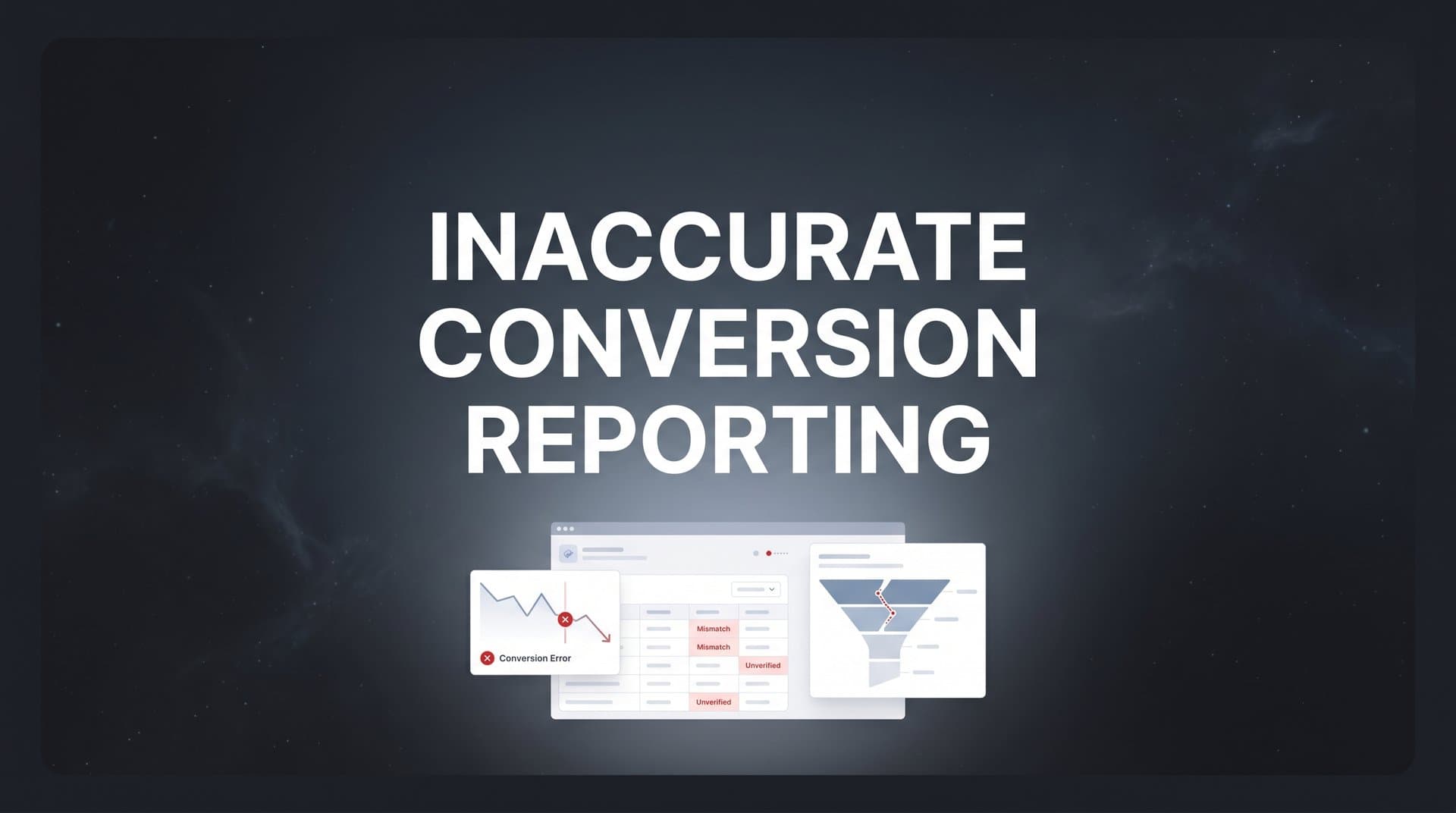
This is inaccurate conversion reporting, and it's one of the most widespread and quietly destructive problems in digital advertising today. It's not a niche technical issue reserved for enterprise teams with complex stacks. It affects businesses of every size running ads across multiple platforms, and most marketers don't even realize how deep the problem runs until they start cross-referencing their numbers.
This guide breaks down exactly why inaccurate conversion reporting happens, what it costs you in real terms, and what you can do to build a measurement foundation you can actually trust. Whether you're managing a modest ad budget or scaling campaigns across multiple channels, understanding this problem is the first step toward fixing it.
The Real Cost of Trusting Bad Conversion Data
Before diving into root causes, it's worth being precise about what inaccurate conversion reporting actually means. At its core, it's the gap between what your ad platforms report and what actually happened in your business. That gap can take several forms: overcounting, where platforms report more conversions than actually occurred; undercounting, where real conversions go untracked; misattribution, where credit is assigned to the wrong channel or campaign; and duplicate counting, where the same sale is claimed by multiple platforms simultaneously.
All four of these problems are happening in most ad accounts right now, often at the same time.
The downstream effects are significant. When a channel appears to be converting well because of overcounting, you pour more budget into it. When a channel that actually drives revenue is undercounted, it looks like a poor performer and gets cut. The result is a budget allocation that's systematically wrong, optimized toward a version of reality that doesn't exist. Your true ROAS and CPA figures become unreliable, making it nearly impossible to evaluate whether your campaigns are actually profitable. This is a widespread issue known as underreporting conversions in ad platforms, and it affects nearly every advertiser running multi-channel campaigns.
Here's where it gets particularly damaging: ad platforms don't just report on conversions passively. They use conversion signals to power their optimization algorithms. When you feed inaccurate conversion data into Meta's or Google's machine learning systems, those systems learn from the wrong signals. They optimize your ad delivery toward audiences that appear to convert based on flawed data, not toward the audiences that actually generate revenue for your business.
This creates a compounding cycle. Bad data produces poor optimization, which leads to declining performance, which prompts you to adjust budgets based on the same bad data, which makes the optimization even worse. Many marketers experience this as a slow, confusing degradation in campaign performance that's hard to diagnose because the dashboards never show an obvious error. The numbers look like numbers. They just happen to be wrong.
The real cost isn't just wasted spend on any given campaign. It's the cumulative effect of months or years of decisions made on data you thought you could trust.
Five Root Causes Behind Broken Conversion Numbers
Understanding why inaccurate conversion reporting happens is essential before you can fix it. There are five primary culprits, and most ad accounts are affected by more than one of them simultaneously.
Privacy restrictions and tracking limitations: Apple's App Tracking Transparency framework, introduced in 2021, requires apps to request permission before tracking users across other apps and websites. A significant portion of iOS users opt out, which means ad platforms lose visibility into a large share of customer journeys on Apple devices. Meanwhile, browsers across the industry have been tightening cookie policies, and ad blockers are widely used. Client-side pixels, which rely on browser-based cookies to track conversions, are increasingly blind to real activity. The result is systematic undercounting that varies by audience but consistently understates true conversion volume.
Platform self-reporting bias and overlapping attribution windows: This is the source of the overcounting problem described in the introduction. Each ad platform operates its own independent attribution system and assigns credit to conversions that occurred within its attribution window. Understanding conversion window attribution is critical, because when a customer sees a Meta ad on Tuesday, clicks a Google search ad on Thursday, and converts on Friday, both platforms count that as their conversion. Add TikTok or LinkedIn into the mix and you can see how a single sale gets claimed multiple times across your stack.
Attribution windows compound this further. Meta might count a conversion that happened 7 days after a click. Google might count the same event within a 30-day window. When you compare these numbers side by side without accounting for window differences, you're comparing apples to oranges, and the total inflates well beyond your actual sales volume.
Technical implementation failures: This category is underappreciated because the errors are often invisible. A pixel that fires on page load rather than on a confirmed purchase action will inflate conversions dramatically. Cross-domain tracking breaks, which occur when a customer moves from your marketing site to a checkout domain without proper tracking continuity, can cause attribution to fail entirely. Tag manager conflicts, where multiple tags fire the same event, create duplicate conversion records. Redirect chains that strip UTM parameters leave conversions unattributed, making it look like direct traffic is doing the work when a paid campaign deserves credit. If you're wondering why your conversion tracking numbers are wrong, technical failures like these are often the culprit.
CRM and offline conversion gaps: Many businesses convert customers through phone calls, sales team follow-ups, or delayed purchase decisions that happen outside the browser session. Client-side pixels have no visibility into these events. If your attribution setup doesn't include a way to pass offline or CRM-based conversion data back to your platforms, you're working with an incomplete picture of your funnel, and your channel performance data reflects only the portion of the journey your pixels can see.
Inconsistent event naming and setup across platforms: When different platforms track slightly different events under slightly different conditions, comparing their data becomes unreliable. One platform might count a "lead" when a form is submitted; another might count it when a confirmation page loads. These definitional inconsistencies mean your cross-platform comparisons are measuring different things, even when they appear to be measuring the same outcome.
Spotting the Warning Signs Before They Wreck Your Budget
The tricky thing about inaccurate conversion reporting is that it doesn't announce itself. Your dashboards continue to populate with numbers that look reasonable. Here's how to catch the problem before it does serious damage.
The most important habit is regular cross-referencing. Pull your total reported conversions across all platforms for a given time period and compare that sum to your actual sales or leads recorded in your CRM or backend system. If your platforms collectively claim 400 conversions but your CRM shows 180 closed deals, you have a significant overcounting problem. Using a unified marketing reporting approach can make this cross-referencing far more efficient and reliable.
Watch for red flags in your data patterns. A sudden spike in reported conversions that isn't accompanied by a corresponding increase in revenue is a strong signal that something is wrong, whether it's a pixel misfiring, a duplicate event, or a tag manager conflict. Similarly, conversion rates that seem too good to be true often are. If a campaign is suddenly reporting a 30% conversion rate when your historical average is closer to 3%, investigate before scaling.
Compare your platform data against a neutral third-party source. Google Analytics can serve as a useful reference point, though it has its own tracking limitations. If Meta reports 200 conversions from a campaign but GA4 shows only 40 goal completions from paid social during the same period, that gap warrants investigation. The numbers won't match perfectly, but they should be in the same general range. Understanding why ads show conversions but no sales can help you diagnose these discrepancies more effectively.
Audit your tracking setup on a regular schedule. Test your conversion events by completing actual purchase or lead actions and verifying that the pixel fires correctly and only once. Check that your thank-you pages and confirmation screens are properly tagged. Verify that UTM parameters survive your full funnel, including any redirects or cross-domain steps. Tools like browser developer consoles and tag debugging extensions can help you see exactly what's firing and when.
These audits don't need to be exhaustive every time, but a quarterly check of your core conversion events can catch silent failures before they distort months of data.
Server-Side Tracking: The Foundation for Accurate Data
If client-side pixel tracking is the source of so many measurement problems, the logical question is: what's the alternative? The answer is server-side tracking, and it represents a fundamentally different approach to how conversion data flows from your business to ad platforms.
Traditional client-side tracking works like this: when a customer lands on your website, a snippet of JavaScript runs in their browser, detects a conversion action, and sends that data to the ad platform. The problem is that this entire process depends on the browser cooperating. Ad blockers can prevent the script from running. Cookie restrictions can prevent the platform from identifying the user. Browser privacy settings can block the outgoing request entirely. The result is a conversion that happened in your business but never reached your ad platform's reporting.
Server-side tracking removes the browser from the equation. Instead of relying on JavaScript running in the customer's browser, your server directly sends conversion data to ad platform APIs, such as Meta's Conversions API or Google's server-side tagging infrastructure. Because this communication happens server to server, it bypasses ad blockers, cookie restrictions, and browser-level privacy settings entirely. The conversion gets recorded regardless of what the customer's browser would have blocked. You can learn more about the advantages in this deep dive on server-side conversion tracking benefits.
The practical impact is meaningful. Conversions that would have been silently missed by client-side pixels are now captured. Your reported conversion volume becomes more complete and more accurate, which means your performance data reflects closer to what's actually happening in your business.
Beyond capturing missed conversions, server-side tracking also enables richer data. Because the conversion event originates from your server, you can include CRM data, order values, customer identifiers, and other contextual information that a browser pixel can't access. This creates a more complete picture of each conversion event, which is valuable both for attribution and for feeding quality signals back to ad platforms. For businesses that rely on phone calls or in-person sales, the ability to track offline conversions from online ads becomes especially critical.
Cometly uses server-side tracking to connect ad clicks to CRM events and actual revenue, capturing every touchpoint across the customer journey. Rather than relying on what a browser pixel can see, Cometly builds attribution from verified server-level data, giving you a reliable foundation for understanding which ads and channels are actually driving results.
Multi-Touch Attribution vs. Single-Platform Reporting
Even with accurate tracking in place, there's another layer of the problem to address: the inherent bias in relying on any single ad platform's conversion report to evaluate your overall marketing performance.
Every ad platform is designed to show you the value of that platform. Meta's reporting tells you how many conversions Meta drove. Google's reporting tells you how many conversions Google drove. This isn't necessarily deceptive, but it is structurally incomplete. Each platform only sees its own slice of the customer journey, and each has a natural incentive to claim as much credit as possible within its attribution window. When you evaluate each platform's report in isolation, you're getting a biased, self-serving view of performance rather than an honest picture of how your marketing actually works together.
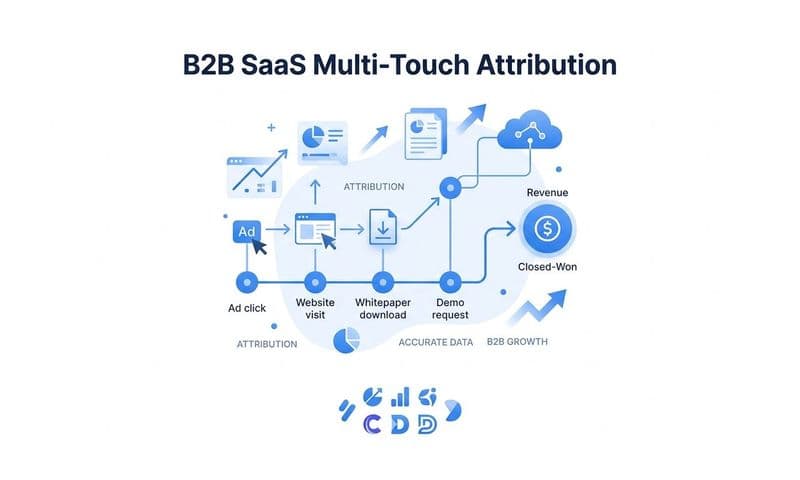
Multi-touch attribution addresses this by tracking all the touchpoints a customer interacts with before converting and then distributing credit across those touchpoints according to a defined model. Understanding multi-touch conversion value is essential here: instead of Meta taking 100% credit for a conversion and Google taking 100% credit for the same conversion, a multi-touch model might assign partial credit to the Meta ad that introduced the customer, the Google search ad they clicked on later, and the retargeting ad that brought them back to complete the purchase.
Different attribution models distribute credit in different ways. A linear model splits credit equally across all touchpoints. A time-decay model assigns more credit to touchpoints closer to the conversion. A position-based model gives more weight to the first and last interactions. Each model tells a slightly different story, and the right model for your business depends on your sales cycle and how you think about the role of awareness versus conversion-focused touchpoints.
The key insight is that no single model is objectively correct, but any multi-touch model gives you a more honest view than single-platform last-click attribution. Performing thorough conversion path analysis helps you see how all your channels contribute to conversions rather than evaluating each in isolation, enabling better budget decisions.
Cometly's multi-touch attribution connects your ad platforms, CRM, and website data into a single unified view, letting you compare attribution models side by side and understand which ads genuinely drive revenue. The AI-powered analysis goes further, identifying high-performing campaigns across channels and surfacing actionable recommendations for scaling what's working. Instead of guessing which platform deserves more budget, you get a data-driven view of the full customer journey.
Feeding Better Data Back to Ad Platforms for Smarter Optimization
Fixing your conversion reporting isn't just about improving your own visibility. It also directly impacts how well your ad platforms perform on your behalf.
Modern ad platforms rely heavily on machine learning to optimize ad delivery. Meta's algorithm decides which users to show your ads to based on patterns it detects in your conversion data. Google's Smart Bidding adjusts bids in real time based on the likelihood of conversion for each auction. These systems are powerful, but they're only as good as the signals you feed them. When your conversion data is incomplete or inaccurate, the algorithms learn the wrong patterns and optimize toward the wrong audiences.
Conversion sync technology addresses this by sending enriched, verified conversion events from your attribution platform back to the ad platforms. Rather than relying solely on the pixel fires the platform can see on its own, you're supplementing that data with server-verified conversion events that include richer context: actual purchase values, customer identifiers, CRM-matched lead quality signals, and conversions that happened offline or outside the browser window.
The effect on algorithm performance can be significant. When Meta or Google receives more complete conversion signals, their algorithms build better models of who your actual customers are. Lookalike audiences become more accurate because they're modeled on real buyers rather than on whatever subset of buyers the pixel happened to capture. Bidding strategies become more precise because the algorithm has a clearer signal of which clicks actually lead to revenue.
This creates a virtuous cycle that runs in the opposite direction from the compounding error cycle described earlier. Accurate data improves algorithm performance, which improves campaign results, which generates more reliable conversion data, which further improves optimization. The improvement compounds over time as the platform's model of your ideal customer gets progressively more accurate.
Cometly's Conversion Sync feature automates this process by continuously sending cleaned, verified conversion data back to Meta, Google, and other ad platforms. Rather than manually managing conversion API integrations for each platform, Cometly handles the data flow, ensuring that ad platform algorithms always have access to the most accurate and complete conversion signals available. The result is better targeting, more efficient bidding, and improved ROI without additional manual work on your end.
Building a Measurement Foundation You Can Trust
Inaccurate conversion reporting is not a minor inconvenience you can afford to ignore. It's a fundamental threat to your marketing ROI, one that distorts every budget decision, corrupts your optimization algorithms, and makes it nearly impossible to understand what's actually working in your campaigns.
The good news is that the problem is solvable. The path forward involves four interconnected steps. First, implement server-side tracking to capture conversions that client-side pixels miss and build a more complete picture of your funnel. Second, adopt multi-touch attribution to move beyond the biased, self-serving reports that individual ad platforms provide and understand how your channels work together. Third, audit your tracking setup regularly to catch silent failures before they distort months of data. Fourth, feed better conversion signals back to your ad platforms so their algorithms can optimize toward real buyers rather than incomplete pixel data.
Each of these steps reinforces the others. Server-side tracking provides the accurate data that multi-touch attribution needs. Multi-touch attribution identifies which conversions to sync back to platforms. Better platform signals improve performance, which generates more reliable data to work with.
Cometly is built to solve exactly these problems. It connects your ad platforms, CRM, and website data into one accurate, unified view, giving you the confidence to make real budget decisions based on what's actually driving revenue. From server-side tracking to multi-touch attribution to Conversion Sync, Cometly provides the complete infrastructure for trustworthy conversion measurement.
Ready to stop guessing and start making decisions you can stand behind? Get your free demo today and see how Cometly can give you confidence in your conversion data from day one.