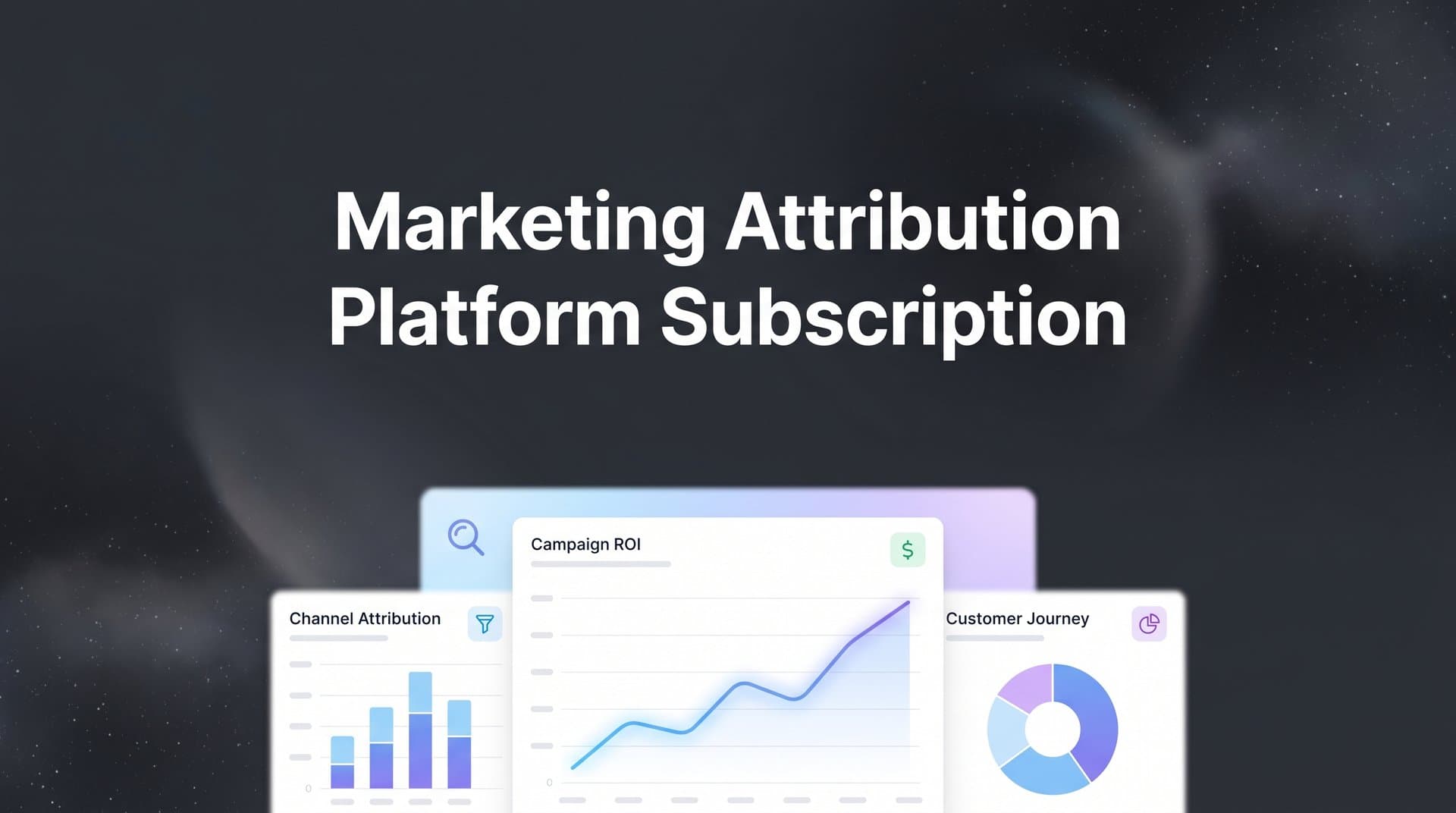
Running paid campaigns across Meta, Google, TikTok, and a handful of other platforms simultaneously is now the norm for most marketing teams. The problem is that each platform takes credit for conversions in its own reporting, leaving you with inflated numbers and no clear picture of what's actually driving revenue. A dedicated marketing attribution platform subscription solves this by giving you a single source of truth across every channel and touchpoint.
Choosing the right subscription comes down to a few key factors: your channel mix, team size, budget, and how complex your customer journey really is. The tools below were evaluated on multi-touch attribution capabilities, integration ecosystems, pricing transparency, data accuracy, and ease of use. Whether you're scaling a DTC brand, running B2B demand generation, or managing app install campaigns, there's a solution on this list built for your specific situation.
If you're newer to attribution concepts, it's worth understanding the difference between multi-touch attribution models before committing to a platform. And if you're already running paid ads, understanding how marketing attribution works will help you get more out of whichever tool you choose.
1. Cometly
Best for: Marketing teams and agencies wanting AI-powered attribution with real-time optimization recommendations.
Cometly is an AI-powered marketing attribution platform that connects your ad platforms, CRM, and website to track the full customer journey with server-side accuracy.
 9 Best Marketing Attribution Platform Subscriptions to Track ROI in 2026
Where This Tool Shines
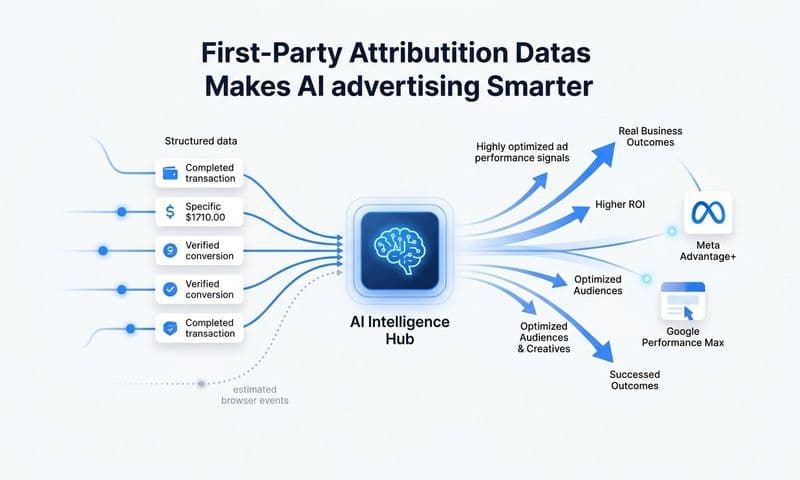
Cometly's biggest differentiator is the combination of server-side tracking and conversion sync. While browser-based tracking loses signal due to iOS restrictions and ad blockers, Cometly captures first-party event data server-side and sends enriched conversion data back to Meta, Google, TikTok, and other ad platforms. This means the algorithms powering your campaigns get better data, which leads to smarter optimization over time.
The AI layer adds another dimension. Rather than just showing you what happened, Cometly's AI Ads Manager surfaces actionable recommendations: which campaigns to scale, which to cut, and where budget is being wasted. The AI Chat feature lets you ask plain-language questions about your data without needing to build custom reports from scratch.
Key Features
AI-Powered Attribution: Surfaces optimization recommendations based on real attribution data, not last-click assumptions.
Server-Side Tracking: Captures conversion events accurately even when browser-based tracking fails due to privacy restrictions.
Conversion Sync: Sends enriched event data back to Meta, Google, TikTok, and more to improve ad platform targeting and bidding.
Multi-Touch Attribution: Maps every touchpoint across the full customer journey to show which channels actually contribute to conversions.
AI Chat: Lets you query your marketing data in natural language, making analysis accessible without advanced analytics skills.
Best For
Cometly is an excellent fit for performance marketers, growth teams, and agencies managing paid campaigns across multiple platforms. It's especially valuable for teams running Meta and Google ads who want to improve algorithm performance by feeding cleaner conversion data back into the platforms.
Pricing
Cometly offers subscription-based pricing tailored to your needs. Contact the Cometly team directly for current plan details and to find the right tier for your ad spend and team size.
2. Triple Whale
Best for: DTC e-commerce brands running primarily on Shopify who want first-party data attribution.
Triple Whale is an e-commerce attribution platform built around first-party data tracking, creative analytics, and deep Shopify integration.
 7 Best Funnel.io Alternatives for Marketing Data Analytics in 2026
Where This Tool Shines
Triple Whale was built specifically for the DTC world, and it shows. The platform's first-party pixel captures customer journey data without relying on third-party cookies, making it more resilient to iOS privacy changes. For Shopify brands spending heavily on Meta and TikTok, this is a meaningful advantage when reconciling platform-reported ROAS against actual revenue.
The creative analytics component is a standout. Triple Whale breaks down performance by individual ad creative, helping media buyers understand which hooks, formats, and offers are actually driving purchases rather than just clicks.
Key Features
First-Party Pixel: Collects cookieless tracking data directly from your storefront for more accurate attribution.
Shopify Integration: Deep native connection to Shopify order data for closed-loop revenue attribution.
Creative Analytics: Breaks down ad performance by individual creative assets to identify what's resonating with buyers.
Customer Journey Mapping: Visualizes the full path to purchase for DTC customers across multiple touchpoints.
Best For
Triple Whale is purpose-built for Shopify-based DTC brands and e-commerce businesses with high paid social spend. It's less suited for B2B companies or teams with complex offline sales cycles.
Pricing
Triple Whale offers subscription tiers based on annual revenue. A free plan is available for smaller stores, with paid tiers scaling up as your business grows.
3. Northbeam
Best for: E-commerce brands that want customizable attribution models and media mix modeling in one platform.
Northbeam is a machine-learning-based attribution platform that gives e-commerce marketers granular control over how credit is assigned across their media mix.
 9 Best Conversion Tracking Software Options: Pricing Comparison for 2026
Where This Tool Shines
Northbeam goes deeper on attribution modeling than most e-commerce tools. You can compare multiple attribution models side by side and customize how credit is distributed across touchpoints, which is valuable when you're trying to understand the true contribution of upper-funnel channels like YouTube or display ads. The media mix modeling layer helps with budget allocation decisions beyond just last-click or first-click views.
Click and impression-based tracking gives a more complete picture for brands running awareness campaigns alongside direct-response ads, where view-through conversions matter but are often overcounted by ad platforms.
Key Features
Customizable Attribution Models: Build and compare multiple multi-touch models to find the one that best reflects your customer journey.
Media Mix Modeling: Analyze budget allocation across channels to optimize overall marketing efficiency.
Click and Impression Tracking: Captures both click-based and view-through conversion paths for a fuller attribution picture.
Attribution Window Flexibility: Adjust lookback windows and compare results across different time frames.
Best For
Northbeam suits data-driven e-commerce marketers who want more control over attribution methodology than plug-and-play tools offer. It's a strong fit for brands with significant upper-funnel spend who need to justify awareness investments.
Pricing
Northbeam uses custom subscription pricing based on ad spend and business needs. Reach out directly for a quote tailored to your volume.
4. Rockerbox
Best for: Omnichannel marketers running both digital and offline campaigns who need deduplicated attribution.
Rockerbox is an omnichannel attribution platform that unifies digital and offline marketing channels including TV, direct mail, and podcasts into a single attribution view.
 9 Best Accurate Ad Attribution Tools for Data-Driven Marketers in 2026
Where This Tool Shines
Most attribution platforms stop at digital. Rockerbox goes further by incorporating offline channels like linear TV, streaming audio, direct mail, and podcast sponsorships into the same attribution framework. This is critical for brands that invest heavily in brand-building channels alongside performance marketing, where the interaction effects between offline and online touchpoints can be significant.
Deduplicated conversion tracking is another strong point. Rather than letting every channel claim the same conversion, Rockerbox applies deduplication logic so you get an accurate count of actual conversions and a clearer read on each channel's true contribution.
Key Features
Offline Channel Attribution: Tracks TV, direct mail, podcasts, and other non-digital channels alongside your digital spend.
Deduplicated Conversions: Eliminates double-counting across channels so your conversion totals reflect reality.
Incrementality Testing: Measures the true incremental lift of marketing channels beyond baseline conversions.
Media Mix Analysis: Provides a holistic view of how your full media mix contributes to revenue.
Best For
Rockerbox is ideal for mid-market and enterprise brands running integrated campaigns across digital and offline channels. It's particularly well suited for consumer brands that advertise on streaming platforms, podcasts, or direct mail alongside paid social and search.
Pricing
Rockerbox uses custom subscription pricing. Contact their team for a quote based on your channel mix and tracking volume.
5. HubSpot Marketing Hub
Best for: B2B marketing teams already using HubSpot CRM who want native closed-loop attribution reporting.
HubSpot Marketing Hub is an all-in-one marketing platform with built-in multi-touch attribution reporting tied natively to HubSpot's CRM and deal pipeline.
 9 Best Attribution Software for B2B SaaS in 2026
Where This Tool Shines
The biggest advantage HubSpot offers for attribution is native CRM integration. Because your contact records, deal stages, and revenue data all live in the same system as your marketing data, you get genuinely closed-loop reporting without needing to stitch together data from multiple tools. You can see which campaigns influenced deals that actually closed, not just which ones generated form fills.
For B2B teams already running email, landing pages, and workflows inside HubSpot, adding attribution reporting feels natural rather than bolted on. The tradeoff is that attribution capabilities are tied to your HubSpot subscription tier, with the most useful reporting reserved for Professional and above.
Key Features
Multi-Touch Revenue Attribution: Attributes closed revenue to specific marketing touchpoints using several built-in models.
Native CRM Integration: Links marketing activity directly to contacts, deals, and revenue without third-party connectors.
Contact and Deal-Level Attribution: Tracks influence at both the individual contact and deal level for account-based analysis.
Marketing Automation: Combines attribution insights with email, workflows, and lead nurturing in one platform.
Best For
HubSpot Marketing Hub is the right choice for B2B companies that are already HubSpot customers or are considering adopting it as their CRM. Teams looking for a standalone attribution solution may find better value elsewhere.
Pricing
Marketing Hub Professional starts at $890/month and Enterprise at $3,600/month. Attribution reporting is available in Professional and above tiers.
6. Ruler Analytics
Best for: Lead generation businesses that need closed-loop attribution connecting marketing touchpoints to CRM revenue with call tracking included.
Ruler Analytics is a closed-loop attribution platform that tracks visitors across sessions, ties form fills and phone calls back to their original marketing source, and syncs that data to your CRM and ad platforms.
 8 Best Attribution Tools with Onboarding Support in 2026
Where This Tool Shines
Ruler Analytics is particularly strong for service businesses and B2B companies where phone calls are a primary conversion point. The platform assigns dynamic phone numbers to track which ad, campaign, or channel generated each call, then pushes that attribution data back to Google Analytics, Google Ads, and Facebook Ads. This closes the loop between marketing spend and actual revenue recorded in your CRM.
For agencies managing lead-gen clients, Ruler provides a clear line from ad click to closed deal, which is often the missing piece when trying to prove marketing ROI to stakeholders.
Key Features
Closed-Loop Attribution: Connects marketing touchpoints to CRM revenue for a complete view of marketing ROI.
Call Tracking: Attributes inbound phone calls to their originating marketing source using dynamic number insertion.
Form and Chat Tracking: Captures form submissions and live chat conversions with full marketing source attribution.
Ad Platform Integration: Pushes attribution data back to Google Ads and Facebook Ads to improve bidding and targeting.
Best For
Ruler Analytics is a strong fit for lead generation businesses, professional services firms, and B2B companies where phone calls and form submissions are the primary conversion events. It works well alongside CRMs like Salesforce and HubSpot.
Pricing
Subscription plans start around $200/month, with pricing scaling based on tracking volume and the number of tracked visitors per month.
7. Dreamdata
Best for: B2B SaaS companies with long, multi-stakeholder sales cycles that need account-based attribution modeling.
Dreamdata is a B2B revenue attribution platform that maps multi-stakeholder buying journeys at the account level, designed for SaaS companies with complex, long-cycle sales processes.
 9 Best B2B SaaS Attribution Platforms Reviewed for 2026
Where This Tool Shines
B2B attribution is genuinely hard because multiple people from the same company interact with your marketing before a deal closes. Dreamdata handles this by attributing at the account level, not just the individual contact level. You can see how content, ads, and organic channels contributed to a deal across every stakeholder involved in the buying process.
The organic and content attribution capabilities are a notable addition. Most attribution platforms focus on paid channels, but Dreamdata also tracks how blog posts, case studies, and SEO-driven traffic contribute to pipeline, which is valuable for SaaS companies with strong inbound content programs.
Key Features
Account-Based Attribution: Maps touchpoints across all contacts at an account to reflect how B2B buying decisions actually happen.
Multi-Stakeholder Mapping: Tracks every person involved in the buying journey, not just the primary contact.
Content and Organic Attribution: Measures the revenue influence of blog content, SEO traffic, and organic channels.
CRM Integration: Connects with Salesforce and HubSpot to tie marketing activity to pipeline and closed-won revenue.
Best For
Dreamdata is built for B2B SaaS companies with sales cycles measured in weeks or months and buying committees of multiple stakeholders. It's less suited for transactional e-commerce or single-touchpoint conversion models.
Pricing
A free tier is available for teams getting started. Paid subscriptions unlock advanced attribution features and support higher data volumes. Contact Dreamdata for enterprise pricing.
8. AppsFlyer
Best for: Mobile app marketers running install campaigns who need fraud protection and privacy-compliant attribution.
AppsFlyer is a leading mobile attribution and marketing analytics platform that tracks app installs, in-app events, and user journeys with built-in fraud protection and SKAdNetwork support.
Where This Tool Shines
AppsFlyer has built its reputation on mobile attribution accuracy and fraud prevention. The platform's Protect360 fraud solution filters out invalid traffic and fraudulent installs before they skew your data, which is a persistent problem in mobile advertising. For app marketers spending on networks, DSPs, and social channels simultaneously, having clean attribution data is essential for making sound budget decisions.
Privacy compliance is another area where AppsFlyer excels. With SKAdNetwork support for iOS and Privacy Sandbox readiness for Android, the platform is designed to operate accurately within Apple and Google's privacy frameworks, which is increasingly non-negotiable for mobile marketers.
Key Features
Mobile Attribution: Tracks app installs and in-app events back to their originating ad campaigns and channels.
Fraud Protection: Identifies and filters invalid traffic and fraudulent installs to keep your data clean.
Deep Linking: Creates seamless user experiences by routing users to the right in-app destination from any channel.
SKAdNetwork Support: Fully supports Apple's privacy-preserving attribution framework for iOS campaigns.
Best For
AppsFlyer is the right choice for mobile-first businesses, app developers, and growth teams running user acquisition campaigns across ad networks, social platforms, and DSPs. It's less relevant for web-only businesses without a mobile app.
Pricing
AppsFlyer offers a Zero plan (free tier) for apps with lower conversion volumes. Paid plans scale based on the number of conversions tracked per month.
9. Hyros
Best for: High-ticket businesses, info product creators, and coaching businesses with long sales cycles and phone-based conversions.
Hyros is an AI-powered ad tracking platform built for businesses with long attribution windows, high-ticket offers, and complex funnels that standard platform tracking consistently misattributes.
Where This Tool Shines
Hyros was built for a specific type of business that most attribution platforms serve poorly: high-ticket funnels where the time between first ad click and final purchase can span weeks or months. The platform uses long attribution windows and email-based tracking to follow prospects through webinars, email sequences, and sales calls before a conversion happens, giving you a much clearer read on which ad actually started the journey.
Call tracking with ad source attribution is particularly useful for coaching and consulting businesses where sales happen over the phone. Knowing which Facebook or YouTube ad generated a call that eventually closed as a $5,000 client is the kind of insight that changes how you allocate budget.
Key Features
Long Attribution Windows: Tracks conversions over extended time periods to match high-ticket sales cycles accurately.
Call Tracking: Attributes inbound sales calls back to the original ad that generated the lead.
AI Optimization Recommendations: Surfaces insights on which ads are driving the highest-value conversions, not just the most conversions.
Ad Platform Integration: Connects with Meta, Google, YouTube, and other major ad platforms for consolidated reporting.
Best For
Hyros is best suited for info product businesses, online educators, coaches, consultants, and high-ticket e-commerce brands where standard 7-day attribution windows miss a large portion of actual conversions.
Pricing
Subscription plans start around $99/month, with higher tiers available for businesses with larger ad spend and higher tracking volumes.
Which Attribution Platform Is Right for You
The best marketing attribution platform subscription is the one that matches where you spend your ad dollars and how your customers actually buy. There's no universal answer, but there are clear patterns worth considering.
For e-commerce brands on Shopify with heavy paid social spend, Triple Whale and Northbeam are purpose-built for your world. Triple Whale's first-party pixel and creative analytics make it a natural fit for DTC brands, while Northbeam suits teams that want deeper control over attribution modeling and media mix analysis.
B2B SaaS and lead generation teams have different needs entirely. Dreamdata handles the complexity of multi-stakeholder account-based buying journeys, while Ruler Analytics is the better choice when phone calls and form submissions are your primary conversion events. HubSpot Marketing Hub is worth serious consideration if you're already in the HubSpot ecosystem and want attribution tied directly to your CRM pipeline.
If you're running omnichannel campaigns that include TV, podcasts, or direct mail alongside digital, Rockerbox is one of the few platforms that handles offline attribution well. And for mobile-first businesses, AppsFlyer remains the standard for app install attribution with fraud protection built in. Hyros fills a specific but important gap for high-ticket funnels where standard attribution windows fall short.
For teams that want AI-powered attribution with accurate server-side tracking and the ability to feed better conversion data back to Meta, Google, and other ad platforms, Cometly is worth a close look. It's designed for performance marketers who need more than a dashboard: they need recommendations they can act on immediately to improve campaign efficiency.
If that sounds like your team, Get your free demo and see how Cometly captures every touchpoint, connects them to real revenue, and helps you scale your campaigns with confidence.