Marketing data scattered across Google Ads, Meta, your CRM, and analytics platforms makes it nearly impossible to know which campaigns actually drive revenue. You're left guessing which channels deserve more budget and which are quietly bleeding money. The right marketing data analytics platform changes that by unifying your data, connecting every touchpoint to real outcomes, and showing you exactly where to double down.
The best platforms don't just collect data—they make it actionable. They integrate seamlessly with your existing stack, track the full customer journey despite browser restrictions and iOS limitations, and surface insights that directly improve your ROI. Here are the top marketing data analytics platforms that help growth-focused marketers turn fragmented data into revenue-driving decisions.
1. Cometly
Best for: Marketers who need accurate multi-touch attribution and AI-powered optimization across all channels.
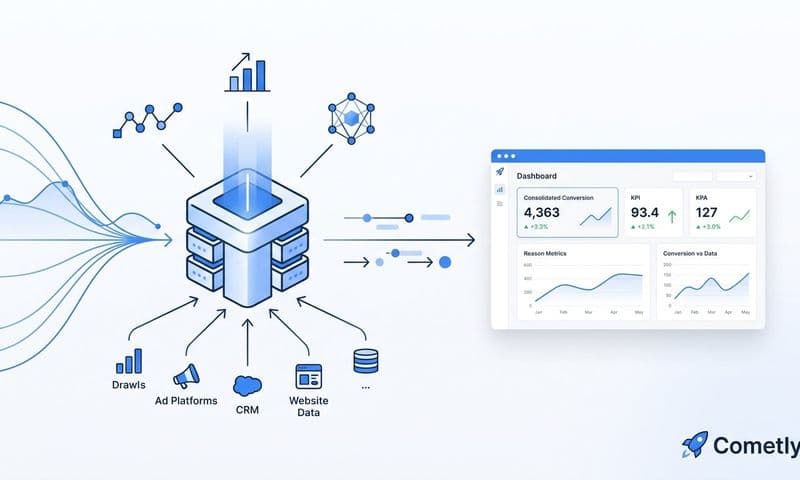
Cometly is a marketing attribution and analytics platform that tracks the entire customer journey from first ad click to final conversion, connecting your ad platforms, CRM, and website data in real time.
 9 Best Marketing Data Analytics Platforms to Drive Revenue in 2026
Where This Tool Shines
Cometly solves the attribution puzzle that keeps most marketers guessing. It captures every touchpoint—ad clicks, website visits, form submissions, CRM events—and connects them to actual revenue. This complete view lets you see which campaigns, ads, and channels truly convert, not just which ones get credit in last-click models.
The platform's server-side tracking bypasses iOS limitations and browser restrictions that cripple pixel-based tracking. You get accurate data even as privacy changes continue reshaping digital marketing. The AI analyzes this enriched data to identify high-performing campaigns and recommend where to scale spend.
Key Features
Multi-Touch Attribution: Track every customer interaction across all marketing touchpoints to understand the full journey.
AI Ads Manager: Get AI-powered recommendations on which ads and campaigns to scale based on actual conversion data.
Server-Side Tracking: Capture accurate conversion data that bypasses iOS restrictions and ad blockers.
Conversion Sync: Feed enriched conversion events back to Meta, Google, and other ad platforms to improve their targeting algorithms.
Real-Time Analytics Dashboard: Monitor campaign performance and attribution data as it happens, not hours later.
Best For
Digital marketers and agencies running multi-channel paid campaigns who need to prove ROI and optimize ad spend with confidence. Particularly valuable for businesses spending $50K+ monthly on ads across multiple platforms where accurate attribution directly impacts scaling decisions.
Pricing
Custom pricing based on monthly ad spend. Demo available to see the platform in action with your actual data.
2. Google Analytics 4
Best for: Businesses wanting comprehensive free web analytics with predictive insights and Google Ads integration.
Google Analytics 4 is Google's event-based analytics platform for tracking website and app performance with machine learning-powered insights.
 11 Best Conversion Optimization Tools to Boost Your ROI in 2026
Where This Tool Shines
GA4 represents Google's complete reimagining of web analytics for a privacy-first world. Unlike Universal Analytics' session-based model, GA4 tracks events and user properties, giving you flexibility to measure what matters most to your business. The platform's predictive metrics use machine learning to forecast purchase probability and churn risk.
The free tier offers remarkable depth for businesses of any size. Cross-platform tracking connects web and app behavior, while native Google Ads integration makes campaign optimization straightforward. The interface has a learning curve, but the insights justify the investment.
Key Features
Event-Based Data Model: Flexible tracking system that measures specific user actions instead of rigid pageview sessions.
Predictive Metrics: Machine learning forecasts purchase probability, churn likelihood, and revenue potential for audience segments.
Cross-Platform Tracking: Unified view of user behavior across website and mobile apps in one property.
Native Google Ads Integration: Seamless connection to Google Ads for conversion tracking and audience building.
Free Comprehensive Analytics: Enterprise-grade analytics at no cost for most businesses, with generous data limits.
Best For
Businesses of all sizes that want robust analytics without licensing fees, especially those heavily invested in Google's advertising ecosystem. The platform works well for content sites, e-commerce, and SaaS companies tracking user engagement.
Pricing
Free for standard implementation. GA360 enterprise version available with higher data limits and SLA guarantees.
3. Adobe Analytics
Best for: Enterprise organizations needing advanced segmentation and deep integration with Adobe's marketing stack.
Adobe Analytics is an enterprise analytics solution offering advanced segmentation, real-time data processing, and comprehensive integration with Adobe Experience Cloud.
 11 Best Enterprise Marketing Analytics Software Platforms in 2026
Where This Tool Shines
Adobe Analytics delivers enterprise-grade analytics with segmentation capabilities that go far beyond basic demographics. You can create complex audience segments based on behavioral patterns, lifetime value, and cross-channel interactions. These segments sync across Adobe's marketing tools for consistent personalization.
The platform processes data in real time, letting you respond to trends as they emerge rather than analyzing yesterday's performance. Custom attribution modeling gives you control over how credit gets assigned across touchpoints, and the AI-powered Analysis Workspace surfaces insights automatically.
Key Features
Advanced Segmentation: Build sophisticated audience segments using behavioral data, demographics, and custom variables.
Predictive Analytics with AI: Adobe Sensei identifies anomalies, forecasts trends, and recommends optimization opportunities.
Real-Time Data Processing: Monitor campaign performance and user behavior as events happen, not hours later.
Custom Attribution Modeling: Define your own attribution rules to match your specific customer journey and business model.
Adobe Experience Cloud Integration: Seamless data sharing with Adobe Target, Campaign, and other Experience Cloud products.
Best For
Large enterprises with complex marketing operations across multiple channels and regions. Most valuable for organizations already using Adobe's marketing suite or those needing advanced segmentation for personalization at scale.
Pricing
Enterprise pricing model based on server calls and features. Contact Adobe for custom quote.
4. Mixpanel
Best for: Product teams and SaaS companies focused on user behavior analysis and retention metrics.
Mixpanel is a product analytics platform specializing in user behavior tracking, interactive funnel analysis, and cohort-based retention reporting.
 9 Best Marketing Data Analytics Platforms to Drive Revenue in 2026
Where This Tool Shines
Mixpanel makes user behavior analysis accessible without requiring SQL knowledge. The interactive funnel reports show exactly where users drop off in conversion flows, letting you identify friction points quickly. Drag and drop to build queries, adjust time ranges, and compare segments in seconds.
The retention and cohort analysis tools are particularly powerful for subscription businesses. Track how different user groups behave over time, measure feature adoption, and quantify the impact of product changes on engagement. Real-time updates mean you can monitor campaign launches and product releases as they happen.
Key Features
Interactive Funnel Reports: Visual conversion funnels that show drop-off rates and let you drill into specific user segments.
Retention and Cohort Analysis: Track how user groups engage over time and identify patterns that predict long-term value.
A/B Test Analysis: Compare experiment variants with statistical significance testing built in.
Self-Serve Queries: Build custom reports without SQL using an intuitive point-and-click interface.
Real-Time Data Updates: See user actions and campaign results as they happen, not after batch processing.
Best For
Product-led SaaS companies, mobile apps, and digital products where understanding user behavior drives growth. Particularly valuable for teams that need to democratize analytics beyond technical analysts.
Pricing
Free tier for up to 20 million monthly events. Growth plans start at $20/month and scale with usage.
5. HubSpot Marketing Analytics
Best for: Inbound marketing teams using HubSpot who need campaign analytics tightly integrated with CRM data.
HubSpot Marketing Analytics is the built-in analytics suite within HubSpot's marketing platform, offering campaign performance tracking across channels with native CRM integration.
 10 Best Enterprise Channel Analytics Software To Maximize Marketing ROI
Where This Tool Shines
HubSpot's analytics shine when you need to connect marketing activity directly to sales outcomes. Because the analytics live inside the same platform as your CRM, you can track a contact's entire journey from first website visit through deal closure without integration headaches. Every email open, form submission, and content download connects to the contact record.
The revenue attribution reports show which campaigns and content pieces influence deals, helping you justify marketing spend to leadership. Custom report builders let you create dashboards tailored to your specific KPIs, and the interface is significantly more intuitive than most enterprise analytics tools.
Key Features
Native CRM Integration: Automatic connection between marketing analytics and sales pipeline data without middleware.
Multi-Channel Campaign Tracking: Monitor performance across email, social, ads, and content in unified reports.
Revenue Attribution Reporting: See which marketing touchpoints influence closed deals and revenue.
Custom Report Builder: Create tailored dashboards and reports without technical expertise.
Email and Social Analytics: Deep insights into email engagement, social reach, and content performance.
Best For
B2B companies and agencies already using HubSpot for marketing automation and CRM. Most valuable when you need tight alignment between marketing and sales with shared visibility into the full funnel.
Pricing
Included with HubSpot Marketing Hub. Professional tier starts at $800/month, with advanced analytics in Enterprise tier.
6. Tableau
Best for: Organizations needing powerful data visualization to transform complex marketing data into executive-ready dashboards.
Tableau is a data visualization platform that connects to hundreds of data sources and transforms marketing data into interactive, shareable dashboards.
 11 Best Marketing Analytics Tools to Track and Optimize Campaign Performance in 2026
Where This Tool Shines
Tableau excels at making complex data understandable through visual storytelling. The drag-and-drop interface lets you build sophisticated visualizations without coding—combine data from Google Ads, your CRM, web analytics, and offline sources into a single interactive dashboard. Executives can explore the data themselves rather than waiting for static reports.
The platform connects to over 100 data sources natively, from SQL databases to cloud applications to spreadsheets. Real-time collaboration features let teams annotate dashboards, share insights, and make data-driven decisions together. Mobile-optimized views ensure your metrics are accessible anywhere.
Key Features
Drag-and-Drop Visualization: Build complex charts and dashboards without SQL or coding knowledge.
Connects to 100+ Data Sources: Native integrations with databases, cloud apps, spreadsheets, and marketing platforms.
Real-Time Collaboration: Teams can share dashboards, add comments, and explore data together.
Mobile-Optimized Dashboards: Automatically formatted views for tablets and smartphones.
Embedded Analytics Options: Integrate Tableau visualizations into other applications and portals.
Best For
Marketing teams that need to combine data from multiple sources into executive presentations and performance dashboards. Particularly valuable for agencies reporting to multiple clients or enterprises with complex data infrastructure.
Pricing
Creator license from $75/user/month. Viewer licenses available at lower cost for dashboard consumers.
7. Amplitude
Best for: Product-led companies needing deep behavioral analysis and user journey mapping with experimentation capabilities.
Amplitude is a digital analytics platform specializing in behavioral cohort analysis, user journey mapping, and integrated experimentation for product-focused organizations.
 9 Best Marketing Data Analytics Platforms to Drive Revenue in 2026
Where This Tool Shines
Amplitude treats analytics as a product growth engine rather than just a reporting tool. The behavioral cohort analysis goes beyond basic segmentation—you can track how specific user actions predict long-term retention and revenue. The platform identifies "aha moments" where users suddenly become engaged, helping you optimize onboarding flows.
User journey mapping visualizes the actual paths people take through your product, revealing unexpected workflows and drop-off points. The integrated experimentation framework lets you test hypotheses directly in the analytics platform, measuring impact on the metrics that matter. Predictive analytics forecast which users are likely to convert or churn.
Key Features
Behavioral Cohort Analysis: Track user groups based on actions taken and measure long-term engagement patterns.
User Journey Mapping: Visualize the actual paths users take through your product to identify optimization opportunities.
Experimentation and A/B Testing: Built-in testing framework with statistical analysis and impact measurement.
Predictive Analytics: Machine learning forecasts which users will convert, upgrade, or churn.
Real-Time Streaming: Process user events as they happen for immediate insights and personalization.
Best For
Product-led growth companies, mobile apps, and digital platforms where user behavior drives business outcomes. Most effective for teams that run frequent experiments and need to quickly understand feature adoption.
Pricing
Free tier available for up to 10 million actions per month. Growth and Enterprise plans with custom pricing.
8. Looker (Google Cloud)
Best for: Technical teams needing a semantic modeling layer for unified analytics across marketing and business data.
Looker is a business intelligence platform with SQL-based semantic modeling that creates a single source of truth for analytics across your entire organization.
Where This Tool Shines
Looker's LookML modeling language creates a semantic layer that defines business logic once and applies it everywhere. Marketing, sales, and finance teams query the same data with consistent definitions—no more arguments about how conversion rate is calculated. This approach scales beautifully as your data complexity grows.
The platform's Git-based version control treats analytics like software development. Changes to data models are tracked, reviewed, and deployed systematically. The API-first architecture lets you embed analytics directly into other applications, and cross-database queries combine data from multiple sources without ETL pipelines.
Key Features
LookML Semantic Modeling: Define business logic once in code and reuse across all reports and dashboards.
Embedded Analytics: Integrate Looker visualizations and reports directly into your applications.
Git-Based Version Control: Track changes to data models with branching, merging, and code review workflows.
Cross-Database Queries: Combine data from multiple databases in a single query without moving data.
API-First Architecture: Programmatic access to all platform features for custom integrations and automation.
Best For
Data-mature organizations with technical analytics teams that need governance and scalability. Most valuable when multiple departments need consistent analytics from complex data infrastructure.
Pricing
Enterprise pricing model. Contact Google Cloud for custom quote based on users and features.
9. Heap
Best for: Teams wanting automatic event capture that enables retroactive analysis without pre-defining tracking.
Heap is an analytics platform with automatic event capture technology that records all user interactions, allowing you to analyze behavior retroactively without setting up tracking in advance.
Where This Tool Shines
Heap's autocapture eliminates the tracking implementation bottleneck that slows most analytics projects. Install one snippet and the platform automatically records every click, form submission, page view, and interaction. When you later decide to analyze a specific behavior, the historical data is already there—no waiting for tracking to accumulate.
This retroactive analysis capability changes how teams work with data. Product managers can explore user behavior without filing engineering tickets. Session replay shows exactly what users experienced during their journey. The quick implementation means you can start getting insights within hours, not weeks of development sprints.
Key Features
Autocapture of All User Interactions: Automatically records every click, view, and interaction without manual event definition.
Retroactive Analytics: Analyze historical user behavior even if you didn't define the event when it occurred.
Session Replay: Watch recordings of actual user sessions to understand experience and identify friction.
Funnel and Path Analysis: Build conversion funnels and explore user journeys using autocaptured data.
Quick Implementation: Start collecting data within hours with minimal technical setup.
Best For
Fast-moving product teams and startups that need analytics quickly without extensive engineering resources. Particularly valuable when you're still discovering which metrics matter most and need flexibility to explore.
Pricing
Free tier available for smaller implementations. Growth and Pro plans with custom pricing based on sessions.
Making the Right Choice
The right marketing data analytics platform depends on your specific needs and existing stack. If accurate attribution across paid channels is your priority, Cometly delivers the multi-touch tracking and AI-powered optimization that directly improve ad ROI. For comprehensive free analytics with Google Ads integration, GA4 remains hard to beat despite its learning curve.
Enterprise organizations with complex segmentation needs and Adobe's marketing suite should consider Adobe Analytics. Product-led companies benefit from Mixpanel's user behavior focus or Amplitude's journey mapping. HubSpot users get the most value from the native Marketing Analytics integration.
When you need powerful visualization across disparate data sources, Tableau transforms raw data into executive-ready insights. Looker serves technical teams building a governed semantic layer, while Heap's autocapture works best for fast-moving teams that can't wait for manual tracking implementation.
The common thread? The best platform connects your marketing activity to actual business outcomes. Whether that's revenue attribution, user retention, or campaign optimization, choose the tool that makes your specific success metrics visible and actionable.
Ready to elevate your marketing game with precision and confidence? Discover how Cometly's AI-driven recommendations can transform your ad strategy—Get your free demo today and start capturing every touchpoint to maximize your conversions.