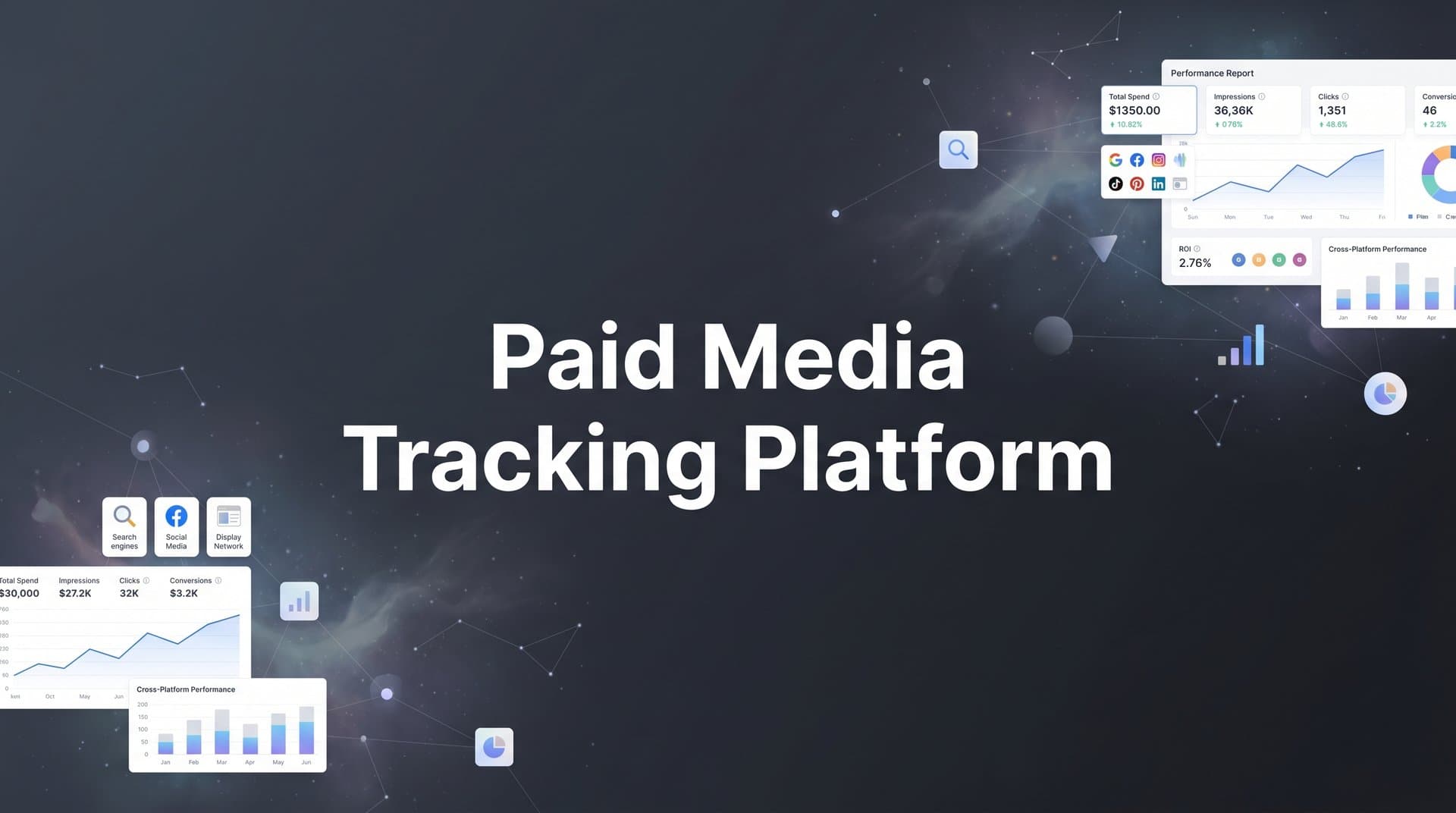
Running paid media across Meta, Google, TikTok, LinkedIn, and beyond sounds like a growth marketer's dream. In practice, it often feels like flying blind. Each platform reports its own numbers, attribution windows overlap, and privacy changes have made browser-based pixels increasingly unreliable. The result? You're spending real money without a clear picture of what's actually driving revenue.
The right paid media tracking platform cuts through that noise. It connects your ad spend to actual conversions, not just clicks or impressions, giving you the clarity to scale what works and cut what doesn't. When evaluating the media buying platforms below, we focused on cross-platform tracking capabilities, attribution accuracy, ease of integration, reporting depth, and overall value for the investment.
Whether you're managing ad tracking tools for a lean team or overseeing complex multi-channel campaigns, and whether you need rock-solid conversion tracking or full-funnel attribution modeling, there's a platform built for your situation. Here are the top paid media tracking platforms worth your attention in 2026.
1. Cometly
Best for: Marketers and agencies who need accurate multi-touch attribution powered by AI
Cometly is an AI-powered marketing attribution platform that connects your ad platforms, CRM, and website to reveal which paid media actually drives revenue.
 9 Best Paid Media Tracking Platforms to Maximize Ad ROI in 2026
Where This Tool Shines
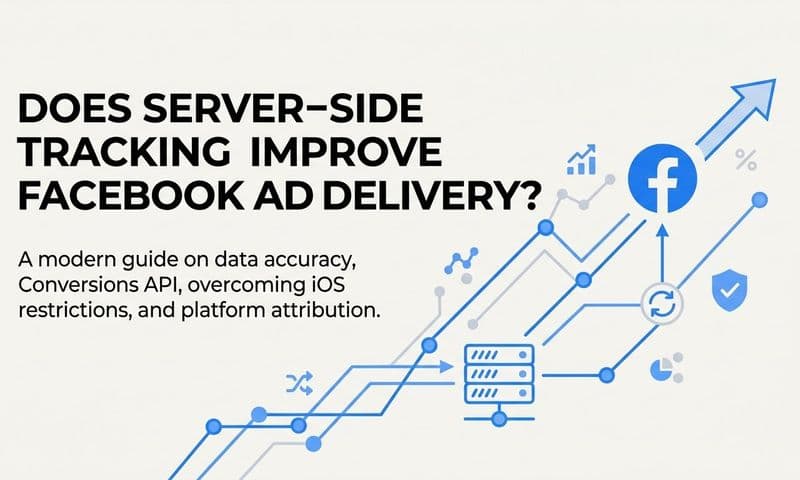
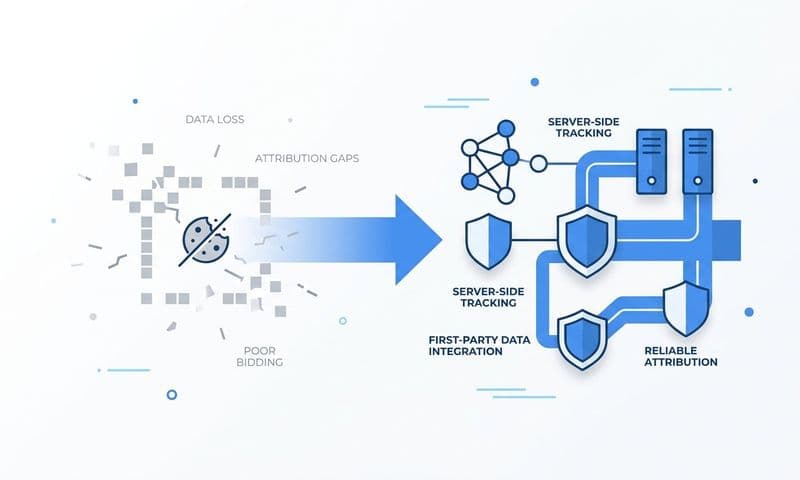
Cometly's biggest differentiator is how it handles the modern tracking problem. Rather than relying on browser-based pixels that get blocked by ad blockers, iOS restrictions, or browser privacy settings, Cometly uses server-side tracking to capture conversion data with far greater accuracy. This means you're making budget decisions based on complete data, not a partial picture.
Beyond tracking, Cometly moves into prescriptive territory. Its AI analyzes campaign performance across every channel and surfaces actionable recommendations: which ads to scale, where to reallocate budget, and which campaigns are underperforming relative to their spend. The AI Chat feature lets you ask plain-language questions about your data and get instant answers without building custom reports.
Key Features
Server-Side Tracking: Captures conversion events at the server level, bypassing browser limitations and delivering more complete, accurate data for attribution.
Multi-Touch Attribution: Tracks every paid touchpoint across channels with customizable attribution models so you can see the full path to conversion.
AI-Powered Recommendations: Identifies high-performing ads and campaigns, then suggests specific budget moves to maximize ROI across every channel.
Conversion Sync: Feeds enriched, conversion-ready event data back to Meta, Google, and other ad platforms, improving their algorithmic targeting and optimization.
AI Chat: Lets you query your marketing data in plain language, making it fast to surface insights without manual report building.
Best For
Cometly is built for digital marketers, growth teams, and agencies managing paid campaigns across multiple channels who need accurate attribution data and AI-driven guidance to scale confidently. It's particularly valuable for teams frustrated by the gap between what ad platforms report and what's actually converting.
Pricing
Custom pricing based on ad spend volume. A demo is available on request at cometly.com, making it easy to see the platform in action before committing.
2. Triple Whale
Best for: Ecommerce brands on Shopify that want unified paid media reporting
Triple Whale is an ecommerce-focused analytics and attribution platform with deep Shopify integration and a centralized dashboard for paid media performance.
 7 Best Funnel.io Alternatives for Marketing Data Analytics in 2026
Where This Tool Shines
Triple Whale was built with Shopify merchants in mind, and that focus shows. It pulls real-time revenue data directly from your store and maps it against ad spend across Meta, Google, TikTok, and more, all inside a single summary dashboard. For ecommerce teams who live and die by ROAS, having that unified view without jumping between native ad platforms is a genuine time-saver.
Its creative analytics layer is worth highlighting. Triple Whale gives you performance data at the individual ad creative level, helping you understand not just which campaigns are working but which specific images, videos, or copy angles are driving purchases.
Key Features
Triple Pixel: A first-party, cookieless tracking pixel that captures conversion data beyond what browser-based pixels typically catch.
Creative Analytics: Measures performance at the ad creative level to identify which visuals and messaging drive the best results.
Shopify-Native Integration: Syncs directly with Shopify for real-time revenue attribution tied to actual orders.
Summary Dashboard: Combines all paid channel data into one view for fast daily performance reviews.
Best For
Ecommerce brands running on Shopify that want a purpose-built attribution tool with strong creative performance insights. Less suited for non-ecommerce businesses or those outside the Shopify ecosystem.
Pricing
Plans start around $100/month and scale based on revenue volume and feature tier. Higher tiers unlock advanced attribution modeling and additional analytics capabilities.
3. Hyros
Best for: High-ticket funnels, info products, and businesses with complex or phone-based sales cycles
Hyros is an attribution tracking platform designed specifically for businesses where the path from ad click to closed sale is long, complex, or involves offline touchpoints like phone calls.
 7 Best Northbeam Alternatives for Small Business in 2026
Where This Tool Shines
Most attribution tools are optimized for quick ecommerce transactions. Hyros takes a different approach, built for funnels where a prospect might click an ad today, attend a webinar next week, and speak with a sales rep before converting. Its long-window attribution tracking keeps those early touchpoints visible throughout the entire sales cycle.
The call tracking integration is a standout feature for businesses that close deals over the phone. Hyros can tie phone conversions back to the original ad that generated the lead, giving you attribution data that most platforms simply can't capture.
Key Features
Long-Window Attribution: Tracks conversions across extended sales cycles, keeping ad touchpoints visible for weeks or months.
Call Tracking Integration: Connects phone-based conversions back to the originating paid media source.
AI-Driven Optimization: Provides budget reallocation suggestions based on which ad sources are actually driving closed revenue.
Print Tracking: Extends attribution to direct mail campaigns, useful for businesses running offline media alongside digital ads.
Best For
Coaches, course creators, agencies, and high-ticket service businesses with long sales cycles or significant phone sales volume. Not the best fit for standard ecommerce or quick-conversion businesses.
Pricing
Starts around $199/month, with higher tiers for larger ad spend volumes. Pricing is positioned at the premium end of the market, reflecting its specialization.
4. Northbeam
Best for: Established ecommerce brands that need both granular attribution and high-level channel planning
Northbeam is a multi-touch attribution and media mix modeling platform designed for ecommerce brands that want both day-to-day attribution insights and strategic budget planning capabilities.
 9 Best Attribution Tools for Multiple Ad Platforms in 2026
Where This Tool Shines
Northbeam combines two approaches that are often sold separately: multi-touch attribution for granular, channel-level performance data and media mix modeling (MMM) for top-down budget planning. Having both inside one platform gives marketing teams a more complete picture than either method alone can provide.
Its incrementality testing capability is particularly valuable. Rather than relying solely on attribution models, Northbeam can help you measure the true incremental lift a campaign generates, separating real impact from correlation.
Key Features
Multi-Touch Attribution: Customizable lookback windows and attribution models for granular channel-level performance analysis.
Media Mix Modeling: Top-down statistical modeling to guide channel-level budget allocation and long-term planning.
Incrementality Testing: Measures true lift from campaigns to validate whether your ads are actually driving incremental conversions.
Creative-Level Insights: Breaks down performance to the individual creative level across paid channels.
Best For
Mid-to-large ecommerce brands with meaningful ad spend who want a sophisticated measurement platform that goes beyond standard attribution. Best suited for teams with the analytical maturity to act on MMM insights.
Pricing
Custom pricing, typically positioned for brands with significant monthly ad spend. Prospective customers should contact Northbeam directly for a tailored quote.
5. Rockerbox
Best for: Brands running paid media across both digital and traditional channels
Rockerbox is a marketing measurement platform that unifies tracking across digital ads, TV, podcasts, direct mail, and other traditional paid media channels.
 9 Best Conversion Value Optimization Software Tools in 2026
Where This Tool Shines
Most attribution platforms are built exclusively for digital channels. Rockerbox stands out by extending measurement to traditional media like linear TV, connected TV, podcasts, and direct mail. If your media mix includes offline channels alongside paid digital, Rockerbox gives you a single place to measure all of it.
Its deduplication engine is another strength. When a single conversion is claimed by multiple platforms (a common problem with overlapping attribution windows), Rockerbox applies deduplication logic to give you a cleaner, more accurate conversion count rather than inflated numbers from self-reporting platforms.
Key Features
Cross-Channel Tracking: Spans digital ads, TV, podcasts, and direct mail in a unified measurement framework.
Multi-Touch Attribution: First-party data collection with flexible attribution models for digital touchpoints.
Deduplicated Conversion Reporting: Removes double-counting across platforms to give you accurate, consolidated conversion data.
Journey-Level Visibility: Shows the full path to purchase, including both online and offline touchpoints.
Best For
Brands with diverse media mixes that include traditional channels alongside digital paid media. Particularly useful for direct-to-consumer brands, subscription businesses, and companies investing in podcast or TV advertising.
Pricing
Custom pricing based on the number of channels and data volume. Contact Rockerbox directly for a quote tailored to your media mix.
6. Segment (by Twilio)
Best for: Data-driven teams that need a flexible event tracking infrastructure and data pipeline
Segment is a customer data platform (CDP) that acts as a central data pipeline, collecting paid media events and routing them to analytics tools, data warehouses, and downstream destinations.
 8 Best Attribution-Focused Platforms vs Segment: Which Approach Fits Your Marketing Stack in 2026
Where This Tool Shines
Segment is less of a reporting tool and more of a data infrastructure layer. It collects events from your web, mobile, and server sources, then routes that data wherever you need it: your analytics platform, your CRM, your data warehouse, or your ad platforms. For teams building a serious data stack, Segment eliminates the need to implement separate tracking for every destination.
Its identity resolution capabilities are particularly useful for paid media tracking. Segment can stitch together user behavior across devices and sessions, giving you a more complete view of how prospects interact with your ads before converting.
Key Features
Unified Event Tracking: Collects events from web, mobile, and server sources into a single, structured data layer.
400+ Integrations: Routes data to analytics platforms, marketing tools, and ad platforms without custom engineering for each destination.
Identity Resolution: Stitches user profiles across devices and sessions for more accurate cross-channel attribution.
Real-Time Data Pipeline: Streams event data to warehouses like BigQuery and Snowflake for custom analysis and reporting.
Best For
Engineering-forward marketing teams, data analysts, and growth teams that want full control over their data infrastructure. Requires technical resources to implement and maintain; not a plug-and-play reporting tool for non-technical users.
Pricing
A free tier is available for smaller data volumes. Paid plans start at approximately $120/month, with enterprise pricing for high-volume use cases.
7. Supermetrics
Best for: Analysts and agencies who need to pull paid media data into custom reports and BI tools
Supermetrics is a data connector tool that pulls paid media metrics from ad platforms directly into spreadsheets, BI tools, and data warehouses for custom reporting and analysis.
 9 Best Paid Media Tracking Platforms to Maximize Ad ROI in 2026
Where This Tool Shines
Supermetrics doesn't try to be an attribution platform. Instead, it excels at one thing: getting your paid media data out of ad platforms and into the tools where your team actually analyzes it. Whether that's Google Sheets, Looker Studio, Excel, or BigQuery, Supermetrics handles the data pipeline so analysts can focus on building insights rather than manually exporting CSVs.
The breadth of its connector library is impressive. With support for over 100 data sources, Supermetrics can pull from virtually every major ad platform, social channel, and marketing tool into a single, automated reporting workflow.
Key Features
100+ Platform Connectors: Pulls data from virtually every major ad platform, social network, and marketing data source.
Flexible Destinations: Direct integrations with Looker Studio, Google Sheets, Excel, BigQuery, and other popular reporting environments.
Automated Data Refresh: Schedules automatic data pulls so reports stay current without manual intervention.
Custom Query Builder: Allows analysts to specify exact metrics, dimensions, and filters for precise data extraction.
Best For
Marketing analysts, agencies managing multiple client accounts, and teams that build custom dashboards in Looker Studio or BI tools. Works best as a complement to attribution platforms rather than a standalone measurement solution.
Pricing
Starts around $39/month per connector, with pricing scaling based on the number of data sources and destinations. Agencies and teams with multiple connectors should factor in cumulative costs.
8. Adjust
Best for: Mobile app marketers tracking paid installs and in-app events across mobile ad networks
Adjust is a mobile measurement partner (MMP) built specifically for app marketers who need accurate attribution for paid installs, in-app events, and campaign performance across mobile ad networks.
Where This Tool Shines
Mobile attribution is a fundamentally different challenge from web-based paid media tracking, and Adjust is built from the ground up to handle it. It supports SKAdNetwork and Privacy Sandbox attribution, meaning it can measure iOS campaign performance accurately even within Apple's privacy framework, something that generic web analytics tools simply cannot do.
Its fraud prevention suite is a meaningful differentiator in the mobile space, where click injection, SDK spoofing, and invalid installs can quietly drain ad budgets. Adjust filters out fraudulent activity before it skews your attribution data or wastes spend.
Key Features
Mobile-Specific Attribution: Supports SKAdNetwork and Privacy Sandbox for accurate iOS and Android campaign measurement within privacy constraints.
Deep Linking: Creates seamless ad-to-app experiences that improve user flow and conversion rates from paid campaigns.
Fraud Prevention Suite: Filters invalid installs, click injection, and other forms of mobile ad fraud in real time.
Cohort Analysis: Segments users by acquisition source and tracks retention and lifetime value over time.
Best For
Mobile app marketers, gaming companies, and app-first businesses running paid user acquisition campaigns across iOS and Android. Not applicable for web-only businesses without a mobile app component.
Pricing
A free tier is available for early-stage apps and startups. Enterprise pricing is custom based on app scale and data volume. Contact Adjust for a tailored quote.
9. Google Analytics 4
Best for: Businesses that need free baseline paid media tracking with native Google Ads integration
Google Analytics 4 is Google's free, event-based analytics platform that provides baseline paid media tracking with native Google Ads integration and cross-device reporting capabilities.
Where This Tool Shines
For teams with limited budgets or those just getting started with paid media measurement, GA4 offers a surprisingly capable foundation. Its event-based data model is flexible enough to track custom conversions and micro-events across your site, and the native Google Ads integration means your campaign data flows in automatically without additional configuration.
GA4's Explorations feature adds meaningful depth for paid media analysis. You can build funnel reports, path analyses, and segment overlaps that go well beyond what standard dashboards show, which is useful for understanding where paid traffic drops off in the conversion journey.
Key Features
Event-Based Data Model: Tracks any interaction as an event, enabling flexible conversion tracking for both macro and micro goals.
Native Google Ads Integration: Automatically imports campaign, ad group, and keyword data for direct performance analysis within GA4.
Cross-Device Tracking: Uses Google Signals and user ID matching to track journeys across devices and sessions.
Explorations and Funnel Analysis: Provides advanced reporting templates for deeper paid media path and conversion analysis.
Best For
Businesses of all sizes looking for a free, solid baseline for paid media tracking, particularly those heavily invested in Google Ads. Keep in mind that GA4 has real limitations around multi-touch attribution accuracy and cross-platform measurement compared to dedicated attribution platforms.
Pricing
Completely free for the standard version. GA4 360, the enterprise tier with higher data limits and advanced features, is available at custom pricing through Google's sales team.
Which Paid Media Tracking Platform Is Right for You?
The right choice depends heavily on what you're selling, where you're advertising, and how sophisticated your measurement needs are. Here's a quick way to think through it.
If you're running multi-channel paid campaigns and need accurate attribution tied to actual revenue, Cometly is the strongest all-around choice. Its server-side tracking, multi-touch attribution, AI recommendations, and Conversion Sync make it a complete solution for marketers who want to move beyond vanity metrics and actually understand what's driving growth.
For Shopify-based ecommerce brands, Triple Whale's native integration and creative analytics make it a natural fit. If your business closes deals over the phone or runs long, complex funnels, Hyros is purpose-built for that scenario. Northbeam is worth exploring for established ecommerce brands that want both attribution and media mix modeling in one place.
Rockerbox fills a specific gap for brands running traditional media alongside digital. Segment and Supermetrics are infrastructure tools rather than attribution platforms, best used to power custom reporting workflows or feed data into other systems. Adjust is the clear choice for mobile-first businesses running paid user acquisition. And GA4 serves as a solid, free starting point, though it has real limitations once your attribution needs grow beyond Google's ecosystem.
The common thread across all of these tools is this: accurate data leads to better decisions. Ad platforms will always have an incentive to show their own numbers in the best possible light. An independent tracking platform gives you a source of truth you can actually trust.
If you're ready to stop guessing and start scaling with confidence, see what Cometly can do for your campaigns. Get your free demo and discover how AI-driven attribution can transform the way you allocate budget and measure results.