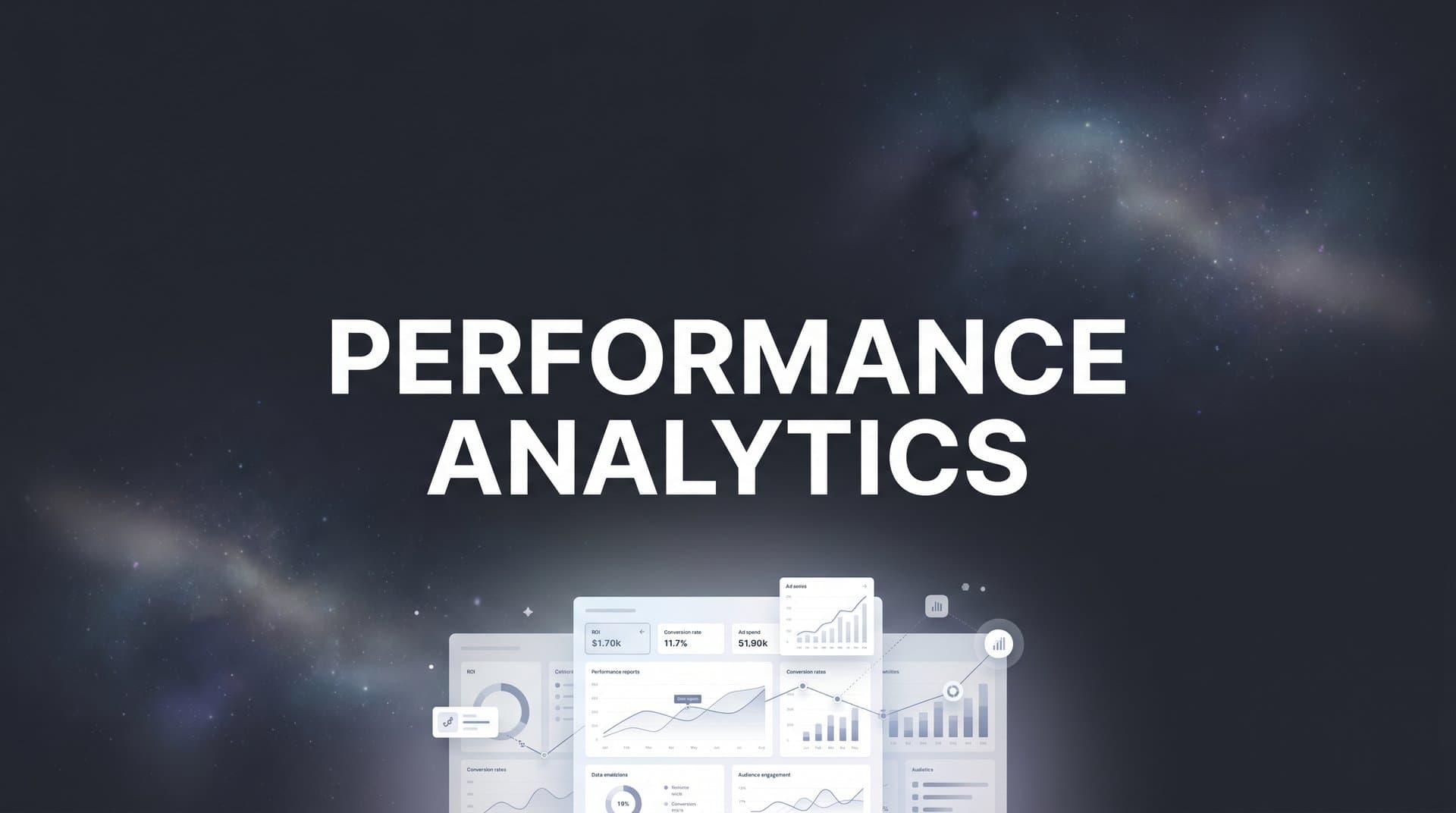
Performance analytics has become the backbone of modern marketing. Without clear visibility into which campaigns, channels, and ads actually drive revenue, marketing teams are essentially flying blind. You might be generating traffic, running ads across five platforms, and watching leads come in, but if you cannot connect those dots back to actual revenue, you are making budget decisions on gut feel rather than data.
The challenge is that the performance analytics landscape has grown rapidly, and each platform brings a different angle to the table. Some focus on web traffic behavior, others on ad spend optimization, and others on full-funnel attribution. Choosing the right tool, or the right combination of tools, can mean the difference between scaling profitably and wasting budget on campaigns that look good on the surface but deliver little in return.
This guide breaks down the 10 best performance analytics tools available in 2026, ranked by their ability to help digital marketers and agencies make smarter, data-driven decisions. Whether you need cross-platform attribution, real-time dashboards, or AI-powered optimization recommendations, this list covers the tools that deliver the clearest path from data to action.
One important distinction before diving in: not all analytics tools are created equal. Web analytics, product analytics, business intelligence platforms, and marketing attribution tools each serve different layers of your data stack. Understanding where each tool fits will help you build a stack that actually closes the loop between spend and revenue.
1. Cometly: AI-Powered Marketing Attribution Built for Paid Campaigns
The Challenge It Solves
Most analytics tools tell you what happened on your website. Very few tell you which specific ad, on which specific platform, actually drove a paying customer. For teams running paid campaigns across Meta, Google, TikTok, and other channels simultaneously, this attribution gap is costly. Budget gets misallocated to campaigns that look like they are performing but are not actually converting into revenue.
The Strategy Explained
Cometly is a marketing attribution and analytics platform purpose-built for this exact problem. It connects your ad platforms, CRM, and website to track the entire customer journey in real time. Using server-side tracking, Cometly captures conversion data that browser-based tools increasingly miss due to ad blockers, iOS privacy restrictions, and cookie deprecation.
 10 Best Performance Analytics Tools to Maximize Your Marketing ROI
What sets Cometly apart is its combination of multi-touch attribution, AI-powered recommendations, and Conversion Sync. The AI Ads Manager surfaces which ads and campaigns are driving real revenue, not just clicks or surface-level conversions. AI Chat lets you query your marketing data in plain language, making it accessible to your entire team without requiring a data analyst. And Conversion Sync feeds enriched, first-party conversion events back to Meta, Google, and other ad platforms, directly improving their targeting algorithms and ad delivery.
Implementation Steps
1. Connect your ad platforms (Meta, Google, TikTok, and others) and your CRM to Cometly to unify your data sources in one place.
2. Implement server-side tracking to capture conversions that client-side scripts miss, ensuring your attribution data is as complete as possible.
3. Set up Conversion Sync to send enriched conversion events back to your ad platforms, feeding better data to their optimization algorithms.
4. Use the AI Ads Manager to identify your highest-performing campaigns and get actionable recommendations on where to scale and where to cut.
5. Query your data with AI Chat to quickly surface insights without building manual reports.
Pro Tips
Cometly is especially powerful for teams spending meaningful budget across multiple paid channels. The server-side tracking advantage compounds over time as browser restrictions tighten. Set up Conversion Sync early so your ad platforms start learning from better data immediately. The accuracy improvement in your ad platform's targeting algorithm can have a noticeable downstream effect on your cost per acquisition.
2. Google Analytics 4: The Industry-Standard Baseline for Web Analytics
The Challenge It Solves
Every marketing team needs a foundational layer of web analytics. Understanding how users arrive at your site, which pages they visit, how long they stay, and where they drop off is table stakes for any optimization effort. Without this baseline, you are optimizing in the dark.
The Strategy Explained
Google Analytics 4 is the free, event-based analytics platform that replaced Universal Analytics. Its event-driven data model is more flexible than its predecessor, allowing you to track virtually any user interaction on your website or app. GA4 integrates natively with Google Ads, which makes it useful for understanding traffic quality from search campaigns and connecting ad clicks to on-site behavior.
 11 Best Marketing Analytics Tools to Track and Optimize Campaign Performance in 2026
GA4's exploration reports give analysts the ability to build custom funnels, segment audiences, and conduct path analysis. The platform also includes predictive metrics powered by Google's machine learning, such as purchase probability and churn probability, for accounts with sufficient data volume.
Implementation Steps
1. Set up a GA4 property and install the Google tag on your website using Google Tag Manager for clean, manageable implementation.
2. Configure key conversion events that align with your business goals, such as form submissions, purchases, or demo requests.
3. Link your GA4 property to Google Ads and Google Search Console to get a unified view of paid and organic traffic performance.
4. Build custom exploration reports to analyze specific funnels, user segments, or traffic sources relevant to your campaigns.
Pro Tips
GA4 has a steeper learning curve than Universal Analytics, particularly around event configuration and custom dimensions. Invest time in setting up your data layer properly from the start. Also be aware that GA4 relies on client-side tracking and sampling at scale, which means it works best as a behavioral and traffic tool rather than a source of truth for revenue attribution across paid channels.
3. Adobe Analytics: Enterprise-Grade Digital Experience Intelligence
The Challenge It Solves
Large organizations with complex digital properties, multiple brands, and sophisticated data requirements often outgrow the customization limits of standard analytics tools. They need granular segmentation, real-time data processing, and the ability to define their own metrics and dimensions at scale.
The Strategy Explained
Adobe Analytics is the enterprise-grade alternative to GA4, built for organizations that need deep customization and advanced data processing capabilities. It offers real-time reporting, highly flexible variable and event configuration, and powerful segmentation through its Analysis Workspace interface. Adobe Analytics is part of the broader Adobe Experience Cloud, which means it integrates with Adobe's advertising, personalization, and customer data platforms.
 9 Best AI Marketing Analytics Tools in 2026
The platform's virtual report suites allow teams to create tailored views of data for different business units or stakeholders without duplicating data collection. Its attribution IQ feature offers multiple attribution models for comparing how different touchpoints receive credit for conversions.
Implementation Steps
1. Work with your Adobe implementation team to define your data layer and variable mapping before deploying tags, as Adobe Analytics requires careful upfront planning.
2. Configure custom success events and conversion variables (eVars) that match your specific business KPIs.
3. Build segments in Analysis Workspace to isolate specific user behaviors, traffic sources, or customer cohorts for deeper analysis.
4. Use Attribution IQ to compare how different attribution models affect credit distribution across your marketing touchpoints.
Pro Tips
Adobe Analytics is a significant investment in both cost and implementation complexity. It delivers the most value for enterprises with dedicated analytics teams and complex, multi-property digital ecosystems. For smaller teams or those primarily focused on paid campaign attribution, the investment may exceed the practical return compared to more focused enterprise marketing analytics software.
4. Mixpanel: Event Analytics for Product-Led Growth Teams
The Challenge It Solves
SaaS companies and digital product teams need to understand not just who visits their product, but what users actually do inside it. Which features drive engagement? Where do users drop out of onboarding? What behaviors predict long-term retention? Traditional web analytics tools are not designed to answer these questions at the user level.
The Strategy Explained
Mixpanel is a product and event analytics platform focused on user behavior tracking, funnel analysis, and retention metrics. Unlike page-view-centric tools, Mixpanel tracks granular user actions across your product and lets you analyze them at both the individual and cohort level. Its funnel reports show exactly where users drop off in multi-step flows, and its retention charts reveal how different user segments return over time.
 9 Best Cross Device Tracking Solutions for Marketers in 2026
Mixpanel's user-level data model means you can look up any specific user's event history, which is valuable for debugging issues and understanding individual customer journeys. It also supports A/B experiment analysis to help product teams evaluate the impact of feature changes.
Implementation Steps
1. Define your event taxonomy before implementation: identify the key user actions in your product that map to meaningful business outcomes.
2. Implement Mixpanel's SDK or server-side tracking to capture events as users interact with your product.
3. Build funnel reports for your core user flows, such as signup to activation or trial to paid conversion, to identify drop-off points.
4. Set up retention analyses to understand which user behaviors in the first week or month correlate with long-term retention.
Pro Tips
Mixpanel is primarily a product analytics tool, not a marketing attribution platform. It excels at answering "what are users doing inside my product?" rather than "which ad drove this user to convert?" Use it alongside a dedicated attribution tool like Cometly for full-funnel visibility from ad click to in-product behavior. For SaaS teams evaluating their options, exploring marketing analytics platforms for SaaS can help clarify which tools best complement product analytics.
5. HubSpot Marketing Analytics: Attribution for the HubSpot Ecosystem
The Challenge It Solves
Teams already using HubSpot as their CRM often struggle to connect their marketing activities to pipeline and revenue without leaving the platform. Jumping between HubSpot and separate analytics tools creates fragmentation and makes it harder to report on marketing's contribution to closed deals.
The Strategy Explained
HubSpot Marketing Analytics is built into the HubSpot platform and leverages the CRM's contact and deal data to connect marketing touchpoints to revenue outcomes. On the Enterprise tier, HubSpot offers multi-touch revenue attribution that shows how different marketing interactions contributed to closed deals across first touch, last touch, and weighted models.
 9 Best Attribution Software for B2B SaaS in 2026
Because HubSpot owns the CRM data, its attribution is particularly strong for inbound marketing activities like email, organic content, and landing pages. The dashboards are approachable for non-technical marketers, and the integration with HubSpot's email, social, and ads tools makes it a convenient all-in-one view for teams living in the HubSpot ecosystem.
Implementation Steps
1. Ensure your HubSpot tracking code is installed on all website pages and that key conversion actions are mapped to HubSpot form submissions or deal stages.
2. Set up custom attribution reports in HubSpot's reporting module to analyze which content assets and channels contribute to pipeline.
3. Use the revenue attribution reports on Enterprise to see how marketing touchpoints map to closed-won revenue in your CRM.
4. Build custom dashboards for your marketing team that surface the KPIs most relevant to your goals, such as MQL volume, cost per MQL, and channel contribution to pipeline.
Pro Tips
HubSpot's attribution works best for teams whose primary acquisition channels are inbound and content-driven. For teams running heavy paid advertising across multiple platforms, HubSpot's attribution has gaps, particularly around cross-device tracking and ad-level granularity. Pairing HubSpot with a dedicated paid attribution tool gives you the best of both worlds. Understanding touchpoint tracking analytics can help you identify exactly where those gaps exist in your current setup.
6. Tableau: Business Intelligence for Custom Marketing Dashboards
The Challenge It Solves
Marketing data often lives in silos: ad platform dashboards, CRM reports, web analytics tools, and spreadsheets that never quite talk to each other. Building a unified view of performance across all these sources typically requires significant manual effort, which means leadership is often looking at outdated or incomplete data.
The Strategy Explained
Tableau is a powerful business intelligence and data visualization platform that connects to virtually any data source, from SQL databases and cloud data warehouses to spreadsheets and marketing APIs. It allows analysts to build highly customized, interactive dashboards that pull together data from multiple sources into a single view.
 10 Best Marketing Data Visualization Tools in 2026
For marketing teams, Tableau is most valuable as a reporting layer on top of a consolidated data warehouse. Rather than replacing your analytics tools, it reads from them and presents the data in whatever format your stakeholders need. Teams looking to consolidate their reporting should also consider exploring marketing analytics dashboard companies to find the right fit for their visualization needs.
Implementation Steps
1. Identify the data sources you need to unify: ad platforms, CRM, web analytics, and any other relevant systems.
2. Connect those sources to Tableau either directly or through a data warehouse like BigQuery or Snowflake for better performance at scale.
3. Build calculated fields and blended data sources to create the unified metrics your business needs, such as blended ROAS or cross-channel cost per acquisition.
4. Publish dashboards to Tableau Server or Tableau Cloud so stakeholders across the organization can access live data without needing a Tableau license themselves.
Pro Tips
Tableau is a visualization and BI tool, not an attribution platform. It shows you data you feed it, but it does not collect or attribute marketing data on its own. Pair it with a data pipeline tool like Supermetrics to pull marketing data automatically, and with an attribution platform like Cometly to ensure the underlying attribution data is accurate before it hits your dashboards.
7. Supermetrics: Automated Marketing Data Pipelines
The Challenge It Solves
Manually pulling performance data from Meta Ads, Google Ads, LinkedIn, TikTok, and other platforms into spreadsheets or dashboards is time-consuming and error-prone. Marketing analysts often spend hours each week on data extraction that could be automated, leaving less time for actual analysis.
The Strategy Explained
Supermetrics is a marketing data pipeline tool that automates pulling data from ad platforms and analytics tools into your reporting destinations of choice. It supports connections to Google Sheets, Excel, Looker Studio, BigQuery, Snowflake, and other destinations. Rather than logging into each platform separately, Supermetrics schedules automated data pulls and keeps your reports and dashboards up to date.
It is particularly useful for agencies managing multiple client accounts, as it can pull data from dozens of platforms and organize it into client-specific reports without manual intervention. For agencies evaluating their full analytics stack, reviewing the top marketing analytics tools for agencies can help identify the best combination of pipeline and attribution tools. Supermetrics does not analyze or attribute your data; it simply moves it efficiently from source to destination.
Implementation Steps
1. Identify which platforms you need data from and which destination (Google Sheets, Looker Studio, BigQuery, etc.) you want to report in.
2. Set up Supermetrics connectors for each data source and configure the fields, date ranges, and filters relevant to your reporting needs.
3. Schedule automated data refreshes so your reports update daily or at the frequency your team requires.
4. Build your reporting templates on top of the automated data feeds so analysts spend time on insights rather than data extraction.
Pro Tips
Supermetrics is a data movement tool, not an analytics or attribution platform. The quality of your reporting still depends on the accuracy of the underlying data. If your ad platforms are receiving incomplete conversion signals due to tracking limitations, Supermetrics will faithfully replicate those gaps. Combining Supermetrics with Cometly's Conversion Sync ensures that the data flowing into your dashboards reflects accurate, server-side attribution rather than incomplete platform-reported numbers.
8. Looker Studio: Free Visual Reporting for Marketing Teams
The Challenge It Solves
Not every team has the budget or technical resources for enterprise BI tools like Tableau. But marketers still need professional-looking dashboards that they can share with clients or leadership without requiring everyone to log into multiple platforms separately.
The Strategy Explained
Looker Studio (formerly Google Data Studio) is a free reporting and dashboard tool from Google that connects to a wide range of data sources through native connectors and community-built integrations. It is particularly well-suited for Google-centric teams, with native connections to Google Analytics 4, Google Ads, Google Search Console, and BigQuery.
Its drag-and-drop report builder makes it accessible to marketers without deep technical skills. Community connectors extend its reach to platforms like Meta Ads, LinkedIn, and others, though these third-party connectors vary in quality and reliability. For teams that need a more robust approach, building a unified marketing analytics dashboard can solve many of the reliability challenges that come with stitching together multiple free connectors.
Implementation Steps
1. Connect your primary data sources using Looker Studio's native connectors, starting with GA4 and Google Ads for the most reliable integrations.
2. Use community connectors or a tool like Supermetrics to bring in data from non-Google platforms such as Meta Ads or LinkedIn.
3. Build report templates that match your reporting cadence, whether that is weekly campaign performance summaries or monthly executive dashboards.
4. Share reports with stakeholders using view-only links so they can access live data without needing a Google account or platform login.
Pro Tips
Looker Studio is excellent for its price point (free), but it has limitations at scale. Complex blended data sources can slow down report loading times, and community connectors occasionally break when source platforms update their APIs. For agencies with many clients or teams needing highly reliable automated reporting, a paid solution like Tableau or a dedicated reporting platform may be worth the investment.
9. Amplitude: Behavioral Analytics and Experimentation for Digital Products
The Challenge It Solves
Understanding how users navigate through a digital product, which paths lead to conversion, and how different user segments behave requires more than page view data. Product teams need granular behavioral data, cohort comparisons, and the ability to run and measure experiments without relying on a data science team for every analysis.
The Strategy Explained
Amplitude is a behavioral analytics platform that goes beyond Mixpanel's core event tracking to include session replay, cohort analysis, and built-in experimentation capabilities. Its Journeys feature maps the paths users take through your product, revealing which sequences of actions lead to conversion and which lead to churn. Session replay lets teams watch actual user sessions to understand friction points that quantitative data alone cannot explain.
Amplitude's experimentation module integrates directly with its analytics, so you can measure the impact of A/B tests on behavioral metrics like retention and feature adoption rather than just surface-level conversion rates. The growing role of AI marketing analytics is making it easier for teams to surface insights from this kind of behavioral data without requiring deep technical expertise.
Implementation Steps
1. Instrument your product with Amplitude's SDK, defining a clear event taxonomy that captures the user actions most relevant to your product goals.
2. Build user journey maps using Amplitude's Journeys feature to understand the most common paths from signup to key activation milestones.
3. Set up cohort analyses to compare the behavior and retention of different user segments, such as users who completed onboarding versus those who did not.
4. Use Amplitude's experimentation module to run controlled tests on product changes and measure their impact on behavioral outcomes over time.
Pro Tips
Like Mixpanel, Amplitude is a product analytics tool rather than a marketing attribution platform. It answers questions about what users do inside your product, not which marketing channel or ad drove them there. For a complete picture of performance from ad impression to in-product behavior and revenue, combine Amplitude's product insights with Cometly's paid channel attribution to connect the full customer journey.
10. Databox: Real-Time KPI Dashboards with Goal Tracking
The Challenge It Solves
Marketing teams often lack a single, always-on view of their key performance indicators. Performance data is scattered across platform dashboards that require individual logins, and building consolidated reports manually takes time that could be spent on optimization. Teams need a live pulse on their most important metrics without the complexity of a full BI platform.
The Strategy Explained
Databox is a real-time KPI dashboard tool that connects to popular marketing platforms including Google Analytics, Google Ads, Meta Ads, HubSpot, Salesforce, and many others. It pulls data from these sources and displays it in customizable dashboards that update automatically, giving teams a live view of performance against their goals. Understanding the benefits of real-time marketing analytics helps explain why tools like Databox have become essential for fast-moving teams.
Its goal-tracking feature lets you set targets for key metrics and monitor progress in real time. Alert functionality notifies team members when metrics fall outside expected ranges, enabling faster responses to performance changes. Databox also includes pre-built dashboard templates for common use cases, which reduces setup time for teams that do not want to build from scratch.
Implementation Steps
1. Connect your primary marketing platforms to Databox using its native integrations, prioritizing the sources that contain your most important KPIs.
2. Choose or build dashboard templates that surface the metrics most relevant to your team's daily decision-making.
3. Set up goals for each key metric so Databox can display progress toward targets rather than just raw numbers.
4. Configure performance alerts to notify your team via email or Slack when metrics deviate significantly from expected ranges.
Pro Tips
Databox shines as a monitoring and visibility tool for teams that want a quick daily pulse on performance without building complex reports. It is not an attribution platform, and the accuracy of its data depends on what the connected platforms report. For teams running paid campaigns, the numbers Databox shows from Meta or Google reflect those platforms' native attribution, which may overcount or misattribute conversions. Feeding better conversion data into your ad platforms via Cometly's Conversion Sync improves the accuracy of what Databox ultimately displays.
Choosing the Right Performance Analytics Stack for Your Goals
The performance analytics tools in this list each serve a distinct layer of your data strategy. Understanding where each fits will help you build a stack that eliminates blind spots rather than creating new ones.
Web analytics tools like GA4 give you the behavioral baseline: who visits your site, what they do, and where they drop off. Product analytics platforms like Mixpanel and Amplitude go deeper into in-product behavior, user journeys, and retention. Business intelligence tools like Tableau and Looker Studio help you visualize and communicate data across your organization. Data pipeline tools like Supermetrics automate the tedious work of moving data between sources and destinations. Monitoring tools like Databox keep your team aligned on real-time KPI performance.
But here is the critical gap that most of these tools leave open: none of them, with the partial exception of HubSpot at the Enterprise tier, are built to tell you which specific ad on which specific platform drove a paying customer. For teams running paid campaigns, that gap is where budget gets wasted.
This is where a dedicated attribution platform like Cometly fills a role that general analytics tools simply cannot. By combining server-side tracking, multi-touch attribution, AI-powered recommendations, and Conversion Sync, Cometly closes the loop between your ad spend and your actual revenue. It captures the touchpoints that client-side tools miss, tells you which campaigns are genuinely driving results, and feeds better data back to your ad platforms to improve their targeting over time.
Start by auditing your current blind spots. If you know what users do on your site but not which ads brought them there, attribution is your gap. If you know which channels drive traffic but not which drive revenue, you need full-funnel attribution. If your ad platforms are optimizing on incomplete conversion data, Conversion Sync is your next move.
The best analytics stack is not the one with the most tools. It is the one that connects your spend to your outcomes with the least friction and the most accuracy. Ready to close that gap? Get your free demo and see how Cometly's AI-driven attribution can show you exactly which ads are driving revenue, so you can scale what works and stop funding what does not.