Digital marketers are losing data, and most of them know it. Every time a user opens Safari, installs an ad blocker, or declines a tracking prompt on iOS, another conversion event disappears into the void. The pixels and JavaScript tags that powered marketing analytics for over a decade are increasingly unreliable, and the campaigns running on top of that broken foundation are paying the price.
For teams managing paid advertising across Meta, Google, TikTok, and other platforms, this is not a theoretical problem. It shows up as inflated cost-per-acquisition numbers, underperforming campaigns that should be working, and attribution reports that simply do not add up. The algorithms powering your ad delivery need accurate conversion signals to optimize effectively, and right now, many of those signals are being blocked before they ever arrive.
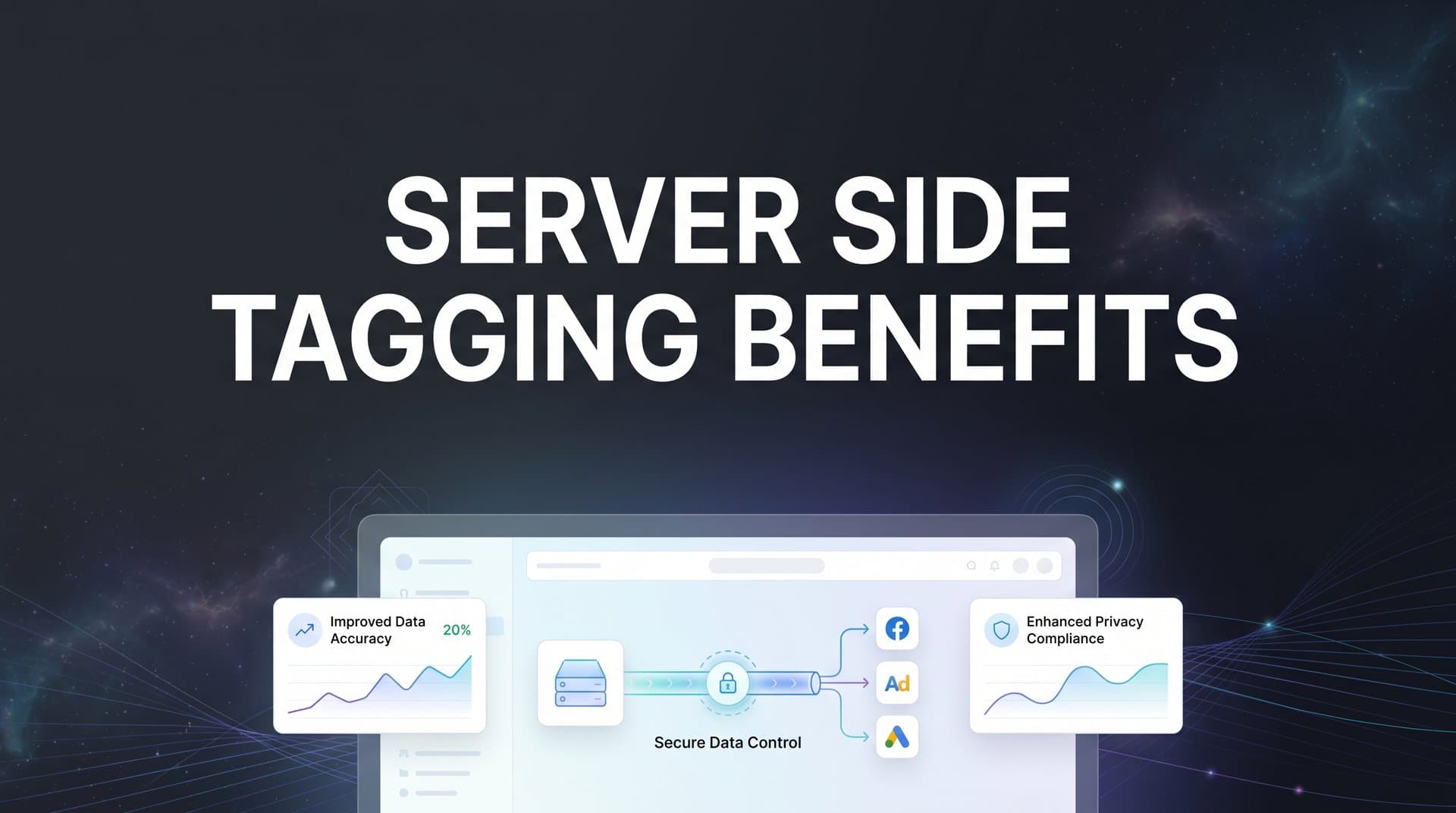
Server side tagging has emerged as the most effective response to this challenge. By moving data collection off the browser and into a server environment you control, it bypasses the mechanisms that block client-side tracking and restores the signal quality your campaigns depend on. This article breaks down the key server side tagging benefits, explains exactly how the technology works, and shows why forward-thinking marketing teams are making it a core part of their data infrastructure.
How Browser-Based Tracking Broke (And Why It Matters for Your Ads)
To understand why server side tagging matters, you first need to understand what it is replacing and why that older approach is failing.
Traditional client-side tagging works like this: a user visits your website, and JavaScript tags embedded in your page fire in their browser. Those tags send event data directly from the browser to third-party platforms like Google Analytics, the Meta Pixel, or the TikTok Pixel. This approach was the industry standard for well over a decade, and for a long time, it worked reliably enough.
Then several forces converged to dismantle it.
Apple's Privacy Updates: When Apple introduced App Tracking Transparency (ATT) with iOS 14.5, it required apps to ask users for permission before tracking them across other apps and websites. A significant portion of users opted out. Safari's Intelligent Tracking Prevention (ITP) goes further, limiting the lifespan of certain cookies to as little as 24 hours and blocking many third-party tracking mechanisms entirely.
Browser-Level Restrictions: Firefox's Enhanced Tracking Protection blocks third-party cookies and many common tracking scripts by default. Google Chrome has been moving toward giving users greater control over cookie settings through its Privacy Sandbox initiative. The browser environment that once passively allowed tags to fire freely is now actively hostile to them.
Ad Blockers: Browser extensions designed to block ads frequently block tracking scripts as well. The Meta Pixel, Google Analytics tags, and similar scripts are commonly targeted. When these tags are blocked, the conversion events they would have reported simply never reach the ad platform.
The downstream effect on ad performance is direct and significant. Ad platform algorithms, particularly Meta's and Google's, rely on conversion data to optimize bidding, targeting, and delivery. When those algorithms receive only a fraction of the actual conversion events, they make decisions based on incomplete information. Campaigns that should be profitable appear to underperform. Budgets get shifted away from channels and audiences that are actually working. CPAs inflate not because the ads are less effective, but because the measurement is broken. Understanding why server-side tracking is more accurate helps explain how this measurement gap can be closed.
This is the environment that server side tagging was built to address.
Server Side Tagging Explained in Plain Terms
The concept is simpler than it sounds. Instead of tags firing directly in the user's browser and sending data straight to third-party platforms, data is routed through a server you control first. That server acts as an intermediary layer between your website and the platforms you send data to.
Here is how the data flow works step by step.
1. A user takes an action on your website, such as making a purchase or submitting a lead form. Your website sends that event data to your own server endpoint, rather than directly to Meta or Google.
2. Your server receives the data. At this stage, you can validate it, clean it, enrich it with additional information, and apply any filtering rules you have set up.
3. Your server then forwards the processed event data to the appropriate destinations: Meta via the Conversions API, Google via Enhanced Conversions or the Measurement Protocol, TikTok via the Events API, and any other platforms you are sending to.
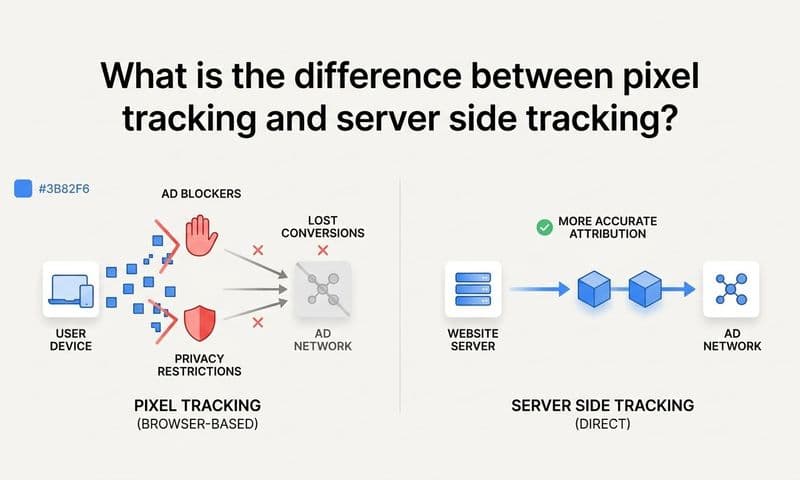
Because the data travels server-to-server rather than from the user's browser to a third-party platform, it is not subject to the same blocking mechanisms. Ad blockers operate in the browser. ITP operates in the browser. The server-side data flow largely bypasses both. For a deeper dive into the underlying technology, our guide on server side tracking covers the fundamentals in detail.
It is worth clarifying a distinction that often creates confusion. Server side tagging refers specifically to the infrastructure and method: the use of a server container to manage and route tag data. Server side tracking is a broader concept referring to collecting and processing data on the server rather than the client. In practice, marketers use these terms interchangeably, but understanding that server side tagging is the implementation mechanism behind server-to-server data transmission helps clarify how it fits into your overall tracking architecture.
Google Tag Manager's server-side container, launched in 2020, made this infrastructure more accessible to marketing teams. However, setting up and maintaining a server-side container requires meaningful technical resources, which is one reason purpose-built platforms that handle server-side tracking as part of a broader solution have become increasingly valuable.
The Core Server Side Tagging Benefits for Paid Advertising
Once you understand how it works, the advantages become clear. Server side tagging delivers benefits across three critical dimensions: data capture, data quality, and website performance.
Resilience Against Ad Blockers and Browser Restrictions
This is the most immediate benefit for most advertising teams. When a user has an ad blocker installed, client-side tags like the Meta Pixel simply do not fire. The conversion event is lost. With server side tagging, the event data originates from your server, not from a JavaScript tag in the user's browser. Most ad blockers have no mechanism to intercept server-to-server communication.
The same logic applies to ITP and other browser-based restrictions. These privacy features operate at the browser level, limiting what client-side scripts can do. A server-side data flow operates outside that scope. The result is that more of your actual conversion events are captured and reported accurately, giving your ad platforms a more complete picture of what is working. Teams looking to evaluate their options can explore the top server side tracking tools available today.
Improved Data Accuracy and Quality
The server layer is not just a pass-through. It gives you an opportunity to improve the quality of the data before it reaches ad platforms. You can validate events to ensure they are complete and properly formatted. You can filter out bot traffic and internal visits that would otherwise pollute your conversion data. You can deduplicate events that might be reported by both a client-side tag and a server-side event, preventing double-counting.
You can also enrich events with additional data points, such as customer information stored in your CRM, that would not be available to a browser-based tag. This enrichment directly improves metrics like Meta's Event Match Quality score, which measures how effectively your conversion events can be matched to Meta users. Higher EMQ scores lead to better optimization and more accurate attribution within the Meta platform.
Faster Website Performance
Every third-party JavaScript tag loaded in the browser adds weight to your page. The Meta Pixel, Google Ads conversion tracking, TikTok Pixel, and other tags each require the browser to load, parse, and execute additional scripts. This adds to page load time, which affects user experience, conversion rates, and in some cases ad quality scores.
With server side tagging, you can reduce the number of third-party scripts firing in the browser. The heavy lifting moves to the server, and your pages load faster. For e-commerce and lead generation sites where page speed has a measurable impact on conversion rates, this is a meaningful secondary benefit on top of the tracking improvements.
Feeding Better Data to Ad Platform Algorithms
Here is where the server side tagging benefits become most financially significant for marketing teams. The ad platforms you spend money on, Meta, Google, TikTok, and others, all use machine learning to optimize campaign delivery. These algorithms decide who sees your ads, when, and at what bid. Their effectiveness depends almost entirely on the quality and completeness of the conversion data you send them.
When algorithms receive partial data, they are essentially working with an incomplete map. They cannot accurately identify which users are most likely to convert, so they optimize toward a skewed version of your actual customer. The result is inefficient delivery, higher CPAs, and lower ROAS than your campaigns could otherwise achieve. Investing in ad tracking management software helps ensure your data pipeline stays intact.
Server side tagging enables the Conversion API solutions that each major platform has built specifically to address this problem.
Meta Conversions API (CAPI): Meta built CAPI as a direct server-to-server alternative to the browser-based Pixel. When implemented through server side tagging, CAPI can send enriched first-party data including email addresses, phone numbers, and other customer identifiers that help Meta match events to users with greater accuracy. This improves attribution and gives the algorithm better signals for optimization. Understanding the difference between Meta browser events vs Meta server events is essential for getting the most out of CAPI.
Google Enhanced Conversions: Google's Enhanced Conversions works similarly, sending hashed first-party customer data alongside conversion events to improve match rates and fill gaps left by cookie-based tracking. The Measurement Protocol for GA4 allows server-side event reporting directly to Google's analytics infrastructure.
TikTok Events API: TikTok's server-side solution allows advertisers to send conversion data directly from their servers, supplementing or replacing client-side Pixel data that may be blocked or incomplete.
The compounding effect of better data is where the real ROI lives. Better conversion signals lead to better algorithm optimization. Better optimization leads to more efficient delivery, lower CPAs, and higher ROAS. Over time, campaigns running on complete, accurate data consistently outperform those running on fragmented client-side signals. For most marketing teams adopting server side tagging, this improvement in algorithm performance is the single biggest driver of return on investment.
Data Control, Privacy, and Building a First-Party Foundation
Beyond the immediate performance benefits, server side tagging changes the fundamental nature of your data infrastructure in ways that matter for the long term.
When data flows through your server, you own the pipeline. You decide exactly what data points are collected, how they are processed, and what gets forwarded to each platform. This is a meaningful shift from the client-side model, where third-party tags often collect data independently and send it to their platforms with limited oversight from the advertiser. The role of data analytics in marketing becomes far more powerful when you control the underlying data quality.
With server side tagging, you can configure each destination to receive only the data it needs. You might send full event data including customer identifiers to Meta for matching purposes, while sending only anonymized aggregate data to a different platform. This granular control over personally identifiable information is increasingly important as privacy expectations evolve.
Server side tagging also naturally supports a first-party data strategy. Because data is collected through your own domain and server rather than through third-party scripts, it is not subject to the same third-party cookie restrictions. You are building a tracking foundation that does not depend on infrastructure you do not control. As third-party cookies continue to be deprecated and browser restrictions tighten further, this durability becomes a significant competitive advantage.
Consent management also becomes more straightforward. With client-side tagging, enforcing user consent typically means relying on a consent management platform to block individual tags based on user preferences. This approach can be inconsistent and difficult to audit. With server side tagging, you can enforce consent rules at the server level. If a user has not consented to a particular type of tracking, the server simply does not forward that data to the relevant platform. The enforcement happens in your infrastructure, not in the browser, making it more reliable and easier to verify. For teams ready to get started, our server side tracking implementation guide walks through the process step by step.
This combination of control, durability, and privacy alignment makes server side tagging a foundational investment rather than just a tactical fix. It positions your marketing data infrastructure to remain effective as the tracking landscape continues to evolve.
How Cometly's Server-Side Tracking Amplifies These Benefits
Understanding the benefits of server side tagging is one thing. Implementing it effectively and extracting maximum value from it is another. This is where a purpose-built platform makes a substantial difference.
Cometly's server-side tracking captures every touchpoint across the customer journey, from the initial ad click through to CRM events and offline conversions. Rather than depending on fragile browser-based tags that can be blocked or restricted, Cometly collects data through a server infrastructure that gives you a complete, accurate view of how users move from first exposure to conversion. The AI powering Cometly's analysis has access to enriched, reliable data rather than the incomplete signals that client-side tracking produces.
Cometly's Conversion Sync takes the server-side data and routes it back to the ad platforms that need it most. Enriched, conversion-ready events are sent to Meta, Google, TikTok, and other platforms through their respective server-side APIs, improving match rates and giving platform algorithms the complete signal they need to optimize effectively. When your ad platform's machine learning is working from accurate data, your campaigns perform better. It is that direct.
But Cometly goes beyond just fixing the tracking layer. On top of the server-side data foundation, Cometly layers multi-touch attribution modeling that shows you how each channel and touchpoint contributes to revenue across the full customer journey. You are not just recovering lost conversion events; you are gaining a clearer understanding of which ads, campaigns, and channels are actually driving results. The AI-powered recommendations built into Cometly surface actionable insights from that data, identifying high-performing ads and flagging opportunities to scale or reallocate budget with confidence.
For marketing teams and agencies managing campaigns across multiple platforms, this combination of server-side accuracy, conversion signal amplification, and intelligent attribution analysis addresses the full scope of the data problem that client-side tracking created.
The Bottom Line on Server Side Tagging
Server side tagging is no longer a technical nice-to-have for advanced teams. It has become the baseline requirement for any marketing operation that wants accurate data powering its campaigns. The forces eroding client-side tracking, browser restrictions, ad blockers, privacy frameworks, and cookie deprecation, are not going away. They will continue to tighten, and teams that rely solely on browser-based tags will see their data quality deteriorate further over time.
The benefits of making the shift are concrete: more conversion events captured, higher quality data reaching ad platform algorithms, faster page load times, and a durable first-party data foundation that does not depend on third-party cookies. Each of these advantages compounds. Better data leads to better optimization, which leads to more efficient campaigns and stronger returns on ad spend.
The natural starting point is an honest evaluation of your current tracking setup. How many conversion events are you likely missing due to ad blockers or browser restrictions? How complete is the data your ad platforms are receiving? Are your algorithms optimizing on accurate signals or on a fraction of your actual conversions?
If those questions reveal gaps, server-side infrastructure paired with a platform built to maximize its value is the path forward. Ready to elevate your marketing game with precision and confidence? Discover how Cometly's AI-driven recommendations can transform your ad strategy. Get your free demo today and start capturing every touchpoint to maximize your conversions.