UTM parameters have been a staple of digital marketing for years, helping teams tag campaign links and sort traffic in analytics platforms. But if you have been relying on them as your primary attribution method, you have probably run into their limitations firsthand.
Links break when users copy and paste them. Ad blockers and browser privacy restrictions strip parameters before they ever reach your analytics tool. iOS privacy changes have made mobile tracking increasingly unreliable. And manual UTM management, when done inconsistently across a team, produces the kind of messy, contradictory data that makes it nearly impossible to trust your reports.
The good news is that the industry has responded. As privacy regulations tighten and customer journeys grow more complex and cross-platform, a new generation of tracking methods has emerged that can give you cleaner data, more complete attribution, and stronger confidence in your marketing decisions.
This article covers seven proven alternatives to UTM tracking. Whether you want to supplement your existing setup or move beyond URL parameters entirely, these strategies will help you understand what is actually driving revenue across every channel.
1. Server-Side Tracking for Privacy-Proof Data Collection
The Challenge It Solves
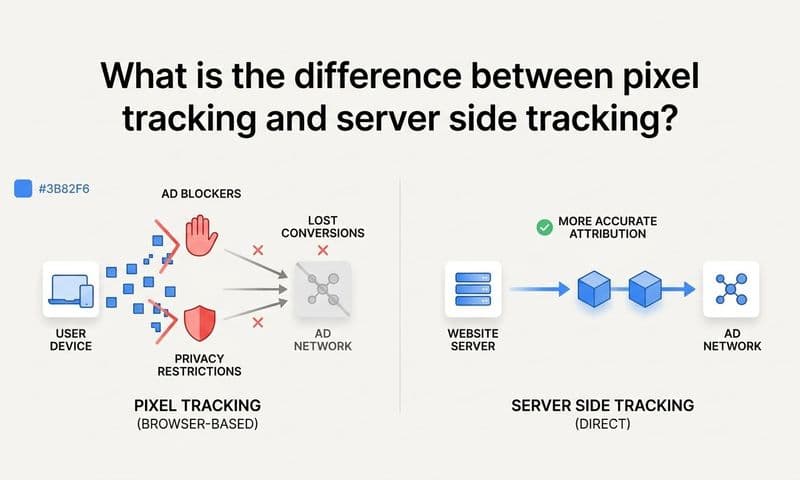
Browser-based tracking is increasingly fragile. Ad blockers prevent tracking scripts from loading, Safari's Intelligent Tracking Prevention limits cookie lifespans, and iOS restrictions have made client-side data collection unreliable. When your tracking depends entirely on what happens in a user's browser, you are at the mercy of every privacy update that rolls out.
The Strategy Explained
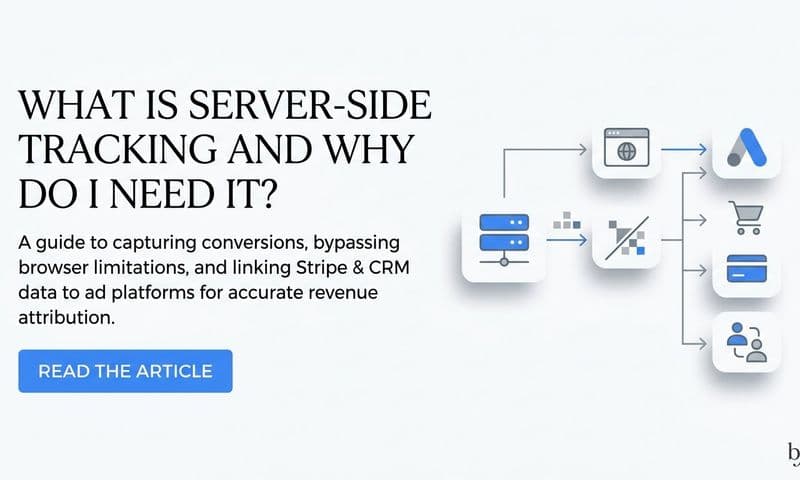
Server-side tracking moves data collection off the browser and onto your own server. Instead of firing a JavaScript tag in the user's browser, your server captures the event and sends it directly to your analytics platform or ad network. Because the data never passes through the browser environment, it bypasses ad blockers, cookie restrictions, and browser-level privacy controls entirely.
This approach gives you a more complete and accurate picture of what is happening across your site and campaigns. To understand why this method produces superior results, explore our guide on why server-side tracking is more accurate than traditional browser-based approaches. You control what data is collected, how it is processed, and where it is sent, which also puts you in a stronger position from a data governance standpoint.
Implementation Steps
1. Set up a server-side tagging container using a platform like Google Tag Manager Server-Side or a dedicated tracking infrastructure, and route your key conversion events through it.
2. Map out the critical events you need to track, such as form submissions, purchases, and sign-ups, and configure your server to capture these directly from your application or CRM.
3. Connect your server-side container to your analytics tools and ad platforms, replacing or supplementing the client-side tags that are currently dropping data.
Pro Tips
Server-side tracking works best when combined with first-party identifiers like hashed email addresses or customer IDs. This lets you match events back to individual users across sessions without relying on third-party cookies. Platforms like Cometly offer built-in server-side tracking that connects directly to your ad channels and CRM, making this setup significantly faster to deploy than building it from scratch.
2. Multi-Touch Attribution Modeling Across the Full Funnel
The Challenge It Solves
UTM parameters, by themselves, do not tell you how channels work together. If your analytics platform uses last-click attribution, a UTM-tagged paid search ad gets all the credit even if the customer first discovered you through a podcast, then saw a retargeting ad, then clicked an organic post before finally converting. You end up over-investing in the last touchpoint and undervaluing everything that came before it.
The Strategy Explained
Multi-touch attribution distributes conversion credit across every touchpoint in the customer journey. Instead of a single click getting all the credit, models like linear, time-decay, or data-driven attribution assign weight to each interaction based on its role in the path to conversion. The best marketing attribution platforms for revenue tracking make this process significantly easier to implement and manage. This gives you a much more realistic view of how your channels actually perform and how they support each other.
For teams running campaigns across paid search, paid social, email, and organic, multi-touch attribution often reveals that channels you thought were underperforming are actually doing a lot of heavy lifting in the early stages of the funnel.
Implementation Steps
1. Audit your current attribution model and identify which touchpoints are being undercounted or overcounted based on single-touch logic.
2. Choose an attribution model that fits your sales cycle. Linear models work well for shorter journeys; time-decay models often make more sense for longer B2B cycles where recent touchpoints carry more weight.
3. Implement a platform that can ingest data from all your channels and apply multi-touch logic across the full path, connecting ad platform data with CRM and website events.
Pro Tips
Do not switch attribution models in isolation. When you move from last-click to multi-touch, your reported numbers will change significantly, and your team needs to understand why. Use the transition as an opportunity to educate stakeholders on how the new model better reflects actual customer behavior. Cometly's multi-touch attribution capabilities let you compare models side by side so you can see the difference before committing to a new reporting framework.
3. First-Party Data and CRM-Based Tracking
The Challenge It Solves
UTM parameters live in URLs. They capture the click, but they rarely tell you what happened after it. Did that click become a lead? Did that lead become a paying customer? Without connecting your ad data to your CRM, you are optimizing campaigns based on clicks and form fills rather than actual revenue, which often means you are optimizing for the wrong thing.
The Strategy Explained
First-party data tracking uses information your business collects directly: form submissions, CRM records, email engagement, purchase history, and customer interactions. By connecting these data sources to your marketing channels, you can trace the journey from first ad impression to closed deal without relying on URL parameters that can break, get stripped, or simply not fire.
When your CRM is connected to your attribution system, you can see which campaigns generated leads that actually converted to revenue, not just which campaigns drove the most form fills. Implementing a solid lead tracking process is essential to making this distinction, and it fundamentally changes how you allocate budget.
Implementation Steps
1. Ensure your CRM captures a marketing source field at the lead creation stage, either through form integrations or manual entry, so you have a baseline of self-reported and system-tracked attribution.
2. Connect your CRM to your analytics and attribution platform using native integrations or webhooks so that deal stages and revenue data flow back to your marketing reports.
3. Use customer identifiers like email addresses to stitch together ad platform data, website behavior, and CRM records into a unified customer profile.
Pro Tips
The quality of your CRM data directly determines the quality of your attribution. Invest time in cleaning up your lead source fields and standardizing how data is entered before you try to build attribution reports on top of it. A unified platform like Cometly can connect your CRM, ad channels, and website into a single view, making it much easier to tie marketing activity to revenue without manual data exports.
4. Conversion API Integrations With Ad Platforms
The Challenge It Solves
When iOS 14.5 introduced App Tracking Transparency, it disrupted the pixel-based tracking that Meta advertisers had relied on for years. Similar challenges emerged across other platforms as browsers restricted third-party cookies. Understanding what a tracking pixel is and how it works helps explain why these browser-level restrictions caused such significant underreporting of conversions, which caused ad algorithms to optimize toward the wrong signals and made campaign performance look worse than it actually was.
The Strategy Explained
Conversion APIs, sometimes called server-side APIs, let you send conversion events directly from your server to ad platforms like Meta, Google, and TikTok. Instead of relying on a browser pixel to fire when a user completes an action, your server sends the event data directly to the platform's API. This bypasses the browser entirely and ensures that conversions are reported even when pixels are blocked or cookies are restricted.
Beyond improving reporting accuracy, Conversion API data feeds better signals to ad platform machine learning algorithms. When Meta's or Google's algorithm has more complete conversion data, it can optimize delivery more effectively, which typically improves campaign efficiency.
Implementation Steps
1. Set up Meta's Conversions API, Google's Enhanced Conversions, and TikTok's Events API for each platform where you run ads, prioritizing the channels with the highest spend.
2. Configure event deduplication so that when both a browser pixel and the server-side API fire for the same event, the platform counts it only once.
3. Include enriched data like hashed email addresses, phone numbers, and customer IDs in your API payloads to improve match rates and attribution accuracy.
Pro Tips
Higher event match quality scores directly correlate with better attribution and algorithm performance. Sending hashed first-party identifiers alongside your conversion events is one of the most impactful things you can do to improve your Conversion API setup. Cometly's Conversion Sync feature automates this process, sending enriched conversion events back to Meta, Google, and other platforms without requiring custom API development.
5. Probabilistic Matching for Bridging Tracking Gaps
The Challenge It Solves
Even with server-side tracking and Conversion APIs in place, there will be moments in the customer journey where you simply cannot connect the dots with certainty. A user sees an ad on mobile, later visits your site on desktop, and converts through an organic search. Without a deterministic identifier like a login or email address linking those sessions, traditional tracking loses the thread entirely.
The Strategy Explained
Probabilistic matching uses a combination of contextual signals, such as device type, browser, location, time of visit, and behavioral patterns, to infer connections between sessions and users when deterministic identifiers are not available. Rather than requiring a definitive match, it calculates the likelihood that two events belong to the same user and assigns attribution accordingly.
This approach is privacy-safe because it does not rely on device fingerprinting or persistent identifiers. It aligns well with the growing demand for privacy-compliant tracking alternatives that work by analyzing patterns across aggregated data rather than tracking individual users, making it compatible with modern privacy standards while still recovering attribution that would otherwise be lost.
Implementation Steps
1. Identify the gaps in your current tracking where cross-device or cross-session journeys are breaking attribution, typically visible as high direct traffic or unattributed conversions.
2. Implement a platform that uses probabilistic modeling to fill these gaps, ensuring it uses aggregated signals rather than invasive fingerprinting techniques that could create privacy risks.
3. Validate the probabilistic model by comparing its attributed results against known conversion data from your CRM to assess accuracy before relying on it for budget decisions.
Pro Tips
Probabilistic matching is most valuable as a complement to deterministic methods, not a replacement for them. Use it to recover attribution in the gaps rather than as your primary tracking strategy. Addressing these issues is a critical part of fixing conversion tracking gaps across your marketing stack. The more first-party data you have in your system, the more accurate your probabilistic models will be, since they have more signals to work with.
6. Post-Purchase Surveys and Self-Reported Attribution
The Challenge It Solves
Some of the most influential marketing touchpoints are completely invisible to digital tracking. A customer hears about your brand on a podcast, sees it mentioned in a newsletter, or gets a recommendation from a colleague. None of these interactions generate a trackable click. By the time they convert, your analytics platform credits whatever the last digital touchpoint was, and the actual source of awareness is never recorded.
The Strategy Explained
Post-purchase surveys ask customers directly: "How did you first hear about us?" This simple question captures qualitative attribution data that no analytics platform can collect on its own. It is sometimes called dark social attribution because it surfaces influence from channels that exist in the shadows of your tracking systems.
The responses often reveal that channels you thought were low performers, like podcasts, communities, or word-of-mouth, are actually driving a meaningful share of your best customers. Combining survey insights with robust marketing analytics data can redirect budget toward high-influence channels that your digital tracking consistently undervalues.
Implementation Steps
1. Add a single open-text or multiple-choice question to your post-purchase or post-sign-up flow asking how the customer discovered your brand. Keep it optional and frictionless.
2. Collect and categorize responses regularly, grouping them by channel type so you can identify patterns over time rather than treating each response as a one-off data point.
3. Cross-reference survey responses with your digital attribution data to identify channels that appear frequently in survey results but rarely in your analytics reports. These are your undertracked high-influence touchpoints.
Pro Tips
Open-text responses are more revealing than pre-set options because customers often name specific podcasts, influencers, or communities that you would never think to include in a dropdown list. Analyze the language customers use to describe how they found you. It often contains insights about messaging and positioning that go well beyond attribution.
7. AI-Powered Attribution Platforms That Unify Everything
The Challenge It Solves
The real problem with moving beyond UTMs is not any single tracking method. It is the fragmentation that comes from using multiple methods that do not talk to each other. Your server-side tracking lives in one tool, your CRM data in another, your ad platform reports in five separate dashboards, and your survey responses in a spreadsheet. Without a unified view, you are still making decisions based on incomplete information, just with more complexity added on top.
The Strategy Explained
AI-powered attribution platforms are designed to bring all of these data streams together into a single, coherent view of your marketing performance. They ingest data from your ad platforms, CRM, website, and server-side tracking, then use machine learning to model attribution across the full customer journey, identify patterns, and surface recommendations for where to invest next.
The AI layer is what separates these platforms from traditional analytics tools. Instead of simply reporting what happened, they analyze performance across every channel and campaign, flag what is working, and recommend specific optimizations based on your actual revenue data. Evaluating the best software for tracking marketing attribution is essential for teams ready to make this shift from reporting to active decision-making.
Implementation Steps
1. Audit your current data sources and identify every place where marketing and conversion data lives: ad platforms, CRM, website analytics, email tools, and any server-side tracking you have in place.
2. Connect these sources to a unified attribution platform that can ingest and reconcile data across all of them, creating a single customer journey view that spans every channel.
3. Use the platform's AI recommendations to identify your highest-performing campaigns and channels, then reallocate budget based on revenue attribution rather than click-based metrics.
Pro Tips
Cometly is built specifically for this use case. It connects your ad platforms, CRM, and website to track every touchpoint in real time, applies multi-touch attribution across the full funnel, and uses AI to surface actionable recommendations. Its AI Ads Manager identifies which campaigns and creatives are driving actual revenue, while Conversion Sync feeds enriched data back to Meta, Google, and other platforms to improve algorithm performance. For teams that want to move beyond fragmented UTM tracking, it provides the unified infrastructure that makes all the other strategies on this list work together.
Putting These Alternatives to Work
Start by auditing where your current UTM-based tracking falls short. Are you losing data to ad blockers and privacy restrictions? Missing touchpoints in long sales cycles? Getting inconsistent data from manual tagging? Your biggest pain points will tell you which alternatives to prioritize first.
For most teams, the highest-impact starting point is combining server-side tracking with Conversion API integrations. These two strategies immediately improve data accuracy and feed better signals to the ad platform algorithms that control your delivery and optimization. The improvement in campaign performance alone often justifies the implementation effort.
From there, layering in multi-touch attribution and CRM-based tracking gives you a complete, revenue-connected view of your marketing. Add post-purchase surveys to capture the dark social touchpoints that digital tracking misses, and you have a measurement system that is significantly more reliable than UTM parameters alone.
The goal is not to replace every UTM tag overnight. It is to build a tracking foundation that does not collapse every time Apple releases a new privacy update or a user copies a link into a Slack message.
Platforms like Cometly are built to bring all of these strategies together in one place, connecting your ad channels, CRM, and website to track every touchpoint and tie it directly to revenue. Instead of managing fragmented UTM spreadsheets and reconciling data across five dashboards, you get a unified attribution system powered by AI that shows you what is actually working and where to invest next.
Ready to elevate your marketing game with precision and confidence? Discover how Cometly's AI-driven recommendations can transform your ad strategy. Get your free demo today and start capturing every touchpoint to maximize your conversions.