
You're spending money on Snapchat ads. Your campaigns are running. Impressions are climbing. But here's the uncomfortable truth: without proper attribution tracking, you have no idea which campaigns actually generate revenue and which ones just look good in a dashboard.
Snapchat reaches over 400 million daily active users, making it a powerful platform for reaching younger demographics and driving conversions. The platform's unique full-screen ad format and engaged audience create real opportunities for growth. But opportunity means nothing if you can't measure results.
The difference between profitable Snapchat advertising and burning budget comes down to tracking. When you know exactly which ads, audiences, and creative variations drive actual business outcomes, you can scale with confidence. When you're guessing, you're gambling.
This guide walks you through setting up Snapchat ads attribution tracking from scratch. You'll learn how to install the Snap Pixel correctly, configure conversion events that match your business goals, implement server-side tracking to overcome iOS limitations, connect your data to your CRM for revenue attribution, and validate everything works before you scale.
By the end, you'll have complete visibility into which Snapchat ads generate real business results, not just vanity metrics.
Step 1: Set Up Your Snap Pixel in Ads Manager
Your Snap Pixel is the foundation of all attribution tracking on Snapchat. This small piece of code sits on your website and tracks user actions after they interact with your ads. Without it, Snapchat has no way to connect ad clicks to conversions.
Log into your Snapchat Ads Manager and navigate to the Events Manager section. You'll find this in the left sidebar under the "Manage" section. Click "Create Pixel" to start the setup process.
Snapchat will ask you to name your pixel. Use something descriptive that identifies your website or business, especially if you manage multiple properties. Something like "MainWebsite_2026" or "EcommerceStore_Pixel" works better than generic names when you're troubleshooting later.
Next, you'll choose your tracking method. Snapchat offers two primary options: the standard web pixel and the Conversions API. For most businesses starting out, begin with the standard web pixel. You can add Conversions API later for enhanced tracking, which we'll cover in Step 4.
Once you create the pixel, Snapchat generates a unique pixel ID and base code. This code looks like a JavaScript snippet that starts with a script tag. Copy this entire code block. You'll need it in the next step.
The pixel ID is the crucial identifier. It's a string of numbers and letters that connects all tracking data back to your Snapchat account. Keep this ID handy because you'll reference it when setting up integrations with other platforms. If you're looking for a comprehensive Snapchat ads tracking solution, understanding this foundation is essential.
Before moving on, take note of the pixel status in Events Manager. It will show as "Not Verified" until you install the code and it starts receiving data. This status indicator becomes your first checkpoint for confirming successful installation.
Why does this matter? The Snap Pixel is your data collection engine. Every conversion event, every page view, every add-to-cart action flows through this pixel. Get this step wrong, and nothing else in your attribution tracking will work.
Step 2: Install the Pixel on Your Website
You have your pixel code. Now you need to get it onto your website in the right place. The base pixel code must be installed in the header section of every page you want to track. Specifically, it needs to go before the closing head tag in your HTML.
If you have direct access to your website code, open your site's header template file. This is typically named something like header.php, index.html, or base.html depending on your platform. Paste the Snap Pixel base code just before the closing head tag. Save the file and push the changes to your live site.
Most marketers don't touch code directly. If that's you, Google Tag Manager is your best friend. Create a new tag in GTM, select "Custom HTML" as the tag type, and paste your Snap Pixel code. Set the trigger to "All Pages" so the pixel fires on every page load. Publish your GTM container, and you're done.
For e-commerce platforms like Shopify, WooCommerce, or BigCommerce, look for native Snapchat integrations in your app store. These integrations handle pixel installation automatically and often include pre-configured conversion events. Install the Snapchat app for your platform, enter your pixel ID when prompted, and the integration handles the technical implementation. For Shopify users specifically, you might also want to learn how to set up Google Ads conversion tracking for Shopify to complement your Snapchat tracking.
After installation, verify the pixel fires correctly. Install the Snap Pixel Helper Chrome extension from the Chrome Web Store. This free tool shows you which Snapchat pixels are active on any page you visit. Navigate to your website with the extension installed. You should see a small Snapchat icon in your browser toolbar light up, confirming the pixel is firing.
Click the Snap Pixel Helper icon to see detailed information. It will show your pixel ID and any events firing on that page. At minimum, you should see a "PageView" event on every page load. If you don't see this, your pixel isn't installed correctly.
Common installation errors to watch for: duplicate pixels from installing the code in multiple locations, incorrect placement outside the head section which delays firing, and caching issues where your changes haven't propagated to the live site yet. If you're using a caching plugin or CDN, clear your cache after installation.
Another frequent mistake is installing only the base pixel without adding conversion event code later. The base pixel tracks page views but nothing else. You'll add specific conversion events in the next step, but for now, confirm the foundation is solid.
Test on multiple pages, not just your homepage. The pixel needs to fire on product pages, checkout pages, thank you pages, and anywhere else users might land from your ads. Inconsistent pixel coverage creates blind spots in your attribution data.
Step 3: Configure Conversion Events for Your Business Goals
The base pixel tracks page views. That's useful, but page views don't pay the bills. You need to track the actions that matter to your business: purchases, leads, sign-ups, downloads, or whatever defines success for your campaigns.
Snapchat provides standard events that cover most business goals. The core events include PageView, ViewContent, AddToCart, Purchase, Lead, SignUp, CompleteRegistration, and Search. Each event represents a specific user action in your conversion funnel.
Start by mapping your customer journey to these standard events. If you run an e-commerce store, your funnel might look like this: PageView when someone lands on your site, ViewContent when they view a product, AddToCart when they add an item, and Purchase when they complete checkout. For lead generation, you might use PageView, ViewContent for your landing page, and Lead when someone submits a contact form. Understanding your complete marketing funnel attribution tracking helps you configure these events correctly.
Why use standard events instead of creating custom ones? Snapchat's algorithm optimizes better with standard events because it has historical data about how users who trigger these events typically behave. Standard events also populate pre-built reports in Ads Manager without additional configuration.
Now comes the technical part: adding event-specific code to the right pages. Each conversion event requires a small code snippet placed on the page where that action occurs. For a Purchase event, this code goes on your order confirmation or thank-you page. For a Lead event, it goes on the page users see after submitting a form.
Here's what makes events valuable: parameters. When you fire a Purchase event, include the purchase value, currency, and item details. This data lets Snapchat calculate return on ad spend and optimize for revenue, not just conversions. A conversion with a dollar value attached is worth infinitely more than a conversion that just says "something happened."
The code structure for events includes the event name and an object containing parameters. For a Purchase event, you'll pass parameters like value (the purchase amount), currency (USD, EUR, etc.), and transaction_id (your order number). For ViewContent events, pass content_type, content_ids, and currency to help Snapchat understand what products users are viewing.
If you're using Google Tag Manager, set up each conversion event as a separate tag. Create a tag for Purchase events that fires only on your thank-you page. Create another for AddToCart that fires when users click your add-to-cart button. Use GTM's built-in variables to dynamically pull values like purchase amount from your page's data layer.
For e-commerce platforms with Snapchat integrations, conversion events often configure automatically. The integration detects purchases, adds to cart, and other actions without manual code. Double-check that these automatic events include dynamic values, not static placeholders.
After adding each event, test it fires correctly. Snapchat's Events Manager includes a test events tool. Navigate to Events Manager, select your pixel, and click "Test Events." You'll see a unique test event code. Add this code to your pixel temporarily, then complete a test conversion on your site. Events Manager will show the event firing in real-time with all parameters.
Look for common mistakes: static values instead of dynamic ones (every purchase showing as $0 or $1), events firing on the wrong pages (Purchase event firing on every page instead of just confirmation), and missing parameters that prevent optimization (no value passed with Purchase events).
Take the time to test each event in your funnel. The data quality you establish now determines the optimization quality you'll get later. Snapchat's algorithm can only work with the signals you send it.
Step 4: Implement Server-Side Tracking with Conversions API
Your browser-based pixel is running. Events are firing. But here's the reality: browser-based tracking alone isn't enough in 2026. iOS App Tracking Transparency restrictions, ad blockers, and cookie limitations mean you're missing conversions that actually happened.
When a user opts out of tracking on iOS, your Snap Pixel can't fire. When they use an ad blocker, your pixel code gets blocked entirely. When they browse in privacy mode or clear cookies, you lose the connection between their ad click and their conversion. These aren't edge cases anymore. They represent a significant portion of your traffic.
Server-side tracking through Snapchat's Conversions API solves this problem. Instead of relying on browser cookies and JavaScript, Conversions API sends conversion data directly from your server to Snapchat. This happens behind the scenes, unaffected by browser settings, ad blockers, or privacy restrictions. Implementing first-party data tracking for ads is becoming essential for accurate measurement.
Think of it this way: browser-based tracking asks the user's browser to tell Snapchat about conversions. Server-side tracking has your server tell Snapchat directly. One method depends on the user's cooperation. The other doesn't.
Setting up Conversions API requires technical implementation, but the accuracy improvement is worth it. You'll need to configure your server to send HTTP POST requests to Snapchat's Conversions API endpoint whenever a conversion occurs. This typically involves working with your development team or using a tag management solution that supports server-side tracking.
The critical piece is event matching. When you send the same conversion through both your pixel and Conversions API, Snapchat needs to deduplicate these events so you don't count the same conversion twice. You accomplish this by including matching parameters in both the pixel event and API call.
Key matching parameters include email address (hashed), phone number (hashed), IP address, and user agent. When Snapchat receives an event from your pixel and an event from your API with matching parameters, it recognizes them as the same conversion and counts it once. When it receives an event from only the API (because the pixel was blocked), it still counts the conversion.
This deduplication logic is why server-side tracking improves attribution accuracy without inflating your numbers. You're not double-counting. You're filling in the gaps where browser-based tracking fails.
For e-commerce platforms, look for apps that handle Conversions API automatically. Many Shopify apps, for example, send server-side events without requiring custom development. You install the app, connect it to your Snapchat pixel, and it handles the API calls.
If you're building a custom implementation, Snapchat's Conversions API documentation provides detailed technical specifications. You'll need your pixel ID, an access token from Ads Manager, and the ability to make server-side HTTP requests from your backend.
How much does server-side tracking improve attribution? Many businesses see 20 to 30 percent more conversions attributed when they add Conversions API on top of pixel tracking. These aren't new conversions. They're conversions that were always happening but couldn't be tracked through browser-based methods alone.
The secondary benefit is ad optimization. When Snapchat's algorithm receives more complete conversion data, it can optimize delivery more effectively. Better data in means better performance out. Your campaigns learn faster and target more accurately when they're not missing signals.
Step 5: Connect Snapchat Data to Your CRM and Analytics Stack
Snapchat Ads Manager shows you conversions. But conversions don't tell the complete story. What you really need to know is revenue, customer lifetime value, and which Snapchat campaigns contribute to closed deals, not just form fills.
This is where CRM integration becomes essential. Your CRM holds the truth about which leads become customers and how much revenue they generate. Connecting Snapchat data to your CRM lets you track beyond the initial conversion to actual business outcomes. Understanding marketing attribution platforms for revenue tracking can help you see the full picture.
Start by ensuring your Snapchat campaigns use consistent UTM parameters. UTM parameters are tags you add to your destination URLs that identify the traffic source in your analytics tools. For Snapchat campaigns, use utm_source=snapchat, utm_medium=paid_social, and utm_campaign with your specific campaign name.
When a user clicks your Snapchat ad and lands on your website, these UTM parameters travel with them. If they fill out a form, your form tool should capture these parameters and pass them to your CRM along with the lead data. This creates a direct connection between the Snapchat campaign and the lead record in your CRM.
Most modern CRMs like HubSpot and Salesforce automatically capture UTM parameters when configured correctly. In HubSpot, this happens through the tracking code. In Salesforce, you typically use hidden form fields that populate with UTM values from the URL. Check your CRM's documentation for specific implementation steps.
Once UTM data flows into your CRM, you can track Snapchat's contribution to revenue. When a lead from a Snapchat campaign closes as a customer, you can attribute that revenue back to the specific campaign, ad set, and creative that brought them in. This is revenue attribution, and it's infinitely more valuable than conversion tracking alone.
For Google Analytics users, UTM parameters also enable Snapchat tracking in GA4. Your Snapchat traffic will appear under the appropriate source and medium, letting you analyze behavior, engagement, and conversion paths alongside your other channels. This cross-platform view helps you understand where Snapchat fits in your marketing mix.
But here's the limitation of single-platform attribution: it only shows you last-click data. If a user discovers your brand through a Snapchat ad, clicks it, browses your site, leaves, then returns later through Google search and converts, Snapchat Ads Manager won't claim that conversion. Google Analytics will credit Google search. Both platforms are technically correct from their own perspective, but neither shows the full journey. This is a common challenge when comparing Facebook Ads attribution vs Google Ads attribution as well.
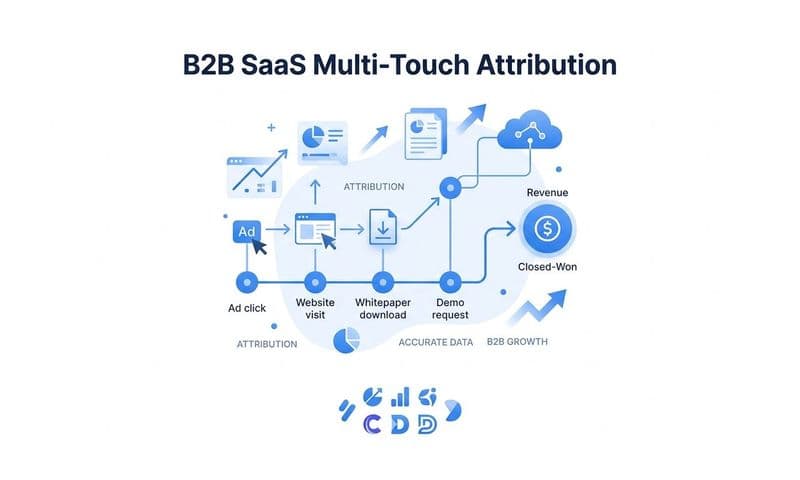
This is where multi-touch attribution platforms become valuable. These tools track every touchpoint in the customer journey and assign credit based on the actual influence of each channel. A user might interact with your Snapchat ad, your Google ad, your email campaign, and your organic search result before converting. Multi-touch attribution shows you how all these pieces work together.
Why does CRM integration matter beyond just tracking? Because it changes what you optimize for. When you only see conversions, you might scale a campaign that generates lots of low-quality leads. When you see revenue, you scale campaigns that generate high-value customers. The metrics you measure determine the decisions you make.
Set up regular reporting that combines Snapchat data with CRM data. A weekly report showing Snapchat spend, conversions, conversion cost, and attributed revenue gives you the full picture. You'll quickly identify which campaigns are profitable and which ones need adjustment.
Step 6: Validate Your Tracking Setup Before Scaling
You've installed the pixel, configured events, implemented server-side tracking, and connected your CRM. Everything looks right. But looking right and working right are different things. Before you scale budget, validate that your tracking captures data accurately.
Start with end-to-end testing. Run a test conversion through your entire funnel as if you were a real customer. Click one of your Snapchat ads (or use the test URL parameter to simulate an ad click). Browse your site, add a product to cart if applicable, and complete a conversion. Use a real email address you control so you can verify the data flow.
After completing the test conversion, check multiple places for the data. First, look in Snapchat Events Manager. Your conversion should appear within a few minutes, showing the correct event type and parameters. If you included a value with the conversion, verify it shows the correct amount, not zero or a static placeholder.
Next, check your website analytics. If you're using Google Analytics, the session should appear with the correct UTM parameters. Navigate to your acquisition reports and confirm you see the test session attributed to Snapchat as the source. If you're running multiple platforms, you may want to explore attribution tracking for multiple campaigns to manage everything effectively.
Then check your CRM. If you submitted a form, verify the lead record was created with the correct UTM parameters in the appropriate fields. This confirms the connection between your Snapchat campaign and your CRM is working.
Look for data discrepancies between platforms. Some variance is normal due to different attribution windows and counting methodologies, but large discrepancies indicate a problem. If Snapchat shows 100 conversions but your CRM only shows 60 leads from Snapchat, something in your tracking chain is broken.
Common discrepancy causes include: pixel firing before form submission completes, form submissions that don't include UTM parameters, conversion events firing multiple times for a single action, and attribution window differences between platforms. Investigate any variance above 10 to 15 percent.
Test custom audience creation based on pixel data. In Snapchat Ads Manager, create a custom audience of users who triggered a specific event, like ViewContent. If your pixel is working correctly, this audience should populate with users. If it stays at zero, your events aren't recording properly.
Create a tracking audit checklist and work through it systematically. Your checklist should include: base pixel firing on all pages, each conversion event firing on the correct pages, event parameters passing dynamic values correctly, Conversions API sending duplicate events with proper deduplication, UTM parameters appearing in analytics and CRM, and test conversions appearing in all systems.
Don't skip the validation step. The time you invest in confirming accurate tracking now prevents wasted ad spend later. Making optimization decisions on bad data is worse than making decisions on no data. At least with no data, you know you're guessing. Bad data makes you confident in wrong decisions.
Run multiple test conversions over several days to confirm consistency. A single successful test is good. Five successful tests over a week is better. You're looking for reliable, repeatable tracking that captures every conversion, every time.
Your Tracking Foundation is Built
With your Snapchat ads attribution tracking fully configured, you now have the visibility needed to make confident budget decisions. You're no longer guessing which campaigns work. You're measuring which ones drive actual business results.
Your quick-start checklist: Snap Pixel installed and verified on all pages, conversion events configured for each stage of your funnel, Conversions API sending server-side data to overcome tracking limitations, CRM connected for revenue attribution beyond conversions, and test conversions validated across all systems. Each piece works together to create a complete attribution picture.
The next step is patience. Let your tracking collect data for at least two weeks before making major optimization decisions. This gives Snapchat's algorithm time to learn from your conversion signals and gives you enough data to identify meaningful patterns rather than random fluctuations.
During this learning period, monitor your tracking daily. Check that events continue firing correctly. Watch for any sudden drops in conversion volume that might indicate a tracking issue. Verify that the data in Snapchat matches the data in your other systems within acceptable variance.
Once you have reliable attribution data flowing, you can start making the decisions that matter. Scale campaigns that show positive ROI based on revenue, not just conversions. Cut campaigns that generate activity but no value. Test new audiences and creative with confidence because you'll know exactly what works.
The difference between profitable Snapchat advertising and wasted budget is measurement. You've built the measurement foundation. Now you can build campaigns on top of it that actually drive growth.
Ready to elevate your marketing game with precision and confidence? Discover how Cometly's AI-driven recommendations can transform your ad strategy. Get your free demo today and start capturing every touchpoint to maximize your conversions.