Running campaigns on both Google Ads and Facebook Ads is standard practice for most marketing teams today. But when your data lives in two separate dashboards with two different attribution methodologies, getting a unified picture of what is actually driving revenue becomes a real challenge.
Google takes credit for conversions its way. Meta takes credit its way. And the numbers rarely add up. The result is duplicated conversions, inflated ROAS, and budget decisions based on incomplete data. Sound familiar?
This guide walks you through exactly how to track Google Ads and Facebook Ads together in a single, unified view so you can compare performance accurately, understand the full customer journey, and allocate budget with confidence.
By the end of these steps, you will have a cross-platform tracking system that captures every touchpoint, eliminates double-counted conversions, and gives you one source of truth for all your paid advertising data. Whether you are a solo media buyer or part of a larger marketing team, these steps are practical and designed to get you up and running quickly.
The core problem is this: Google defaults to data-driven attribution while Meta uses its own modeled attribution. Both platforms operate independently, each claiming credit for conversions without any awareness of what the other platform contributed. When you add up the conversions each platform reports, the total often exceeds your actual number of conversions by a significant margin. This is not a bug in either platform. It is simply what happens when two systems measure the same events using different rules.
The fix is not to trust one platform over the other. The fix is to build a tracking infrastructure that sits above both platforms, applies consistent rules, and gives you a view that neither dashboard can provide on its own. Let's build that system now.
Step 1: Audit Your Current Tracking Setup on Both Platforms
Before you build anything new, you need to understand exactly what you are working with. Skipping this audit is one of the most common mistakes marketers make, and it leads to layering new tracking on top of broken foundations.
Start by logging into both Google Ads and Meta Ads Manager. In Google Ads, navigate to Tools and Settings, then Conversions, and document every active conversion action. Note the conversion name, the source (website, app, phone call, import), the attribution model being used, and the conversion window. In Meta Ads Manager, go to Events Manager and review every active pixel event and Conversions API event that is currently firing.
Create a simple spreadsheet with these columns: Platform, Conversion Event Name, Tracking Method (pixel, tag, server-side), Attribution Window, Status (active, broken, duplicate), and Notes. Using a marketing campaign tracking spreadsheet as a template can help you organize this audit efficiently and ensure nothing is missed.
As you document, watch for these common issues:
Double-firing events: The same conversion being tracked by both a pixel and a server-side event without deduplication logic in place, which inflates your reported numbers.
Broken or outdated tags: Pixels or Google Tag Manager triggers that were set up months or years ago and are no longer firing correctly due to site changes.
Mismatched attribution windows: Google may be using a 30-day click window while Meta uses a 7-day click and 1-day view window by default. These differences mean the two platforms are measuring fundamentally different time periods, which is a major source of Facebook Ads reporting discrepancies.
Missing conversions on retargeting campaigns: Many teams track purchase events but forget to verify that lead or add-to-cart events are firing correctly on campaigns further up the funnel.
Once your audit is complete, you should have a clear picture of every conversion event across both platforms, its current status, and where the gaps are. This spreadsheet is your foundation. Do not move to Step 2 until it is complete and accurate.
Success indicator: You have a documented spreadsheet listing every active conversion event across Google and Facebook, the attribution window each uses, and a clear list of known gaps or issues to resolve.
Step 2: Standardize UTM Parameters Across Every Campaign
UTM parameters are the connective tissue between your ad platforms and your analytics tools. Without them, you cannot properly attribute traffic from Google versus Facebook in any third-party system. With inconsistent UTMs, your data becomes a mess of mismatched labels that are nearly impossible to analyze at scale.
The goal here is to create a naming convention that is consistent, logical, and used by everyone on your team for every campaign on both platforms.
Here is a standard UTM structure that works well across both Google and Facebook:
utm_source: Identifies the platform. Use "google" for Google Ads and "facebook" for Facebook Ads. Always lowercase, always consistent. Never use "Google" in one campaign and "google" in another, as analytics tools treat these as separate sources.
utm_medium: Identifies the channel type. Use "cpc" for paid search and paid social. Some teams use "paid-social" for Facebook to differentiate from search, which is a reasonable approach as long as it is applied consistently across all Facebook campaigns.
utm_campaign: Identifies the campaign name. Use a naming convention that reflects your campaign structure, such as "brand-search-us" or "prospecting-top-of-funnel-q2." Keep it descriptive but concise.
utm_content: Identifies the specific ad or creative. This is especially useful for Facebook where you may be running multiple creatives within the same ad set.
utm_term: Primarily used for Google search campaigns to capture the keyword. Less relevant for Facebook but still worth including in your template for completeness.
Build a UTM builder spreadsheet or use a tool like Google's Campaign URL Builder to generate consistent links. For a comprehensive overview of how UTM parameters work and why they matter, this guide on UTM tracking and how it helps your marketing covers the fundamentals in detail. The key is that every new campaign launch on both platforms goes through this process before the campaign goes live. Make it a required step in your campaign launch checklist.
Common pitfalls to avoid: inconsistent capitalization (analytics tools are case-sensitive), using different source names for the same platform across campaigns, and forgetting to add UTMs to retargeting campaigns, which are often the campaigns closest to conversion and the most important to track accurately.
For a deeper dive into building a UTM naming convention that scales across your entire marketing operation, Cometly's guide on UTM tracking and naming conventions walks through best practices in detail.
Success indicator: Every active ad across both Google Ads and Facebook Ads has properly formatted, consistent UTM parameters that follow your documented naming convention.
Step 3: Implement Server-Side Tracking to Capture Accurate Data
Here is the reality of browser-based tracking in today's environment: it is no longer reliable enough to be your primary tracking method.
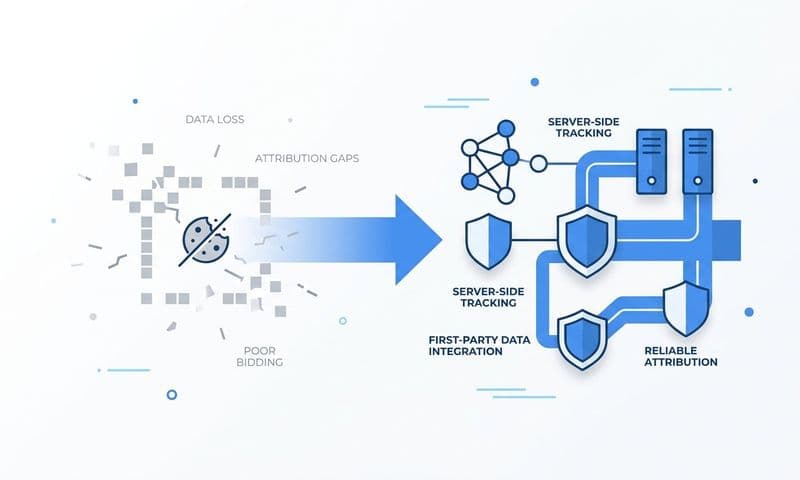
iOS privacy updates, starting with iOS 14.5 and continuing through subsequent releases, significantly reduced the accuracy of browser-based pixel tracking, particularly for Facebook. When users opt out of tracking on iOS devices, the Meta pixel cannot fire, which means those conversions go unrecorded. Add to this the impact of ad blockers, Safari's Intelligent Tracking Prevention, Firefox's Enhanced Tracking Protection, and the gradual deprecation of third-party cookies, and you are looking at a tracking environment where a meaningful portion of your conversions simply disappear from your data.
Server-side tracking solves this by sending conversion data directly from your server to the ad platforms, rather than relying on a browser-based pixel to fire. Understanding what a tracking pixel is and how it works helps clarify why server-side methods are now essential to supplement pixel-based approaches.
To implement server-side tracking, you have two primary options. The first is to use the native server-side solutions each platform offers: Google's Enhanced Conversions for Google Ads and Meta's Conversions API (CAPI). Both require technical setup that involves passing hashed customer data (email, phone number) from your server to the respective platform when a conversion occurs.
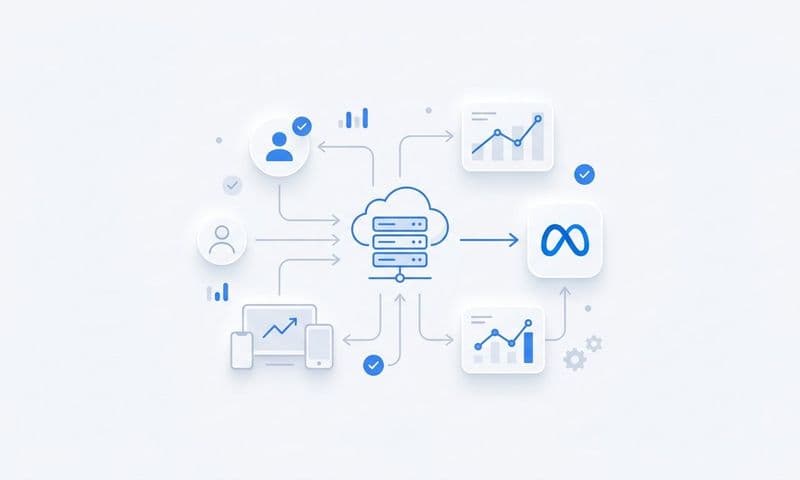
The second option is to use a unified tracking platform that handles server-side event collection across both Google and Facebook simultaneously. This is where Cometly's server-side tracking becomes particularly valuable. Rather than setting up separate server-side integrations for each platform, Cometly connects directly to your ad platforms and CRM, capturing every touchpoint from a single server-side implementation. This means you get complete conversion data for both Google and Facebook without managing two separate technical setups.
When setting up server-side tracking, make sure your deduplication logic is in place. If you are running both a browser pixel and server-side events simultaneously (which is the recommended approach for maximum coverage), both the pixel and the server-side event may fire for the same conversion. Without deduplication, this doubles your reported conversions. Both Meta's CAPI and Google's Enhanced Conversions have built-in deduplication mechanisms, but they need to be configured correctly.
Success indicator: Server-side events are firing correctly and you can see conversions being captured that your browser pixels were previously missing, giving you a more complete and accurate dataset.
Step 4: Connect Both Ad Platforms to a Unified Attribution Dashboard
This is the step where everything starts to come together. You have audited your tracking, standardized your UTMs, and implemented server-side tracking. Now you need a single place where data from both platforms flows into one consistent view.
Here is why this matters so much: comparing Google Ads Manager to Meta Ads Manager side by side will always produce conflicting numbers. It is not a data quality problem you can fix by cleaning up your pixels. It is a structural problem caused by each platform using its own attribution model, its own conversion windows, and its own methodology for assigning credit. You cannot reconcile two platforms that are fundamentally designed to measure differently.
The solution is to connect both platforms to a unified attribution tool that applies a single, consistent attribution model across all your data. This means pulling raw event data from Google Ads, Facebook Ads, your website, and your CRM into one system, then applying your chosen attribution model to that data rather than relying on what each platform reports natively.
Cometly is built specifically for this use case. It pulls data from Google Ads, Facebook Ads, your website, and your CRM into one analytics dashboard, then applies a consistent attribution methodology so you can compare performance across platforms on equal footing. Instead of seeing Google claim 200 conversions and Facebook claim 180 conversions when you only had 250 actual conversions, you see a unified view that reflects what actually happened.
When connecting your platforms, you will also need to choose an attribution model to apply consistently. The most common options are:
First-touch attribution: Gives full credit to the first ad interaction a customer had. Useful for understanding which channels are best at generating initial awareness.
Last-touch attribution: Gives full credit to the final ad interaction before conversion. This is what most ad platforms default to, and it tends to favor bottom-of-funnel channels like branded search.
Multi-touch attribution: Distributes credit across all touchpoints in the customer journey. This is generally the most accurate reflection of how your channels work together, though it requires more data and configuration to implement well. Understanding Facebook Ads attribution in particular helps you see why relying on a single platform's model leads to skewed results.
For a deeper breakdown of how to choose the right model for your business, Cometly's guide on common attribution models covers each option in practical detail.
Success indicator: Both Google Ads and Facebook Ads are feeding data into a single dashboard with one consistent attribution methodology applied, and you can see cross-platform performance without switching between native ad managers.
Step 5: Map the Full Customer Journey Across Platforms
Now that your data is flowing into one place, you can start asking questions that were impossible to answer before. How do customers actually move between Google and Facebook before they convert? Which platform starts the journey and which one closes it? Are there common multi-platform paths that consistently produce your highest-value customers?
This is where multi-touch attribution goes from being a theoretical concept to a practical tool for understanding your marketing.
One of the most common cross-platform journey patterns looks like this: a user sees a Facebook prospecting ad and visits your site but does not convert. A few days later, they search for your brand on Google, click a branded search ad, and complete a purchase. Under last-click attribution, Google gets all the credit. Under first-touch attribution, Facebook gets all the credit. Neither view is accurate. The reality is that both touchpoints played a role, and understanding that relationship changes how you think about budget allocation.
This pattern has a significant implication that many marketers miss: if you cut your Facebook prospecting budget because it appears to have low direct conversion rates in Meta Ads Manager, you may see your Google branded search conversions drop shortly after. Learning how to properly track marketing campaigns across platforms is what prevents these costly misattribution mistakes.
To map customer journeys effectively, you need your attribution platform to capture and display the sequence of ad interactions for each converting customer. This means tracking the first ad they clicked, every subsequent ad interaction, and the final touchpoint before conversion, along with timestamps and platform information for each event.
Cometly's customer journey tracking shows every ad interaction from first touch to final conversion across both Google and Facebook. You can see which platform combinations appear most frequently in the journeys of your highest-value customers, which gives you a data-driven basis for deciding how to invest across both channels.
Look for patterns like: which Facebook ad types most often appear at the beginning of journeys that end in Google search conversions? Which Google campaigns close the most journeys that started on Facebook? These insights are invisible in native platform reporting and only emerge when you can see the full journey in one place.
Success indicator: You can view complete customer journeys that span both Google and Facebook, and you can identify the most common multi-platform paths that lead to conversion.
Step 6: Sync Enriched Conversion Data Back to Each Ad Platform
Most marketers stop after building their unified dashboard. They have their accurate data, they can see what is working, and they feel like the job is done. But there is one more critical step that directly improves the performance of your actual ad campaigns: sending your accurate, deduplicated conversion data back to Google and Facebook.
Here is why this matters. Both Google and Meta rely heavily on the conversion signals they receive to power their automated bidding and targeting algorithms. When you use Smart Bidding in Google Ads or Meta's Advantage+ targeting, the platform's AI is learning from the conversion data you send it. If that data is incomplete or inaccurate because of pixel gaps, iOS restrictions, or missed conversions, the algorithm is learning from a flawed picture of your customers. Understanding how ad tracking tools help you scale ads using accurate data makes it clear why this feedback loop is so critical.
Now that you have more complete and accurate conversion data in your unified attribution system, you can send that enriched data back to each platform. This closes the loop and gives Google and Meta's algorithms a much better dataset to learn from.
Cometly's Conversion Sync feature handles this process by feeding attribution-verified, deduplicated conversion events back to both Meta and Google Ads. Rather than each platform only seeing the conversions its own pixel captured, it now receives a more complete set of conversion signals that reflect your actual results. This improves the quality of automated bidding, enhances audience targeting, and helps both platforms optimize toward the customers who actually convert and generate revenue.
Think of it as a virtuous cycle. Better data into the platforms leads to better ad delivery. Better ad delivery leads to better performance. Better performance generates more high-quality conversion data. And that data feeds back into the platforms to improve delivery further.
The common pitfall here is skipping this step entirely. Many marketers invest significant effort in building accurate attribution reporting but never close the loop by sending that data back to the platforms. The result is that their ad campaigns keep optimizing on flawed data even though accurate data exists in their dashboard. Do not make that mistake.
Success indicator: Both Google Ads and Facebook Ads are receiving clean, accurate, deduplicated conversion signals from your attribution platform, and you begin to see improvements in campaign performance as the algorithms learn from better data.
Step 7: Analyze, Optimize, and Reallocate Budget With Confidence
You have built the infrastructure. Now it is time to use it to make smarter decisions.
With unified tracking in place, open your attribution dashboard and start reviewing cross-platform performance with fresh eyes. You are looking for insights that were invisible before, specifically the ones that change how you think about budget allocation across Google and Facebook.
Start with your top-performing campaigns on each platform. But instead of measuring performance by what each platform reports natively, measure it by the unified attribution data you now have. Which campaigns are actually driving revenue when you apply a consistent attribution model? Which ones looked strong in their native dashboard but underperform when you account for the full customer journey?
Look for cross-platform dependencies. As mentioned in the previous step, Facebook prospecting often plays a role in driving Google branded search conversions. If your unified data shows that a significant portion of Google search converters had a Facebook ad interaction earlier in their journey, that is a critical insight. It means your Facebook spend is generating value that does not show up in Meta Ads Manager at all. Leveraging paid ads analytics across both platforms is the only way to surface these hidden cross-channel relationships.
Use your data to identify the platform and campaign combinations that produce your highest true ROAS. This might mean increasing budget on Facebook prospecting campaigns that feed high-intent search behavior, or it might mean identifying Google display campaigns that look good in last-click reporting but contribute little to actual customer journeys.
Cometly's AI-powered recommendations can surface these insights automatically, flagging high-performing ads and suggesting optimization moves across both platforms based on your unified attribution data. Rather than manually combing through reports to find these patterns, the AI identifies them and presents actionable recommendations you can act on directly.
Set up a regular review cadence, weekly for active campaigns and biweekly for broader budget allocation decisions. Consistency matters here. The value of unified tracking compounds over time as you accumulate more data about how your channels interact and as your optimization decisions improve campaign performance.
Success indicator: You are making budget reallocation decisions based on unified, accurate cross-platform data rather than conflicting native platform reports, and your overall ROAS is improving as a result.
Your Cross-Platform Tracking Checklist
You now have a complete system for tracking Google Ads and Facebook Ads together. Here is a quick-reference summary of everything you have built:
1. Audit your current tracking setup and document every conversion event, attribution window, and known gap across both platforms.
2. Standardize UTM parameters with a consistent naming convention applied to every campaign on both Google and Facebook.
3. Implement server-side tracking to capture conversions that browser pixels miss due to iOS restrictions, ad blockers, and cookie limitations.
4. Connect both platforms to a unified attribution dashboard that applies a single, consistent attribution model across all your data.
5. Map the full customer journey to understand how customers move between Google and Facebook touchpoints before converting.
6. Sync enriched conversion data back to each ad platform so their algorithms can optimize based on accurate, complete signals.
7. Analyze your unified data regularly and reallocate budget toward the platform and campaign combinations that drive the highest true revenue.
Tracking Google Ads and Facebook Ads together is not just about convenience. It is about making smarter budget decisions based on accurate, unified data instead of two conflicting reports that each tell a self-serving story. The marketers who build this infrastructure are the ones who can see what is actually working, protect high-performing channels from being cut based on misleading data, and scale with confidence.
Cometly is built specifically to solve this cross-platform tracking challenge. It connects your ad platforms, website, and CRM into one source of truth, applies consistent attribution across all your data, maps complete customer journeys, and syncs enriched conversion signals back to Google and Meta to improve algorithmic performance. Everything you need to move from fragmented platform reports to a single, accurate view of your marketing is in one place.
Ready to stop guessing and start making budget decisions based on data you can actually trust? Get your free demo today and start capturing every touchpoint to maximize your conversions.