YouTube advertising offers massive reach, but many marketers are stuck staring at the same frustrating question: which ads are actually driving conversions? You can see impressions, views, and click-through rates all day long, but connecting those numbers to real revenue often feels like guessing in the dark.
The challenge is real. Customers rarely see one YouTube ad and immediately buy. They might watch a TrueView ad on their phone during lunch, search for your brand on a laptop that evening, click a retargeting ad two days later, and finally convert through an email link. By the time they convert, last-click attribution has already erased most of that story.
Add in cross-device behavior, view-through conversions, iOS privacy restrictions, and ad blockers, and you have a tracking problem that goes well beyond checking your Google Ads dashboard. The good news is that a reliable, accurate YouTube attribution system is absolutely buildable. It just requires the right layers working together.
This guide walks you through six concrete steps to track YouTube ads to conversions with accuracy and confidence. Whether you are running TrueView in-stream ads, bumper ads, or YouTube Shorts campaigns, this framework applies across all formats. By the end, you will have a system that captures every touchpoint, attributes conversions fairly, and gives your optimization decisions a solid data foundation.
Step 1: Define Your Conversion Events and Goals Before Anything Else
Before you install a single tag or configure a single setting, you need to get crystal clear on what a conversion actually means for your business. This sounds obvious, but skipping this step is one of the most common reasons YouTube tracking setups produce misleading data.
Start by identifying your macro-conversions. These are the actions that directly tie to revenue: a completed purchase, a submitted demo request, a signed contract, or an app install that leads to a paid subscription. These are the outcomes your campaigns ultimately need to drive.
Then map out your micro-conversions. For YouTube specifically, this step is critical. Because YouTube often functions as a top-of-funnel or mid-funnel channel, it frequently assists rather than closes. A viewer might watch your ad, visit your site, read a blog post, and subscribe to your email list before ever becoming a customer. If you only track macro-conversions, you will consistently undervalue what YouTube is doing for your pipeline.
Micro-conversions worth tracking for YouTube campaigns include:
Email sign-ups: A strong signal that YouTube introduced someone to your brand who wanted to learn more.
Content downloads or lead magnet submissions: These indicate intent and move prospects deeper into your funnel.
Product page visits or pricing page views: Engagement signals that show YouTube drove meaningful consideration.
Free trial starts: For SaaS businesses, this often sits between the first YouTube touchpoint and a paid conversion.
Once you know what you are tracking, set up or verify your conversion actions inside Google Ads. Pay close attention to three settings that many marketers configure incorrectly.
First, the counting method. For lead generation, set conversions to count "one" per click so a single user submitting the same form twice does not inflate your numbers. For e-commerce, "every" conversion makes more sense since one user can legitimately make multiple purchases. Understanding the nuances of tracking conversions for lead generation can help you avoid common pitfalls here.
Second, the conversion window. The default window in Google Ads is often too short for YouTube's consideration cycle. Someone who watches a YouTube ad for a high-consideration product like software, a service, or a significant purchase may take weeks to convert. Extend your conversion window to 30, 60, or even 90 days depending on your typical sales cycle length.
Third, assign conversion values wherever possible. Even estimated values give Google's algorithm something meaningful to optimize toward, which becomes important when you reach Step 6.
Step 2: Implement Google Ads Conversion Tracking and the Google Tag on Your Site
With your conversion events defined, the next step is getting the technical tracking infrastructure in place. This is where most of the foundational data capture happens for YouTube ad clicks.
Start by installing the Google tag (gtag.js) across your entire website, not just your conversion pages. The Google tag needs to be present on every page so it can read the GCLID (Google Click ID) that gets appended to URLs when someone clicks a YouTube ad. If the tag only lives on your thank-you page, you will miss a significant portion of the attribution chain.
If you are using Google Tag Manager, deploy the Google Ads conversion tracking tag and the conversion linker tag through your container. The conversion linker is particularly important because it stores the GCLID in a first-party cookie on your domain, which helps maintain attribution across pages and sessions.
Next, configure enhanced conversions in Google Ads. This feature supplements your existing conversion tags by hashing first-party data such as email addresses and phone numbers collected during a conversion event, then sending that hashed data alongside the conversion signal. Google can then match this information to logged-in Google users, improving YouTube ads tracking accuracy even when cookies are unavailable or blocked.
Enhanced conversions are especially valuable for YouTube because many viewers are logged into their Google accounts while watching. This creates a more reliable identity signal than a third-party cookie ever provided.
After implementation, verify everything is working correctly. Use Google Tag Assistant to confirm your tags are firing on the right pages and passing the correct parameters. Check the real-time conversion reports in Google Ads to see if test conversions are registering. Do not assume the tags are working just because they were deployed. Actually test them.
Here is an honest caveat worth naming: even with a perfectly implemented Google tag and enhanced conversions, browser-based tracking alone leaves gaps. Safari's Intelligent Tracking Prevention, Firefox's Enhanced Tracking Protection, and widespread ad blocker usage all limit what client-side pixels can capture. Cross-device journeys add another layer of complexity. This is exactly why Step 4 on server-side tracking is not optional if you want accurate data in 2026.
Step 3: Connect Your CRM and Revenue Data to Close the Attribution Loop
Here is a gap that surprises many marketers when they first encounter it: the "conversions" number in your Google Ads dashboard is not the same as revenue. It is not even necessarily qualified leads. It is form submissions, button clicks, and page visits that matched your conversion action criteria. That distinction matters enormously when you are trying to evaluate the true ROI of your YouTube campaigns.
Connecting your CRM to your tracking stack is what transforms surface-level conversion counts into meaningful business intelligence. When you can track leads to revenue, you stop optimizing for vanity metrics and start optimizing for what actually grows your business.
The practical mechanism for feeding CRM data back into Google Ads is offline conversion imports. Here is how it works: when a lead converts on your site, Google Ads records the GCLID associated with that click. Your CRM stores this GCLID alongside the lead record. When that lead later becomes a qualified opportunity or a closed-won customer, you export those CRM outcomes and upload them to Google Ads as offline conversions, matched by GCLID.
This tells Google's algorithm which YouTube ad clicks actually resulted in real business outcomes, not just form fills. Over time, this signal teaches the algorithm to find more people who are likely to become actual customers, not just people who are likely to submit a form. Learning how to track offline conversions from ads is essential to making this workflow reliable.
To make this work, you need to capture and store the GCLID in your CRM at the moment of lead creation. Most CRM integrations and form tools can pass this as a hidden field. If your current setup does not do this, it is worth prioritizing because it unlocks the entire offline conversion import workflow.
Platforms like Cometly simplify this process by connecting your ad platforms, CRM data, and website tracking in one place. Instead of manually managing GCLID capture and CSV uploads, you get a unified view of how YouTube ad clicks progress through your entire funnel to closed revenue, with the attribution data flowing automatically.
Step 4: Layer in Server-Side Tracking for Data You Can Trust
Browser-based tracking worked well for years. In 2026, it is no longer sufficient on its own. The combination of Safari's Intelligent Tracking Prevention, Firefox's Enhanced Tracking Protection, rising ad blocker adoption, and evolving consent requirements means that a meaningful portion of conversion events simply never get recorded by client-side pixels.
The result is a systematic undercount of your YouTube ad conversions. You are not seeing random noise. You are seeing a consistent gap between what actually happened and what your tracking reports show. And that gap directly affects the optimization decisions you make. This is a core reason why so many advertisers experience wasted ad budget on untracked conversions.
Server-side tracking solves this by moving the data collection process off the browser and onto your server. Instead of relying on a JavaScript tag in the user's browser to fire and successfully send data to Google, your server receives the conversion event directly and relays it to Google Ads through the API. Browser restrictions, ad blockers, and cookie limitations become largely irrelevant because the data never travels through the browser at all.
Conceptually, the setup involves a server-side endpoint that listens for conversion events from your website or application, enriches those events with any available first-party data, and then sends them to Google Ads via the Google Ads API or Google's server-side tagging infrastructure through Google Tag Manager Server-Side. For a deeper dive into how this works, read our guide on what is server-side tracking for ads.
This approach also gives you more control over the data you send. You can validate events before they are transmitted, strip out personally identifiable information that should not be passed to ad platforms, and ensure that only high-quality, verified conversion signals reach Google's algorithm.
Cometly's server-side tracking is built specifically to handle this layer. It captures conversion events that browser pixels miss, ensuring your YouTube ad data stays complete even as the browser environment becomes increasingly restrictive. This is not a future-proofing exercise. It is a present-day necessity for any advertiser who wants accurate attribution data.
To measure the impact of adding server-side tracking, compare your pixel-reported conversions against your server-side reported conversions over the same time period. Many advertisers discover a meaningful gap they had no idea existed. That gap represents real conversions that were previously invisible to your optimization system.
Step 5: Apply Multi-Touch Attribution to See YouTube's True Impact
Last-click attribution and YouTube ads are a particularly bad combination. Here is why: YouTube almost never gets the last click. It introduces, educates, and builds consideration. Then the user searches for your brand, clicks a Google Search ad or an organic result, and converts. Last-click gives all the credit to that final touchpoint and assigns zero value to the YouTube ad that started the whole journey.
The practical consequence is that YouTube campaigns consistently look underperforming under last-click models, which leads marketers to reduce budgets for channels that are actually doing meaningful work at the top and middle of the funnel. It is a data problem that creates a strategy problem.
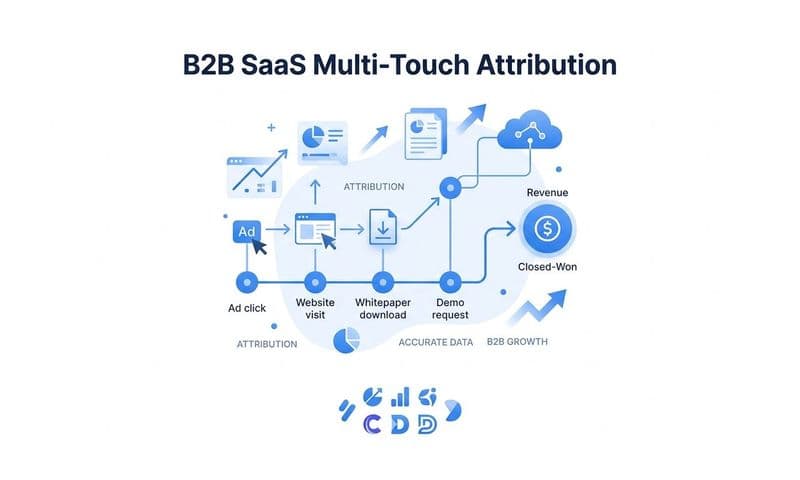
Multi-touch attribution distributes conversion credit across all the touchpoints in a customer's journey. The right model depends on your business and how you think about channel value. Accurately tracking conversions across multiple touchpoints is what makes this possible. Here is a quick overview of the models most relevant to YouTube:
Linear attribution: Splits credit equally across every touchpoint. Simple to understand and gives YouTube some credit for its role, but does not differentiate between a 30-second view and a direct purchase click.
Time-decay attribution: Gives more credit to touchpoints closer to the conversion. This can still undervalue YouTube's early-funnel role, but it is more nuanced than last-click.
Position-based attribution: Assigns the most credit to the first and last touchpoints, with the remaining credit distributed across the middle. This model tends to treat YouTube well when it is the first introduction to a brand.
Data-driven attribution: Uses machine learning to assign credit based on the actual contribution each touchpoint made to conversions in your account. This is generally the most accurate model when you have sufficient conversion volume, and Google recommends it for most advertisers.
Cometly's multi-touch attribution connects every touchpoint across channels, giving you a clear view of how YouTube ads contribute to conversions even when they are not the final click before purchase. You can see YouTube's role in assisted conversions, understand which campaigns are driving top-of-funnel awareness that eventually converts, and make budget decisions based on the full picture rather than a distorted last-click snapshot.
A practical exercise worth doing: pull your YouTube campaign performance under last-click attribution, then compare it against a multi-touch model. The campaigns that look marginal under last-click often look quite strong when you account for their assisted conversion contribution. Those are exactly the campaigns you may be underinvesting in.
Step 6: Sync Enriched Conversion Data Back to Google Ads for Smarter Optimization
Everything you have built in the previous five steps creates something valuable: a clean, accurate, enriched picture of which YouTube ad interactions actually lead to real business outcomes. Step 6 is about putting that data to work by feeding it back into Google's algorithm.
Google Ads uses conversion data to power its Smart Bidding strategies. When you run Target CPA or Target ROAS campaigns, the algorithm is constantly learning which users, placements, times, and creative combinations are most likely to drive conversions. The quality of that learning depends entirely on the quality of the conversion signals you send back.
If you are only sending pixel-fired form submissions, Google's algorithm is optimizing toward people who fill out forms, not necessarily people who become customers. This is a common reason ads show conversions but no sales. If you layer in CRM-validated outcomes, qualified lead signals, and actual revenue data, the algorithm starts optimizing toward what actually matters for your business.
This is what conversion sync accomplishes. Instead of relying on the raw pixel events that fire on your site, you send verified, enriched conversion events back to Google Ads. These events reflect real business outcomes validated by your CRM and enriched with first-party data that improves match rates.
Cometly's Conversion Sync feature automates this process. It takes the enriched conversion data flowing through your attribution system and sends it back to Google Ads and other ad platforms, so the algorithm has the best possible signal to work with. For advertisers managing campaigns on multiple networks, understanding how to approach tracking conversions across multiple ad platforms ensures consistency across your entire media mix.
To measure the impact, monitor your cost per acquisition and return on ad spend after enabling conversion sync. Give it at least two to four weeks for Google's algorithm to accumulate enough signal and adjust its bidding behavior. Many advertisers see meaningful improvements in campaign efficiency as the algorithm learns to prioritize the users and placements that actually drive revenue, not just conversion events.
Putting It All Together: Your YouTube Ad Tracking Checklist
Building a complete YouTube attribution system is not a one-afternoon project, but it is entirely achievable when you work through it step by step. Here is a quick-reference checklist to make sure nothing falls through the cracks.
Conversion events defined: Macro and micro-conversions identified, conversion actions configured in Google Ads with correct counting methods, appropriate conversion windows, and assigned values.
Google tag deployed: Google tag installed site-wide, conversion linker tag active, enhanced conversions configured to improve match rates with hashed first-party data.
CRM connected: GCLID capture enabled on lead forms, offline conversion imports set up to send CRM outcomes back to Google Ads, attribution loop closed from ad click to closed revenue.
Server-side tracking active: Server-side endpoint capturing conversion events that browser pixels miss, data gap between pixel and server-side reporting measured and monitored.
Multi-touch attribution applied: Attribution model selected and implemented, YouTube's assisted conversion role analyzed, budget decisions informed by full-funnel data rather than last-click snapshots.
Conversion sync enabled: Enriched, CRM-validated conversion events flowing back to Google Ads, algorithm optimizing toward real revenue signals, CPA and ROAS trends monitored post-implementation.
One final note: treat this as a living system, not a one-time setup. Ad platforms regularly update their tracking requirements, attribution models, and API specifications. Build in a quarterly audit to verify that tags are firing correctly, conversion windows still match your sales cycle, and your CRM integration is passing clean data.
Cometly brings all of these layers into one platform, from server-side tracking to multi-touch attribution to conversion sync. Instead of stitching together multiple tools and hoping the data stays consistent, you get a unified system that tracks YouTube ads to conversions accurately, surfaces AI-powered recommendations for optimization, and feeds enriched data back to Google so your campaigns keep getting smarter. Get your free demo today and start capturing every touchpoint your YouTube campaigns are generating, so every optimization decision you make is built on data you can actually trust.