
Automotive dealerships operate in one of the most competitive and high-stakes advertising environments in local business. Between paid search, social media, display ads, third-party listing sites, and walk-in traffic, the path a buyer takes from first awareness to a signed deal is rarely straightforward.
Most dealerships are spending significant budget across multiple channels but have limited visibility into which efforts are actually driving showroom visits, test drive bookings, and closed sales. That disconnect between ad spend and revenue is the core problem that tracking for automotive dealerships is designed to solve.
This article breaks down seven practical strategies dealership marketing teams and their agency partners can use to build a reliable tracking foundation. Each strategy addresses a specific gap in the typical dealership marketing stack, from capturing multi-touch customer journeys to feeding better conversion data back to ad platforms.
Whether you are managing a single-point dealership or a large dealer group, these strategies will help you move from gut-feel decisions to data-driven ones. The result is a clearer picture of which channels, campaigns, and creatives are generating real pipeline and revenue, not just clicks and impressions.
1. Build a First-Party Data Foundation Before Spending More on Ads
The Challenge It Solves
Automotive buyers typically research across many sessions and devices before ever setting foot in a showroom. Browser privacy changes and the broad reduction in pixel-based tracking reliability mean that dealerships relying solely on third-party cookies are flying partially blind. Without a solid first-party data layer, every other tracking strategy you layer on top will have gaps.
The Strategy Explained
A first-party data foundation starts with syncing your CRM, website, and lead form events into a unified tracking system before you scale ad spend further. CRM platforms commonly used by dealerships, such as DealerSocket, VinSolutions, and Reynolds and Reynolds, hold valuable conversion data that often never gets connected back to ad platforms or analytics tools.
The goal is to make that data accessible and actionable. When your CRM events, website interactions, and form submissions are all flowing into a central system, you create the tracking backbone that every other strategy in this guide depends on. Think of it as laying the plumbing before you turn on the water.
Implementation Steps
1. Audit your current CRM setup and identify which lead events are being captured, including form fills, phone calls, chat submissions, and appointment bookings.
2. Connect your CRM to your analytics and attribution platform so that lead data flows automatically rather than sitting in a silo.
3. Implement first-party tracking scripts on your dealership website to capture user interactions with key pages, such as vehicle detail pages, finance calculators, and inventory search results.
4. Validate that data is flowing correctly by cross-referencing CRM records with events captured in your analytics platform before scaling any paid campaigns.
Pro Tips
Do not wait until your campaigns are running to build this foundation. Retroactively trying to attribute leads to campaigns without a clean data layer is far more difficult than setting it up correctly from the start. Prioritize data quality over data volume: a smaller set of clean, verified events is more valuable than a large set of unreliable ones. A proper attribution tracking setup ensures your data layer supports every campaign decision you make going forward.
2. Implement Multi-Touch Attribution to Understand the Full Buyer Journey
The Challenge It Solves
Last-click attribution is particularly misleading in automotive marketing because purchase decisions rarely happen in a single session. A buyer might see a display ad, search for your dealership a week later, browse your inventory from a social ad, and then convert on a branded search. Last-click gives all the credit to that final branded search and makes every upper-funnel channel look like it is not working.
The Strategy Explained
Multi-touch attribution distributes credit across all the touchpoints that contributed to a conversion. For long purchase cycles like automotive, this matters enormously. Models such as time-decay attribution give more credit to touchpoints closer to the conversion, which often reflects the reality of how buyers move through the funnel. Data-driven models go further by using actual conversion path data to assign credit dynamically.
By switching from last-click to a multi-touch model, dealership marketers often discover that channels they were considering cutting, such as display or paid social, are actually playing a meaningful role in generating leads that eventually close. This prevents underinvestment in upper-funnel awareness campaigns that warm buyers before they are ready to visit.
Implementation Steps
1. Identify all the channels currently driving traffic to your dealership website and confirm they are being tracked with consistent parameters.
2. Choose an attribution model that reflects your typical buyer journey. For most dealerships, time-decay or data-driven models are more representative than linear or last-click.
3. Use an attribution platform that lets you compare models side by side so you can see how credit shifts across channels under different assumptions.
4. Review your budget allocation against multi-touch data and identify any channels that are systematically undervalued by your current reporting.
Pro Tips
Attribution model selection is not a one-time decision. Revisit your model choice as your campaign mix evolves and as you accumulate more conversion path data. Platforms like Cometly allow you to compare attribution models in real time, so you can see the full picture without committing to a single view of the truth.
3. Use Server-Side Tracking to Recover Lost Conversion Signals
The Challenge It Solves
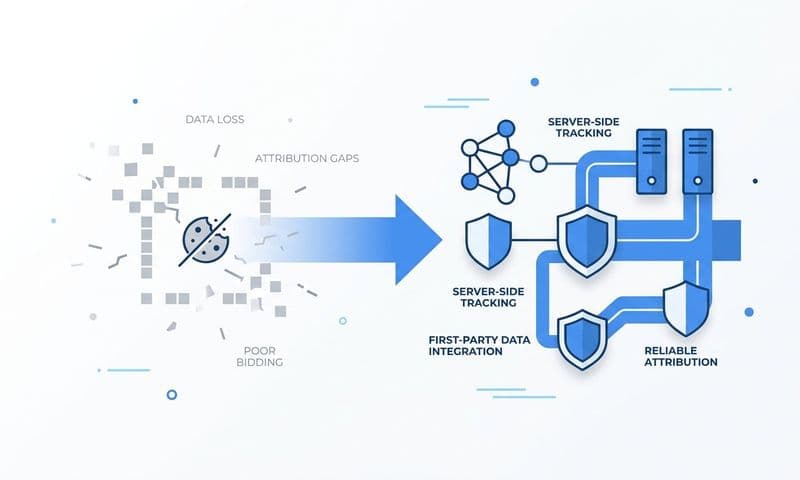
Ad blockers, iOS privacy changes, and browser-level restrictions have meaningfully reduced the completeness of browser-based pixel data across the industry. When a lead submits a test drive request on your website but their browser blocks the pixel from firing, that conversion never reaches your ad platform. Over time, this gap distorts your campaign performance data and causes ad algorithms to optimize against an incomplete picture.
The Strategy Explained
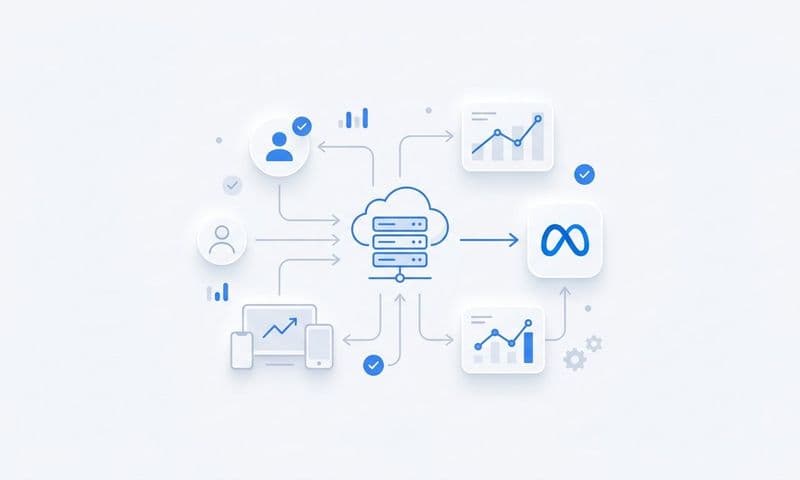
Server-side tracking routes conversion events directly from your server to ad platforms, bypassing browser-level restrictions entirely. Instead of relying on a pixel in the buyer's browser to fire correctly, the event is sent server-to-server, making it far more reliable. The two primary implementations for dealerships are Meta's Conversion API (CAPI) and Google's Enhanced Conversions.
When implemented correctly, server-side tracking recovers conversion signals that would otherwise be lost, giving your ad platforms a more complete and accurate dataset to optimize against. This directly improves the performance of automated bidding strategies and audience targeting.
Implementation Steps
1. Audit your current pixel-based tracking to identify the gap between server-side events and browser-side events. This gap represents the volume of conversions you are currently missing.
2. Implement Meta Conversion API and Google Enhanced Conversions for your key conversion events, including lead form submissions, test drive bookings, and phone call completions.
3. Set up event deduplication to ensure that conversions captured by both the browser pixel and the server-side integration are not counted twice in your reporting.
4. Monitor event match quality scores in Meta Events Manager and Google Ads to confirm that your server-side events are being matched accurately to user profiles.
Pro Tips
Event deduplication is the step most teams skip, and it causes significant over-reporting of conversions. Always use a consistent event ID across your browser and server-side events so that platforms can identify and remove duplicates automatically. Cometly's server-side tracking infrastructure handles this automatically, reducing the technical burden on your team.
4. Track Every Lead Source, Not Just the Last Ad Clicked
The Challenge It Solves
Dealerships receive leads from a wide variety of sources: their own website, third-party listing platforms like Cars.com, AutoTrader, and CarGurus, paid search campaigns, and social ads. Without consistent source tracking, these leads arrive in the CRM as generic entries with no clear record of where they came from. Marketing teams lose the ability to evaluate which sources are actually generating qualified leads that progress through the sales process.
The Strategy Explained
Consistent UTM tagging across every paid channel, combined with a system that passes that source data through to CRM records, gives your team full lead source visibility throughout the entire sales process. The key word here is consistent. Inconsistent UTM structures create fragmented data that is difficult to analyze and easy to misinterpret. Understanding what UTM tracking is and how it works is essential before building out your tagging taxonomy.
When source data is preserved in the CRM record, sales managers can see exactly where each lead originated. Marketing teams can then connect lead source to sales outcomes, identifying which sources generate leads that actually close rather than just leads that fill the funnel.
Implementation Steps
1. Create a standardized UTM taxonomy for your dealership that covers source, medium, campaign, and content parameters. Apply this consistently across every paid channel and third-party listing platform.
2. Configure your CRM to capture and store UTM parameters from incoming leads. Many dealership CRM platforms support this natively or through a simple integration.
3. Audit your current lead sources to identify any gaps where source data is not being captured, such as phone calls, chat tools, or third-party form submissions.
4. Use call tracking tools to assign source attribution to phone call leads, which are often a significant volume driver for dealerships but are frequently untracked.
Pro Tips
Third-party listing platforms often use their own tracking parameters that can overwrite your UTMs. Work with each platform to understand how their tracking interacts with yours, and configure your CRM to capture both sets of data where possible. The goal is to never have a lead arrive in your CRM without a clear source record attached to it. Reviewing call tracking metrics alongside your digital lead sources gives you a more complete picture of every inbound opportunity.
5. Connect Ad Spend Directly to Pipeline and Revenue
The Challenge It Solves
Cost-per-lead is one of the most commonly used metrics in dealership marketing, but it is also one of the most misleading. A channel that generates a high volume of cheap leads is not necessarily valuable if those leads never progress to test drives or signed deals. Without pipeline and revenue attribution, marketing teams optimize for lead volume rather than lead quality, which often leads to wasted budget.
The Strategy Explained
Pipeline attribution tracks how leads progress through each stage of your sales process, from initial inquiry to test drive booked to deal signed. Revenue attribution takes this further by connecting the final vehicle sale back to the originating ad campaign, giving marketers a true cost-per-sale figure rather than just a cost-per-lead.
This shift in measurement changes how budgets get allocated. When you can see that a particular paid search campaign generates leads that close at a high rate while a display campaign generates leads that rarely progress past the first call, you can make informed decisions about where to invest more and where to pull back. Choosing the right marketing attribution platform for revenue tracking is what makes this level of visibility achievable.
Implementation Steps
1. Map out your dealership's sales pipeline stages and ensure each stage is tracked as a distinct event in your CRM, including lead received, contacted, test drive scheduled, test drive completed, and deal closed.
2. Connect your CRM pipeline data to your attribution platform so that progression through each stage is tied back to the originating ad campaign and channel.
3. Calculate cost-per-stage metrics for each channel, such as cost per test drive booked and cost per deal closed, to get a clearer picture of channel efficiency beyond cost per lead.
4. Set up revenue attribution by integrating your CRM deal values with your ad spend data, allowing you to calculate return on ad spend at the campaign level.
Pro Tips
If your dealership uses a payment or deal management system, consider integrating it directly with your attribution platform. Cometly supports revenue integrations that connect deal data to ad spend, giving you a real-time view of which campaigns are generating actual vehicle sales rather than just leads sitting in the top of your funnel.
6. Feed Enriched Conversion Data Back to Ad Platforms
The Challenge It Solves
Ad platform machine learning models, including Meta Advantage+ and Google Smart Bidding, rely on conversion signal quality to optimize targeting and bidding. When the only conversion signal you send back to these platforms is a generic "lead form submitted" event, the algorithm has limited information to work with. It cannot distinguish between a lead that booked a test drive and a lead that never responded to a follow-up call.
The Strategy Explained
By sending CRM-based conversion events back to Meta and Google, you give ad platform algorithms a much richer signal to optimize against. Instead of optimizing for any form submission, the platform can optimize for the specific behaviors that predict a vehicle sale, such as test drives booked, appointments confirmed, or deals signed.
This is done through offline conversion imports and server-side event integrations. When you send a "test drive booked" event back to Meta with the original click ID attached, Meta's algorithm can identify the characteristics of users who progress to that stage and find more of them. Over time, this improves targeting efficiency and lowers your cost per acquisition. Addressing Facebook pixel tracking data loss is a critical first step before layering in enriched offline signals.
Implementation Steps
1. Identify the CRM events that are most predictive of a vehicle sale at your dealership. Common choices include test drive scheduled, test drive completed, and deal signed.
2. Set up offline conversion imports in Google Ads to send these CRM events back to the platform with the original Google Click ID (GCLID) attached for accurate matching.
3. Configure Meta's Conversion API to send CRM-based events back to your ad account, using the original FBC and FBP parameters to match events to the correct ad interactions.
4. Monitor conversion match rates in each platform to ensure your CRM events are being matched accurately. Low match rates indicate a need to improve the quality of customer data being passed with each event.
Pro Tips
The further down the funnel the conversion event you send back to ad platforms, the more valuable the signal. Sending "deal signed" events back to Meta and Google is significantly more powerful than sending "lead form submitted" events, because it trains the algorithm on the characteristics of buyers who actually purchase. Start with whatever CRM events you can access today and work toward sending deeper funnel signals over time.
7. Use Cross-Channel Analytics to Allocate Budget with Confidence
The Challenge It Solves
Dealerships typically advertise across paid search, paid social, display, video, and third-party automotive listing sites simultaneously. Without a unified view of performance, budget decisions get made based on siloed platform reports where every channel claims credit for the same conversions. Paid search says it drove the lead. Meta says it drove the lead. The listing site says it drove the lead. You end up with inflated numbers across the board and no clear signal about where to invest more.
The Strategy Explained
A single source of truth for cross-channel performance consolidates data from every ad platform and lead source into one dashboard, applying consistent attribution logic across all of them. This allows marketing teams to compare true channel contribution side by side and make budget allocation decisions based on actual revenue impact rather than platform-reported metrics. The best cross-platform analytics tools eliminate the attribution chaos that comes from relying on each platform's self-reported numbers.
AI-driven insights take this further by surfacing which campaigns, ad sets, and creatives are driving the highest-quality leads and the most vehicle sales. Instead of manually reviewing reports across five different platforms, you get a unified view with clear recommendations about where to scale and where to cut.
Implementation Steps
1. Integrate all active ad platforms into a single analytics tool, including Google Ads, Meta Ads, display networks, and any third-party automotive listing platforms you use.
2. Apply consistent attribution logic across all channels so that credit is assigned based on a single model rather than each platform's self-reported numbers.
3. Build a dashboard that shows cost, leads, pipeline progression, and revenue by channel and campaign in one view. This becomes your primary decision-making tool for budget allocation.
4. Review cross-channel performance on a regular cadence, at minimum weekly, and use the data to shift budget toward channels that are demonstrably driving vehicle sales.
Pro Tips
When reviewing cross-channel data, always compare channels on the same metric. Cost per lead is not a fair comparison between a branded paid search campaign and a top-of-funnel display campaign. Use pipeline-stage metrics and cost-per-sale figures to create an apples-to-apples comparison across channels with different roles in the buyer journey. Cometly's cross-channel analytics bring all of this together in one place, giving dealership marketing teams and their agency partners a real-time view of what is actually driving revenue.
Putting It All Together: Your Implementation Roadmap
Tracking for automotive dealerships is not just a technical exercise. It is the foundation that separates dealerships that scale their ad spend confidently from those that guess and hope. The seven strategies covered in this guide work together as a system, and the sequence in which you implement them matters.
Start with your first-party data foundation and CRM integration. Without clean, reliable data flowing from your website and CRM, every other strategy will produce incomplete results. Once your data layer is solid, implement multi-touch attribution and server-side tracking to ensure you are capturing the full picture of your buyer journey without losing signals to browser restrictions.
From there, layer in consistent UTM tagging and lead source tracking to give your CRM records the source context they need. Then connect that data to pipeline and revenue attribution so you can measure true cost-per-sale rather than just cost-per-lead. Feed enriched conversion events back to your ad platforms to improve algorithm performance, and finally consolidate everything into a cross-channel analytics view that gives you a single source of truth for budget decisions.
Platforms like Cometly are built to bring all of these layers together in one place, connecting your ad platforms, CRM, and website to give you a real-time view of which campaigns are driving actual vehicle sales. The dealerships that win in a competitive market are the ones that know their numbers and act on them faster than their competitors.
Ready to elevate your marketing with precision and confidence? Discover how Cometly's AI-driven recommendations can transform your ad strategy. Get your free demo today and start capturing every touchpoint to maximize your conversions.