When you run paid campaigns across multiple channels, you rarely send traffic to a single landing page. You have product pages, demo request pages, free trial pages, webinar sign-up pages, and more. Each one serves a different audience, a different offer, and a different stage of the funnel.
The challenge is knowing which of those pages is actually driving pipeline and revenue, not just traffic. Without a structured tracking system, you end up with fragmented data, misattributed conversions, and no clear picture of what is working.
You make budget decisions based on incomplete information. High-performing pages get starved while underperformers keep burning spend. Sound familiar?
This guide walks you through exactly how to set up tracking across multiple landing pages in a way that is scalable, accurate, and connected to real revenue outcomes. Whether you are managing five landing pages or fifty, the same framework applies.
By the end, you will know how to structure your tracking setup, capture every conversion event, connect page-level data to your CRM and ad platforms, and use attribution to understand which pages are generating the most pipeline. This is not a generic analytics tutorial. It is a practical system built for B2B SaaS marketing teams who need to connect ad spend to closed-won revenue across a complex, multi-page funnel.
Step 1: Audit and Categorize Every Landing Page You Are Running
Before you track anything, you need a complete inventory of every active landing page across all campaigns and channels. This sounds obvious, but most teams skip it and jump straight to tag setup. That shortcut creates inconsistent naming, duplicate events, and data gaps that are genuinely painful to fix retroactively.
Start by pulling a list of every URL currently receiving paid or organic traffic. Check your ad platforms, your CRM, your email campaigns, and your organic search reports. You will likely find pages you forgot were live.
Once you have the full list, categorize each page by funnel stage:
Top-of-funnel pages: Blog content, webinar registration pages, gated guides, and event sign-ups. These pages attract early-stage visitors who are problem-aware but not yet solution-ready.
Mid-funnel pages: Demo request pages, free trial sign-up pages, and product comparison pages. Visitors here are evaluating solutions and closer to making a decision.
Bottom-funnel pages: Pricing pages, sales contact forms, and upgrade pages. These pages capture high-intent visitors who are ready to buy or speak to sales.
Next, assign a primary conversion goal to each page. A webinar registration page has one goal: registration. A demo request page has one goal: demo booked. Knowing the intended conversion action for each page before you configure any tracking prevents ambiguity later when you are reading attribution reports.
You also need to map which ad platforms and campaigns are sending traffic to each page. This gives you the full picture before you touch any tracking code. Create a simple spreadsheet with columns for page URL, funnel stage, primary conversion goal, and traffic sources. A marketing campaign tracking spreadsheet can serve as a practical starting template for this inventory.
Finally, flag pages by their hosting environment. Pages on your main domain behave differently from those on subdomains or third-party builders like Unbounce or Webflow. Third-party tools often require separate tracking configurations and may have limitations on how you implement server-side tracking. Knowing this upfront saves significant troubleshooting time later.
The audit is not glamorous work, but it is the foundation everything else builds on. A thorough inventory here makes every subsequent step faster and more accurate.
Step 2: Implement a Consistent UTM Tagging System Across All Pages
UTM parameters are the foundation of tracking multiple landing pages because they tell you exactly which campaign, ad set, and ad drove a visitor to a specific page. Without them, your analytics platform cannot distinguish between a visitor who came from a LinkedIn ad promoting your demo page and one who came from a Google search ad promoting the same page.
The key word here is consistent. UTM parameters only work as a tracking system when every team member uses the same naming conventions. One person writing "linkedin" and another writing "LinkedIn" creates two separate data buckets in your reports. Multiply that across dozens of campaigns and you have a fragmented mess.
Before you build a single UTM link, define your taxonomy. Here is a practical framework for each parameter:
utm_source: The platform sending traffic. Use lowercase, no spaces: google, linkedin, facebook, email, newsletter.
utm_medium: The channel type: cpc, organic, email, social, display.
utm_campaign: The campaign name. Use a consistent format like [quarter]-[product]-[goal]: 2026q2-trial-signup or 2026q2-demo-request.
utm_content: The specific ad or creative variant. This is especially useful when multiple ads point to the same landing page: headline-a, video-ad-1, carousel-02.
utm_term: Paid keyword for search campaigns, or an additional differentiator for other channels.
Use utm_content or utm_term to differentiate between landing page variants within the same campaign. If you are running two versions of a demo request page to test different headlines, the UTM content parameter lets you compare performance at the page-variant level without creating separate campaigns. Understanding what UTM tracking is and how it helps your marketing is essential before scaling this system across your team.
Build a UTM builder spreadsheet or use a dedicated tool to enforce these conventions across your team. The goal is to make it easy to create correct UTMs and hard to create incorrect ones. When someone builds a link manually without the template, inconsistencies creep in.
After launching any new page or campaign, verify that UTM parameters are being captured correctly in your analytics platform. Check within the first hour of going live. Catching a missing parameter on day one is a five-minute fix. Catching it after two weeks of campaign spend is a data loss you cannot recover.
One more critical step: store UTM data in your CRM at the lead level. When someone submits a form on your demo request page, the UTM values should be captured as hidden fields and passed directly into the lead record. This is what allows you to trace a closed deal back to the specific landing page and campaign that first captured the lead, months later.
Step 3: Set Up Conversion Events for Each Page Goal
Every landing page needs at least one conversion event configured. The type of event depends on the page goal: a form submission, a button click, a thank-you page view, or a custom event triggered by a specific user action. The important thing is that each page has a clearly defined, measurable conversion signal.
Here is where many teams make a critical mistake: they use a single generic event name like "lead" across every page. This collapses all your conversion data into one bucket and makes it impossible to distinguish which page type is driving which conversions in your attribution reports. You cannot compare a webinar registration to a demo request if they both fire the same event.
Instead, configure unique event names for each page type. For example:
demo_request_submitted for your demo request pages.
trial_signup_completed for free trial pages.
webinar_registered for event registration pages.
content_download for gated asset pages.
pricing_form_submitted for pricing inquiry pages.
This naming structure lets you segment performance by page goal in your attribution reports and understand which conversion types are actually generating pipeline downstream. Following best practices for tracking conversions accurately ensures your event data remains clean and actionable as you scale across more pages.
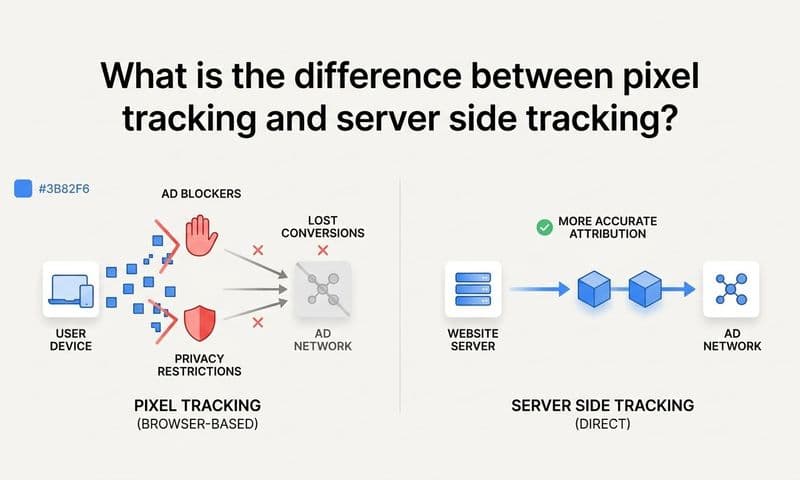
Now, about tracking accuracy. Client-side pixel tracking has become increasingly unreliable. Ad blockers, browser privacy restrictions, and changes to how browsers handle third-party cookies all degrade the quality of pixel-based conversion data. For B2B SaaS teams making budget decisions based on conversion data, this accuracy gap matters.
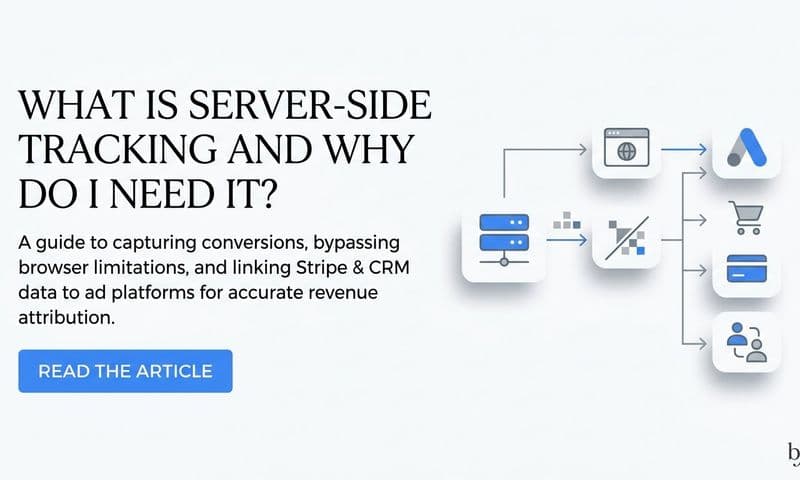
Server-side tracking addresses this directly. Instead of relying on a browser pixel to fire, server-side tracking sends conversion events from your server to ad platforms and analytics tools. This approach is not affected by ad blockers or browser restrictions, which means your conversion data is more complete and more accurate.
Setting up a Conversion API integration, often called CAPI, sends these events directly from your server to Meta, Google, and other ad platforms. This improves the match rate between your conversion events and the ad platform's user data, which in turn improves the quality of optimization signals those platforms use to target and bid on your behalf.
Before launching any campaign to a new landing page, verify that your conversion events are firing correctly using your platform's event testing tools. A broken event on launch day means you are spending budget with no conversion data flowing back to your attribution model. That is not a recoverable situation mid-campaign.
Step 4: Connect Landing Page Data to Your CRM and Revenue Pipeline
Tracking clicks and form fills is only the first layer. The real insight comes when you connect landing page conversions to what happens downstream in your CRM. This is the step that separates teams who know which pages get traffic from teams who know which pages generate revenue.
The mechanism is straightforward: pass the original landing page URL and UTM data as hidden fields in every form on your site. When a visitor arrives on your demo request page from a LinkedIn ad, their UTM values should be captured automatically and stored alongside their form submission. When that lead is created in your CRM, those values travel with it.
This requires two things to work correctly. First, your forms need to be configured to accept and pass hidden field values from the URL. Most form tools support this natively or through a simple JavaScript snippet. Second, your CRM needs corresponding fields to store this data at the lead and contact record level.
Once that data is flowing into your CRM, map your lead source fields to match your UTM taxonomy. If your UTM campaign value is "2026q2-demo-request" and your CRM stores it in a field called "Lead Source Campaign," make sure your sales team and marketing team are both looking at the same field with the same values. Misaligned field mapping is one of the most common reasons attribution data breaks down between marketing and sales.
The next layer is connecting CRM pipeline stages back to the originating landing page. This is where an attribution platform becomes essential. You need a system that can take a closed-won opportunity in your CRM and trace it back through the pipeline to the original lead record, and from there to the landing page and campaign that first captured that lead.
This connection is what most teams are missing. They track conversions at the page level but never connect those conversions to pipeline velocity or closed-won revenue. A demo request page might generate twice as many leads as a free trial page, but if the free trial leads close at a higher rate and higher contract value, the free trial page is generating more revenue per conversion. You cannot see that without connecting landing page data to your CRM pipeline.
Set up a view in your attribution dashboard that shows landing page performance by revenue generated, not just by lead volume. This single change in how you evaluate pages will shift your budget allocation decisions significantly.
Step 5: Build a Multi-Touch Attribution View Across All Landing Pages
A single landing page rarely tells the full story. Think about how a typical B2B SaaS buyer actually behaves. They might click a LinkedIn ad and land on a thought leadership article. A week later, they see a retargeting ad and visit your webinar registration page. Two weeks after that, they search your brand name, land on your demo request page, and convert. Three different landing pages, one buyer journey.
If you are using last-click attribution, the demo request page gets all the credit. The article page and the webinar page look like they contributed nothing. You cut budget from those pages, the top of your funnel dries up, and eventually your demo request page stops converting because there are no longer any nurtured prospects reaching it. This is a real pattern that plays out when teams rely on single-touch attribution models.
Multi-touch attribution distributes credit across every landing page a prospect visited before converting. Configuring this view requires that your tracking setup captures every session and touchpoint, not just the final one. That is why the UTM structure and server-side event tracking from the earlier steps are so important. You cannot build an accurate multi-touch model on incomplete data. Understanding customer attribution tracking at a deeper level will help you choose the right model for your funnel complexity.
Once your data is flowing correctly, compare how different attribution models assign credit across your landing pages:
First-touch attribution gives full credit to the first page a prospect visited. This highlights which pages are best at initiating journeys.
Last-touch attribution gives full credit to the final page before conversion. This highlights which pages are best at closing.
Linear attribution distributes credit equally across every touchpoint in the journey. This gives a balanced view of contribution across all pages.
Data-driven attribution uses algorithmic weighting based on actual conversion patterns in your data. This is the most accurate model but requires sufficient conversion volume to be reliable.
Use path analysis to identify which landing page sequences produce the highest conversion rates and shortest sales cycles. You may find that prospects who visit a specific content page before a demo request page convert at a meaningfully higher rate. That insight tells you to invest in that content page and create more pathways from it to your demo request page.
Pay particular attention to landing pages that appear frequently in multi-step journeys but rarely receive credit in single-touch reports. These pages are often high-leverage assets that are invisible in standard reporting. Optimizing them can improve your entire funnel without requiring additional ad spend. Learning how to optimize landing pages for conversion is the natural next step once you have identified which pages deserve more investment.
Step 6: Create a Centralized Landing Page Performance Dashboard
Once your tracking is in place, you need a single view where you can monitor all landing pages side by side without toggling between platform dashboards. Reviewing pages individually in Google Ads, then LinkedIn Campaign Manager, then your CRM, then your analytics platform is slow, error-prone, and makes it nearly impossible to spot cross-page patterns.
A centralized dashboard solves this. It aggregates data from every source into one view so you can make comparisons and decisions quickly. Here is what your dashboard should show for each landing page:
Traffic by source: How many sessions each page received, broken down by channel and campaign.
Conversion rate by page: The percentage of visitors who completed the primary conversion goal for that page.
Cost per conversion by page: How much ad spend it took to generate one conversion on each page, segmented by traffic source.
Pipeline generated by page: The total value of opportunities in your CRM that originated from each landing page.
Revenue attributed to each page: Closed-won revenue traced back to the originating landing page, using your chosen attribution model.
Segment the dashboard by campaign or channel so you can see how the same landing page performs across different traffic sources. A demo request page might convert well from Google search traffic but poorly from display traffic. That is a budget reallocation signal, not a page optimization signal.
Set up automated alerts for significant drops in conversion rate or traffic on high-value pages. A broken form, a failed A/B test variant, or a tracking misconfiguration can silently drain budget for days before anyone notices. Alerts catch these issues before they become expensive problems. Tools covered in marketing campaign tracking software reviews often include this alerting functionality built in.
Review the dashboard on a weekly cadence during active campaigns. Use the data to inform budget reallocation decisions: shift spend toward pages generating the most pipeline, pause spend on pages with high cost per conversion and low downstream revenue, and invest in optimizing pages that appear frequently in multi-touch paths but have room to improve their conversion rate.
Avoid the common mistake of building a dashboard that only shows vanity metrics like page views or bounce rate. Those numbers feel informative but rarely drive action. Conversion events and downstream revenue are the metrics that connect your landing pages to business outcomes.
Putting It All Together: Your Landing Page Tracking Checklist
Tracking multiple landing pages at scale is not about putting a tag on every page and hoping the data makes sense. It requires a structured system where every layer connects to the next: your audit informs your UTM structure, your UTM structure feeds your conversion events, your conversion events connect to your CRM, your CRM data powers your attribution model, and your attribution model drives your dashboard.
Here is a concise checklist to verify your setup is complete:
1. Complete a full inventory of every active landing page, categorized by funnel stage and primary conversion goal.
2. Define and document a standardized UTM taxonomy with consistent naming conventions across your entire team.
3. Configure unique conversion events for each page type and implement server-side tracking to ensure accuracy.
4. Pass UTM and landing page URL data as hidden fields in every form and store this data at the lead record level in your CRM.
5. Connect CRM pipeline and revenue data to your originating landing page data using an attribution platform.
6. Configure multi-touch attribution models and use path analysis to understand how each page contributes to the full buyer journey.
7. Build a centralized dashboard that shows traffic, conversion rate, cost per conversion, pipeline, and revenue for every landing page in one view.
This is the framework that connects every landing page to pipeline and revenue so your team can make confident budget decisions based on what is actually working.
Cometly is built to tie all of these layers together. It connects your ad platforms, website events, and CRM data into a single attribution view, with server-side tracking and CAPI integration for accuracy, multi-touch attribution models for complete credit distribution, and AI-driven insights to help you identify which landing pages are worth scaling. From the first ad click to closed-won revenue, every touchpoint is captured and connected.
Get your free demo and start connecting your landing page performance to real revenue attribution today.