
You've launched YouTube campaigns. The views are rolling in. Engagement looks solid. But when your CFO asks about actual return on investment, you're stuck piecing together incomplete data from three different platforms, trying to explain why those 50,000 video views haven't translated into clear revenue numbers.
This disconnect isn't unusual. YouTube advertising offers extraordinary reach—billions of users, sophisticated targeting, multiple ad formats—but tracking the path from video view to actual revenue remains one of digital marketing's trickiest challenges.
The problem? Most marketers stop at surface-level metrics. They track clicks, views, and form submissions, then wonder why their YouTube campaigns appear to underperform compared to search or social. Meanwhile, those video ads are often playing a crucial role in the customer journey, influencing conversions that get credited elsewhere.
Here's what changes when you implement proper YouTube ads ROI tracking: You see which campaigns generate revenue, not just engagement. You understand YouTube's true contribution across the entire customer journey. You make budget decisions based on actual return on ad spend rather than guesswork. And you feed better conversion data back to Google's algorithm, improving targeting and performance over time.
This guide walks you through the complete process of setting up YouTube ROI tracking that connects ad spend to revenue. Whether you're running TrueView in-stream ads, bumper campaigns, or YouTube Shorts promotions, these steps give you the visibility needed to measure and optimize your video advertising investment with confidence.
Step 1: Configure Google Ads Conversion Tracking Foundations
Everything starts with telling Google Ads what constitutes a valuable action for your business. Without this foundation, you're measuring activity instead of outcomes.
Log into your Google Ads account and navigate to Tools & Settings, then Conversions under the Measurement section. Click the plus button to create a new conversion action. This is where most marketers make their first mistake: they track everything equally.
Instead, create conversion actions that align with actual business value. For e-commerce, that's purchases. For SaaS companies, it might be demo requests or trial signups. For B2B services, qualified lead form submissions. Each conversion action should represent something your sales or revenue team cares about.
When setting up each conversion action, you'll choose between implementing the Google tag directly on your website or using Google Tag Manager. If you already use Tag Manager for other marketing tags, go that route—it provides more flexibility and easier debugging. If you're starting fresh and have developer resources, the direct Google tag implementation works fine.
The conversion window setting deserves careful attention. This determines how long after someone interacts with your ad Google will credit that ad for a conversion. The default 30 days works for quick purchase decisions, but if you're in B2B or selling high-consideration products, extend this to 60 or 90 days to match your actual sales cycle.
Configure your attribution settings next. Google offers several models, but start with data-driven attribution if your account has sufficient conversion volume. For a deeper understanding of how attribution works across platforms, explore Google Ads attribution tracking best practices. This model uses machine learning to assign credit based on actual conversion patterns. If you don't meet the threshold, position-based attribution provides a reasonable alternative by crediting both the first and last touchpoints.
After implementation, verification is critical. Install the Google Tag Assistant Chrome extension, then visit your conversion page and complete a test conversion. The Tag Assistant should show your conversion tag firing. Alternatively, open Chrome DevTools, go to the Network tab, and filter for "google" to see the conversion pixel request.
Common issues at this stage include tags firing on the wrong pages (like firing on every page instead of just the thank-you page) or not firing at all due to JavaScript errors. Fix these before moving forward—everything else builds on this foundation.
Step 2: Implement Enhanced Conversions for Better Data Accuracy
Standard conversion tracking has a problem: it increasingly misses conversions. Privacy restrictions, cookie blocking, cross-device journeys, and browser limitations create gaps in your data. Enhanced conversions fills these gaps using first-party data you already collect.
Here's how it works: When someone converts on your website, you're likely collecting information like their email address, phone number, or name. Enhanced conversions securely hashes this data and sends it to Google, where it's matched against signed-in Google accounts. This matching recovers conversions that standard cookie-based tracking would miss.
To set up enhanced conversions, return to your conversion action settings in Google Ads. You'll see an option to "Turn on enhanced conversions." Enable this, then choose your implementation method.
If you use Google Tag Manager, the setup involves modifying your conversion tag to include user-provided data variables. Create data layer variables for email, phone, and other user information, then map these to the enhanced conversion fields in your Google Ads conversion tag. Google provides detailed variable configuration guides, but the key is ensuring these variables populate when users submit your conversion form.
For direct Google tag implementations, you'll add code to your conversion page that captures user data and passes it to the conversion tag. This typically means modifying your thank-you page template to extract form field values and include them in the gtag configuration.
Server-side tracking for ads takes this further by processing conversion data on your server instead of relying entirely on browser-based tags. This approach maintains accuracy even when users block JavaScript or use privacy-focused browsers. Implementing server-side tracking requires more technical setup—you'll need to configure a server-side Google Tag Manager container and route conversion data through your server infrastructure.
The payoff is substantial. Marketers implementing enhanced conversions typically see 5-15% more conversions tracked compared to standard pixel tracking. For YouTube campaigns, where users often research on mobile but convert later on desktop, this recovery of cross-device conversions is especially valuable.
Test your enhanced conversion setup by completing a test conversion with a real email address, then checking the Google Ads interface after a few hours. The conversion should appear with enhanced data indicated. If it doesn't, review your data layer variables or server-side configuration for errors.
Step 3: Connect Your CRM to Track Revenue, Not Just Conversions
Tracking form submissions tells you how many leads YouTube generates. Connecting your CRM tells you how many of those leads actually become customers and how much revenue they bring.
This distinction matters enormously. A campaign might generate 100 leads at $50 each, looking efficient at $5,000 total cost. But if only 2 of those leads close compared to 10 from another campaign, you're optimizing for the wrong metric. Without CRM integration, you can't see this difference.
Start by mapping your CRM pipeline stages to understand the full customer journey. Most CRMs organize leads through stages like New Lead, Qualified, Proposal Sent, and Closed Won. Identify which stages represent meaningful progress and which represent revenue.
Google Ads offline conversion imports let you feed this CRM data back into your ad platform. Understanding offline conversion tracking for online ads is essential for connecting these data points. The setup requires three components: a conversion action configured to accept offline imports, a way to pass Google Click IDs (GCLIDs) into your CRM, and a process to export conversion data from your CRM back to Google Ads.
The GCLID is crucial—it's the unique identifier that connects a CRM record back to the specific ad click that generated it. Modify your conversion forms to capture the GCLID from the URL parameter and store it in a hidden form field. When the form submits, this GCLID should flow into your CRM along with the lead's contact information.
Your CRM needs a custom field to store this GCLID. In Salesforce, HubSpot, or similar platforms, create a new field on your lead or contact object specifically for this identifier. Configure your form integration to populate this field when leads are created.
UTM parameters provide additional tracking context. Establish a consistent structure for your YouTube campaigns: utm_source=youtube, utm_medium=video, utm_campaign=[campaign_name], and utm_content=[ad_group_or_creative]. These parameters should also flow into your CRM, giving you campaign-level attribution even without the GCLID.
Once leads are in your CRM with GCLIDs attached, set up the export process. When a lead reaches a valuable stage (like Closed Won), export a file containing the GCLID, conversion name, conversion time, and conversion value. Google Ads accepts CSV uploads under Tools & Settings > Conversions > Uploads.
For ongoing automation, many CRMs integrate directly with Google Ads through native connectors or tools like Zapier. These integrations automatically send conversion data to Google Ads when pipeline stages change, eliminating manual exports.
The conversion value field is where revenue tracking becomes real. For closed deals, use the actual contract value. For qualified leads that haven't closed yet, you might use an estimated value based on historical close rates and average deal sizes.
This CRM connection transforms your optimization strategy. Instead of optimizing for lead volume, you can now optimize for lead quality and actual revenue. YouTube campaigns that generate fewer but higher-quality leads suddenly show their true value.
Step 4: Build Your YouTube ROI Dashboard and Reporting Framework
Data without structure is just noise. A proper dashboard transforms your tracking setup into actionable insights.
Start by defining the metrics that actually matter for YouTube ROI. Return on ad spend (ROAS) sits at the top—total conversion value divided by ad spend. For every dollar invested, how many dollars return? A ROAS of 3.0 means $3 in revenue for every $1 spent.
Cost per acquisition (CPA) shows efficiency from a different angle: how much you pay for each customer. Calculate this by dividing total ad spend by the number of conversions. Track CPA for different conversion types separately—the cost to acquire a demo request differs from the cost to acquire a closed customer.
Customer lifetime value (CLV) by campaign reveals long-term profitability. If your CRM tracks customer value over time, segment this data by the YouTube campaign that acquired each customer. Some campaigns might have higher upfront CPA but generate customers with significantly higher lifetime value.
Within Google Ads, create custom columns to surface these metrics alongside standard performance data. Navigate to the Campaigns view, click Columns, then Modify Columns. Add columns for conversion value, cost per conversion, and conversion value divided by cost (ROAS). Save this column set as "YouTube ROI View" for quick access.
Build attribution comparison reports to understand YouTube's role across different models. In Google Ads, go to Tools & Settings > Attribution > Model Comparison. Compare how your YouTube campaigns perform under last-click attribution versus data-driven or position-based models. This comparison often reveals that YouTube contributes significantly more to conversions than last-click attribution suggests.
For deeper analysis, connect Google Ads to Google Analytics 4 or your preferred analytics platform. A dedicated marketing ROI tracking tool can provide even more comprehensive insights across all your channels. GA4's Advertising workspace shows YouTube campaign performance alongside other traffic sources, revealing how video ads influence user behavior beyond direct conversions.
Establish a reporting cadence that matches your campaign optimization cycle. For most YouTube campaigns, weekly reviews work well—daily is too noisy, monthly too slow. Create a simple dashboard template that shows week-over-week changes in spend, conversions, CPA, and ROAS for each active campaign.
Set performance benchmarks based on your business economics. If your average customer value is $500 and you can afford to spend 20% on acquisition, your target CPA is $100. If you're currently at $150 CPA, you know optimization is needed. These benchmarks turn abstract metrics into clear goals.
Step 5: Implement Cross-Channel Attribution for Full-Funnel Visibility
YouTube rarely works in isolation. Users watch your video ad, visit your website later through organic search, then convert after clicking a retargeting ad. Last-click attribution credits the retargeting ad entirely, making YouTube appear ineffective when it actually initiated the journey.
This undervaluation is YouTube's biggest tracking challenge. Video ads excel at awareness and consideration—introducing your brand, building interest, creating preference—but often don't generate immediate conversions. Without cross-channel attribution, you'll systematically underinvest in YouTube while over-crediting bottom-funnel channels.
Start by comparing attribution models within Google Ads. The Model Comparison tool shows how each campaign performs under different attribution frameworks. Data-driven attribution uses machine learning to assign credit based on actual conversion patterns in your account. Position-based (also called U-shaped) gives 40% credit to the first and last touchpoints, distributing the remaining 20% across middle interactions. Time decay gives more credit to touchpoints closer to conversion.
Run this comparison for a 30-day period. Look specifically at how YouTube campaigns perform across models. If YouTube shows significantly more conversions under data-driven or position-based models compared to last-click, you've confirmed it's being undervalued in traditional reporting.
For true cross-platform visibility, you need a solution that connects YouTube data with other advertising platforms. Understanding attribution marketing tracking principles helps you build a comprehensive measurement framework. However, native platform attribution has limitations—it struggles with accurate ad platform tracking due to privacy restrictions and doesn't always capture the complete picture.
This is where dedicated attribution platforms become valuable. Tools like Cometly connect all your marketing channels—YouTube, Meta, Google Search, LinkedIn, email—into a unified view of the customer journey. Instead of each platform claiming credit for the same conversion, you see the actual sequence of touchpoints that led to revenue.
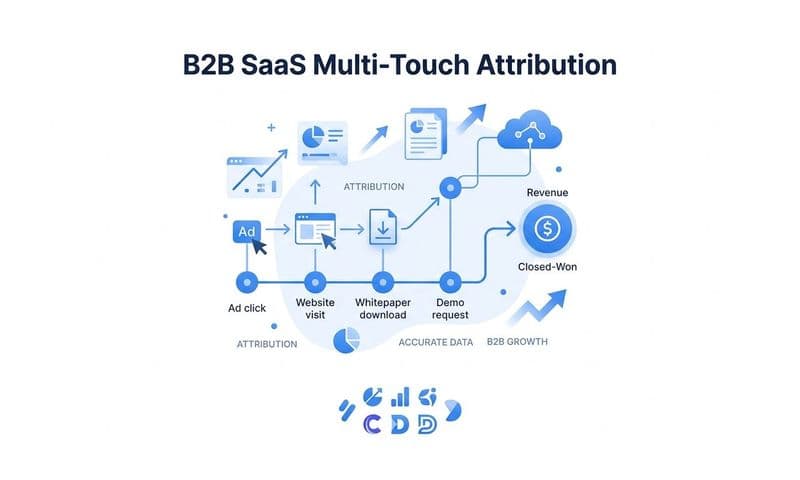
Multi-touch attribution reveals patterns invisible in single-platform reporting. You might discover that YouTube campaigns generate initial awareness, users then engage with your content through organic search, and finally convert after seeing a retargeting ad. Each touchpoint played a role. Multi-touch attribution assigns appropriate credit to each, showing YouTube's true contribution.
When evaluating attribution models, consider your typical customer journey length. For quick purchase decisions (under 7 days), last-click or time decay models work reasonably well. For longer consideration cycles common in B2B or high-ticket purchases, position-based or data-driven models better reflect reality.
The goal isn't finding a "perfect" attribution model—it's using a model that reflects your business reality well enough to make better decisions. If your current model shows YouTube performing poorly but you suspect it's driving awareness that leads to later conversions, switching to a model that credits earlier touchpoints will give you more accurate insights.
Step 6: Optimize Campaigns Based on True ROI Data
With comprehensive tracking in place, optimization shifts from guesswork to data-driven decisions. You're no longer optimizing for engagement metrics that may or may not correlate with revenue—you're optimizing for actual return on investment.
Start by analyzing audience performance through a revenue lens. In Google Ads, navigate to your YouTube campaign, then Audiences. Add columns for conversion value and ROAS. Sort by ROAS descending. The audiences at the top generate the highest return—these deserve increased investment. Audiences with high impressions but low ROAS should be paused or have their bids reduced significantly.
Creative analysis follows the same principle. Review your video ads sorted by ROAS rather than view rate or click-through rate. A video with a 5% view rate but 2.0 ROAS outperforms one with a 15% view rate but 0.5 ROAS. The engaging video that doesn't drive revenue wastes budget. The less "engaging" video that converts efficiently deserves more spend.
Bidding strategy adjustments become clearer with ROI data. If a campaign consistently delivers 4.0 ROAS, you can afford to increase bids to capture more volume at that efficiency level. Campaigns struggling at 1.0 ROAS need bid reductions or strategic changes before scaling.
Target ROAS bidding in Google Ads automates this optimization. Once you have 30+ conversions with conversion value data, switch to Target ROAS bidding. Set your target based on business requirements—if you need 3.0 ROAS to be profitable, set that as your target. Google's algorithm will automatically adjust bids to hit that goal.
Feed conversion quality signals back to Google's algorithm through conversion value optimization. Instead of treating all conversions equally, assign higher values to better outcomes. A qualified enterprise lead might be worth $500, while a small business lead is $50. Google's algorithm learns to optimize for higher-value conversions, improving targeting over time. Learn more about ad spend ROI tracking to maximize your budget efficiency.
Scaling winners requires confidence in your data. When you identify a high-performing campaign backed by solid ROI tracking, increase budget gradually—20-30% weekly increases allow the algorithm to adjust while maintaining performance. Dramatic budget increases often cause temporary efficiency drops as the algorithm recalibrates.
Cut underperformers decisively. If a campaign hasn't achieved your minimum ROAS threshold after collecting 50+ conversions, it's unlikely to improve significantly. Pause it and reallocate budget to proven winners. This disciplined approach to campaign management becomes possible only with accurate ROI tracking.
Putting It All Together: Your YouTube ROI Tracking Checklist
You now have the complete framework for connecting YouTube ad spend to actual business outcomes. The difference between marketers who succeed with YouTube advertising and those who struggle isn't budget size or creative talent—it's measurement discipline.
Here's your implementation checklist: Google Ads conversion tracking configured with conversion actions that match real business goals and attribution windows aligned to your sales cycle. Enhanced conversions enabled to recover lost conversion data and maintain accuracy despite privacy restrictions. CRM integration established with GCLIDs flowing into your system and offline conversion imports feeding revenue data back to Google Ads. Custom dashboard built showing ROAS, cost per acquisition, and customer lifetime value by campaign. Cross-channel attribution implemented to reveal YouTube's true contribution across the customer journey. Optimization workflow established based on revenue metrics rather than vanity metrics.
The most common mistake at this stage is partial implementation. Marketers set up basic conversion tracking, see incomplete data, and conclude YouTube doesn't work for their business. Complete the full process—all six steps—before drawing conclusions about campaign performance.
Start with Step 1 today. Configure your conversion actions properly, verify they're tracking correctly, then move methodically through each subsequent step. Within two to three weeks, you'll have complete visibility into your YouTube advertising performance. You'll know exactly which campaigns drive revenue, which audiences convert best, and how YouTube fits into your broader marketing strategy.
This visibility transforms decision-making. Instead of defending YouTube budget based on views and engagement, you'll show clear return on investment. Instead of wondering whether video advertising works for your business, you'll have data proving which approaches work and which don't. Instead of treating YouTube as a branding channel separate from performance marketing, you'll optimize it with the same rigor you apply to search and social campaigns.
Ready to elevate your marketing game with precision and confidence? Discover how Cometly's AI-driven recommendations can transform your ad strategy—Get your free demo today and start capturing every touchpoint to maximize your conversions.