
Accurate conversion data is the foundation of every smart marketing decision. Without it, you are essentially guessing which ads drive leads, which channels generate revenue, and where your budget should go next. For B2B SaaS companies running paid campaigns across multiple platforms, the stakes are especially high.
A single gap in your tracking setup can cause ad platforms to misattribute conversions, inflate or deflate performance numbers, and push your budget toward campaigns that are not actually working.
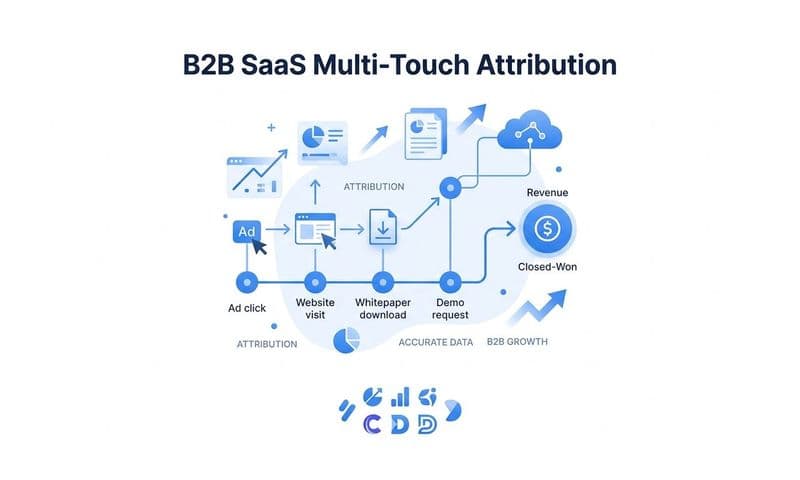
The challenge is that modern buyer journeys are complex. A prospect might click a LinkedIn ad, visit your site twice, read a case study, and then convert through a Google search weeks later. If your tracking only captures the last click, you lose the full picture.
Strategies like server-side tracking, Conversion API integrations, and multi-touch attribution models exist specifically to close these gaps. This article covers seven actionable strategies to improve the accuracy of your conversion data, from fixing your foundational tracking setup to using first-party data enrichment and AI-powered attribution.
Whether you are a marketing leader trying to prove ROI or a growth team scaling paid spend, these strategies will help you build a tracking infrastructure that reflects reality and drives better decisions.
1. Implement Server-Side Tracking to Bypass Browser Limitations
The Challenge It Solves
Browser-based tracking has become increasingly unreliable. Ad blockers strip out pixel fires, iOS privacy changes under App Tracking Transparency limit what browsers can observe, and the ongoing deprecation of third-party cookies continues to erode client-side data collection. The result is a growing gap between what actually happens on your site and what your ad platforms record as conversions.
For B2B SaaS marketing teams, this gap is not just an inconvenience. It directly distorts campaign performance data and leads to poor budget decisions.
The Strategy Explained
Server-side tracking routes conversion events through your own server before sending them to ad platforms. Because the data never passes through the browser, it bypasses ad blockers, iOS restrictions, and cookie limitations entirely. The conversion signal goes directly from your infrastructure to the platform, clean and uninterrupted.
This approach is widely recognized as a best practice for maintaining data fidelity in modern paid media. It does not replace your existing pixel setup immediately, but it adds a reliable layer of server-level event collection that catches what the browser misses. Think of it as building a second lane on the highway so that even when one lane is blocked, your data still gets through. Understanding why server-side tracking is more accurate than browser-based methods is essential before you begin implementation.
Implementation Steps
1. Identify the conversion events most critical to your funnel, such as demo requests, trial starts, and form submissions.
2. Set up a server-side tagging container using a tool like Google Tag Manager's server-side container or a dedicated attribution platform that supports server-side event collection.
3. Configure your server to send these events directly to your ad platforms using their respective APIs, such as Meta's Conversion API or Google's Enhanced Conversions endpoint.
4. Run both browser and server-side tracking in parallel initially, and monitor for discrepancies to validate that server-side events are capturing what the pixel misses.
Pro Tips
Start with your highest-value conversion events before migrating your entire tracking setup. This reduces implementation risk while delivering the most immediate impact on data quality. Platforms like Cometly support server-side tracking natively, making it easier to implement without building custom infrastructure from scratch.
2. Use the Meta Conversion API and Google Enhanced Conversions Together
The Challenge It Solves
Relying on a single tracking method creates a single point of failure. When your browser pixel misses a conversion due to a blocked script or a dropped cookie, that event is simply lost. For B2B SaaS companies where each qualified lead can represent significant pipeline value, missing even a fraction of conversions can meaningfully distort your performance data and cause ad algorithms to underperform.
The Strategy Explained
Meta's Conversion API and Google's Enhanced Conversions are both first-party data solutions designed to complement your browser pixel. They work by sending hashed customer data directly from your server to the ad platform, improving the accuracy of event matching and attribution.
Running your browser pixel alongside your Conversion API integration creates redundancy. The pixel captures what it can on the client side, while the API captures events at the server level. Together, they cover far more of your actual conversion activity than either method alone. The key technical requirement is deduplication: you need to assign unique event IDs so that when both the pixel and the API fire for the same event, the platform counts it only once.
Monitoring your event match quality scores in Meta Events Manager and Google Ads diagnostics gives you a clear signal of how well your data is reaching the platform in a usable format. Following a detailed Conversion API implementation tutorial can help you avoid the most common setup mistakes that cause match quality to suffer.
Implementation Steps
1. Enable Meta's Conversion API alongside your existing Meta Pixel, using a matching event ID parameter to enable deduplication.
2. Set up Google Enhanced Conversions by passing hashed first-party data such as email addresses alongside your standard conversion tags.
3. Review event match quality scores in both platforms after setup and identify any events with low match rates that need additional data enrichment.
4. Test deduplication by checking that conversion counts in your ad platforms align with your actual form submission or CRM data.
Pro Tips
Do not assume that setup equals success. Event match quality scores can degrade over time as your site changes or user data becomes less complete. Build a habit of checking these scores monthly, and use them as a leading indicator of tracking health before problems show up in your campaign performance.
3. Standardize Your Conversion Event Taxonomy Before You Scale
The Challenge It Solves
Many B2B SaaS teams build their tracking incrementally, adding events as campaigns launch and tools get added. The result is a patchwork of inconsistent event names across platforms. One tool calls it "form_submit," another calls it "lead_captured," and your CRM calls it "New Contact." When you try to consolidate this data into a single dashboard, the inconsistencies create attribution errors that are difficult to untangle.
The Strategy Explained
A conversion event taxonomy is simply a standardized naming structure for every event you track across your funnel. Before you scale your paid campaigns or add new tracking integrations, define the exact names, parameters, and definitions for each event so that every platform and tool speaks the same language.
For a typical B2B SaaS funnel, this means defining events like demo_request, trial_start, qualified_lead, opportunity_created, and closed_won with consistent naming across your ad platforms, CRM, and analytics tools. This consistency is what makes it possible to accurately track the customer journey from first touch to closed revenue without data translation errors. Reviewing best practices for tracking conversions accurately can help you build a taxonomy that holds up as your stack grows.
Implementation Steps
1. Audit every conversion event currently firing across your ad platforms, CRM, and analytics tools and document what each one actually measures.
2. Create a master taxonomy document that defines the canonical name, trigger condition, and associated parameters for every event in your funnel.
3. Remap existing events to match the new taxonomy in each platform, updating tag configurations and CRM field mappings as needed.
4. Share the taxonomy document with your entire marketing and operations team so that any new events added in the future follow the same structure.
Pro Tips
Treat your taxonomy document as a living reference. Every time a new campaign launches or a new tool is added to your stack, the taxonomy should be updated before tracking is configured. This discipline pays dividends when you need to consolidate data across platforms for reporting or budget decisions.
4. Connect Your CRM Data to Your Ad Platforms for Revenue-Level Attribution
The Challenge It Solves
Most ad platforms optimize toward the conversion events they can observe directly, which for B2B SaaS typically means top-of-funnel form fills. But a form submission is not revenue. When your ad platform optimizes for demo requests without knowing which of those demos actually closed, it is working with incomplete information. This leads to campaigns that generate high lead volume but low-quality pipeline.
The Strategy Explained
Connecting your CRM to your ad platforms through offline conversion imports allows you to pass deal stage progressions and closed-won revenue back to Google, Meta, and LinkedIn. The ad platform can then see which campaigns, ad sets, and individual ads actually contributed to revenue, not just form fills.
This is especially critical for B2B SaaS companies with multi-week or multi-month sales cycles. The gap between the initial ad click and the closed deal is too long for standard pixel-based attribution to bridge. Pipeline and revenue attribution through CRM integration closes that gap by feeding actual business outcomes back into the ad platform's optimization algorithm. Learning how to fix attribution discrepancies in data is a useful companion step when setting up CRM-to-platform connections for the first time.
The result is that your ad platforms start optimizing toward users who actually convert to revenue, which over time improves the quality of leads your campaigns generate.
Implementation Steps
1. Map the CRM deal stages you want to pass back as offline conversion events, prioritizing stages that indicate high purchase intent and closed-won revenue.
2. Configure your CRM to export these events with the original click ID or lead identifier that ties the deal back to the originating ad click.
3. Import these offline conversions into Google Ads, Meta, and LinkedIn using their respective offline conversion upload tools or API integrations.
4. Set your campaign optimization goals to target the revenue-level conversion events rather than early-funnel form fills.
Pro Tips
The click ID is the critical link between your CRM data and your ad platform. Make sure you are capturing and storing the Google Click ID (GCLID), Meta Click ID (FBCLID), and LinkedIn Click ID at the point of lead capture in your CRM. Without it, your offline conversion imports will have low match rates and limited optimization impact.
5. Apply Multi-Touch Attribution to Understand the Full Customer Journey
The Challenge It Solves
Last-click attribution systematically undervalues every channel that is not the final touchpoint before conversion. For B2B SaaS companies running awareness campaigns on LinkedIn, nurturing content through email, and closing with branded search, last-click attribution credits Google Search with everything and tells you nothing about what actually built the pipeline. Budget decisions made on last-click data consistently starve the channels that create demand.
The Strategy Explained
Multi-touch attribution distributes conversion credit across every touchpoint in the buyer journey, giving you a more accurate view of how each channel contributes to revenue. Common models include linear attribution, which gives equal credit to every touch; time decay, which gives more credit to touchpoints closer to conversion; and position-based, which weights the first and last touch most heavily.
Choosing the right model depends on your sales cycle length and channel mix. For complex B2B sales cycles with many touchpoints over weeks or months, a data-driven or position-based model often reflects reality more accurately than a simpler linear approach. The goal is to use multi-touch attribution models to make budget allocation decisions that reflect how your customers actually move through the funnel, not just where they happened to click last.
Implementation Steps
1. Map out the typical touchpoints in your buyer journey, including paid ads, organic search, content, email, and direct visits.
2. Select an attribution model that fits your sales cycle length and the number of touchpoints you typically observe before conversion.
3. Implement the model in your attribution platform and compare channel performance under the new model versus your previous last-click view.
4. Use the multi-touch attribution data to adjust budget allocation, increasing investment in channels that contribute meaningfully to pipeline even if they are not the last touch.
Pro Tips
Do not switch attribution models and immediately reallocate budget. Run the new model in parallel with your existing reporting for at least four to six weeks so you can build confidence in the data before making significant spend changes. Attribution model transitions are a change management exercise as much as a technical one.
6. Enrich First-Party Data to Improve Event Match Quality
The Challenge It Solves
As third-party cookies decline and browser-level tracking becomes less reliable, the quality of your conversion data increasingly depends on how well you collect and pass first-party identifiers. When ad platforms receive conversion events without strong identity signals, they cannot accurately attribute those conversions to specific users or campaigns. Low event match quality means your data is reaching the platform but not being used effectively for attribution or optimization.
The Strategy Explained
First-party data enrichment means collecting identifiers like email addresses and phone numbers at the point of conversion and passing them through your Conversion API integrations in hashed format. Hashing protects user privacy while giving ad platforms a strong signal to match the conversion back to a specific user profile.
This strategy is closely tied to your Conversion API setup but focuses specifically on the quality of the data you are sending rather than the technical mechanism of sending it. A well-configured CAPI integration sending low-quality data with missing identifiers will still underperform. The goal is to pass as many hashed identifiers as possible with every conversion event to maximize match rates. Building a strong first-party data strategy is the foundation that makes enrichment efforts sustainable and scalable over time.
Implementation Steps
1. Audit your current conversion events to identify which ones are already collecting email addresses or phone numbers at the point of capture, such as form submissions or trial signups.
2. Update your forms and data collection flows to capture additional identifiers where they are currently missing.
3. Configure your Conversion API integration to hash and pass these identifiers alongside every conversion event using SHA-256 hashing as required by Meta and Google.
4. Monitor event match quality scores after implementation and track improvement over a 30-day period to validate the impact.
Pro Tips
Even small improvements in event match quality can have a meaningful impact on how well your ad platform algorithms identify and target high-value users. Prioritize the conversion events that feed directly into your campaign optimization goals, as these are the signals the platform relies on most heavily for bidding decisions.
7. Audit and Validate Your Tracking Setup Regularly
The Challenge It Solves
Conversion tracking setups do not stay accurate on their own. Every site redesign, CMS update, new campaign launch, or CRM configuration change creates an opportunity for something to break. Duplicate conversion events from misconfigured deduplication, broken pixels after a site migration, attribution windows that no longer match your sales cycle, and failed CRM syncs are all common issues that quietly degrade your data quality without triggering any obvious alerts.
The Strategy Explained
A structured tracking audit is a recurring process, not a one-time setup check. The goal is to systematically verify that every conversion event is firing correctly, that deduplication is working as intended, that your CRM sync is passing data to ad platforms accurately, and that attribution windows are configured to match your actual sales cycle length.
Tools like Meta Events Manager, Google Tag Assistant, and dedicated ad tracking management platforms can surface many of these issues automatically. But the audit process also requires a human review of your data: comparing conversion counts across platforms, checking for unexpected spikes or drops in event volume, and validating that the events you are optimizing toward still reflect meaningful business outcomes. Understanding the root causes of inaccurate conversion tracking helps you know exactly what to look for during each audit cycle.
A quarterly audit cadence is the minimum for most B2B SaaS teams. If your site changes frequently or you run high-volume paid campaigns, monthly audits are more appropriate.
Implementation Steps
1. Check all conversion events in Meta Events Manager and Google Ads for duplicate fires, low match quality scores, and events that have stopped firing.
2. Verify that your deduplication event IDs are functioning correctly by comparing pixel-only counts to API-only counts and ensuring the combined total matches your actual conversion volume.
3. Review your CRM offline conversion sync logs to confirm that deal stage data is uploading successfully and matching back to ad clicks at an acceptable rate.
4. Validate that attribution window settings across your ad platforms align with your typical sales cycle length and update them if your cycle has changed.
Pro Tips
Build your audit into a recurring calendar event with a documented checklist rather than treating it as an ad hoc task. The teams that maintain the most accurate conversion data are the ones who treat tracking validation as a routine operational discipline, not a reactive troubleshooting exercise.
Putting It All Together
Building accurate conversion data is not a one-time setup. It is an ongoing discipline that requires the right infrastructure, consistent event standards, and regular validation. The seven strategies covered here work together as a system rather than as isolated fixes.
Server-side tracking and Conversion API integrations protect your data from browser restrictions. A standardized event taxonomy ensures your data is clean and consistent across every tool in your stack. CRM integration and multi-touch attribution give you revenue-level visibility instead of just lead counts. First-party data enrichment improves your match rates so ad platforms can optimize more effectively. And regular audits make sure the entire system stays accurate as your business grows and your campaigns evolve.
For B2B SaaS companies, the payoff is significant. When your conversion data reflects reality, your ad platforms make smarter bidding decisions, your team allocates budget to channels that actually convert, and leadership gets a clear picture of marketing ROI.
Cometly is built to support every layer of this strategy. From server-side tracking and Conversion API integrations to multi-touch attribution and pipeline revenue tracking, Cometly gives marketing teams a single source of truth for their conversion data. You can capture every touchpoint from ad click to closed-won revenue, use AI to identify which campaigns are actually driving results, and feed enriched conversion data back to Meta, Google, and LinkedIn to improve platform optimization.
If you are ready to move from guesswork to data-driven growth, start by auditing your current tracking setup and identifying the gaps these strategies can close. Get your free demo today and start capturing every touchpoint to maximize your conversions.