Startups face a unique challenge: limited budgets mean every ad dollar must work harder. Without proper tracking, you're essentially flying blind, unable to tell which campaigns drive actual revenue versus which ones drain your runway. The right ad tracking software gives you clarity on what's converting, helps you optimize spend in real time, and provides the data foundation you need to scale confidently.
We evaluated dozens of tools based on startup-friendly pricing, ease of setup, attribution accuracy, and scalability. Here are the top ad tracking solutions for startups ready to take control of their ad performance.
1. Cometly
Best for: Startups running multi-channel campaigns who need AI-powered attribution and optimization recommendations
Cometly is an AI-powered marketing attribution platform that tracks the entire customer journey and feeds enriched conversion data back to ad platforms.
 9 Best Ad Tracking Software for Startups in 2026
Where This Tool Shines
Cometly stands out by solving one of the biggest challenges startups face: knowing which marketing touchpoints actually drive revenue. The platform tracks every interaction across all your channels and uses AI to identify patterns that human analysis might miss.
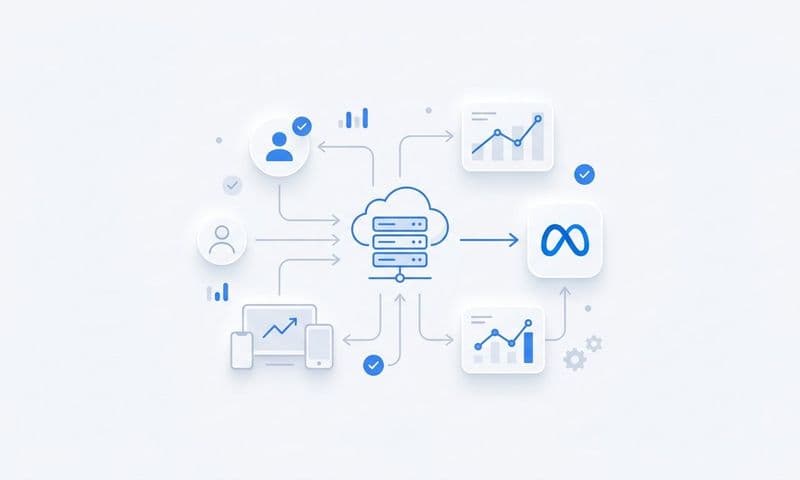
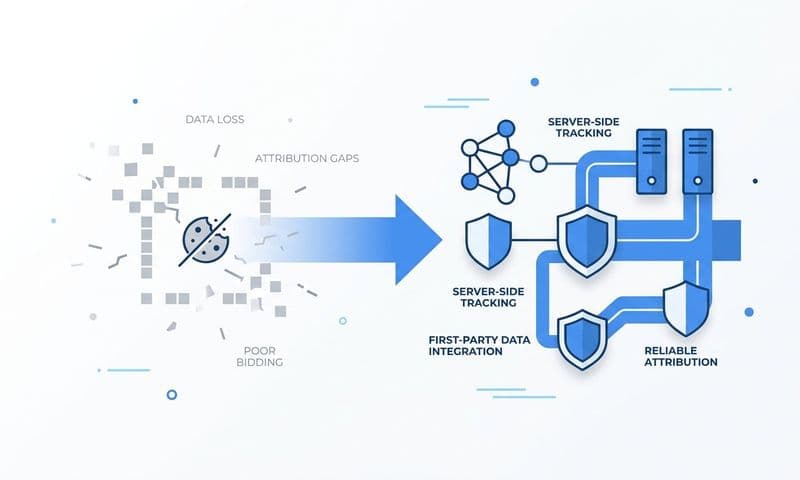
What makes Cometly particularly valuable for startups is its server-side tracking approach. While browser-based tracking has become increasingly unreliable due to iOS changes and cookie restrictions, Cometly's server-side infrastructure captures accurate data regardless of these privacy updates. This means you're making decisions based on complete information, not fragmented data.
Key Features
Multi-Touch Attribution: See the complete customer journey across every channel, not just the last click before conversion.
Server-Side Tracking: Collect accurate conversion data that isn't affected by iOS restrictions or ad blockers.
AI Recommendations: Get specific suggestions on which campaigns to scale and which to pause based on actual revenue impact.
Conversion Sync: Feed enriched conversion events back to Meta, Google, and other ad platforms to improve their targeting algorithms.
Real-Time Analytics Dashboard: Monitor performance across all channels in one unified view without jumping between platforms.
Best For
Cometly works best for startups running paid campaigns across multiple platforms like Meta, Google, TikTok, or LinkedIn. If you're spending enough on ads that attribution accuracy directly impacts your bottom line, and you need to prove ROI to investors or stakeholders, this platform delivers the clarity you need.
Pricing
Custom pricing based on your ad spend and feature requirements. The investment scales with your growth, making it accessible for startups at different stages.
2. Triple Whale
Best for: Shopify-based ecommerce startups needing unified analytics across advertising channels
Triple Whale is an ecommerce-focused attribution and analytics platform built specifically for Shopify brands.
 7 Best Funnel.io Alternatives for Marketing Data Analytics in 2026
Where This Tool Shines
Triple Whale was designed with ecommerce operators in mind. If you're running a Shopify store, the integration is seamless and requires minimal technical setup. The platform pulls data from your ad accounts, Shopify store, and email marketing tools into one dashboard.
The first-party pixel technology helps maintain tracking accuracy despite iOS limitations. For ecommerce startups juggling multiple ad platforms, having all your metrics in one place eliminates the constant tab-switching and spreadsheet reconciliation that wastes valuable time.
Key Features
Unified Dashboard: View performance across Meta, Google, TikTok, and other platforms without logging into each separately.
First-Party Pixel: Maintain accurate tracking even as third-party cookies become less reliable.
Creative Performance Analytics: See which specific ad creatives drive the best results, not just which campaigns perform.
Profit and Loss Reporting: Understand true profitability by channel after accounting for ad spend, product costs, and other expenses.
Shopify Integration: Automatic data sync with your store for real-time revenue tracking.
Best For
Ecommerce startups on Shopify who want a simple, powerful analytics solution without hiring a data analyst. Particularly valuable if you're running creative-heavy campaigns on Meta and TikTok.
Pricing
Starts around $129 per month for the Growth plan, with higher tiers available as your business scales.
3. Northbeam
Best for: Direct-to-consumer brands seeking granular, machine learning-powered attribution insights
Northbeam is a machine learning attribution platform designed for DTC brands seeking granular performance insights.
 9 Best Ad Tracking Software Solutions After iOS Privacy Updates in 2026
Where This Tool Shines
Northbeam uses machine learning models to attribute conversions across your entire marketing mix. Unlike simpler tools that rely on basic rules, Northbeam's ML approach accounts for complex customer journeys where someone might see your TikTok ad, click a Google search ad days later, and convert after reading an email.
The platform excels at creative-level analysis. You can see which specific ad variations drive results, helping you double down on what works and kill underperformers faster. For startups testing multiple creative approaches, this granularity is invaluable.
Key Features
Multi-Touch Attribution with ML: Machine learning models assign credit across touchpoints based on actual conversion patterns.
Creative and Channel Analysis: Drill down to individual ad performance, not just campaign-level data.
Customizable Attribution Windows: Adjust lookback periods to match your actual sales cycle length.
Media Mix Modeling: Understand how different channels work together to drive conversions.
Incrementality Testing: Run tests to measure the true incremental impact of your marketing spend.
Best For
Growing DTC startups with sufficient ad spend to justify sophisticated attribution. Best suited for brands spending at least $50K monthly on paid acquisition who need to optimize complex marketing mixes.
Pricing
Custom pricing based on your ad spend and needs. Typically positioned for mid-market and above, making it a better fit for well-funded or revenue-generating startups.
4. Hyros
Best for: Startups selling high-ticket products or services with longer, more complex sales cycles
Hyros is an ad tracking platform specializing in high-ticket products, courses, and businesses with longer sales cycles.
 7 Best Northbeam Alternatives for Small Business in 2026
Where This Tool Shines
Most attribution tools are built for quick ecommerce purchases. Hyros was designed for businesses where the customer journey takes weeks or months. If you're selling enterprise software, coaching programs, or high-value services, standard tracking often misses the complexity of your sales process.
The call tracking integration is particularly powerful. Many high-ticket sales involve phone conversations, and Hyros connects those calls back to the original ad that started the relationship. This closes a tracking gap that causes many B2B and high-ticket startups to undervalue their top-of-funnel marketing.
Key Features
Call Tracking Integration: Attribute phone call conversions back to the specific ads and campaigns that generated them.
Long Sales Cycle Attribution: Track customer journeys that span weeks or months across multiple touchpoints.
Print Tracking: Even track offline conversions from direct mail or print advertising back to digital touchpoints.
AI Optimization Recommendations: Get specific guidance on which campaigns to scale based on actual revenue data.
Revenue Tracking: Connect actual revenue amounts to marketing sources, not just lead counts.
Best For
Startups in coaching, consulting, SaaS, or any business where sales cycles exceed a few days and involve multiple touchpoints including phone calls or demos.
Pricing
Starts around $199 per month and scales based on your ad spend volume. Higher tiers unlock additional features and support.
5. Segment
Best for: Startups building a scalable data infrastructure that connects tracking across multiple tools
Segment is a customer data platform that collects, cleans, and routes tracking data to hundreds of downstream tools.
 8 Best Attribution-Focused Platforms vs Segment: Which Approach Fits Your Marketing Stack in 2026
Where This Tool Shines
Segment takes a different approach than most attribution platforms. Instead of being the analytics tool itself, it acts as the data layer that feeds all your other tools. You implement Segment's tracking once, and it can send that data to your analytics platform, ad platforms, email tools, and CRM simultaneously.
This architecture prevents the nightmare scenario where you want to try a new analytics tool but would need to re-implement all your tracking. With Segment, you flip a switch and your data starts flowing to the new destination. For startups that value flexibility and want to avoid vendor lock-in, this approach makes tremendous sense.
Key Features
Single API for All Tracking: Implement tracking once and route data to any destination without changing your code.
300+ Integrations: Connect to virtually any marketing, analytics, or data tool you might use.
Identity Resolution: Unify user behavior across devices and sessions to understand the complete customer journey.
Data Governance Controls: Manage privacy compliance and data quality from a central location.
Real-Time Data Streaming: Events flow to your destinations in real time, not hours later.
Best For
Tech-forward startups that want to build a proper data foundation from day one. Particularly valuable if you're already using or plan to use multiple analytics and marketing tools.
Pricing
Free tier available for early-stage startups. Team plan starts at $120 per month, with pricing scaling based on monthly tracked users.
6. Mixpanel
Best for: Product-led startups needing to understand user behavior and conversion funnels in detail
Mixpanel is a product analytics platform with event-based tracking ideal for understanding user behavior and conversion funnels.
 9 Best AI Marketing Analytics Tools in 2026
Where This Tool Shines
Mixpanel excels at answering questions about what users do after they click your ads. While it tracks acquisition sources, its real power lies in understanding post-click behavior. You can see exactly where users drop off in your signup flow, which features correlate with retention, and how different user cohorts behave over time.
For startups where the product experience drives conversion more than the ad creative, this depth of behavioral insight is invaluable. You might discover that users who complete a specific action in their first session are 5x more likely to convert, allowing you to optimize your onboarding flow and improve ad efficiency indirectly.
Key Features
Event-Based Analytics: Track any user action as a custom event and analyze patterns across millions of interactions.
Funnel and Retention Analysis: Visualize where users drop off and which cohorts stick around longest.
A/B Testing Insights: Measure the impact of product experiments on key conversion metrics.
User Journey Mapping: See the actual paths users take through your product, not just the path you designed.
Cohort Analysis: Compare behavior between user groups acquired from different sources or time periods.
Best For
SaaS startups, mobile apps, and any product-led business where understanding in-product behavior is crucial for improving conversion rates and retention.
Pricing
Free for up to 20 million events per month. Growth plan starts at $20 per month and scales based on event volume, making it accessible for early-stage startups.
7. Amplitude
Best for: Startups focused on product intelligence and deep user engagement tracking
Amplitude is a behavioral analytics platform focused on product intelligence and user engagement tracking.
 9 Best Ad Tracking Software for Startups in 2026
Where This Tool Shines
Amplitude competes directly with Mixpanel but brings its own strengths to product analytics. The platform excels at identifying behavioral patterns that predict conversion and retention. Its machine learning capabilities can automatically surface insights you might miss, like discovering that users who perform action X within their first three days are significantly more likely to become paying customers.
The behavioral cohort features are particularly powerful. You can create segments based on complex behavior patterns and see how those segments respond to different marketing initiatives or product changes. This helps you understand not just who your best customers are, but what behaviors make them valuable.
Key Features
Cohort Analysis: Build sophisticated user segments based on behavioral patterns and track their performance over time.
Behavioral Segmentation: Group users by what they do, not just demographic attributes.
Retention and Engagement Tracking: Measure how different acquisition sources impact long-term user value.
Experiment Analysis: Understand the impact of product changes on key business metrics.
Predictive Analytics: Use machine learning to identify users likely to convert or churn.
Best For
Product-led growth startups that need to optimize the entire user journey from acquisition through retention and expansion. Particularly valuable for freemium or trial-based business models.
Pricing
Free Starter plan available with basic features. Growth plan pricing varies based on event volume and features needed, with custom enterprise pricing for larger startups.
8. Google Analytics 4
Best for: Bootstrap startups needing free, reliable analytics with strong Google Ads integration
Google Analytics 4 is a free analytics platform with event-based tracking and native integration with Google Ads.
Where This Tool Shines
GA4 represents Google's answer to the privacy-first tracking era. Unlike Universal Analytics, GA4 uses an event-based model that's more flexible and privacy-compliant. For startups with limited budgets, the fact that it's completely free for most use cases makes it an obvious starting point.
The Google Ads integration is seamless. If you're running search or display campaigns through Google, GA4 automatically imports cost data and allows you to analyze campaign performance alongside website behavior. The machine learning insights, while not as sophisticated as dedicated platforms, can still surface useful patterns in your data without requiring manual analysis.
Key Features
Event-Based Data Model: Track any user interaction as a custom event without rigid category limitations.
Cross-Platform Tracking: Combine web and app data to understand the complete user journey.
Google Ads Integration: Automatically import ad spend and performance data for unified reporting.
Machine Learning Insights: Automated alerts for significant changes in traffic or conversion patterns.
Conversion Modeling: Fill gaps in conversion data caused by privacy restrictions using statistical modeling.
Best For
Early-stage startups with tight budgets who need reliable analytics without monthly fees. Particularly valuable if Google Ads is a primary acquisition channel.
Pricing
Completely free for most use cases. GA4 360 exists for enterprise needs but is overkill for startups. The standard version handles millions of events without cost.
9. Ruler Analytics
Best for: B2B startups focused on lead generation with phone calls and CRM-based sales processes
Ruler Analytics is a marketing attribution platform focused on B2B lead generation with call tracking and CRM integration.
Where This Tool Shines
Ruler Analytics was built specifically for B2B companies where the customer journey involves form fills, phone calls, and CRM-based sales processes. The platform connects these offline conversion points back to the original marketing touchpoints that started the relationship.
The closed-loop reporting is where Ruler delivers real value. You can track a lead from initial website visit through sales qualification and ultimately to closed revenue. This complete picture helps B2B startups understand which marketing channels generate not just leads, but qualified opportunities and actual customers.
Key Features
Call Tracking and Form Attribution: Connect phone calls and form submissions back to the campaigns and keywords that generated them.
CRM Integration: Sync with Salesforce, HubSpot, or other CRMs to track leads through the entire sales funnel.
Multi-Touch Attribution Models: Choose from first-touch, last-touch, linear, or custom attribution models.
Revenue Attribution by Channel: See which marketing channels drive actual closed revenue, not just lead volume.
Marketing Qualified Lead Tracking: Understand which sources generate leads that sales actually wants to work.
Best For
B2B startups with sales-driven go-to-market motions where phone calls and CRM tracking are essential. Particularly valuable if your sales cycle involves multiple touchpoints before closing.
Pricing
Starts around $199 per month, with pricing scaling based on the number of tracked visitors and features required.
Finding the Right Fit for Your Startup
The best ad tracking software depends entirely on your business model and current stage. If you're running multi-channel campaigns and need AI-powered optimization recommendations, Cometly delivers the attribution accuracy and conversion sync capabilities that help you scale confidently. Its server-side tracking ensures you're making decisions based on complete data, not the fragmented picture that browser-based tracking provides.
For ecommerce startups on Shopify, Triple Whale or Northbeam offer specialized features built specifically for online retail. The unified dashboards eliminate time wasted jumping between platforms, and the creative-level analytics help you identify winning ads faster.
High-ticket businesses with longer sales cycles should seriously consider Hyros. The call tracking integration and revenue attribution capabilities address the unique challenges of complex B2B or high-value sales processes that most attribution tools ignore.
If you're building data infrastructure for the long term, Segment provides the flexibility to connect any tools you might use now or in the future. This approach prevents vendor lock-in and makes your tracking implementation future-proof.
Product-led startups focused on optimizing user behavior should evaluate Mixpanel or Amplitude. These platforms excel at answering questions about post-click behavior and can help you improve conversion rates by optimizing the product experience itself.
Bootstrap startups with limited budgets can start with Google Analytics 4. While it lacks the sophistication of paid platforms, it provides solid foundational analytics without monthly fees. Just know that you'll likely outgrow it as your attribution needs become more complex.
B2B lead generation startups should look at Ruler Analytics for its CRM integration and call tracking capabilities. The closed-loop reporting helps you prove marketing's impact on actual revenue, not just lead volume.
The common thread across all these tools is that accurate tracking drives better decisions. When you know which campaigns actually drive revenue, you can confidently scale what works and cut what doesn't. This clarity becomes increasingly valuable as your ad spend grows and the cost of wrong decisions increases.
Ready to elevate your marketing game with precision and confidence? Discover how Cometly's AI-driven recommendations can transform your ad strategy. Get your free demo today and start capturing every touchpoint to maximize your conversions.