
Picture this: your campaign reports are sitting in three different ad platforms, your CRM has its own conversion numbers, and your analytics tool tells a completely different story. You spend hours every week pulling data into spreadsheets, trying to reconcile the discrepancies, and by the time you have a clear picture, the data is already a week old. Sound familiar?
This is the reality for most B2B SaaS marketing teams. The conversion data exists. It is just scattered, stale, and impossible to act on with confidence. The result is budget decisions made on gut instinct dressed up as analysis, and campaigns optimized for metrics that do not actually connect to revenue.
Automated conversion reporting changes this entirely. Instead of manually stitching together data from disconnected sources, automation continuously collects, normalizes, and surfaces conversion signals across every channel in real time. It maps each conversion back to the campaign and touchpoint that drove it, and it does this without anyone pulling a single CSV file. This article breaks down what automated conversion reporting is, how the underlying data pipeline works, and why it has become a strategic necessity for B2B SaaS teams that want to make faster, more confident decisions about where to invest their marketing budget.
The Hidden Cost of Manual Conversion Reporting
Manual reporting is not just slow. It is structurally broken in ways that compound over time and quietly erode the quality of every marketing decision your team makes.
The most immediate problem is data lag. When you pull reports manually, you are always working with yesterday's numbers at best, last week's numbers at worst. In a paid media environment where campaign performance can shift significantly within 24 to 48 hours, making optimization decisions on stale data is a real liability. You might pause a campaign that just started working, or continue funding one that has already peaked, simply because your reporting cadence cannot keep up with the pace of the platforms.
Then there is the fragmentation problem. Google Ads, Meta, LinkedIn, and your CRM each measure conversions using their own logic. Google counts a view-through. Meta counts a click-through. Your CRM counts a form submission. None of these definitions align perfectly, and when you try to reconcile them in a spreadsheet, you end up with numbers that do not add up and no clear way to determine which source is right. This forces marketers into a position where they are essentially guessing which data to trust when making budget decisions.
Human error makes this worse. Spreadsheet-based reporting involves copying, pasting, filtering, and formula-building across multiple exports. Every step introduces the possibility of mistakes: a misaligned column, a date range that does not match, a formula that breaks when the source format changes. Over time, these small errors accumulate into a reporting environment where the data is technically present but functionally unreliable.
The deeper strategic cost is that manual reporting consumes analyst and marketing ops time that could be spent on actual analysis. When your team spends hours every week assembling data, they have less time to interpret it, test hypotheses, or identify the patterns that drive growth. The process of reporting becomes the job, rather than the insights that reporting should generate. Dedicated SaaS reporting tools exist precisely to eliminate this bottleneck and return that time to analysis.
This is the environment that automated conversion reporting is designed to fix. Not by making spreadsheets faster, but by eliminating the need for them entirely.
What Automated Conversion Reporting Actually Does
Automated conversion reporting is not simply a faster way to generate the same reports. It is a fundamentally different approach to how conversion data is collected, organized, and delivered.
At its core, automated conversion reporting continuously pulls conversion signals from every connected source without manual intervention. This means your ad platform data, CRM events, website analytics, and payment data are all flowing into a single system in real time. When a prospect clicks an ad, fills out a form, books a demo, or converts to a paying customer, that event is captured and recorded automatically, regardless of which platform it originated from.
The more important capability is what happens next. Rather than simply aggregating raw numbers, automated reporting systems apply attribution logic to each conversion event. This means the system traces each conversion back to the originating touchpoint, the campaign, the ad, and the channel that first or most significantly influenced the conversion. Instead of seeing that you received 50 leads this week, you see that 23 of those leads came from a specific LinkedIn campaign, 18 from a Google search campaign targeting a particular keyword group, and 9 from organic channels, each with a clear line connecting the conversion to the source.
Real-time dashboards replace static spreadsheets as the primary interface for this data. Rather than waiting for a weekly report, marketing teams can see a live view of which ads and channels are generating leads, pipeline, and revenue at any moment. This changes the tempo of optimization. Instead of reviewing performance once a week and making adjustments, teams can monitor performance continuously and respond to significant shifts as they happen.
Automated reporting also handles the normalization work that makes manual reconciliation so time-consuming. When different platforms use different conversion definitions, the system applies consistent logic to make the data comparable. A lead in Google Ads and a lead in your CRM get mapped to the same event, so you are always comparing apples to apples rather than trying to manually align definitions across exports. Understanding best practices for tracking conversions accurately is what separates teams that trust their data from those that are always second-guessing it.
The practical result is that marketing teams spend less time assembling data and more time acting on it. When the reporting infrastructure runs automatically, analysis becomes the primary activity rather than a byproduct of hours of data preparation.
How the Data Pipeline Works Behind the Scenes
Understanding what happens under the hood helps you appreciate why automated conversion reporting is more accurate than traditional pixel-based tracking, and why the technical infrastructure matters as much as the reporting interface.
The foundation of a reliable automated reporting pipeline is server-side tracking. Traditional conversion tracking relies on browser-based pixels: small snippets of JavaScript that fire when a user completes an action on your website. The problem is that browser-based tracking is increasingly unreliable. Ad blockers prevent pixels from firing. iOS privacy changes limit cross-site tracking. Browser restrictions reduce the data that pixels can capture and transmit. The result is that pixel-based tracking systematically undercounts conversions, sometimes significantly. Fixing conversion tracking gaps caused by these browser limitations is one of the most impactful steps a B2B SaaS team can take.
Server-side tracking solves this by capturing conversion signals at the source, on your server, rather than in the user's browser. When a conversion event occurs, your server sends that data directly to the ad platform or analytics system via an API connection, bypassing browser restrictions entirely. Meta's Conversion API, Google's Enhanced Conversions, and similar tools operate on this principle. Because the data is sent server-to-server, it is not affected by ad blockers or browser privacy settings, which means your conversion data is more complete and more accurate.
Event deduplication is the next critical layer. When you run both pixel tracking and server-side tracking simultaneously, which is often recommended during a transition period, there is a risk of counting the same conversion twice. A sophisticated automated reporting system handles deduplication automatically, using event IDs and matching logic to ensure that each unique conversion is counted exactly once across all data sources. This keeps your conversion counts clean and prevents the kind of inflated numbers that lead to poor budget decisions.
First-party data enrichment adds the business context that makes conversion data genuinely useful for B2B SaaS. Raw conversion events tell you that someone clicked an ad and filled out a form. Enriched conversion data tells you that the person who filled out that form is a senior marketing leader at a 200-person SaaS company, that their opportunity is currently in the proposal stage of your CRM, and that the deal is worth a specific amount of pipeline. This enrichment happens by connecting conversion events to CRM records, matching on email address, company domain, or other identifiers, and pulling in deal stage, company size, and revenue data alongside the original conversion event.
The combination of server-side tracking, deduplication, and first-party enrichment produces a data pipeline that is more complete, more accurate, and more contextually rich than anything a manual process can generate.
Attribution Models That Shape What You See
One of the most powerful and often underappreciated features of automated conversion reporting is the ability to apply and compare different attribution models. This matters more than most marketers realize, because the attribution model you use directly determines which campaigns appear to be performing well and which appear to be underperforming.
Different attribution models assign credit to touchpoints in fundamentally different ways. First-touch attribution gives all credit to the first interaction a prospect had with your brand, which tends to favor awareness channels like organic search and top-of-funnel paid campaigns. Last-touch attribution gives all credit to the final touchpoint before conversion, which tends to favor bottom-of-funnel channels like branded search and retargeting. Linear attribution distributes credit equally across every touchpoint in the journey. Data-driven attribution uses statistical modeling to assign credit based on which touchpoints most frequently appear in converting journeys compared to non-converting ones.
Each of these models produces different conversion counts for the exact same set of campaigns. A LinkedIn awareness campaign might look like it drives almost no conversions under last-touch attribution, but under first-touch or linear attribution, it might be one of your highest-performing channels because it is consistently introducing prospects who later convert through other channels.
Automated reporting platforms allow you to switch between attribution models in real time, which means you can see how each model changes the apparent performance of every campaign and channel simultaneously. This is not possible with manual reporting, where changing the attribution model requires rebuilding the entire analysis from scratch. The ability to compare models side by side reveals insights that a single-model view will always miss.
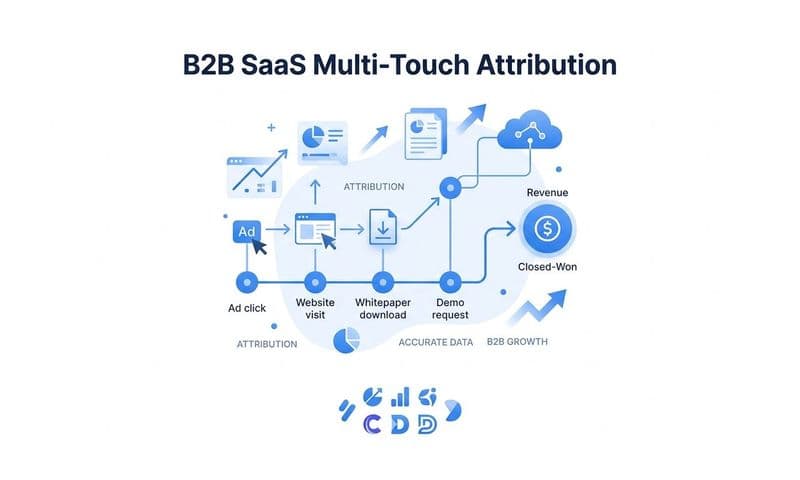
For B2B SaaS companies with long sales cycles, multi-touch attribution is typically the most accurate lens for understanding campaign performance. When a prospect takes 60 to 90 days to move from first awareness to closed deal, interacting with multiple ads, content pieces, and sales touchpoints along the way, attributing the conversion entirely to the last click dramatically undervalues the earlier touchpoints that built awareness and drove consideration. Understanding multi-touch conversion value distributes credit across the journey in a way that more accurately reflects how B2B buying decisions actually happen.
Connecting Conversion Data to Pipeline and Revenue
Tracking conversions at the lead level is useful. Connecting those conversions to pipeline and closed revenue is where automated conversion reporting becomes genuinely transformative for B2B SaaS teams.
Most marketing teams can tell you how many leads a campaign generated. Far fewer can tell you how much qualified pipeline that campaign produced, how many of those leads progressed to opportunities, or how much revenue closed from a specific ad set. This gap between lead volume and revenue impact is one of the most common reasons marketing teams struggle to justify budget increases or demonstrate their contribution to business growth.
Revenue attribution closes this loop. By connecting ad-level conversion data to downstream CRM outcomes, automated reporting systems allow you to trace a closed-won deal back to the specific campaign, ad, and channel that first engaged the customer. This means you can calculate true ROI per channel, not cost per lead as a proxy for performance, but actual revenue generated per dollar spent. The difference in decision-making quality is significant. A channel with a high cost per lead might still be your best-performing channel if the leads it generates have a higher close rate and larger average contract value than leads from cheaper sources. Tracking value per conversion rather than raw conversion volume is what makes this level of analysis possible.
Integrating billing or payment data alongside CRM data adds another layer of precision. When you can see not just which campaigns generated closed deals but which campaigns generated customers who retained, expanded, and generated the highest lifetime value, you have a fundamentally different basis for budget allocation. You can identify the campaigns that are attracting your best customers, not just your most frequent converters, and invest accordingly.
This level of revenue attribution also changes the conversation between marketing and the rest of the business. When marketing can demonstrate a clear, data-backed line from campaign spend to pipeline to closed revenue, it shifts from being a cost center to being a growth driver with measurable ROI. That change in perception has real implications for budget authority, headcount, and strategic influence.
Platforms like Cometly are built specifically to enable this kind of end-to-end attribution for B2B SaaS teams. By connecting ad platform data, CRM records, and revenue data in a single system, Cometly makes it possible to see exactly which campaigns are driving pipeline and revenue, not just leads, in real time.
Putting Automated Conversion Reporting Into Practice
Understanding the value of automated conversion reporting is one thing. Building a reporting infrastructure that actually delivers on that value requires a deliberate approach to setup and ongoing optimization.
Start with a conversion event audit. Before configuring any tracking, map out which conversion events matter at each stage of your funnel. For most B2B SaaS companies, this includes top-of-funnel events like content downloads and newsletter signups, mid-funnel events like trial signups, demo bookings, and pricing page visits, and bottom-of-funnel events like qualified opportunities created and closed-won deals. Each of these events tells a different part of the conversion story, and each needs to be tracked and reported on with the same rigor. Trying to optimize campaigns without visibility into the full funnel means you are always working with an incomplete picture.
Once your conversion events are defined and tracked, use automated reporting insights to guide budget reallocation. The goal is to move spend toward campaigns and channels that demonstrate measurable impact on pipeline, not just top-of-funnel volume. A campaign that generates a high volume of leads but a low percentage of qualified pipeline is a different investment than one that generates fewer leads but converts them at a higher rate into real opportunities. Performance marketing reporting software makes these distinctions visible in a way that manual reporting rarely can.
The third step is to close the feedback loop by sending enriched conversion data back to your ad platforms via Conversion API. When you feed higher-quality conversion signals, including downstream events like demo bookings and closed deals rather than just form fills, back to Meta, Google, and LinkedIn, you give those platforms' algorithms better data to optimize against. This typically improves targeting precision, reduces wasted spend, and compounds performance over time as the algorithms learn from more accurate conversion signals. Syncing conversion data to Facebook Ads is one of the highest-leverage actions available to B2B SaaS marketing teams operating in a privacy-constrained tracking environment.
The combination of comprehensive event tracking, revenue-connected reporting, and algorithmic feedback creates a self-reinforcing system where better data leads to better targeting, which leads to better conversions, which generates even better data.
The Bottom Line on Automated Conversion Reporting
The shift to automated conversion reporting represents a fundamental change in how B2B SaaS marketing teams relate to their data. Instead of assembling reports manually and making decisions on information that is already outdated, teams operate with a continuous, reliable data pipeline that connects every ad click to real business outcomes in real time.
The value is not primarily about saving time on reporting, though it does that too. The real value is in the quality of decisions that become possible when your conversion data is complete, accurate, and connected to revenue. You can allocate budget with confidence. You can identify which channels are actually driving growth versus which ones are generating activity without impact. You can demonstrate marketing's contribution to revenue in terms that resonate with finance and leadership.
For B2B SaaS teams navigating long sales cycles, multiple ad platforms, and increasing pressure to prove ROI, automated conversion reporting is not a nice-to-have. It is the infrastructure that makes confident, data-driven marketing possible.
Cometly is built specifically for this. It connects your ad platforms, CRM, and revenue data into a single attribution system that gives you real-time visibility into which campaigns are driving pipeline and closed-won revenue. With multi-touch attribution, server-side tracking, AI-driven recommendations, and 70+ native integrations, Cometly gives B2B SaaS marketing teams the clarity they need to scale what works and stop wasting budget on what does not.
If you are ready to replace manual reporting with a system that actually connects your marketing spend to revenue, Get your free demo and see how Cometly's attribution and reporting capabilities can transform how your team makes decisions.