
Your ad platform says 120 conversions. Your CRM shows 80. Your analytics tool reports something else entirely. Sound familiar? Conversion tracking discrepancies are one of the most frustrating problems marketing teams deal with, and they are far more common than most people realize.
The real danger is not the confusion itself. It is the decisions you make when you trust the wrong number. You scale a campaign that is actually underperforming. You cut a channel that is quietly driving pipeline. You bring a budget report to your leadership team built on data that does not hold up under scrutiny.
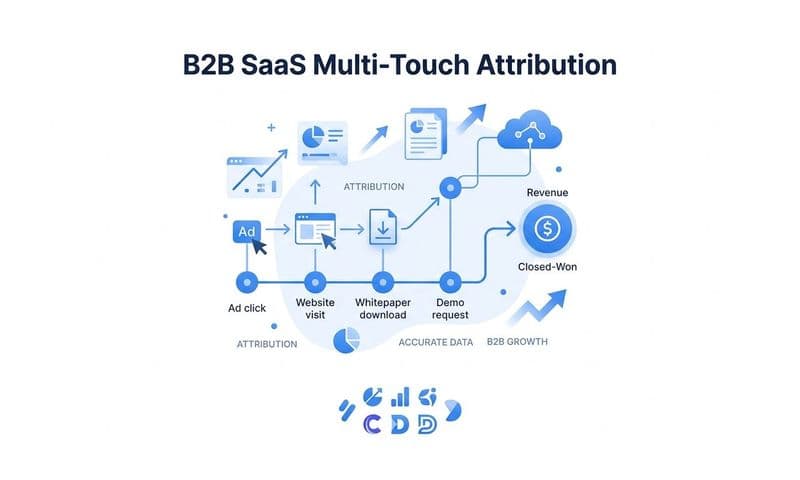
For B2B SaaS companies, this problem is especially acute. Long sales cycles, multi-touch journeys, and multiple tools in the stack create more opportunities for data to break down. A lead might click a LinkedIn ad, return through organic search two weeks later, and convert on a third visit from a retargeting campaign. Each platform in that story wants to take credit, and none of them are telling the complete truth on their own.
Fixing conversion tracking discrepancies requires a structured approach. You need to know where the gap lives before you can close it, and you need to understand the mechanics behind why different systems report different numbers in the first place.
This guide walks you through six concrete steps: identifying where your data breaks down, auditing your pixel and tag setup, aligning attribution windows, implementing server-side tracking, reconciling your CRM data, and establishing a single source of truth with ongoing monitoring. Each step builds on the last, so by the time you reach the end, you will have a tracking system your entire team can rely on.
Whether you are running paid search, paid social, or a full multi-channel mix, accurate conversion data is the foundation of every smart marketing decision. Let us start diagnosing the problem.
Step 1: Identify Where the Discrepancy Actually Lives
Before you can fix a conversion tracking discrepancy, you need to know exactly where it is happening. This sounds obvious, but most teams skip this step and jump straight to assumptions. They assume it is a pixel problem, or a UTM issue, or a platform quirk, without ever mapping out the full picture first.
Start by pulling conversion numbers from every source you use and placing them side by side. That means your ad platform dashboards (Google Ads, Meta, LinkedIn), your analytics tool, your CRM, and any attribution software you have in place. Use the same date range across all of them. Document the exact number each source reports for the same campaigns and time period.
This baseline comparison is your diagnostic starting point. Once you have the numbers in front of you, categorize the type of discrepancy you are seeing. There are three common types:
Volume mismatches: Different total conversion counts across platforms. Your ad platform reports significantly more or fewer conversions than your CRM or analytics tool for the same period.
Timing mismatches: The same conversions are attributed to different dates. This often happens when platforms use different attribution windows, crediting a conversion to the day of the ad click versus the day the conversion actually occurred.
Source mismatches: Credit is assigned to different channels. One platform claims a conversion, another claims the same one, and your CRM shows it came from a third source entirely.
After categorizing the type, check whether the discrepancy is consistent across all campaigns or isolated to specific ones. If only one campaign shows a major gap, that points to a setup issue with that specific tag or pixel configuration. If the discrepancy is consistent across everything, you are likely dealing with a systemic issue such as attribution window misalignment or a missing server-side tracking layer.
One critical pitfall to avoid: never compare numbers across platforms without first aligning date ranges and attribution windows. A Google Ads report using a 30-day click window and a Meta report using a 7-day click window will always produce different numbers for the same campaigns, even if both are technically correct. That difference is structural, not a bug. Understanding this distinction early saves hours of troubleshooting in the wrong direction.
Document your findings in a simple spreadsheet. List each source, the conversion count it reports, the date range used, and the attribution window applied. This document becomes your working reference for every step that follows. Teams dealing with persistent gaps will find that fixing attribution discrepancies in data often starts with exactly this kind of systematic documentation before any technical changes are made.
Step 2: Audit Your Pixel and Tag Implementation
Once you know where the discrepancy lives, the next place to look is your pixel and tag setup. Misconfigured tags are one of the most common causes of conversion tracking discrepancies, and they are often invisible until you actively go looking for them.
Start by using your browser's developer tools or a dedicated tag auditing extension to verify that your tracking pixels are firing correctly on every conversion page. Conversion pages include thank-you pages after form submissions, demo confirmation screens, checkout completions, and any other page a user lands on after completing a meaningful action.
Open the page in your browser, trigger the conversion action, and watch the network requests or tag debug output. You are looking for two things: confirmation that the tag fires at all, and confirmation that it fires exactly once.
Duplicate pixel fires are one of the most common causes of over-reporting in ad platforms. If your conversion tag fires twice for a single form submission, your ad platform records two conversions. This inflates your numbers and makes campaigns appear more efficient than they actually are. Check your Google Tag Manager triggers carefully. A tag set to fire on "All Pages" combined with a separate trigger on a specific thank-you page URL can cause exactly this problem.
Also verify that your conversion tags are placed on the correct pages and not on pages users visit multiple times during a session. If your thank-you page is accessible without completing a conversion (for example, if a user can navigate back to it or bookmark it), your tag will fire on non-conversion visits and inflate your counts.
Check your Google Tag Manager container to confirm it is published and that the correct triggers are mapped to each conversion tag. An unpublished container means your tag changes are not live, which is a surprisingly common oversight after updates.
If you are running multiple ad platforms, check each one independently. Your Meta pixel, Google Ads conversion tag, and LinkedIn Insight Tag all need individual verification. A problem with one does not necessarily mean the others are broken.
Success indicator: Each conversion event should fire exactly once per actual conversion action, with no duplicate triggers visible in the tag debug console. If you see multiple fires for a single action, trace the trigger logic in Google Tag Manager until you find the source of the duplication and remove it. For a broader look at how inaccurate conversion tracking develops across different tag configurations, reviewing common failure patterns can help you anticipate issues before they appear in your reports.
Step 3: Align Attribution Windows Across All Platforms
Here is something that surprises many marketers when they first encounter it: even if every pixel is firing perfectly and every tag is configured correctly, your platforms will still report different conversion numbers. The reason is attribution windows, and understanding them is essential to fixing conversion tracking discrepancies.
An attribution window defines how far back a platform looks to assign credit for a conversion. Meta's default is a 7-day click and 1-day view window. Google Ads defaults to a 30-day click window for most conversion actions. LinkedIn uses a 30-day click and 7-day view window by default. These differences alone create significant count variations when you compare raw numbers across platforms.
Think about what this means in practice. A user clicks a Meta ad on day one, does not convert, and then converts on day eight after clicking a Google Ads search result. Google Ads counts it (within the 30-day window). Meta does not (outside the 7-day window). But if that same user had converted on day six, both platforms would claim credit for the same conversion. Neither is wrong by its own rules, but comparing them directly produces misleading numbers.
The fix is to standardize your attribution window across every platform you are comparing. Choose one window and apply it consistently when pulling reports. For B2B SaaS companies with longer sales cycles, a 30-day or 90-day attribution window typically reflects the actual buyer journey more accurately than the default shorter windows. Understanding what conversion window attribution means in practice helps teams make an informed choice about which window to standardize on.
It is also important to understand view-through conversions. Meta and many display platforms count conversions where a user saw an ad but never clicked it. These view-through conversions will never appear in Google Ads or your CRM because those systems require a click or a direct action. This structural difference explains a meaningful portion of the gap between Meta-reported conversions and what you see elsewhere.
When building internal reports, separate click-through conversions from view-through conversions so you can compare equivalent actions across platforms. View-through data has value, but it should not be mixed into your primary conversion counts when doing cross-platform comparisons.
Document your chosen attribution window as a team standard. Write it down, share it with everyone who touches campaign reporting, and enforce it consistently. Every report should be built on the same logic, or the numbers will never align. For a deeper explanation of how attribution windows connect to different attribution models, reviewing how multi-touch attribution models work can provide useful context for teams building their reporting framework.
Step 4: Implement Server-Side Tracking to Close the Data Gap
Even with clean tags and aligned attribution windows, you are likely missing a meaningful portion of your conversions. The culprit is browser-based pixel tracking, and its limitations have become more significant over the past few years.
Ad blockers block pixel requests before they reach the platform. iOS privacy changes restrict cross-site tracking and limit cookie lifespans. Browser-level privacy settings prevent third-party cookies from persisting across sessions. All of these factors mean that client-side pixels routinely miss conversions that actually happened. Your platform under-reports, and you make optimization decisions based on an incomplete picture.
Server-side tracking solves this problem by sending conversion data directly from your server to the ad platform, bypassing the browser entirely. The two primary implementations for paid advertising are the Meta Conversion API and Google Enhanced Conversions. Understanding why server-side tracking is more accurate than browser-based methods helps make the case for this investment internally.
The Meta Conversion API sends conversion events from your server to Meta's servers using your first-party data. Because the request originates from your server rather than the user's browser, it is not affected by ad blockers or iOS restrictions. Google Enhanced Conversions works similarly, using hashed first-party data such as email addresses to match conversions back to Google Ads clicks with greater accuracy.
When you implement server-side tracking alongside your existing pixel, you need to configure event deduplication. Without it, both your pixel and your server-side event will fire for the same conversion, and the platform will count it twice. Deduplication works by assigning a unique event ID to each conversion. When the platform receives both a pixel event and a server event with the same ID, it counts only one.
Use first-party data wherever possible to improve match rates. When your server sends a hashed email address or phone number along with the conversion event, the platform can match it more reliably to a specific user in its system. This improves attribution accuracy, especially for users who have cleared their cookies or switched devices between their initial ad click and their eventual conversion.
For B2B SaaS companies, server-side tracking is particularly valuable because the conversion journey spans multiple sessions and often multiple devices. A prospect might click an ad on their phone, research the product on their laptop, and complete a demo request from a work computer. Client-side pixels struggle with this journey. Server-side tracking, anchored to first-party identifiers, handles it much more reliably. For teams ready to act on this, a Conversion API implementation tutorial walks through the technical setup step by step.
Success indicator: After implementing server-side tracking with proper deduplication, your platform-reported conversions should increase slightly as previously missed events are captured. If you see a dramatic spike, check your deduplication configuration. A sudden doubling of conversions typically means deduplication is not working correctly and both the pixel and server events are being counted.
Step 5: Reconcile CRM Data with Ad Platform Reporting
Your CRM is the closest thing you have to ground truth. It records actual business outcomes: form submissions, demo requests, qualified leads, opportunities created, and closed deals. Ad platforms record clicks and pixel fires. These two data sets will never match perfectly, but the gap between them should be explainable.
Start by mapping your CRM conversion stages to your ad platform conversion events. This step is where many teams discover a fundamental misalignment. A CRM contact created is not the same as a platform-reported lead if your form has a multi-step flow. If your ad platform fires a conversion on step one of a two-step form, but your CRM only creates a contact when step two is completed, you have a structural mismatch baked into your reporting.
Audit each conversion event in your ad platforms and confirm exactly which user action triggers it. Then confirm which CRM action you are comparing it to. If they are not equivalent actions, adjust either the conversion trigger or the CRM stage you are using for comparison.
Next, check your UTM parameter coverage across CRM contacts. Pull a report of all contacts created in a given period and look at what percentage have UTM source data attached. If a significant portion of your contacts have no UTM data, that means traffic is arriving at your site without proper tracking parameters. Those conversions are being recorded in your CRM but are invisible to your ad platform attribution.
Audit your UTM tagging across every active ad campaign. Every paid ad should have source, medium, and campaign parameters consistently applied. Use a naming convention your team follows without exception. A single campaign with missing UTMs can create a noticeable gap between CRM contacts and platform-attributed conversions. If your team needs a refresher on how these parameters work, reviewing what UTM tracking is and how it helps marketing provides a solid foundation for building a consistent tagging convention.
The most efficient way to close this reconciliation gap is to use a marketing attribution platform that connects your CRM pipeline data directly with your ad spend data. When your attribution tool can see both the ad click that started the journey and the revenue that resulted from it, you can evaluate campaigns based on actual business outcomes rather than pixel fires. This is the foundation of understanding which campaigns generate revenue, not just traffic. For teams evaluating tools that connect ad spend to pipeline, reviewing B2B revenue attribution software options provides a useful starting point.
Step 6: Build a Single Source of Truth and Keep It Accurate
You have identified the discrepancy, fixed your tags, aligned your windows, added server-side tracking, and reconciled your CRM data. Now the final step is making sure none of this breaks down over time.
Choose one system as your authoritative source for conversion data. For most B2B SaaS teams, this should be your CRM or your marketing attribution platform, not the ad platform dashboards. Ad platforms are inherently biased toward self-reporting. They count view-through conversions, use their own attribution logic, and have a structural incentive to show strong results. They are useful for optimization, but they should not be your final word on performance.
Build a standardized reporting framework that pulls from your chosen source of truth consistently. Every team member, from the performance marketer to the VP of Marketing to the CFO, should reference the same dashboard when evaluating campaign performance. When different people are looking at different numbers, every conversation becomes a debate about data rather than a discussion about strategy.
Set up automated alerts for conversion volume anomalies. A sudden drop in reported conversions often signals a tracking break, not a real performance decline. A sudden spike can mean a duplicate firing issue has reappeared. Catching these anomalies quickly prevents you from making bad decisions based on broken data.
Schedule a monthly tracking audit. It does not need to be extensive, but it should cover the essentials: pixels are firing correctly, UTM parameters are intact across active campaigns, server-side events are sending successfully, and CRM data is syncing with your attribution platform. A 30-minute monthly check catches most issues before they compound into major reporting problems.
Document your entire tracking setup in a shared document that your team can access. Include pixel IDs, event names, attribution window settings, UTM naming conventions, and data source mappings. This documentation becomes invaluable when team members change, when platforms update their interfaces, or when you need to troubleshoot a new discrepancy months from now. For teams looking to strengthen their lead tracking process alongside this setup, a structured lead tracking framework can complement the attribution work you have done here.
Putting It All Together
Fixing conversion tracking discrepancies is not a one-time project. It is an ongoing discipline that requires the right setup, consistent standards, and regular audits. But the payoff is significant. When your conversion data is accurate, every downstream decision improves.
You can confidently scale campaigns that are generating real pipeline. You can cut spend on channels that look good in their own dashboards but do not show up in your CRM. You can bring your growth team and finance team into alignment around the same numbers, and stop having the same argument about which data to trust every time you review performance.
The six steps in this guide give you a structured path from diagnosing where your data breaks down to building a system that holds up over time. Start by identifying where the discrepancy lives. Audit your pixel implementation. Align your attribution windows. Layer in server-side tracking. Reconcile your CRM data. Then lock in a single source of truth with ongoing monitoring.
Cometly helps B2B SaaS marketing teams do exactly this by connecting ad platforms, CRM data, and website events into one unified attribution view. From first ad click to closed-won revenue, Cometly captures every touchpoint, feeds enriched conversion data back to your ad platforms, and gives your team the complete picture they need to make confident decisions.
Stop guessing at which campaigns are working. Get your free demo today and start building the accurate, reliable conversion tracking system your marketing team deserves.