
Most B2B SaaS marketing teams are flying blind. They run paid campaigns across Google, Meta, LinkedIn, and TikTok, but when it comes time to answer "which channel actually drove that deal?", the data falls apart. The problem is rarely the ad creative or the targeting. It's the conversion tracking package underneath it all.
A conversion tracking package is the foundation of your entire marketing measurement system. It defines which events you capture, how you send that data to ad platforms, how you connect leads to revenue, and how you make budget decisions with confidence. When it's built well, every dollar you spend becomes accountable. When it's built poorly, you're optimizing campaigns based on incomplete or misleading signals.
This guide breaks down seven actionable strategies to build, implement, and scale a conversion tracking package that gives your team a true picture of marketing performance. Whether you're setting up tracking for the first time or auditing a system producing inconsistent data, these strategies will help you establish a reliable, revenue-connected measurement foundation.
Each strategy addresses a specific layer of the tracking stack, from event architecture and server-side data delivery to attribution modeling and ad platform optimization. By the end, you'll have a clear roadmap to move from fragmented data to a single source of truth that connects every touchpoint to pipeline and closed revenue.
1. Define Your Conversion Event Hierarchy Before You Build Anything
The Challenge It Solves
Without a structured event hierarchy, teams end up tracking everything or nothing. Both extremes create problems. Tracking too many events floods ad platforms with noisy signals that don't correlate with revenue. Tracking too few means your campaigns optimize toward surface-level actions that never translate into paying customers. The result is wasted budget and attribution data you can't trust.
The Strategy Explained
Before writing a single line of tracking code, map out your conversion events in a tiered structure that reflects your actual funnel. Think in terms of micro-conversions and macro-conversions.
Micro-conversions are early-stage signals: page views, content downloads, webinar registrations, free trial signups. Macro-conversions are the events that matter most to revenue: demo requests, qualified leads, opportunities created, and closed-won deals.
Each event should be tagged with a funnel stage, an estimated value, and a clear definition of what qualifies as a conversion. This taxonomy becomes the blueprint your entire tracking package is built on. It also ensures that when you send optimization signals to Google or Meta, you're pointing their algorithms at events that actually correlate with customers, not just clicks.
Implementation Steps
1. List every meaningful action a prospect can take on your website and in your product, from landing page visits to demo bookings to trial activations.
2. Categorize each action by funnel stage: top of funnel, middle of funnel, or bottom of funnel. Assign a relative value to each tier based on its proximity to revenue.
3. Identify your primary conversion event, typically the one that best predicts a closed deal, and designate it as your main optimization signal for paid campaigns.
4. Document the event taxonomy in a shared spec sheet that your marketing, engineering, and analytics teams all reference. This prevents inconsistencies when events are implemented across different tools.
Pro Tips
Resist the urge to send every event to ad platforms as a conversion. Choose one or two high-intent events as your primary signals and use the rest for internal reporting only. Ad platform algorithms perform best when they receive clean, focused signals. For a deeper look at structuring this correctly, the best practices for tracking conversions accurately cover the most common mistakes teams make when defining their event taxonomy.
2. Implement Server-Side Tracking to Eliminate Data Loss
The Challenge It Solves
Browser-based pixel tracking has become significantly less reliable. Apple's App Tracking Transparency framework, widespread use of ad blockers, and the ongoing deprecation of third-party cookies all contribute to a growing gap between what actually happens on your site and what your pixels report. Many teams find that pixel-only tracking misses a meaningful portion of conversion events, which means ad platforms are optimizing on incomplete data.
The Strategy Explained
Server-side tracking bypasses the browser entirely. Instead of relying on a pixel firing in the user's browser, your server sends conversion event data directly to ad platforms via their APIs. Meta's Conversion API and Google's Enhanced Conversions are the two primary implementations for most B2B SaaS teams.
The most resilient setup combines both approaches: browser pixels fire when they can, and server-side events fill in the gaps when they can't. This hybrid model ensures maximum data coverage regardless of the user's browser settings, device, or privacy preferences. Understanding why server-side tracking is more accurate than browser-based methods helps make the case for this investment internally.
Server-side tracking also gives you more control over the data you send. You can enrich events with CRM data, add customer identifiers, and apply deduplication logic before the data ever reaches an ad platform, which leads directly into several of the strategies that follow.
Implementation Steps
1. Set up Meta's Conversion API through a server-to-server integration or through a tag management solution that supports server-side containers, such as Google Tag Manager's server-side mode.
2. Configure Google Enhanced Conversions by passing hashed first-party customer data alongside your standard Google Ads conversion tags.
3. Test both browser and server-side events in parallel using each platform's diagnostic tools, such as Meta's Events Manager and Google's Tag Diagnostics, to confirm events are firing correctly.
4. Monitor event match quality scores in both platforms and address any gaps in the customer data fields being passed with each event.
Pro Tips
If you're using a platform like Cometly, server-side Conversion API integration is built in, which removes much of the engineering overhead. Rather than building and maintaining a custom server-side pipeline, you can route your conversion events through Cometly's infrastructure and have them delivered reliably to Meta, Google, and other ad platforms automatically.
3. Connect Your CRM Data to Close the Lead-to-Revenue Gap
The Challenge It Solves
Most conversion tracking packages stop at the lead. A form fill gets recorded, an event fires, and the ad platform marks it as a conversion. But for B2B SaaS companies, a lead is just the beginning of the journey. Without connecting CRM pipeline stages and closed-won revenue back into your attribution system, you have no way of knowing whether those leads actually became customers or whether the campaigns generating the most leads are generating the most revenue.
The Strategy Explained
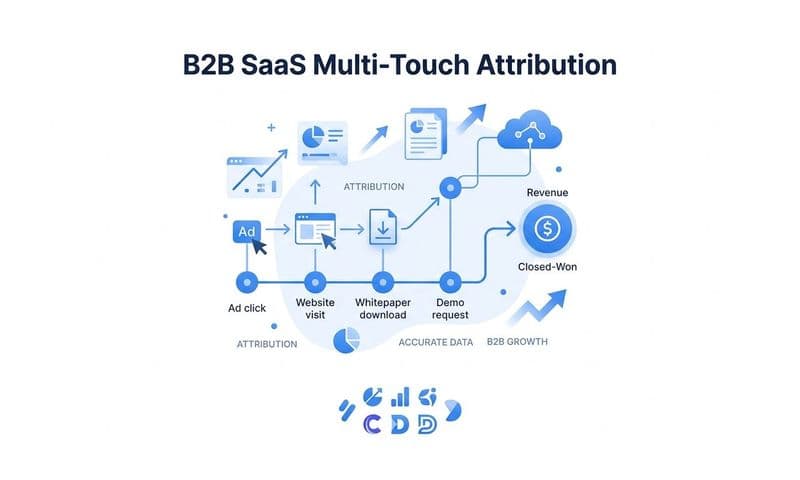
The goal is to create a continuous data loop between your ad platforms, your website, your CRM, and your billing system. When a lead moves through pipeline stages in your CRM, those status changes should feed back into your attribution data. When a deal closes, that revenue event should be connected to the original ad click that started the journey.
Connecting your billing tool, such as Stripe, takes this a step further. Instead of relying on CRM deal values, which can be manually entered and inconsistent, you're tying actual payment data to your attribution. This gives you a precise, revenue-based view of campaign performance rather than an estimated one.
This connection transforms your conversion tracking package from a lead counter into a revenue attribution system. You can see cost per acquired customer by channel, revenue per campaign, and which ad creative types correlate with the highest lifetime value customers. Exploring customer attribution tracking methods in depth reveals how leading B2B teams structure this data loop end to end.
Implementation Steps
1. Map your CRM pipeline stages to conversion events in your attribution system. Each stage progression, from MQL to SQL to opportunity to closed-won, should trigger a corresponding event.
2. Ensure your CRM records include the UTM parameters and source data captured at the time of the original lead conversion so attribution can be traced back to the originating campaign.
3. Connect your billing platform to your attribution system. Cometly's Stripe integration, for example, pulls actual revenue data and maps it to the ad interactions that preceded the purchase.
4. Build a reporting view that shows pipeline and revenue by channel, campaign, and ad set so you can make budget decisions based on downstream outcomes, not just lead volume.
Pro Tips
CRM data quality is often the weakest link in this chain. If your sales team isn't consistently updating pipeline stages or logging deal values, your revenue attribution will be unreliable. Invest time in aligning with your sales team on data hygiene standards before you build the technical integration. Clean inputs produce reliable outputs.
4. Choose the Right Attribution Model for Your Sales Cycle
The Challenge It Solves
B2B SaaS sales cycles are rarely linear. A prospect might discover your product through a LinkedIn ad, download a guide from organic search three weeks later, attend a webinar, and then convert after clicking a retargeting ad. Last-click attribution gives all the credit to that final retargeting ad and assigns zero value to the channels that built awareness and trust throughout the journey. Over time, this causes teams to underinvest in top-of-funnel channels that are actually essential to driving deals.
The Strategy Explained
Moving beyond last-click requires selecting an attribution model that reflects the complexity of your actual buying process. The most common multi-touch models each have a different logic for distributing credit across touchpoints.
Linear attribution distributes credit equally across all touchpoints in the journey. It's simple and avoids overweighting any single channel, but it doesn't differentiate between a high-intent demo request click and a casual blog visit.
Position-based (U-shaped) attribution gives the most credit to the first touch and the last touch, with the remainder distributed across middle touchpoints. This model works well for teams that want to value both acquisition and conversion channels.
Time-decay attribution assigns more credit to touchpoints closer to the conversion date. This can be useful for shorter sales cycles but may undervalue early awareness efforts in longer B2B cycles.
Data-driven attribution uses machine learning to assign credit based on the actual contribution of each touchpoint to conversion outcomes. It requires sufficient conversion volume to be statistically meaningful, but it's the most accurate model when you have the data to support it.
Implementation Steps
1. Document the typical length and stages of your sales cycle. This context should inform which model you select as your primary attribution view.
2. Run your historical conversion data through multiple attribution models side by side to see how channel credit shifts. This comparison often reveals channels that are significantly undervalued by last-click.
3. Select a primary attribution model for budget decision-making and a secondary model for cross-validation. Using two models helps you identify outliers and make more confident decisions.
4. Configure your attribution platform to apply your chosen model consistently across all reporting so your team is always working from the same data set. A structured attribution tracking setup ensures your model is applied uniformly across every channel and campaign.
Pro Tips
Avoid switching attribution models frequently. Changing models mid-quarter makes it impossible to compare performance across time periods. Establish your model, document the rationale, and stick with it long enough to build a meaningful baseline. You can always run comparative analyses without changing your primary reporting model.
5. Deduplicate Events to Prevent Inflated Conversion Counts
The Challenge It Solves
Running browser-side pixels alongside server-side tracking is the right approach for data coverage, but it introduces a new problem: the same conversion event can be reported twice. When a user completes a form, your pixel fires in the browser and your server sends the same event via the Conversion API. Without deduplication logic, both events are counted, and your ad platform reports twice as many conversions as actually occurred. This inflates performance metrics and causes the algorithm to misallocate budget toward campaigns that appear to be performing better than they are.
The Strategy Explained
Both Meta and Google provide documented mechanisms for event deduplication. The core principle is straightforward: assign a unique event ID to every conversion event, and pass that same ID through both your browser pixel and your server-side event. When the ad platform receives two events with the same ID, it recognizes them as duplicates and counts them only once.
The event ID should be generated at the moment the conversion occurs and should be unique to that specific user action. A common approach is to combine a timestamp with a session identifier or user ID to create a string that is reliably unique across all events.
Deduplication is not a set-and-forget configuration. It requires ongoing monitoring to confirm that event IDs are being passed correctly through both channels and that the platform's deduplication logic is functioning as expected. Teams dealing with inaccurate conversion tracking often trace the root cause back to deduplication failures that went undetected for months.
Implementation Steps
1. Generate a unique event ID for every conversion event at the moment it fires. This ID must be consistent between the browser pixel event and the corresponding server-side event for the same user action.
2. Pass the event ID in both your Meta pixel's eventID parameter and your Conversion API payload. For Google, use the transaction ID field in Enhanced Conversions for purchase events.
3. Use Meta's Events Manager deduplication diagnostics to verify that duplicate events are being identified and collapsed correctly. Check the "Deduplicated Events" column in your event reporting.
4. Set up a recurring check, at least monthly, to confirm deduplication is functioning properly after any site updates or tracking configuration changes.
Pro Tips
Deduplication failures are often silent. Your conversion counts will simply be inflated without any obvious error message. Make it a habit to cross-reference conversion counts in your ad platform with your CRM or analytics tool on a regular basis. A significant discrepancy between these numbers is a reliable signal that deduplication is broken somewhere in your stack.
6. Feed Enriched First-Party Data Back to Ad Platforms
The Challenge It Solves
Ad platform algorithms are only as good as the data you feed them. When conversion events arrive without customer identifiers, the platform has limited ability to match that event to a specific user profile, which reduces its ability to find similar audiences, optimize bidding, and improve targeting. As third-party data becomes less available due to privacy changes, the quality of your first-party data becomes a direct competitive advantage.
The Strategy Explained
Both Meta and Google use a concept called event match quality to measure how well they can match an incoming conversion event to a user in their system. Higher match quality means the platform can more confidently attribute the conversion to a specific user and use that signal to improve campaign optimization.
You improve match quality by sending hashed customer identifiers alongside your conversion events. These identifiers typically include email address, phone number, first name, last name, and in some cases, city or country. The data is hashed before it leaves your server, meaning the raw personal data is never transmitted. The platform uses the hash to attempt a match against its own hashed user database.
The practical impact is that your ad platform's AI has richer signals to work with when deciding who to show your ads to, how to adjust bids, and which audiences to expand into. This is especially valuable for B2B SaaS companies where conversion volumes are lower than B2C, making every signal more important. A step-by-step Conversion API implementation tutorial walks through exactly how to structure these enriched payloads for Meta's platform.
Implementation Steps
1. Identify the customer data fields your server has access to at the point of conversion: email, phone number, name, and location are the most impactful fields for match quality.
2. Hash all personally identifiable information using SHA-256 before including it in your server-side event payloads. Both Meta and Google specify SHA-256 as their required hashing algorithm.
3. Check your event match quality scores in Meta's Events Manager and Google's Enhanced Conversions reporting. Both platforms show you which fields are contributing to match quality and flag any fields that are missing or improperly formatted.
4. Prioritize capturing email addresses at every conversion point in your funnel, as email is typically the highest-value identifier for matching purposes on both platforms.
Pro Tips
Don't limit first-party data enrichment to your bottom-of-funnel events. Sending enriched data with mid-funnel events like trial signups or demo requests gives ad platforms earlier signals to work with and helps them optimize for the types of users who are most likely to progress through your pipeline. The more complete your data, the better the platform's AI can work on your behalf.
7. Audit and Maintain Your Tracking Package on a Regular Cadence
The Challenge It Solves
Conversion tracking is not a one-time implementation. It degrades. Website redesigns break event triggers. CRM integrations drift when fields are renamed or workflows change. Ad platform updates alter how events are processed. Browser and iOS updates shift the behavior of client-side pixels. Without a structured audit process, these issues accumulate silently until your data is so unreliable that budget decisions are being made on fiction.
The Strategy Explained
A regular audit cadence treats your conversion tracking package as a living system that requires ongoing maintenance. The goal is to catch degradation early, before it affects campaign performance or reporting accuracy.
A monthly audit should cover four core areas: event firing accuracy, data completeness, deduplication logic, and attribution consistency. Each area has specific checks that can be systematized into a repeatable process.
Beyond the monthly cadence, you should also trigger an immediate audit any time a significant change occurs: a website migration, a new CRM integration, a major ad platform update, or a change in your conversion tracking configuration. These events are the most common sources of fixing conversion tracking gaps that quietly erode reporting accuracy over time.
Implementation Steps
1. Event firing accuracy: Use browser developer tools and platform diagnostic tools to verify that each tracked event fires correctly on the intended pages and actions. Confirm that no events are double-firing at the browser level before server-side deduplication is applied.
2. Data completeness: Check that all required event parameters are being passed with each conversion, including event IDs, customer identifiers, and any custom fields your attribution model depends on. Look for events with missing or null values in key fields.
3. Deduplication logic: Cross-reference conversion counts in your ad platforms against your CRM or analytics tool. Significant discrepancies signal that deduplication is failing or that events are being dropped somewhere in the pipeline.
4. Attribution consistency: Confirm that your attribution model settings have not changed across platforms and that the UTM parameters in your CRM records are being captured correctly. Attribution gaps often trace back to broken UTM tagging on campaign URLs. Understanding what UTM tracking is and how it helps your marketing ensures your team tags every campaign URL consistently.
Pro Tips
Build your audit into a shared document or project management template that your team completes on a fixed schedule. Assign clear ownership for each section of the audit so nothing falls through the cracks. Platforms like Cometly provide centralized visibility into your tracking health across channels, which makes it significantly easier to spot issues without manually checking each platform individually.
Putting It All Together: Your Implementation Roadmap
A strong conversion tracking package is not a one-time setup. It is an ongoing system that connects your ad spend to pipeline, revenue, and real business outcomes.
The seven strategies in this guide build on each other. You start by defining your event hierarchy, then ensure that data reaches ad platforms reliably through server-side tracking, then connect CRM and revenue data to close the attribution loop. From there, choosing the right attribution model, deduplicating events, enriching your first-party data, and committing to regular audits transforms your tracking from a fragile setup into a durable measurement foundation.
For B2B SaaS teams, this level of tracking precision is what separates teams that scale confidently from those that cut budgets based on incomplete data. When you can see exactly which campaigns generate pipeline and closed revenue, every budget conversation becomes clearer and every optimization decision becomes more defensible.
Start with the strategy that addresses your biggest current gap. If browser-side tracking is missing conversions, prioritize server-side implementation. If your CRM data isn't connected to your ad reporting, close that loop first. If your attribution model is still set to last-click, run a multi-touch comparison and see how the picture changes.
Each improvement you make compounds into better decisions, more efficient ad spend, and a clearer picture of what is actually working. Platforms like Cometly are built specifically for this use case, connecting your ad platforms, CRM, website events, and revenue data into a single attribution system so your team always knows which campaigns are driving growth.
Ready to build a conversion tracking package that connects every touchpoint to real revenue? Get your free demo today and see how Cometly's AI-driven attribution gives your team the data it needs to scale with confidence.