

Most marketing teams can tell you their click-through rate, their cost per lead, and which campaign drove the most form fills last month. What they often cannot tell you is how a prospect actually moved from first discovering their brand to signing a contract. Those two things are not the same, and the gap between them is where budget gets wasted and growth stalls.
For B2B SaaS companies specifically, this problem runs deep. A buyer might see a LinkedIn ad on a Tuesday, read a comparison article on Thursday, get retargeted with a case study video two weeks later, attend a webinar, and finally book a demo after a colleague forwarded them a blog post. By the time they convert, half a dozen touchpoints have done meaningful work. But if your reporting only credits the last click, you will optimize toward the wrong things and starve the channels that actually started the conversation.
This article breaks down what the customer journey in digital marketing really looks like for B2B SaaS buyers, why tracking it accurately is harder than most teams realize, and how modern attribution tools give you the full picture instead of a filtered snapshot. By the end, you will have a clear framework for understanding, measuring, and acting on every stage of the journey, from first impression to closed-won revenue.
The Path Every Buyer Takes Before They Sign
The customer journey in digital marketing is the complete sequence of interactions a prospect has with your brand, from the moment they first become aware of you through conversion and into the post-sale relationship. It is not a funnel in the traditional sense. It is a nonlinear, multi-channel sequence of touchpoints that varies by buyer, by company size, and by the complexity of the problem they are trying to solve.
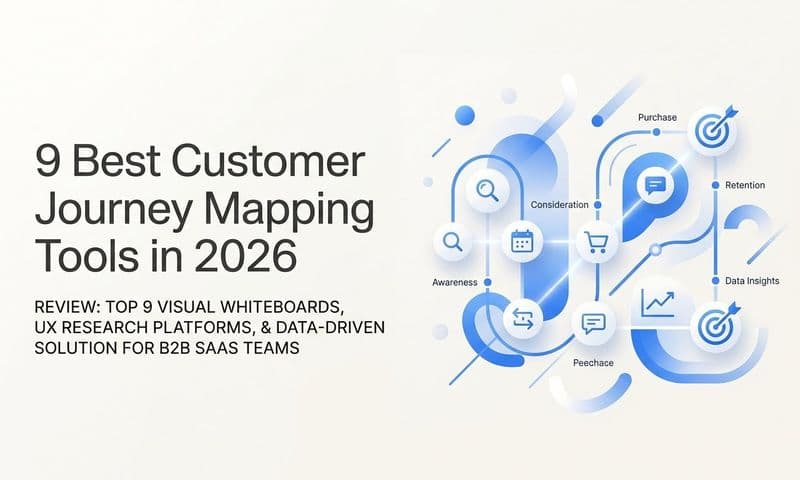
For B2B SaaS buyers, the journey typically moves through three broad stages. Awareness is where a prospect first encounters your brand, often through a paid social ad, an organic search result, a mention in a newsletter, or a peer recommendation. They are not yet evaluating solutions. They are recognizing a problem and beginning to explore what options exist.
Consideration is where the real research happens. A prospect in this stage is comparing vendors, reading reviews on G2 or Capterra, watching product demos, downloading guides, and engaging with retargeting ads that reinforce your positioning. This stage can last weeks or months depending on the deal size and the number of stakeholders involved.
Decision is the final stage, where a prospect converts to a trial, books a call with sales, or makes a purchase. But even here, the journey is rarely a single moment. Multiple decision-makers may need to align before a deal closes, and the marketing touchpoints that helped build consensus along the way deserve credit for that outcome.
This is what makes B2B customer journeys fundamentally different from B2C. A consumer buying a software subscription for personal use might convert in a single session. A B2B buyer evaluating a platform for their marketing team involves procurement conversations, security reviews, budget approvals, and stakeholder demos. The timeline is longer, the touchpoints are more numerous, and the attribution challenge is significantly more complex.
Think about what a realistic B2B SaaS journey looks like in practice. A marketing manager at a mid-size company sees a LinkedIn ad for an analytics tool. They click through, read the homepage, and leave without converting. Two weeks later, they search Google for "marketing attribution software," find a comparison article, and land on your site again. They download a guide, get added to an email sequence, and click through to a demo page. Three weeks after that, they forward a case study to their VP of Marketing. The VP books a demo. The deal closes 45 days later.
Every step in that sequence contributed to the revenue. Tracking it accurately requires a system built for that complexity, not a dashboard that only shows you the last thing that happened before the form was filled out.
Why Most Marketing Teams Are Flying Blind
Here is the uncomfortable reality for most marketing teams: the data they are making decisions from is incomplete, and in many cases, it is systematically misleading.
Last-click attribution is still the default in many ad platforms. It gives 100% of the conversion credit to the final touchpoint before a prospect converted. That sounds logical until you realize it means every LinkedIn awareness campaign, every retargeting ad, every piece of content that moved a buyer through the consideration stage gets zero credit. The result is that teams optimize toward whatever channel happens to touch prospects right before they convert, often branded search or direct traffic, while the channels that actually generated demand go underfunded.
First-click attribution has the opposite problem. It credits the channel that first brought someone to your site, ignoring everything that happened in between. Neither model reflects how buying decisions actually get made.
Beyond model choice, there is a deeper tracking problem that most teams underestimate. Browser-based pixel tracking has become significantly less reliable over the past several years. Safari's Intelligent Tracking Prevention limits how long cookies persist. Firefox blocks many third-party tracking scripts by default. Ad blockers prevent pixels from firing entirely for a meaningful segment of the professional audience, which skews heavily toward the tech-savvy B2B buyers you are trying to reach.
Cross-device behavior adds another layer of complexity. A prospect might see your ad on their phone during a commute, research your product on a work laptop, and convert on a desktop at home. Without server-side tracking and identity resolution, those three sessions look like three separate anonymous visitors. You lose the thread of the journey entirely.
Offline conversion events create yet another blind spot. When a prospect books a demo through your sales team, when a deal closes in your CRM, or when a subscription payment processes through Stripe, those events often never make it back to your ad platform attribution models. So the ads that influenced those outcomes get no credit, and your platform dashboards show a distorted picture of what is actually working.
The business consequences of this are significant. Budget flows toward channels that look strong in platform-native reporting but do not actually drive pipeline. High-performing touchpoints in the middle of the funnel go unrecognized and underfunded. Teams make scaling decisions based on incomplete data and wonder why results do not improve proportionally to spend. The problem is not the strategy. It is the measurement infrastructure underneath it.
Mapping the Digital Touchpoints That Actually Matter
Before you can fix your attribution, you need a clear picture of what you are actually trying to track. In a typical B2B SaaS customer journey, the relevant touchpoints span multiple channels, each playing a different role at different stages of the buying process.
Paid social ads: Platforms like LinkedIn and Meta are often where awareness begins. A prospect encounters your brand through a targeted ad, engages with the creative, and either clicks through or files the brand name away for later. These touchpoints initiate the journey more often than last-click attribution suggests.
Paid search: Google Ads captures intent. When a prospect is actively searching for a solution, paid search puts your brand in front of them at the exact moment they are evaluating options. This channel often appears later in the journey, after awareness has already been established elsewhere.
Organic content: Blog posts, comparison guides, and SEO-driven content serve buyers in the consideration stage. They are researching, comparing, and trying to understand which solution fits their needs. Organic content touchpoints are frequently invisible in paid platform dashboards, even though they do meaningful work in moving buyers forward.
Email sequences: Once a prospect has engaged enough to share their contact information, email becomes a nurture channel. Sequences that deliver relevant content based on where someone is in the journey can accelerate consideration and keep your brand top of mind during long evaluation periods.
Retargeting campaigns: These ads re-engage prospects who have already visited your site or engaged with your content. They are particularly effective in the middle of the funnel, where repeated exposure builds familiarity and trust.
Direct CRM interactions: Sales outreach, demo calls, and follow-up communications are touchpoints too. In a complete customer journey view, these interactions belong in the attribution picture alongside digital ad events.
Multi-touch attribution is the methodology that assigns credit across all of these touchpoints rather than collapsing the entire journey into a single interaction. The most common models each reflect a different philosophy about how credit should be distributed.
Linear attribution gives equal credit to every touchpoint in the journey. Time-decay attribution gives more credit to touchpoints that occurred closer to the conversion event. Position-based attribution, sometimes called U-shaped, gives the most credit to the first and last touches, with the remainder distributed across the middle. Data-driven attribution uses machine learning to assign credit based on which touchpoints actually correlate with conversion in your specific data set.
No single model is universally correct. The value is in being able to compare them and understand how your channel mix looks under different assumptions. That comparison often reveals channels that are systematically undervalued by your current reporting setup, and that is where the budget reallocation opportunities live.
Server-Side Tracking and First-Party Data: The Foundation of Accurate Journey Analysis
Understanding the customer journey conceptually is straightforward. Measuring it accurately is where most teams hit a wall, and that wall is almost always a technical one.
Browser-based tracking, where a JavaScript pixel fires when a user visits a page or completes an action, was the standard approach for years. It is also increasingly unreliable. As described earlier, browser privacy settings, ad blockers, and cross-device behavior all create gaps in the data that pixel-only tracking cannot fill. The result is that a meaningful portion of your actual conversions never get attributed to the ads that drove them.
Server-side tracking solves this by moving conversion event data off the browser and sending it directly from your server to the ad platform's API. Meta's Conversions API and Google's Enhanced Conversions are the two most widely used implementations of this approach. Instead of relying on a browser pixel to fire and successfully transmit data, your server sends the event directly, bypassing browser limitations entirely.
The practical impact is significant. Events that would have been lost due to ad blockers or privacy settings now get captured and attributed. Conversion data becomes more complete, which means your attribution model reflects a more accurate picture of what is actually happening.
First-party data enrichment takes this further. When you connect CRM events, form submissions, demo bookings, and revenue data from tools like Stripe to your ad platform events, you are building a richer, more complete picture of each customer's path. Instead of sending a generic "lead" event to Meta or Google, you can send an event that includes customer lifetime value signals, lead quality scores, or deal stage information. This gives the platform algorithm better data to optimize against.
The downstream effect on ad performance is meaningful. When ad platforms receive enriched, high-quality conversion signals, their machine learning models can identify which users are most likely to become valuable customers, not just which users are most likely to fill out a form. Targeting improves, optimization improves, and the feedback loop between your marketing data and your ad spend becomes more intelligent.
For B2B SaaS teams specifically, this matters because the gap between a lead and a closed deal is wide. A campaign that generates a high volume of low-quality leads looks great in a cost-per-lead report but terrible in a cost-per-revenue report. When you feed downstream CRM and revenue data back to your ad platforms through server-side APIs, you align the algorithm's optimization goal with your actual business goal: closed-won revenue, not just form fills.
This is not a nice-to-have feature. In a privacy-first environment where browser-based tracking continues to degrade, server-side tracking and Conversion API integration are the foundation on which accurate customer journey analysis is built.
Turning Journey Data Into Revenue Decisions
Capturing accurate journey data is the prerequisite. The payoff comes when you use that data to make better decisions about where to invest your budget and how to structure your campaigns.
Pipeline and revenue attribution is the practice of connecting marketing touchpoints directly to closed-won deals. Instead of measuring success at the lead or opportunity stage, you trace each deal back through every marketing interaction that contributed to it and calculate true ROI by ad, campaign, and channel. This shifts the conversation from "which campaign drove the most leads" to "which campaign drove the most revenue," which is a fundamentally different and more useful question.
When you have this data, patterns emerge that would be impossible to see in standard platform dashboards. You might discover that LinkedIn awareness campaigns rarely appear as the last touch before conversion, but they appear in the journeys of your highest-value customers at a rate that is disproportionate to their share of your budget. Or you might find that a specific retargeting creative consistently appears in the journeys of prospects who go on to close at a higher average contract value.
AI-driven analysis of journey data surfaces these patterns at a scale and speed that manual analysis cannot match. Instead of spending hours building custom reports, you get recommendations: these are the ads appearing most frequently in high-value customer journeys, these are the channels that tend to initiate deals versus close them, this campaign is generating leads that rarely progress past the first sales call.
The decision-making loop that follows is straightforward in principle, even if it requires discipline in practice. Use journey insights to reallocate budget toward channels that appear consistently in converting paths. Pause campaigns that generate activity but do not show up in closed deals. Scale creative that appears in high-value journeys. And continuously feed richer conversion data back to your ad platforms so their algorithms optimize toward the outcomes that actually matter to your business.
This loop compounds over time. Better data leads to better optimization, which leads to better results, which generates more data to learn from. Teams that build this infrastructure early create a compounding advantage over competitors who are still making budget decisions based on last-click attribution and platform-native reporting.
The key is treating journey data not as a reporting exercise but as a decision-making input. Every insight should connect to a specific action: a budget shift, a creative test, a channel expansion, or a campaign pause. If the data is not changing what you do, it is not being used effectively.
Building a Single Source of Truth for Your Customer Journey
One of the most common frustrations for marketing teams at B2B SaaS companies is that their data lives in too many places. Meta Ads Manager shows one set of numbers. Google Ads shows another. The CRM shows a third. Stripe shows revenue that does not match any of them. Every team member is working from a different dashboard, drawing different conclusions, and arguing about which number is right.
A unified attribution platform solves this by connecting all of those data sources into a single view. Ad platform data, CRM events, website behavior, and revenue data all flow into one place, deduplicated and reconciled so that every team member is working from the same source of truth. When the marketing team, the sales team, and the leadership team all look at the same numbers, decisions get made faster and with more confidence.
The integration layer that makes this possible is the technical backbone of modern attribution. Native connections to ad platforms like Meta and Google pull in campaign and creative performance data. CRM integrations bring in lead status, opportunity stage, and deal outcome data. Stripe or other payment integrations connect actual revenue to the marketing events that preceded it. Server-side event tracking ties it all together by ensuring that the conversion signals flowing between systems are complete and accurate.
When these integrations work together, you can answer questions that were previously impossible to answer cleanly. Which specific ad creative contributed to the most closed-won revenue last quarter? Which channel has the highest average deal value, not just the highest lead volume? Which campaigns are generating leads that sales loves versus leads that stall in the pipeline?
This is exactly the use case Cometly is built for. Cometly connects your ad platforms, CRM, website, and revenue data into one attribution platform designed specifically for B2B SaaS companies. It captures every touchpoint from the first ad click to closed-won revenue, applies multi-touch attribution across the full customer journey, and uses AI to surface the patterns and recommendations that help you scale what is actually working. With over 70 native integrations and server-side tracking built in, it eliminates the data silos that make accurate journey analysis so difficult in the first place.
Putting It All Together
The customer journey in digital marketing is not a theoretical framework to hang on a whiteboard. It is a measurable sequence of real events that directly determines where your budget goes, how efficiently your pipeline grows, and whether your marketing investments compound into revenue or disappear into vanity metrics.
The teams that win are not necessarily the ones with the biggest budgets. They are the ones who can see the full journey, attribute revenue accurately across every touchpoint, and act on that data in real time. They know which channels start conversations and which channels close them. They know which ad creatives appear in the journeys of their best customers. And they feed that knowledge back into their campaigns continuously, creating a feedback loop that gets smarter with every conversion.
Building that capability starts with the right foundation: server-side tracking to capture what pixels miss, multi-touch attribution to distribute credit fairly across the journey, and a unified platform that connects your ad data to your CRM and your revenue. Without that foundation, you are making budget decisions based on a partial picture, and partial pictures lead to partial results.
If you are ready to move beyond last-click attribution and start seeing the complete customer journey from first impression to closed-won deal, Cometly gives you the tools to do it. Get your free demo and start capturing every touchpoint so your marketing decisions are driven by revenue data, not platform dashboards.