Most B2B SaaS marketing teams are making budget decisions based on incomplete information. A prospect sees a LinkedIn ad, searches your brand name three weeks later, reads a G2 review, clicks a retargeting ad, and finally books a demo through organic search. Which channel gets the credit? In most attribution setups, it's the last one. The other four touchpoints disappear from the record entirely.
This is the central problem with how most teams think about the digital marketing customer journey. They treat it like a straight line when it's actually a web of interactions spread across channels, devices, and time. The journey from first awareness to closed-won revenue in B2B SaaS can take weeks or months, involve multiple decision-makers, and touch a dozen different marketing assets before a deal is signed.
Understanding the full journey is not a theoretical exercise. It's the foundation of every smart marketing decision you'll make: where to allocate budget, which campaigns to scale, which channels are quietly driving pipeline without getting credit, and where prospects are dropping off. Get the journey right, and everything downstream improves. Ignore it, and you're optimizing based on a fraction of the story.
This article breaks down what the digital marketing customer journey actually looks like in B2B SaaS, how to track it with real accuracy, and how attribution connects every touchpoint to the revenue that matters most.
Why the B2B Buyer Path Is More Complex Than a Funnel
The funnel model is useful as a mental shorthand, but it was never designed to map real B2B buying behavior. It implies a clean, sequential progression: awareness flows to consideration, consideration flows to decision, and the buyer moves predictably from top to bottom. That's rarely how it works.
In practice, B2B SaaS prospects loop back. They discover your product through a paid ad, go dark for two weeks, return after a colleague mentions your name, read three blog posts, watch a demo video, check your G2 profile, and then re-engage with a retargeting campaign before finally requesting a demo. That's not a funnel. It's a non-linear path with multiple entry and exit points, and it involves more than one person at the buying organization.
B2B purchases typically involve multiple stakeholders: the end user evaluating the product, a manager approving the budget, and sometimes a procurement or finance contact reviewing the contract. Each of these people may interact with your marketing in completely different ways and at completely different times. A single "buyer journey" is often several parallel journeys converging on one decision.
The channel mix in B2B SaaS makes this even more complex. A typical journey might include paid search on Google, sponsored content on LinkedIn, organic blog traffic, email nurture sequences, direct visits to your pricing page, and outbound sales touches. Each channel plays a different role. Paid social often generates awareness at the top of the funnel. Organic search captures intent-driven research. Email nurtures prospects who are already considering a decision. Review platforms like G2 or Capterra often influence the final evaluation stage.
When you treat all of these touchpoints as equivalent, or worse, when you attribute success only to the last one, you distort your understanding of what's actually driving growth. You'll cut the LinkedIn campaign that introduced half your pipeline because it didn't get credit for closing deals. You'll over-invest in branded search because it captures demand that other channels already created.
The gap between first touch and closed revenue can easily span 30, 60, or 90 days in B2B SaaS. Attributing success without accounting for that full window means your data is structurally incomplete. Every budget decision made on that data carries hidden risk. The first step toward better decisions is accepting that the funnel model isn't enough and building a measurement framework that reflects how buyers actually behave.
The Core Stages of the Digital Marketing Customer Journey
Even though the journey isn't linear, it still has recognizable stages. Understanding what happens at each stage helps you design the right marketing activities, measure the right signals, and avoid the mistake of applying the same message and format everywhere.
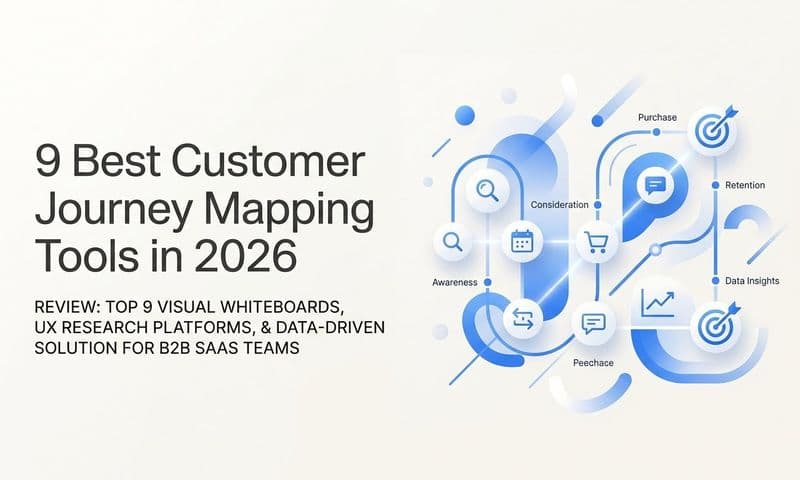
Awareness: This is where a prospect first encounters your brand or category. At this stage, they may not even know they have a problem worth solving, or they know the problem but haven't started evaluating solutions. Paid social ads, thought leadership content, organic blog posts, and podcast sponsorships typically drive awareness. The goal isn't conversion yet. It's recognition and relevance.
Consideration: The prospect is now actively researching. They're comparing options, reading reviews, watching demo videos, and trying to understand which solution fits their specific context. This is where organic search traffic becomes powerful, where review platforms like G2 and Capterra influence perception, and where email nurture sequences can keep your brand top of mind. Content at this stage should be specific, detailed, and honest about what your product does and doesn't do.
Decision: The prospect is ready to choose. They're evaluating pricing, talking to sales, and looking for reasons to commit or reasons to hesitate. Retargeting campaigns, case studies, free trials, and demo offers are most effective here. The friction between consideration and decision is often where deals stall, so your marketing needs to reduce uncertainty and make the next step feel low-risk.
Retention and Expansion: The journey doesn't end at signup. In SaaS, the post-conversion experience directly affects expansion revenue and referrals. Marketing plays a role here too, through onboarding email sequences, product education content, and community engagement. Customers who expand their usage and refer others are often the ones who experienced a seamless journey from first touch to successful adoption.
At each stage, there are trackable micro-conversions that signal where a prospect is in their journey. An ad click signals early awareness. A content download or blog scroll depth indicates consideration. A demo request or pricing page visit signals decision intent. A trial signup or first login is the conversion event. These micro-conversions are not just engagement metrics. They're data points that tell you which touchpoints are moving prospects forward and which ones are creating friction.
Measuring these signals at each stage gives you a much richer picture than tracking only the final conversion. It also tells you where the journey is breaking down, which is often more valuable than knowing what's working.
Touchpoint Tracking: Capturing What Actually Happens Between Ad Click and Closed Deal
Knowing the stages of the journey is one thing. Actually capturing the data that maps a real prospect's path through those stages is a different challenge entirely. And it's a challenge that most teams underestimate.
The traditional approach to tracking relies on browser-based pixels. A pixel fires when a page loads, sends data to the ad platform, and records the event. This works reasonably well in a simple, single-session, single-device world. But that's not the world B2B buyers live in. They switch between devices, use multiple browsers, and increasingly operate in environments where tracking is restricted.
iOS privacy changes, browser-level cookie restrictions, and the growing adoption of ad blockers have created real gaps in pixel-based tracking. When a conversion event doesn't fire because a browser blocked the script, that touchpoint disappears from your data. Over time, these gaps compound into significant measurement errors. You're not just missing a few conversions. You're potentially missing a systematic pattern that's skewing your understanding of which channels are performing.
Server-side tracking addresses this directly. Instead of relying on a browser script to fire an event, server-side tracking sends conversion data from your own server to the ad platform's API. Meta's Conversion API and Google's Enhanced Conversions are the most widely adopted implementations of this approach. Because the signal originates from your server rather than the user's browser, it's far less susceptible to the restrictions that degrade pixel data.
But server-side tracking alone doesn't solve the full problem. You also need to connect data across systems. A prospect might click a LinkedIn ad, visit your site, and not convert until three weeks later after a sales rep follows up via email. The ad platform sees the click. Your CRM records the deal. But without a system that connects these data points, you can't draw a line between the LinkedIn campaign and the closed deal.
This is where unified data collection becomes critical. Connecting your ad platform data, CRM events, and website behavior into a single view gives you a complete picture of the journey rather than fragmented channel-level snapshots. When these systems share a common identifier, such as a lead ID or customer email, you can trace the full path from first ad impression to closed-won revenue.
Platforms like Cometly are built specifically to solve this problem. By integrating with ad platforms, CRMs, and billing systems, Cometly creates a unified record of every touchpoint in the customer journey. That means when a deal closes in your CRM, you can trace it back to the exact campaigns and channels that initiated and influenced the path, without manually stitching together data from five different dashboards.
Attribution Models and What They Reveal About Your Customer Journey
Once you have reliable touchpoint data, the next question is how to assign credit across those touchpoints. This is where attribution models come in, and choosing the right model for the right decision is one of the most underrated skills in B2B SaaS marketing.
First Touch Attribution: Credits the first channel that introduced the prospect to your brand. This model is useful for understanding which channels are most effective at generating awareness and initiating the journey. If you're trying to evaluate which top-of-funnel campaigns are bringing new prospects into your pipeline, first touch gives you a clear signal. Its limitation is that it ignores everything that happened after that initial contact.
Last Click Attribution: Credits the final touchpoint before conversion. This is the default model for most ad platforms and the one most likely to mislead B2B SaaS teams. In a long sales cycle, the last click is often a branded search or a direct visit, channels that captured intent created by earlier touchpoints. Last click attribution systematically undervalues the top-of-funnel activities that started the journey.
Linear Attribution: Distributes credit equally across all touchpoints in the journey. This model acknowledges that every interaction contributed something, which is more honest than last click. Its weakness is that it treats a quick retargeting click the same as the blog post that drove a 20-minute research session. Not all touchpoints are equal, and linear attribution doesn't account for that.
Data-Driven Attribution: Uses algorithmic weighting based on actual conversion patterns in your data. Instead of applying a fixed rule, data-driven attribution analyzes which touchpoint combinations are most predictive of conversion and assigns credit accordingly. This is generally the most accurate model for mature datasets, but it requires sufficient conversion volume to produce reliable weights.
The key insight is that no single model tells the whole story. A sophisticated marketing team uses multiple models side by side to get a more complete view. First touch shows you which channels are generating awareness. Last click shows you which channels are closing. Linear and data-driven models fill in the middle. When a channel looks strong in first touch but weak in last click, that's a signal it's doing important top-of-funnel work that deserves budget even if it rarely gets final conversion credit.
This model comparison approach is especially important when making budget decisions in a long B2B sales cycle. If you rely exclusively on last-click data to decide which campaigns to scale, you will consistently cut the campaigns that are quietly initiating your best deals. The result is a pipeline that gradually dries up because you starved the channels that fed it.
From Journey Data to Revenue: Connecting Marketing Activity to Pipeline
Tracking touchpoints and understanding attribution models are valuable steps, but they only matter if they ultimately connect to revenue. For B2B SaaS growth leaders, the question that matters most is not which campaign drove the most clicks or even the most leads. It's which campaigns drove closed-won revenue and at what cost.
Pipeline and revenue attribution answers this question by connecting marketing touchpoints not just to lead generation events but to actual deals closed in your CRM. When a prospect converts to a customer, revenue attribution traces the full journey backward: which ads they saw, which content they consumed, which channels influenced their decision. This gives you a true picture of which marketing activities are generating business value, not just activity metrics.
The practical implementation requires integrating your ad spend data with your CRM pipeline data. When a deal moves to closed-won, that event needs to flow back to the marketing attribution layer so the credit can be distributed across the touchpoints that contributed to it. Without this integration, your marketing data stops at the lead level, and you're left guessing which leads turned into revenue.
For B2B SaaS companies using Stripe for billing, there's an additional layer of insight available. By connecting Stripe revenue data to your attribution data, you can see not just which campaigns drove signups but which campaigns drove paying customers and measurable MRR. This distinction matters because not all leads convert at the same rate or to the same contract value. A campaign that drives fewer leads but higher-value customers may be far more valuable than one generating high lead volume with low conversion to paid.
This is exactly the kind of integration Cometly is built for. By connecting ad platform data with CRM events and Stripe billing data, Cometly allows B2B SaaS teams to calculate true ROI per channel, per campaign, and even per individual ad creative. You're no longer optimizing toward proxy metrics. You're optimizing toward actual revenue.
AI-driven analysis adds another dimension here. By processing patterns across large volumes of journey data, AI can surface which touchpoint sequences are most predictive of high-value conversions. For example, it might reveal that prospects who engage with a specific content type during the consideration stage and then see a retargeting ad within a certain window convert at a meaningfully higher rate. These are the kinds of non-obvious patterns that are difficult to spot manually but become actionable when surfaced by AI. Cometly's AI recommendations are designed to do exactly this: identify which ads and campaigns are working across every channel so you can scale with confidence rather than guesswork.
Building a Customer Journey Tracking Stack That Actually Works
Understanding the theory is one thing. Building the system that makes it operational is where most teams get stuck. Here's how to think about constructing a reliable journey tracking stack in practical terms.
Unified Data Collection: Start by ensuring that every touchpoint is being captured with a consistent identifier. This means implementing server-side tracking alongside your pixel setup, connecting your ad platforms through their Conversion APIs, and making sure your CRM is recording lead source data accurately. The goal is a single data layer where every interaction is logged and linked to a prospect record.
Attribution Model Configuration: Choose an attribution platform that lets you view multiple models simultaneously rather than locking you into one. Configure your attribution windows to match your actual sales cycle length. If your average deal takes 60 days from first touch to close, a 7-day attribution window will miss most of the journey. Your attribution setup needs to reflect the reality of how your buyers behave.
Revenue Integration: Connect your CRM and billing data to your attribution layer. This is the step that transforms marketing analytics from a reporting function into a revenue intelligence function. When closed-won deals flow back into your attribution data, every budget decision you make is grounded in actual business outcomes rather than lead volume or click metrics.
There's an important feedback loop to recognize here. Accurate journey data doesn't just improve your internal reporting. It also feeds back into the ad platforms themselves. When you send enriched, first-party conversion events back to Meta, Google, and LinkedIn through their Conversion APIs, you're giving their algorithms better signals to optimize against. Better signals mean better targeting, better lookalike audiences, and ultimately better ad ROI. The quality of your tracking directly affects the quality of your ad platform performance.
Cometly connects all of these layers in one place. From first ad click to closed-won revenue, it gives B2B SaaS teams a single source of truth for marketing performance. Instead of managing separate tools for attribution, CRM integration, ad platform reporting, and revenue tracking, Cometly brings it together with 70+ native integrations, AI-driven recommendations, and real-time visibility into what's driving pipeline and revenue. It's built specifically for the way B2B SaaS marketing actually works.
The Bottom Line: Every Untracked Touchpoint Is a Decision Made Blind
The digital marketing customer journey is not just a framework to sketch on a whiteboard. It's a data asset. Every touchpoint your prospects experience is a signal about what's working, what's influencing decisions, and where your budget is actually creating value. When those touchpoints go untracked, you're not just missing data. You're making consequential decisions based on an incomplete version of reality.
The teams that win in B2B SaaS marketing are the ones who invest in understanding the full journey: from the first ad impression that planted a seed to the closed-won deal that justified the spend. They use server-side tracking to capture what browser pixels miss. They compare attribution models to understand the role each channel plays at each stage. They connect marketing activity to revenue so that optimization is always pointed at what actually matters.
Building this capability is not reserved for enterprise teams with large analytics budgets. With the right platform, it's accessible to any B2B SaaS marketing team that's serious about growth.
If you're ready to stop making decisions based on last-click data and start seeing your full customer journey clearly, Get your free demo and see how Cometly maps every touchpoint from first ad click to closed-won revenue.