
Browser-based pixel tracking is losing reliability. Ad blockers, iOS privacy changes, and cookie restrictions are quietly degrading the signal quality that Facebook's algorithm depends on to optimize your campaigns. For B2B SaaS companies running paid social, this creates a real problem: your ad platform is making optimization decisions based on incomplete data.
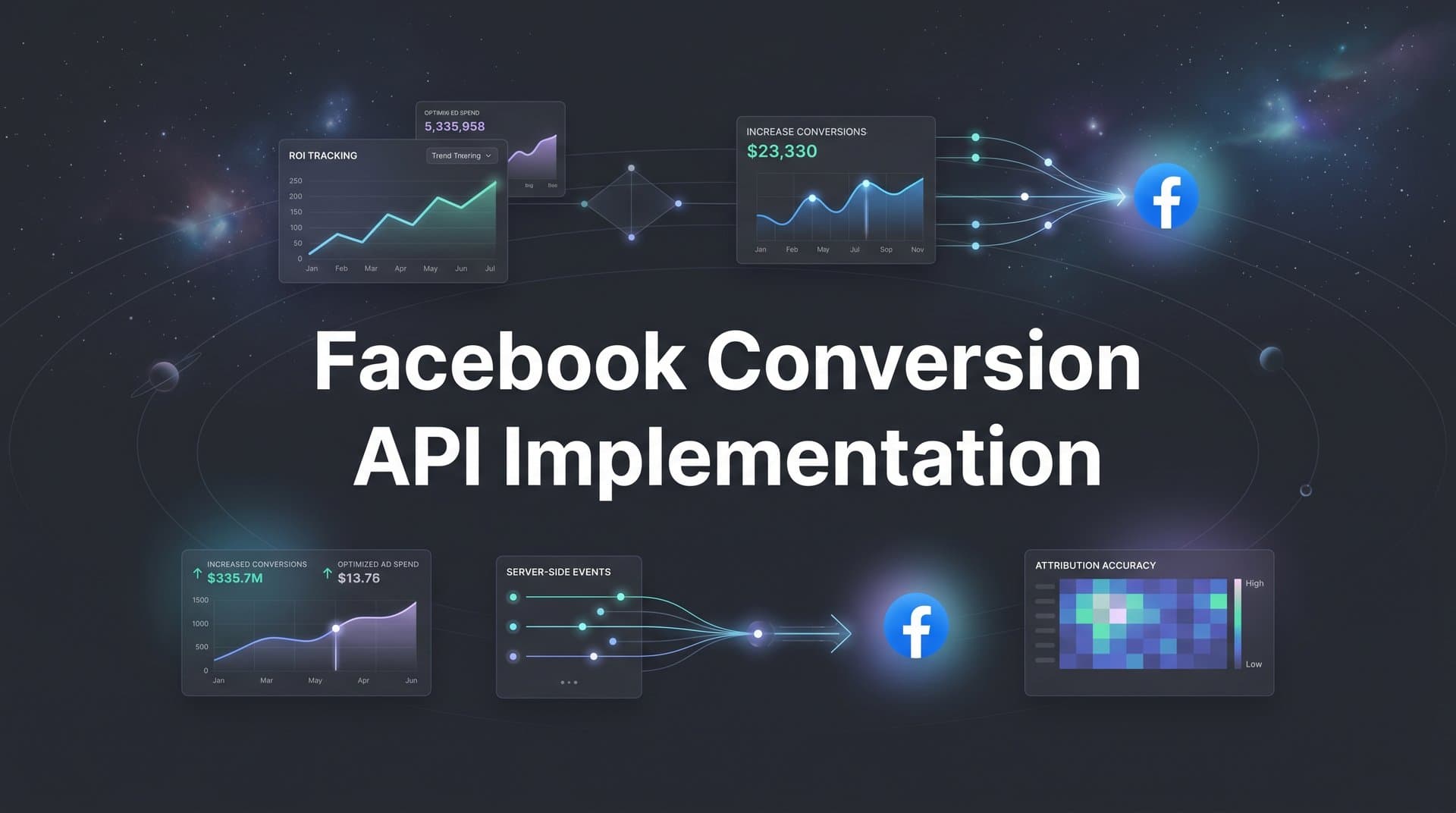
The Facebook Conversion API (CAPI) solves this by sending conversion events directly from your server to Meta, bypassing the browser entirely. The result is more complete data, better event match quality, and an ad algorithm that can actually find the right buyers for your product.
This guide walks you through a complete Facebook Conversion API implementation, from setting up your Business Manager access to verifying events and feeding enriched revenue data back to Meta. Whether you are implementing CAPI for the first time or layering it on top of an existing pixel setup, each step is designed to be actionable and produce a measurable improvement in your tracking accuracy.
By the end, you will have a server-side tracking setup that captures more conversions, reduces data loss, and gives your campaigns a stronger foundation for optimization. Let's get into it.
Step 1: Prepare Your Meta Business Manager and Access Permissions
Before writing a single line of code, you need the right access credentials in place. This step is foundational: without a properly configured System User and access token, every API call you make will fail or create security vulnerabilities down the line.
Start by confirming you have admin access to the Meta Business Manager account connected to your ad campaigns. Navigate to Events Manager and verify that the correct pixel is associated with your ad account. It sounds obvious, but many teams have multiple pixels floating around from past agency setups or legacy accounts. Confirm you are working with the right one before proceeding.
Next, create a System User inside Business Manager. Go to Business Settings > System Users > Add, and create a new System User with the Admin role. This is a critical distinction: you want a System User token, not a personal user token. Personal tokens are tied to individual accounts and expire when passwords change or accounts are deactivated. System User tokens are long-lived and do not break when a team member leaves your organization.
Once your System User is created, assign it dataset permissions by going to Business Settings > Datasets (formerly Pixels), selecting your pixel, and adding the System User with full control access. Then generate an access token by selecting the System User, clicking Generate New Token, and selecting your ad account and the required permissions including ads_management and business_management.
Copy this token immediately and store it in a secure location, such as your team's password manager or an environment variable in your infrastructure. You will need it for every API call you make, and it should never appear in client-side code or public repositories.
Common pitfall: Teams often skip the System User setup and use a personal developer token to get started quickly. This works initially but breaks the integration the moment that user's credentials change. If you want a broader understanding of how the Conversion API works before diving deeper, that context will help you build it right from the start.
Step 2: Map Your B2B SaaS Funnel to Meta Event Names
Not all conversion events are created equal. Before you start sending data to Meta, you need a clear event map that connects your funnel stages to Meta's standard event names. This planning step prevents duplicate configurations, conflicting signals, and wasted optimization budget.
For a typical B2B SaaS funnel, your key events will look something like this:
PageView: Fired on every page load. This is usually handled by the browser pixel and does not need server-side duplication unless you have specific reasons to track it server-side.
Lead: Fired when a user submits a demo request form, books a call, or starts a free trial. This is one of the most important events for B2B SaaS and should be sent via both browser pixel and CAPI for maximum coverage.
CompleteRegistration: Fired when a user completes account activation or onboarding. This signals a higher-intent action than a raw lead submission and helps Meta distinguish between casual form fillers and users who are genuinely engaging with your product.
Schedule: Fired when a demo is booked. For SaaS companies with a sales-assisted motion, this event is often more predictive of revenue than a raw lead.
Purchase: Fired when a subscription starts or a first payment is processed. This is where you include the value and currency parameters to enable revenue-based optimization.
Once you have your event list, decide which events will be sent via server-side only, browser pixel only, or both. Events that involve authenticated user data (like trial signups and purchases) are ideal for server-side because you have access to richer customer information at that point. Events that are purely behavioral (like page views) are often more efficiently handled by the browser pixel.
Document this event plan in a shared spreadsheet before writing any code. Include the event name, the trigger condition, the sending method, and the customer data parameters you plan to include. Understanding how Facebook pixel tracking complements your server-side setup will help you decide which events belong in each layer. This becomes your implementation reference and prevents conflicting configurations later.
Step 3: Set Up Event Deduplication Between Pixel and CAPI
Here is where many implementations go wrong. If you run both a browser pixel and CAPI simultaneously (which is the recommended approach for redundancy and coverage), Meta will receive the same event from two sources. Without deduplication, it counts that event twice. Inflated conversion counts distort your optimization signals and make your reported performance look better than reality.
The fix is straightforward: the event_id parameter.
The event_id is a unique identifier you assign to each conversion event. When Meta receives two events with the same event_id, event_name, and event_time within a 48-hour window, it treats them as duplicates and counts only one. This is the standard deduplication mechanism and it works reliably when implemented correctly.
Here is how to implement it properly. When a conversion action occurs in the browser (for example, a user submits your demo request form), generate a unique event_id on the client side before firing the pixel event. A UUID or a timestamp-based hash works well here. Pass that same event_id to your server before or alongside the form submission data.
Your browser pixel fires with the event_id included in the event parameters. Your server receives the form data along with the event_id and fires its own CAPI call using the same event_id. Meta receives both, recognizes the matching identifiers, and counts the conversion once.
The key timing requirement is that both events need to use the same event_id and arrive within the deduplication window. Do not generate the event_id on the server and then try to retroactively match it to a browser event. Generate it client-side first, then pass it to the server.
To verify deduplication is working, go to Events Manager > Test Events and look at the Deduplicated column. If you see events being flagged as deduplicated, your setup is working correctly. Reviewing Facebook ads reporting discrepancies can help you identify whether double-counted events are already affecting your campaign data.
Common pitfall: Sending server events without an event_id when the pixel is also active. This is the most common deduplication failure and it leads to double-counted conversions and distorted optimization signals. Every shared event must include a matching event_id from both sources.
Step 4: Hash and Send Customer Data Parameters to Improve Match Quality
Event Match Quality (EMQ) is Meta's score for how effectively your server events can be matched to real Facebook user profiles. It is scored on a scale of 0 to 10, and higher scores directly correlate with better ad delivery and optimization performance. A low EMQ score means Meta cannot reliably connect your conversion events to the users who triggered them, which undermines the entire purpose of server-side tracking.
The parameters that have the greatest impact on EMQ are, in rough order of importance: email address, phone number, first name, last name, client IP address, and the fbp and fbc browser cookies. Understanding Facebook Event Match Quality in depth will help you prioritize which parameters to focus on first.
For B2B SaaS, email is typically your highest-value parameter. You collect it at trial signup, demo request, or account creation, which means you have it available at the exact moment the most important conversion events fire. Include it in every server event payload where it is available.
All personally identifiable information (PII) must be hashed using SHA-256 before it is sent to Meta's API. This is a non-negotiable requirement. Never transmit raw email addresses, phone numbers, or names. Hash them on your server before including them in the payload.
The hashing process requires normalizing the data first. For email, convert to lowercase and remove leading or trailing whitespace. For phone numbers, remove all non-numeric characters except the leading plus sign for country codes. Apply SHA-256 to the normalized string and include the resulting hash in your user_data object.
The fbp and fbc cookies are also important. The fbp cookie is set by the Meta pixel and contains the browser ID. The fbc cookie is set when a user clicks a Facebook ad and contains the click ID. Both are available in the browser when a conversion occurs. Pass them from the browser to your server as part of the event payload so they can be included in the CAPI call.
Including the client IP address and user agent from the browser request also contributes to match quality without requiring any additional data collection from the user.
After implementation, check your EMQ score in Events Manager. Aim for a score above 6 out of 10. Scores below that threshold suggest you are missing key parameters or your hashing implementation has an error. You can also review what CAPI match rate means and how it relates to your overall EMQ performance. Scores of 7 or above indicate strong matching capability and meaningful optimization impact.
Step 5: Make Your First API Call and Validate the Connection
With your access token, event map, deduplication logic, and customer data hashing in place, you are ready to send your first server-side event to Meta. This step is about validating your implementation before it touches live conversion data.
Meta's Conversion API uses the Graph API endpoint. Your calls go to:
https://graph.facebook.com/v19.0/{pixel-id}/events?access_token={your-access-token}
The request body is a JSON payload containing the data array with your event objects. Each event object requires these fields at minimum: event_name (the Meta standard event name), event_time (a Unix timestamp in seconds), user_data (the hashed customer information object), and event_source_url (the URL where the conversion occurred).
Before sending to production, use the test_event_code parameter. In Events Manager, navigate to Test Events and copy the test event code provided. Include this code in your API payload as a top-level parameter. Events sent with a test code appear in the Test Events tab without being counted in your live conversion data. This lets you validate the full payload structure and confirm events are arriving correctly before going live.
Send a test event and watch the Test Events tab in Events Manager. You should see the event appear within a few seconds. If it does not appear, check your access token, pixel ID, and JSON structure for errors. A step-by-step conversion API implementation tutorial can help you troubleshoot common payload issues at this stage.
Use Meta's Payload Helper tool inside Events Manager to validate your JSON structure before pushing to production. It will flag missing required fields, incorrect data types, and formatting errors in your hashed parameters.
Common pitfall: Incorrect Unix timestamp formatting. The event_time field requires a Unix timestamp in seconds, not milliseconds. Many languages return timestamps in milliseconds by default. If your timestamp is 13 digits instead of 10, you are sending milliseconds and need to divide by 1000. Events with timestamps too far in the past or future are silently rejected by the API.
Once your test events appear correctly in Events Manager and your EMQ score is visible, remove the test_event_code parameter and deploy to production.
Step 6: Connect Revenue and CRM Data for Full-Funnel Attribution
This is where server-side tracking goes from useful to genuinely powerful. Sending lead and trial events to Meta is a good start, but the real optimization leverage comes from closing the loop between ad clicks and actual revenue.
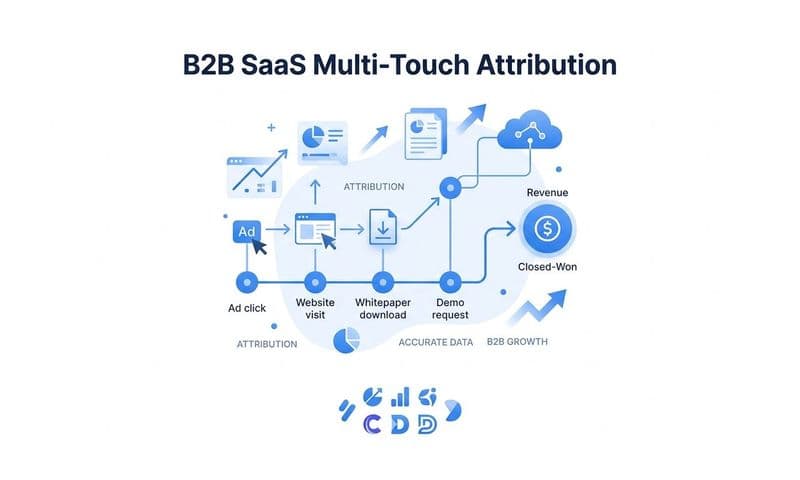
For B2B SaaS companies, the sales cycle often spans days or weeks. A user clicks a Facebook ad, requests a demo, goes through a sales process, and eventually converts to a paying customer. Without connecting your CRM and billing data to Meta, your ad platform only sees the top-of-funnel lead event. It optimizes toward lead volume, not revenue quality.
The solution is to send offline conversion events when a lead converts to a paying customer. Pull closed-won data from your CRM and send a Purchase event to Meta that includes the value and currency parameters reflecting the actual contract or subscription value. This tells Meta exactly how much revenue each converted user generated.
When you include revenue values in your Purchase events, you unlock Meta's value optimization bidding. Instead of optimizing toward any conversion, Meta can now target users who are statistically more likely to generate high revenue. For B2B SaaS teams with meaningful variance in customer lifetime value across segments, this is a significant upgrade over standard conversion optimization. Understanding Facebook conversion optimization strategies will help you make the most of value-based bidding once your revenue data is flowing.
Beyond closed-won events, consider sending pipeline stage events as custom conversions throughout your sales cycle. Events like opportunity created, proposal sent, or demo completed give Meta richer signal during a longer sales process. This helps the algorithm understand which early-funnel behaviors are most predictive of revenue, not just which users submitted a form.
Connecting these data streams manually requires engineering effort: pulling data from your CRM, mapping it to Meta event structures, hashing customer identifiers, and sending the API calls on a reliable schedule. Platforms like Cometly automate this process by connecting your ad data, CRM events, and Stripe revenue into a single enriched data stream that feeds back to Meta automatically. This means your team gets closed-loop attribution without building and maintaining custom pipeline code.
The end result is an ad account that knows not just which campaigns generate leads, but which campaigns generate revenue. That distinction changes how you allocate budget and scale.
Step 7: Monitor, Validate, and Strengthen Your Setup Over Time
A CAPI implementation is not a set-it-and-forget-it project. Server-side tracking requires ongoing monitoring because silent failures are common and costly. An expired token or a broken event_id handoff can go unnoticed for days, quietly degrading your data quality while your campaigns continue spending.
Build a weekly review habit around Events Manager. Check event volume trends for each of your key conversion events. A sudden drop in server-side event counts is a signal that something has broken in your pipeline. Compare server event counts against your CRM or internal analytics to catch discrepancies early.
Watch your EMQ scores over time. If a score drops, it usually means a parameter is missing from recent events. Common causes include website changes that break cookie passing, form updates that stop collecting email before the event fires, or code deployments that accidentally remove the user_data object from the payload.
The three most common post-launch failure modes are worth monitoring specifically:
Access token expiration: System User tokens have long lifespans but can still be revoked or expire under certain conditions. Set a calendar reminder to verify token validity quarterly and build alerting into your server-side code to catch authentication errors before they cause data loss.
Server timeouts: If your server-side event calls are timing out, events are being dropped silently. Implement retry logic with exponential backoff and log failed API calls so you can identify patterns and address infrastructure issues.
Event_id handoff failures: Website changes, JavaScript errors, or form updates can break the mechanism that passes the event_id from the browser to the server. Monitor your deduplication rate in Events Manager. If the deduplicated count drops to zero while you are still running the browser pixel, your event_id handoff has broken.
Use Meta's Aggregated Event Measurement dashboard to confirm your events are actively being used for ad delivery and optimization. Events that are not being used for optimization are often misconfigured or ranked too low in your event priority settings.
As your product and funnel evolve, revisit your event map. New product features, pricing changes, or shifts in your sales motion often create new conversion signals worth tracking. A CAPI setup that reflects your current funnel is far more valuable than one that was accurate when it was built but has since drifted from reality.
Connecting your CAPI data to a Facebook attribution platform gives you a layer of visibility beyond what Meta's native reporting provides. You can analyze which campaigns are actually driving pipeline and revenue across the full customer journey, not just what Meta reports within its own ecosystem.
Your Implementation Checklist and Next Steps
A well-implemented Facebook Conversion API setup gives your ad campaigns a reliable data foundation that browser tracking alone cannot provide. You have now covered every critical layer: access setup, event mapping, deduplication, customer data matching, API testing, revenue integration, and ongoing monitoring.
Before you consider your implementation complete, run through this checklist:
1. System User access token generated, assigned dataset permissions, and stored securely in your infrastructure.
2. Conversion events mapped to Meta standard event names with a documented plan for which events are sent server-side, browser-side, or both.
3. Deduplication via event_id active for all events sent by both the pixel and CAPI simultaneously.
4. Customer data parameters SHA-256 hashed and included in every server payload, with email, fbp, and fbc prioritized.
5. Test events verified in Events Manager using the test_event_code before production deployment.
6. Revenue and CRM data connected to send closed-won Purchase events with value and currency parameters.
7. Event Match Quality score reviewed in Events Manager and confirmed above 6 out of 10.
8. Weekly monitoring process in place to catch event volume drops, EMQ changes, and API errors.
Getting CAPI right is one of the highest-leverage technical investments a B2B SaaS marketing team can make. Better data means better optimization, lower cost per acquisition, and campaigns that scale with confidence rather than guesswork.
Cometly makes this entire process faster by handling server-side event tracking, CRM integration, and revenue attribution in one platform. Your team spends less time on plumbing and more time acting on insights. Ready to see how it works for your campaigns? Get your free demo and start capturing every touchpoint to maximize your conversions.