You launched a campaign, traffic is coming in, and your ads are running. But when you open Google Analytics, the conversion data is missing, incomplete, or just plain wrong. This is one of the most frustrating problems marketing teams face, and it happens more often than you might expect.
The gap between what your ad platform reports and what Google Analytics shows can lead to bad budget decisions, misattributed revenue, and campaigns that get paused when they should be scaled. For B2B SaaS teams especially, where the sales cycle is long and every qualified lead matters, inaccurate conversion data is more than an inconvenience. It is a growth problem.
This guide walks you through exactly why Google Analytics stops showing ad conversions and how to fix each root cause systematically. You will work through the most common issues in order, from basic configuration errors to deeper tracking gaps that require a more robust attribution setup.
By the end, you will know whether your tracking can be fixed within GA4 or whether your business needs a more reliable solution to capture every touchpoint across the full customer journey.
Before diving into the steps, it helps to understand what is actually happening under the hood. Google Analytics relies on browser-based tracking, UTM parameters, and a connection to Google Ads to report conversions. When any one of these elements breaks down, the data disappears. The fix is almost always traceable to a specific configuration issue, which is why a step-by-step diagnostic approach works better than guessing.
Step 1: Verify Your Google Ads and Google Analytics Accounts Are Properly Linked
The most common reason Google Analytics is not showing ad conversions is surprisingly simple: the accounts are not properly linked, or the link exists but is not functioning correctly. Many teams complete the linking process once and assume it is working forever. It is not always that straightforward.
Start by navigating to your Google Ads account and going to Tools and Settings > Linked Accounts > Google Analytics. Confirm that your GA4 property is listed and that the status shows as linked and active, not just created. A link that was initiated but never completed from the GA4 side will not pass data.
Next, check that auto-tagging is enabled. This is the setting that appends the GCLID parameter to your ad destination URLs, which is what allows GA4 to attribute sessions back to specific Google Ads campaigns. To verify this, go to Google Ads > Settings > Account Settings and confirm that auto-tagging is toggled on. If it has been manually disabled at any point, you will lose the attribution connection entirely.
Now confirm you have linked the correct GA4 property. This sounds obvious, but teams that manage multiple properties or recently migrated from Universal Analytics sometimes have the wrong property connected. Check that the property ID in Google Ads matches the GA4 property you are actively using for reporting. Old Universal Analytics properties and test properties are common sources of confusion here.
Also verify that the Google Ads account linked to GA4 is the same account running the campaigns you are trying to track. If your organization uses multiple ad accounts or a manager account structure, it is easy to link the wrong one. A thorough Google Analytics audit can help surface these misconfigurations before they compound into larger reporting gaps.
Common pitfall: The link was completed correctly at some point, but auto-tagging was manually disabled during a previous campaign setup or by another team member who did not realize the downstream impact.
Success indicator: Once this is resolved, Google Ads data will appear under Acquisition > Traffic Acquisition in GA4 with the source labeled as google / cpc. If you see that label, the link and auto-tagging are working as expected.
Step 2: Audit Your Conversion Actions and Goal Configuration in GA4
Even when the account link is solid, conversions can still go missing if the events in GA4 are not properly configured as conversion actions. This is one of the most common oversights for teams that migrated from Universal Analytics, where goals worked differently and were set up in a more intuitive way.
In GA4, events do not automatically count as conversions. You have to manually enable each one. Go to GA4 Admin > Events and look for the events you expect to track as conversions, such as form submissions, demo requests, or trial signups. Each event needs to have the conversion toggle switched on. If that toggle is off, the event fires but GA4 never counts it as a conversion. Understanding event tracking in Google Analytics is essential before troubleshooting why specific conversion events are not registering.
Pay close attention to event naming. GA4 is case-sensitive, which means "FormSubmit" and "form_submit" are treated as two completely different events. If the event name in your GA4 admin does not exactly match what is being fired by your tag on the site, the conversion will never register. This mismatch is more common than it sounds, especially when tags are managed by different team members or agencies.
You also need to understand the difference between GA4 goals imported into Google Ads and native Google Ads conversion tracking. When you import GA4 goals into Google Ads, there can be a delay in data processing and differences in how attribution is applied. Native Google Ads conversion tracking uses the Google Ads tag directly and tends to be more reliable for campaign optimization. Using both simultaneously without a clear strategy can create duplicate counting and distorted numbers.
For B2B SaaS teams, conversion window settings deserve special attention. GA4 and Google Ads default to a 30-day conversion window, but many B2B buying cycles extend well beyond that. If a prospect clicks your ad, enters a nurture sequence, and converts 60 days later, that conversion will not be attributed to the original ad click under default settings. Adjust your conversion windows in both GA4 and Google Ads to reflect your actual sales cycle length.
Common pitfall: Duplicate conversion actions that count the same event twice. This inflates your reported conversion numbers and makes it impossible to trust your cost-per-conversion data.
Success indicator: Your conversion events appear in the GA4 event stream with the correct name, and the conversion toggle is enabled. You can verify this by checking the Conversions report in GA4 and confirming the events you care about are listed there.
Step 3: Test Your Tracking Code and Event Firing with Real-Time Debugging
Configuration settings can look correct on paper while the actual tracking code is broken in practice. This is why debugging with real data is an essential step, not an optional one. You need to watch events fire in real time to confirm your setup is working end to end.
Start with GA4 DebugView, which you can access under Admin > DebugView. This tool shows you a live stream of events as they fire when you navigate your site. To activate it, install the Google Analytics Debugger browser extension and enable debug mode. Once active, every event your GA4 tag fires will appear in DebugView in near real time.
Walk through an actual conversion flow on your site. Submit a test form, reach your thank-you page, or complete whatever action you have configured as a conversion event. Watch DebugView and confirm that the specific conversion event appears with the correct name and parameters attached. If the event does not show up, the tag is either not firing or firing with the wrong trigger. Teams dealing with Google Analytics missing conversions will often discover the root cause at exactly this debugging stage.
Install Google Tag Assistant to get a broader view of what tags are loading on each page. This extension will show you whether your GA4 tag is present and loading correctly across your site, including pages deep in your conversion funnel. Tag Assistant can surface issues like tags firing on the wrong pages or tags that are blocked before they execute.
One issue that is easy to miss is tag firing order. If your conversion tag fires before the page has fully loaded, the event may not register correctly. This is especially relevant for single-page applications or sites with heavy JavaScript. Check the trigger conditions in your tag manager to ensure the conversion tag fires after the relevant action is completed, not just on page load.
Also check whether a consent management platform or cookie banner is blocking the GA4 tag before the user gives consent. This is increasingly common and can cause significant data loss, particularly in markets where cookie consent is legally required. If your GA4 tag is gated behind consent and most users dismiss the banner without accepting, you are losing a substantial portion of your conversion data.
Common pitfall: The GA4 tag is present in the code but firing on the wrong trigger. For example, it fires on every page view instead of specifically on form submission, which means the event name and context are wrong.
Success indicator: You can see your specific conversion event appear in DebugView with the correct parameters attached after completing the conversion action manually.
Step 4: Fix UTM Parameter and URL Tracking Gaps
Even when your GA4 tag is firing correctly and your account is linked, conversions can still disappear if the tracking parameters in your ad URLs are broken or being stripped before GA4 can read them. This step focuses on the URL layer of your tracking setup.
First, verify that auto-tagging is appending the GCLID parameter correctly to your ad destination URLs. The easiest way to do this is to click one of your live ads and look at the URL in your browser's address bar after landing on the page. You should see a gclid parameter in the URL string. If you do not see it, auto-tagging is either disabled or being stripped by a redirect.
If you are using manual UTM parameters instead of auto-tagging, check that every campaign, ad group, and ad has the correct UTM values applied. Missing or inconsistent UTM parameters mean GA4 cannot properly attribute the session to your Google Ads campaign. Use a consistent naming convention and audit your UTM setup across all active campaigns.
A particularly common and frustrating issue is when your website or landing page platform strips query parameters during a redirect. Some CMS platforms, landing page builders, and marketing automation tools redirect users through an intermediate URL before delivering them to the final page. If that redirect does not pass the original query parameters along, the GCLID or UTM values are lost before GA4 ever reads them.
To test for this, use a URL with a known UTM parameter and trace every redirect step using a tool like a redirect checker. Confirm that the final URL your user lands on still contains the original tracking parameters. If parameters are being dropped at any redirect step, you will need to configure your platform to preserve them or restructure your URL flow. Understanding how direct traffic in Google Analytics is generated can help you recognize when stripped parameters are silently misattributing paid sessions.
Avoid mixing auto-tagging and manual UTM parameters on the same campaigns. When both are present, GA4 can experience attribution conflicts and may default to the manual UTM values, which can override or confuse the GCLID-based attribution. Pick one method and apply it consistently.
Common pitfall: The final URL in Google Ads uses a redirect URL that strips the GCLID before the user reaches the tracked landing page. The ad appears to be running normally, but no attribution data is being captured.
Success indicator: Clicking a live ad URL shows the gclid parameter in the browser address bar on the final landing page, confirming that tracking parameters are surviving the full redirect chain.
Step 5: Address Cross-Domain Tracking and Referral Exclusion Issues
If your conversion funnel spans more than one domain, you have a cross-domain tracking problem waiting to happen. This is especially relevant for B2B SaaS companies where a user might land on a marketing site, then move to a separate app subdomain, a booking tool, or a third-party checkout platform to complete a conversion action.
By default, GA4 treats each domain as a separate session. When a user moves from your main site to a different domain, GA4 resets the session and assigns the source as a referral from the previous domain, overwriting the original Google Ads attribution. This means conversions that were genuinely driven by paid ads show up as direct or referral traffic instead.
To fix this, go to GA4 Admin > Data Streams > Configure Tag Settings > Configure Your Domains. Add all the domains that are part of your conversion funnel. This tells GA4 to treat these domains as a single continuous session, preserving the original traffic source across the entire user journey.
Alongside cross-domain configuration, set up referral exclusions for your own domains and any third-party tools that are part of your funnel. Without this, your own subdomains or payment processors can appear as the traffic source in GA4, making it look like your conversions came from a referral when they actually came from a paid ad. Add these domains to your referral exclusion list in GA4 to prevent them from overwriting the original session source. These are exactly the kinds of structural issues that a attribution challenges in marketing analytics deep-dive will surface when teams start questioning why their paid channel numbers never add up.
Check your GA4 acquisition reports and look for traffic sources that do not make sense, such as your own company domain appearing as a referral source, or a booking tool like Calendly showing as the traffic source for converted sessions. These are clear signals that cross-domain tracking or referral exclusions need to be configured.
Common pitfall: A user clicks a Google Ad, lands on your marketing site, then navigates to a separate subdomain where the demo booking or trial signup form lives. GA4 loses the original source at the subdomain boundary, and the conversion is attributed to direct traffic.
Success indicator: The traffic source for converted sessions shows google / cpc in your GA4 reports, rather than a secondary domain name, referral source, or direct.
Step 6: Understand the Structural Limits of GA4 for B2B Ad Attribution
At this point, you have worked through the most common configuration issues. But even with a perfectly configured GA4 setup, there are structural limitations that prevent it from answering the questions B2B SaaS marketing teams actually need answered. Understanding these limits is not pessimistic. It is practical.
GA4 is fundamentally a web analytics tool built around sessions and events. It was not designed to connect ad spend to pipeline stages, deal values, or CRM outcomes. For a B2B SaaS company where the most meaningful conversion is a closed deal, not a form fill, GA4 simply cannot provide that level of insight natively. Teams that have reached this ceiling often begin evaluating a Google Analytics vs attribution platform comparison to understand what they are missing.
Browser-based tracking is also becoming less reliable over time. iOS privacy changes, the proliferation of ad blockers, and stricter cookie consent requirements all reduce the volume of data that GA4 can capture. This is not a configuration problem you can fix. It is a structural characteristic of how GA4 works. The data loss is real and it compounds over time as privacy standards tighten.
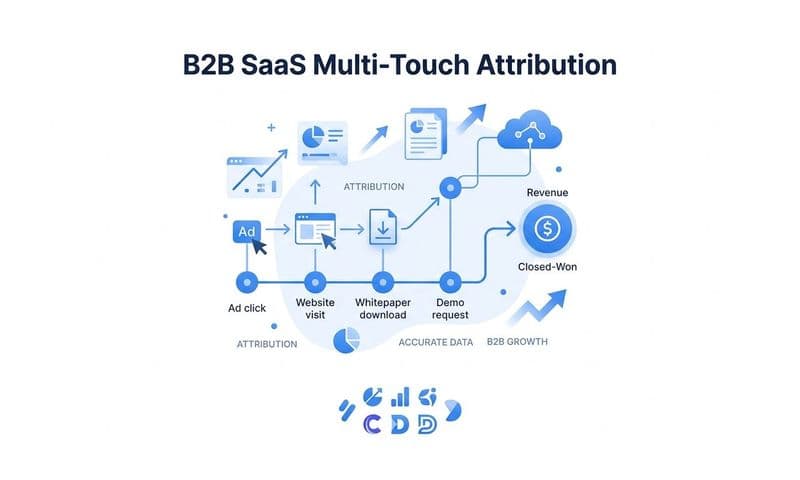
GA4 also does not handle multi-touch attribution across different ad channels particularly well for B2B use cases. If a prospect sees a LinkedIn ad, then a Google search ad, then converts after receiving a retargeting ad on Meta, GA4 will apply its data-driven attribution model across those touchpoints. But it cannot connect that journey to what happened in your CRM after the form was submitted, which means you never know which combination of touchpoints actually drives closed revenue. This is precisely the problem that best marketing attribution analytics platforms are designed to solve.
The default attribution window mismatch is another structural issue. Even if you extend your conversion windows, GA4 cannot tell you that a campaign drove a deal that closed three months later in your CRM. That connection requires integrating your ad data with your revenue data at a level GA4 was not built to support.
This is where a platform like Cometly fills the gap. Cometly connects your ad platforms, CRM, and website behavior into a single attribution view, giving B2B SaaS teams the ability to see not just which campaign drove a click, but which campaign drove a qualified pipeline opportunity and ultimately a closed deal. That is a fundamentally different and more valuable question than what GA4 can answer.
Success indicator: Your team can answer not just which campaign drove a click or a form fill, but which specific campaign drove a closed-won deal and at what cost.
Step 7: Build a More Reliable Conversion Tracking Foundation
Once you have diagnosed and fixed the immediate issues in GA4, the next move is to build a tracking infrastructure that does not depend entirely on browser-based data collection. This is what separates teams that consistently have accurate attribution from those that are always chasing missing data.
The most impactful upgrade you can make is implementing server-side tracking or a Conversion API integration. Instead of relying on a JavaScript tag in the browser, server-side tracking sends conversion data directly from your server to your ad platforms. This approach bypasses ad blockers, cookie restrictions, and browser privacy settings entirely. Google Enhanced Conversions and Meta Conversion API are the two most important implementations for most B2B SaaS teams running paid campaigns.
Pair this with first-party data enrichment. When a lead submits a form on your site, capture identifying information that allows you to match that lead back to the original ad click in your CRM. This creates a durable connection between ad activity and downstream revenue outcomes that does not depend on cookies or browser state.
Set up offline conversion imports in Google Ads to pass CRM data back to the ad platform. This means that when a lead progresses to a qualified opportunity or closes as a customer in your CRM, that signal gets sent back to Google Ads and attributed to the original campaign. This gives Google's bidding algorithms accurate revenue signals instead of just form fill signals, which meaningfully improves campaign optimization over time.
Evaluate whether a dedicated attribution platform makes sense for your team's needs. If you are running campaigns across Google, Meta, LinkedIn, and other channels simultaneously, and you need to understand the combined impact of those campaigns on pipeline and revenue, a single-platform solution built for that purpose will outperform a patchwork of native tools and manual processes.
Cometly is built specifically for this use case. It connects your ad platforms, CRM, and website to track the full customer journey from the first ad click to closed-won revenue. It feeds enriched, conversion-ready events back to Meta, Google, and other channels, improving the quality of signals those platforms use for targeting and optimization. And it provides AI-driven recommendations that help you identify which campaigns are actually driving revenue so you can scale with confidence rather than guessing.
This kind of infrastructure does not just fix the problem of Google Analytics not showing ad conversions. It gives your team a foundation for making smarter decisions at every stage of the funnel.
Success indicator: Your attribution data reflects actual revenue outcomes, not just clicks or form fills. Your team can look at a campaign and know with confidence what it cost to acquire a customer, not just what it cost to generate a lead.
Putting It All Together
Fixing Google Analytics not showing ad conversions is rarely a single-step solution. The issue almost always comes down to one of a few root causes: a broken account link, a misconfigured conversion event, a tracking code that is not firing correctly, UTM parameters being stripped, or cross-domain tracking gaps. Working through each of these systematically will resolve most reporting problems.
However, if your team is running paid campaigns across multiple channels and needs to understand which ads are driving actual pipeline and revenue, not just sessions, you will quickly run into the structural limits of GA4. It was not built to answer that question at scale.
Platforms like Cometly are designed specifically for B2B SaaS marketing teams that need end-to-end attribution, from the first ad click to closed-won revenue. With server-side tracking, CRM integration, and AI-driven insights, Cometly gives you a single source of truth for your marketing data so you can scale campaigns with confidence.
Use this checklist to confirm you have covered every step:
Account Link: Google Ads and GA4 accounts are linked with auto-tagging enabled.
Conversion Events: Conversion events are correctly named and toggled on in GA4 Admin.
Tag Verification: Tags are verified as firing correctly in DebugView.
URL Parameters: UTM parameters or GCLID are present on landing page URLs after ad clicks.
Cross-Domain Setup: Cross-domain tracking and referral exclusions are configured for all domains in your funnel.
Attribution Windows: Conversion windows in GA4 and Google Ads match your actual sales cycle length.
Server-Side Tracking: Server-side or Conversion API tracking is in place to capture data that browser-based tracking misses.
If you have worked through this checklist and still find gaps in your attribution data, the issue is likely structural rather than configurational. That is the right moment to explore a dedicated attribution platform that connects every touchpoint to revenue.
Ready to go beyond what GA4 can show you? Get your free demo and see how Cometly connects your ad spend to real revenue outcomes across every channel.