B2B buyers are no longer opening a browser, typing a category keyword, and scrolling through ten blue links. They are opening ChatGPT, Perplexity, or Google's AI Overviews and asking a direct question: "What are the best marketing attribution tools for SaaS companies?" Within seconds, they have a curated shortlist, a comparison summary, and enough context to form a strong opinion about which vendors are worth their time.
This is not a gradual evolution. It is a structural shift in how professional buyers begin their research, and it is happening faster than most B2B marketing teams have adjusted for. The discovery phase that once unfolded across weeks of organic browsing, blog reading, and keyword-driven content consumption is now compressed into a single AI-generated answer.
The core tension for B2B SaaS marketers is this: if your brand does not appear in those AI-generated answers, you may be losing deals before a buyer ever visits your website, fills out a form, or enters your CRM. And because AI tools rarely leave a trackable referral trail, you often have no idea it is happening. Understanding how AI search changes B2B buying is no longer a forward-looking exercise. It is a present-day operational priority.
The B2B Buyer Journey Has a New Starting Point
Not long ago, the top of the B2B funnel was a relatively predictable place. Buyers would search a broad category term, land on a comparison blog or analyst report, and slowly work their way toward vendor websites over days or weeks. Marketers could map this journey, create content for each stage, and use that content to introduce their brand at exactly the right moment.
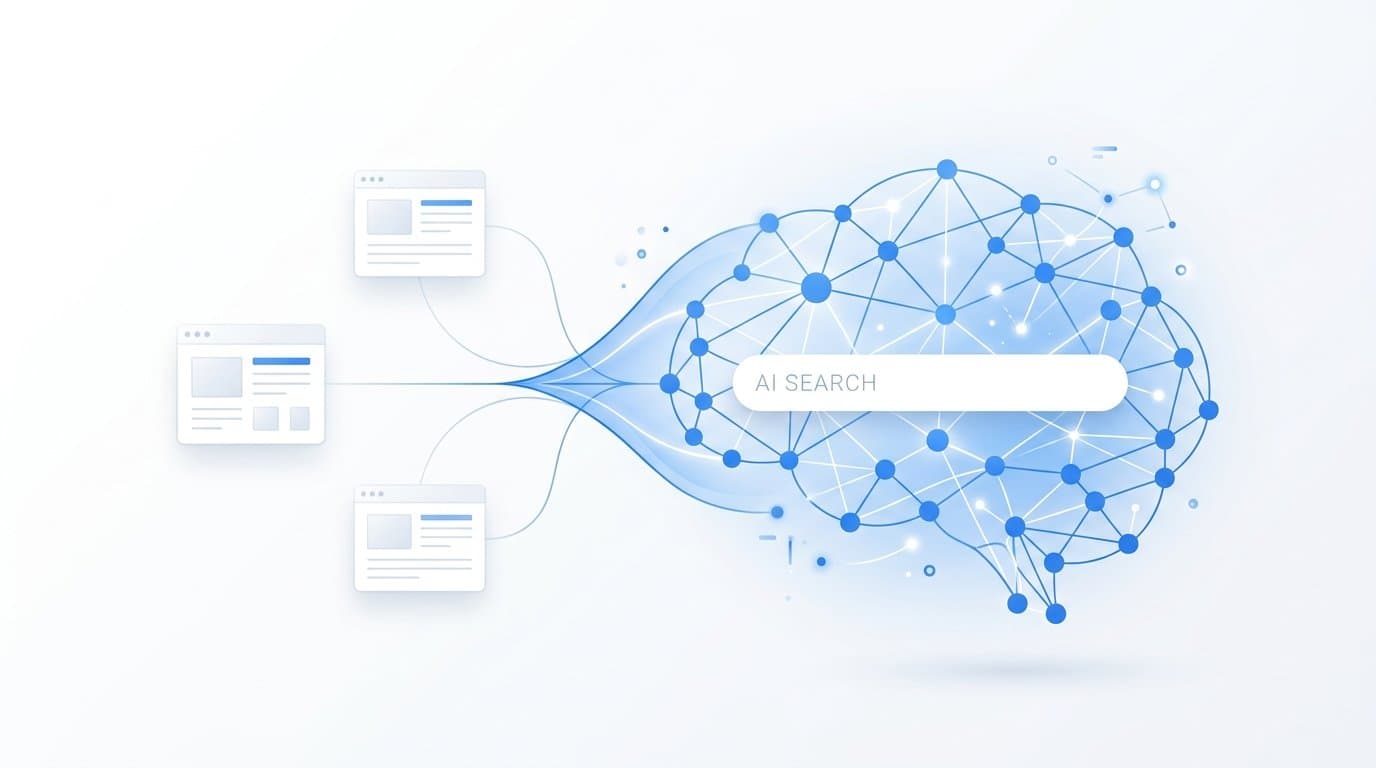
That model is breaking down. AI search tools like ChatGPT, Perplexity, and Google's AI Overviews now act as a first filter. A buyer researching revenue attribution software for their SaaS company does not need to click through five different articles to get oriented. They ask the AI, receive a structured summary of the category, and walk away with vendor names already in mind. Discovery happens before a single traditional search result is clicked.
What this means in practice is that buyers are arriving at vendor websites already partially informed. They have a mental shortlist. They have read AI-generated comparisons of features, pricing models, and use cases. Their consideration window is shorter, and their pre-formed opinions are stronger, shaped not by your content strategy but by whatever the AI decided to surface about your category.
This compresses the top-of-funnel stage in ways that fundamentally challenge traditional demand generation. Early-stage awareness content, the kind designed to introduce your brand to someone who has never heard of you, has less opportunity to do its job when buyers skip that stage entirely by getting their orientation from an AI assistant.
For B2B SaaS companies in particular, this shift is especially acute. SaaS buyers tend to be technically sophisticated, research-driven professionals who are comfortable using AI tools as part of their workflow. When they are evaluating a new platform, they are likely to lean on AI for initial category education before they ever engage a vendor's sales team.
The implication is not that top-of-funnel content is dead. It is that the content which earns AI visibility has effectively become the new top of funnel. If your brand is being cited, summarized, or recommended by AI tools, you are present at the starting point of the journey. If you are not, you are starting the race from behind, trying to win over a buyer who already has a shortlist that does not include you.
Marketers need to understand this new starting point clearly before they can adapt their strategy to meet buyers where the journey actually begins.
Why Traditional Attribution Models Struggle With AI-Influenced Journeys
Here is a scenario that is becoming increasingly common. A buyer asks an AI assistant which marketing attribution platforms are worth evaluating for a B2B SaaS team. Your brand appears in the response. The buyer remembers the name, types your URL directly into their browser a few days later, and requests a demo. In your analytics platform, that visit is logged as direct traffic.
No referral source. No keyword. No campaign. Just a direct session that looks like the buyer already knew who you were.
This is the dark funnel problem in its most modern form, and it is growing as AI-influenced discovery becomes more common. Last-click attribution models, which assign full credit to the final touchpoint before conversion, will credit that direct visit or whatever ad the buyer clicked before converting. First-touch models will either credit the direct visit or, if the buyer clicked an ad at some point, credit that ad instead. Neither model captures the AI recommendation that actually initiated the journey.
The result is systematic misattribution. Marketing teams see direct traffic increasing and cannot explain why. They see paid campaigns converting at higher rates and assume the ads are doing more work than they are. In reality, a significant portion of those conversions may be AI-primed buyers who already knew the brand before they ever saw an ad. The ad functioned as a reinforcement signal, not a discovery mechanism, but the attribution model gives it full credit for the sale.
This matters enormously for budget decisions. If your attribution data tells you that paid search is driving most of your revenue, you may double down on paid search while underinvesting in the content, review presence, and earned media that actually earned you AI visibility. You are optimizing based on a distorted picture of what is working.
Multi-touch attribution becomes more critical in this environment precisely because it distributes credit across the full customer journey rather than concentrating it at a single point. It cannot solve the problem of an AI touchpoint that leaves no referral data, but it can at least prevent over-crediting the last click and give a more accurate picture of how known touchpoints contribute to conversion.
The broader lesson is that as AI search changes B2B buying behavior, the gap between what actually drives pipeline and what your attribution models can see will widen unless you invest in better measurement infrastructure. The dark funnel is not new, but AI has made it significantly larger and harder to ignore.
How AI Search Engines Decide Which Brands to Recommend
If AI-generated answers are the new top of funnel, the obvious question becomes: how do you get included in them? The answer is more nuanced than traditional SEO, and it starts with understanding what AI systems are actually doing when they form recommendations.
AI tools pull from a broad base of web content, prioritizing sources that are authoritative, well-structured, and frequently referenced by other credible sources. They are not just looking for keyword density or page authority in the traditional sense. They are looking for content that clearly and directly answers specific questions, written in a way that can be summarized, cited, and synthesized alongside other sources.
This means that brands appearing in AI-generated answers tend to have a few things in common. Their content is factual and specific rather than vague and promotional. It addresses the exact questions buyers ask when evaluating a category. And it is referenced or mentioned across multiple external sources, not just on the brand's own website.
Third-party validation carries significant weight here. Review platforms like G2 and Capterra, analyst mentions, earned media coverage in industry publications, and community discussions in forums where practitioners talk about tools all feed the credibility signals that AI retrieval systems use. A brand that has strong review presence, is mentioned in practitioner discussions, and is cited in independent comparisons is far more likely to surface in AI recommendations than a brand that publishes excellent content on its own site but has little external footprint.
Technical signals still matter. Schema markup, structured data, fast page load times, and clean site architecture help AI crawlers and retrieval systems parse your content accurately. But these are table stakes. The content itself must go deeper than most SEO-optimized pages have historically gone. Thin content that targets a keyword without genuinely answering the underlying question will not earn AI inclusion, even if it ranks well in traditional search.
The practical implication is that earning AI visibility requires a content strategy built around genuine depth and external credibility, not just on-site optimization. Brands that invest in being genuinely useful, clearly structured, and widely referenced across the web are the ones AI tools will recommend when buyers come asking for category guidance.
Rethinking Your B2B Marketing Strategy for the AI Search Era
Adapting to how AI search changes B2B buying does not mean abandoning what works. It means reorienting your content and distribution strategy around the behaviors that earn AI visibility while continuing to use paid channels strategically for buyers who are already in motion.
Start with content investment. The formats that perform best in AI-influenced discovery are answer-oriented and specific. Comparison pages that directly address how your product differs from alternatives, use case breakdowns that connect your platform to specific buyer problems, and category explainers that help buyers understand a space without requiring them to already know the terminology. These are the content types that match the queries buyers bring to AI tools when they are in early evaluation mode.
Generic thought leadership and keyword-stuffed blog posts are less likely to earn AI inclusion. Content that directly answers "What is the difference between first-touch and multi-touch attribution for B2B SaaS?" is far more likely to be surfaced than a broad post about why attribution matters.
Beyond your own content, build a deliberate brand signal strategy. This means actively earning mentions across the platforms AI systems use as credibility inputs. Encourage satisfied customers to leave detailed reviews on G2, Capterra, and similar platforms. Pursue coverage in industry publications your buyers read. Participate in community forums and practitioner discussions where your category is debated. Each external mention increases the probability that AI tools will include your brand when they synthesize recommendations.
Paid search and paid social remain essential, but their role shifts in an AI-influenced market. Rather than functioning primarily as discovery mechanisms, they increasingly serve as reinforcement for buyers who have already encountered your brand through AI-generated research. A buyer who saw your name in an AI summary and then encounters your ad on LinkedIn is far more likely to click and convert than a cold prospect. This makes precise targeting and strong conversion tracking more valuable, not less, because the buyers your ads reach are often further along in their journey than your attribution data suggests.
The strategic shift, in short, is to earn the first impression through AI visibility and use paid channels to accelerate buyers who are already moving toward you.
Closing the Attribution Gap When AI Hides the First Touch
You cannot always see where the journey starts. That is the reality of AI-influenced buying. But you can build measurement infrastructure that captures far more of the journey than standard browser-based analytics provides, and that infrastructure starts with server-side tracking.
Browser-based pixels are increasingly unreliable. Ad blockers, browser privacy settings, and iOS privacy changes all reduce the fidelity of client-side tracking. When a buyer arrives through an AI-influenced path and then navigates your site with privacy protections enabled, a significant portion of their behavior may go unrecorded. Server-side tracking and Conversion API integrations bypass these limitations by capturing conversion events at the server level, independent of what the buyer's browser allows. This reduces unattributed conversions and gives your attribution models more data to work with.
Implementing Conversion API connections with platforms like Meta and Google also improves the quality of data fed back to those ad platforms. When enriched conversion events flow back to the ad platforms, their AI-driven optimization algorithms have better signals to work with, which improves targeting and reduces wasted spend. This is particularly valuable when AI-primed buyers are clicking your ads as a reinforcement step, because the conversion data helps the platform understand what high-intent buyers look like.
Multi-touch attribution models are the second critical piece. Rather than assigning all credit to the last known click, multi-touch models distribute credit across the touchpoints that can be observed, giving a more accurate picture of how channels work together to move a buyer from awareness to conversion. For AI-influenced journeys where the first touch is invisible, this at least prevents the distortion of over-crediting the final step.
CRM enrichment is the third layer. Even when the first touchpoint is unknown, downstream engagement data tells a story. How did this buyer first engage with your sales team? What content did they reference in early conversations? How long was their sales cycle? Enriching your CRM records with detailed source tracking and engagement history allows you to reconstruct partial journeys and identify patterns in how AI-primed buyers behave differently from buyers who arrived through traditional organic or paid channels. Over time, these patterns inform smarter budget allocation even when individual attribution is incomplete.
Measuring What Actually Drives Revenue in an AI-First Market
Lead volume is an increasingly unreliable proxy for marketing effectiveness in an AI-influenced market. When buyers arrive already educated and partially decided, the shape of the funnel changes. Conversion rates from first contact to close may be higher. Sales cycles may be shorter. The volume of early-stage nurture interactions may be lower. If you are measuring success primarily at the lead level, you may be misreading what is actually working.
The most reliable signal in this environment is revenue attribution: connecting ad spend and content investment directly to pipeline created and closed-won revenue. AI-influenced buyers often enter the funnel at a more advanced stage, which means they may convert faster and with less nurture than buyers who discovered your brand through traditional organic search. If your measurement stops at the lead level, you cannot see this dynamic, and you cannot use it to make smarter decisions.
Alongside revenue attribution, track engagement quality metrics that reveal buyer intent. Time on page, depth of content consumption, demo request rates, and sales cycle length all provide signals about whether the buyers arriving through your current mix are high-intent or low-intent. If AI-primed buyers show stronger engagement quality metrics than buyers from other channels, that is a signal to invest more in earning AI visibility. If your paid campaigns are converting efficiently but producing short sales cycles and strong close rates, that suggests those campaigns are reaching buyers who were already primed before they clicked.
A unified attribution platform that combines ad platform data, CRM events, and website behavior into a single source of truth is what makes this level of analysis possible. When marketing and sales teams are working from the same data picture, they can have productive conversations about which channels are genuinely driving growth versus which channels are receiving credit for conversions that were earned elsewhere.
Cometly is built specifically for this challenge. It connects your ad platforms, CRM, and website behavior into a single attribution view, tracking every touchpoint from the first observable interaction to closed-won revenue. With server-side tracking, Conversion API integrations, and multi-touch attribution models, it reduces the dark funnel gap and gives B2B SaaS marketing teams the accurate data they need to make confident decisions in a market where the buyer journey often starts somewhere you cannot directly see.
Adapting to a Market Where Buyers Know You Before You Know Them
AI search is not replacing B2B marketing. It is raising the stakes for visibility, accuracy, and measurement. Buyers are more informed earlier in their journey, which means the brands that show up in AI-generated answers have a compounding advantage: they earn consideration before the competition even knows the evaluation has started.
Marketers who adapt their content strategy to earn AI visibility, who build external credibility through reviews and earned media, and who invest in attribution infrastructure that captures the full journey including dark funnel touchpoints, will have a structural advantage over teams still operating with a traditional demand generation playbook.
The measurement piece is not optional. As AI-influenced dark funnel traffic grows, the gap between what drives revenue and what your analytics platform can see will widen unless you close it with server-side tracking, multi-touch attribution, and CRM enrichment. Without that infrastructure, you are making budget decisions based on an increasingly incomplete picture.
The buyers are already out there, asking AI assistants which platforms to evaluate. The question is whether your brand is in the answer. And when those buyers arrive at your site, the question is whether your attribution stack can connect that conversion back to the full journey that led them there.
If you are ready to build the measurement foundation that makes confident decisions possible, Get your free demo of Cometly today and start capturing every touchpoint from first impression to closed revenue.