You've just wrapped a discovery call with a promising prospect. They're a perfect fit, their budget is aligned, and when you ask how they found you, they say something like: "Honestly, I feel like I've been seeing you everywhere for months." You pull up their CRM record. Zero touchpoints. No ad clicks, no form fills, no tracked page visits before today's demo request. Nothing.
This is the dark funnel at work. And if you're leading marketing at a B2B SaaS company, this scenario probably feels uncomfortably familiar.
The dark funnel is not a failure of your strategy. It's a failure of your visibility. The influence was real. The research happened. The conversations occurred. Your brand was present in the minds of multiple stakeholders long before any trackable event fired. You just had no way of seeing it.
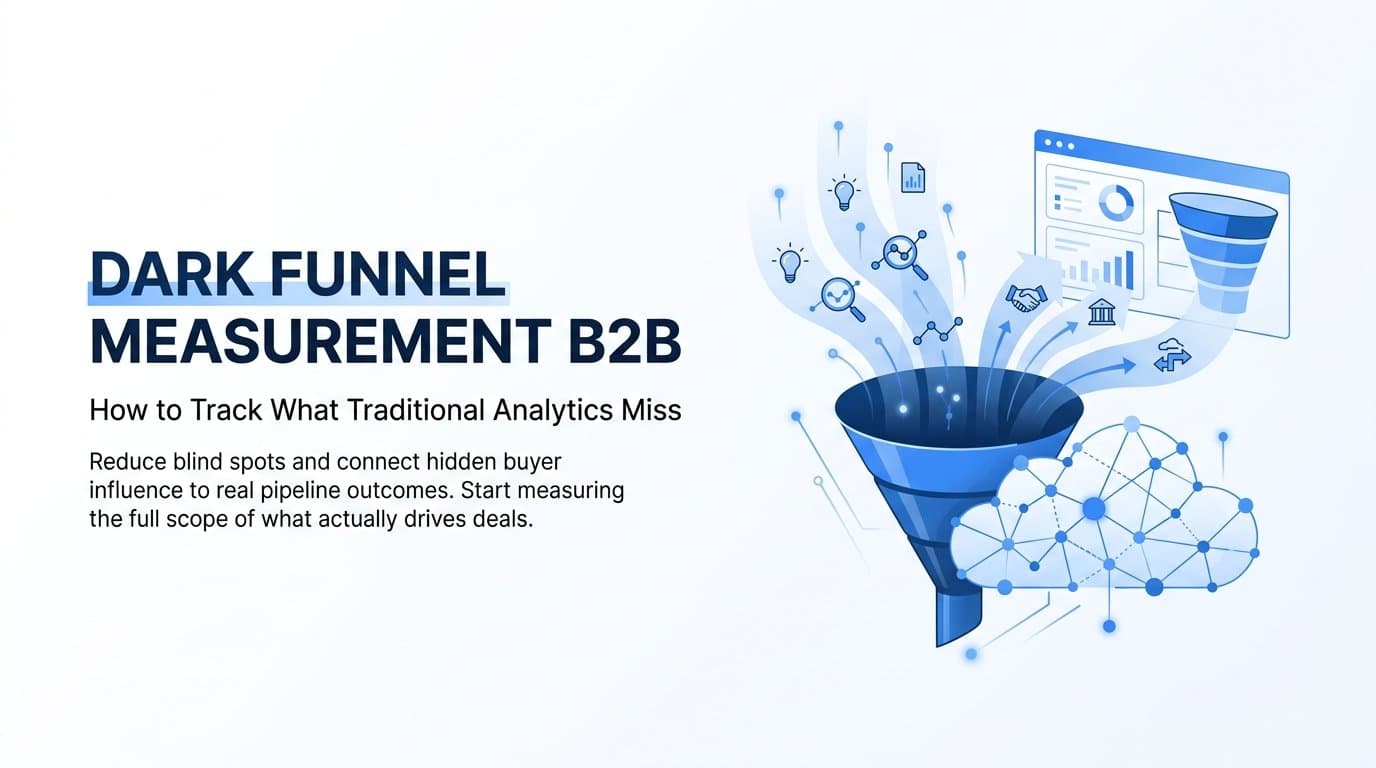
The good news is that modern B2B teams are getting smarter about this. Not by achieving perfect attribution of every dark channel interaction, but by building measurement systems that reduce blind spots, surface patterns, and connect the dots between what can be tracked and what can only be inferred. This article is a practical guide to understanding the dark funnel, acknowledging its impact on your budget decisions, and taking concrete steps to quantify its influence without chasing a measurement unicorn that doesn't exist.
The Invisible Pipeline: What the Dark Funnel Actually Is
The dark funnel is not simply unattributed traffic. It's something more fundamental. It's all the buyer research, conversations, and influence that happens entirely outside of trackable digital touchpoints, leaving no direct digital trace that your analytics tools can capture.
Think about how a B2B buyer actually researches a software purchase. They scroll through LinkedIn and read three of your founder's posts without ever clicking a link. They lurk in a private Slack community where someone recommends your product in a thread. They listen to a podcast episode where you were a guest. They browse your G2 profile and read reviews, but the session isn't tied to any identifiable user in your system. A colleague sends them a direct message saying "we looked at this tool last year, it was solid." None of these interactions create a trackable event. None of them show up in your CRM. All of them influence the eventual purchase decision.
This is what makes the dark funnel genuinely different from the attribution gaps most marketers are used to managing. When a paid ad drives a visit that doesn't convert, you can still see the click. When someone fills out a form through organic search, you can trace the session. The dark funnel is different because the activity itself is invisible to your tracking infrastructure, not just unattributed.
B2B buying cycles amplify this problem significantly. Enterprise and mid-market deals involve longer sales timelines, often stretching across several months, and multiple stakeholders who each conduct independent research. By the time a champion submits a demo request, a CFO may have already Googled your pricing, a technical evaluator may have read your documentation without logging in, and a VP may have asked about you in a private community. Each of these interactions shapes the buying committee's perception of your brand, and none of them are visible to your marketing team.
The visible funnel, the one that lives in your CRM and ad platforms, captures the moments when buyers chose to engage directly: the form fills, the ad clicks, the email opens. This is genuinely useful data. But it represents only the surface layer of a much deeper process. The dark funnel is everything that happened before a buyer decided your product was worth a direct interaction.
Understanding this distinction matters because it changes how you think about measurement. The goal isn't to track the untraceable. It's to build enough visibility into the visible funnel that you can recognize where dark funnel influence is likely at play, and then use qualitative signals to fill in the gaps.
Why Your Attribution Data Is Only Telling Half the Story
Standard attribution models were built for a simpler version of the buyer journey. Last-click attribution credits the final touchpoint before conversion. First-touch credits the original source. Even sophisticated multi-touch models, whether linear, time-decay, or algorithmic, share a common limitation: they can only credit touchpoints that generated a trackable event.
A buyer who spent three weeks reading your thought leadership on LinkedIn, then finally clicked a retargeting ad and converted, will show up in your attribution data as a paid social conversion. The weeks of organic influence are invisible. The retargeting ad gets full credit for work it didn't do alone.
This creates a specific and damaging downstream effect on budget decisions. When dark funnel channels like thought leadership content, community participation, podcast appearances, and organic social influence go unmeasured, they appear to produce no ROI. The channels that happen to capture the final click, typically paid search, retargeting, or direct traffic, appear to be your most efficient drivers. Budget naturally flows toward what appears to be working.
Over time, this creates a feedback loop that quietly defunds the channels doing the heaviest lifting in the awareness and consideration stages. You cut the podcast sponsorship because you can't attribute conversions to it. You deprioritize the community strategy because it doesn't show up in your pipeline reports. You scale the retargeting campaigns because the numbers look great. But what you're actually doing is continuing to harvest the demand that brand-building channels created, while starving the channels that created it.
This is attribution bias in practice. The channels that happen to capture the final click receive credit for influence that was built over weeks or months in unmeasurable spaces. It's not that your attribution data is wrong. It's that it's systematically incomplete in a way that skews your interpretation of what's actually driving growth.
The practical consequence is that many B2B marketing teams are underinvesting in the channels that build the brand awareness and trust that make buyers receptive to their paid campaigns in the first place. When a prospect sees your retargeting ad and clicks it, they're often clicking because they've already been warmed up through dark funnel channels. The ad didn't create the intent. It captured it.
Recognizing this bias doesn't mean abandoning attribution models. It means using them more honestly, understanding what they measure well, what they miss entirely, and building complementary approaches to fill the gaps.
Where B2B Buyers Actually Spend Their Research Time
To measure the dark funnel more effectively, you first need a clear picture of where it actually lives. In B2B, the most common dark funnel channels tend to cluster around a few key areas.
LinkedIn Feeds Without Link Clicks: A significant portion of LinkedIn engagement happens in the form of passive consumption. Buyers read posts, watch videos, and form impressions of brands and founders without ever clicking through to a website. This activity is invisible to your analytics but highly influential in shaping brand perception over time.
Review Sites and Peer Comparison Platforms: G2, Capterra, and similar platforms are heavily trafficked by B2B buyers doing independent research. Many of these sessions are anonymous or not tied to identifiable users in your system. A buyer can spend an hour reading your reviews and comparing you to competitors without generating a single trackable event on your end.
Private Communities: Slack groups, Discord servers, and industry forums are where practitioners share candid opinions about tools and vendors. These conversations carry significant weight precisely because they happen outside of branded channels. A recommendation from a trusted peer in a private community can move a buyer further down the funnel than any ad campaign.
Newsletters and Podcasts: Industry newsletters and podcasts reach buyers in contexts where clicking through to a website isn't the expected behavior. A buyer might hear your name mentioned positively in three different podcasts over a month without ever visiting your site. That accumulated exposure creates familiarity and trust that will influence their eventual decision.
Internal Champion Conversations: Once a champion inside a buying organization becomes aware of your product, they begin advocating for it internally through meetings, emails, and Slack messages that you will never see. Each of these conversations is a dark funnel touchpoint influencing stakeholders you may not even know are part of the buying committee.
The rise of AI-powered search and answer engines is expanding the dark funnel further. Buyers are increasingly getting answers about product categories, feature comparisons, and vendor recommendations directly from AI tools without ever visiting a brand's website. This means brand presence in authoritative content, in the sources that AI systems draw from, is becoming strategically important in ways that traditional web analytics cannot measure.
The implication for B2B teams is significant. The dark funnel is not a single gap. It's multiple parallel gaps across multiple stakeholders, each conducting independent research through channels that leave no trace in your tracking systems.
Practical Approaches to Dark Funnel Measurement
Measuring the dark funnel requires accepting that you will never achieve complete visibility. The goal is to reduce blind spots enough to make better investment decisions. Several practical approaches can help.
Self-Reported Attribution: The most direct approach is simply asking prospects how they heard about you. Post-demo surveys, sales discovery questions, and onboarding questionnaires can surface dark funnel influence that no tracking tool will ever capture. When a prospect says they heard about you from a colleague, read about you in a newsletter, or listened to a podcast you appeared on, that's valuable signal. The key is collecting this data systematically and storing it alongside CRM records so you can aggregate it across many deals and identify patterns. Over time, self-reported attribution data can reveal which dark funnel channels are generating the most awareness, even if you can't tie that awareness to specific campaign spend.
Intent Data and Account-Level Signals: Third-party intent data platforms track content consumption patterns across publisher networks, surfacing accounts that are actively researching topics relevant to your product even before they visit your site. Spikes in branded search volume, increased review site traffic from target accounts, and rising engagement on organic content without direct click attribution can all serve as proxy signals for dark funnel activity. These signals won't tell you exactly what a buyer read or who they talked to, but they can confirm that active research is happening at an account level, which is useful for prioritizing outbound efforts and timing your paid campaigns.
First-Party Data and Server-Side Tracking: As third-party cookies become less reliable, first-party data collected through server-side tracking and Conversion APIs becomes your most accurate foundation for any attribution strategy. This matters for dark funnel measurement because a cleaner, more complete picture of the visible funnel makes it easier to identify where dark funnel gaps exist. When your visible funnel data is accurate and trustworthy, you can identify accounts that converted with unusually sparse tracked journeys and infer that dark funnel influence was likely at play. If your visible funnel data is messy and incomplete, you can't distinguish between genuine dark funnel activity and tracking failures.
The combination of these three approaches, qualitative self-reported data, account-level intent signals, and a precise first-party data foundation, gives you a much more honest picture of how buyers are actually moving through your funnel than any single attribution model can provide on its own.
How Multi-Touch Attribution Connects Visible and Dark Funnel Signals
A robust multi-touch attribution model does more than credit your marketing channels fairly. It creates the clean baseline you need to start interpreting dark funnel signals with confidence.
When every trackable touchpoint in the buyer journey is captured accurately, from the first ad click to the final CRM stage to closed-won revenue, you gain the ability to identify anomalies. Accounts that converted with unusually short or sparse tracked journeys stand out. These are your dark funnel signals. A company that submitted a demo request after only one tracked touchpoint but closed in two weeks is telling you something important: significant influence happened outside of your tracked channels before they ever engaged directly.
This kind of pattern analysis becomes genuinely useful when you have enough data to segment it. You might discover that accounts from specific industries tend to have minimal tracked touchpoints before converting, suggesting those industries have active communities or peer networks where your brand is discussed. You might find that deals originating from a particular company size close faster with fewer tracked interactions, pointing to strong word-of-mouth or review site presence in that segment. These patterns don't tell you exactly what happened in the dark funnel, but they tell you where to invest in dark funnel channels and how to interpret the downstream impact of those investments.
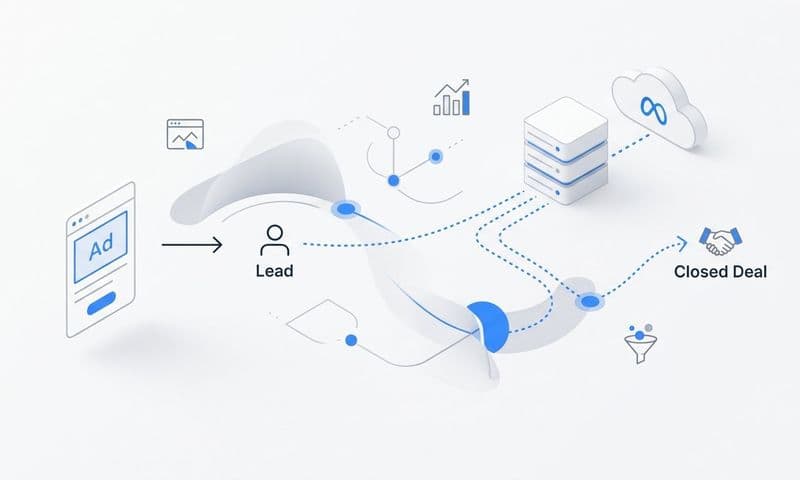
Connecting ad platform data, CRM pipeline stages, and revenue data through a unified attribution platform is what makes this analysis possible. Without that connection, you're looking at fragments. Your ad platform shows clicks and conversions. Your CRM shows pipeline and close rates. Your revenue data sits in a separate system. None of these views alone can surface the patterns that reveal dark funnel influence.
This is where Cometly's approach becomes foundational. By connecting every ad click, CRM event, and revenue milestone into a single customer journey view with multi-touch attribution, Cometly gives B2B SaaS teams the accurate, connected baseline they need before they can meaningfully interpret dark funnel signals. When your visible funnel data is complete and trustworthy, the gaps become visible. And visible gaps are the first step toward understanding what's filling them.
The goal isn't to replace dark funnel channels with more trackable ones. It's to understand your visible funnel so precisely that you can recognize where dark funnel influence is doing the work, and then invest in those channels with more confidence.
Building a Dark Funnel Strategy That Complements Paid Attribution
Once you understand the dark funnel and have a framework for measuring its influence, the practical question becomes: how do you invest in it intelligently?
The key shift is accepting that dark funnel channels like community participation, thought leadership, podcast appearances, and strategic partnerships will rarely show direct attributed conversions. Their ROI shows up differently: in faster sales cycles, higher close rates, stronger brand recall in self-reported surveys, and shorter time-to-first-engagement when outbound campaigns reach accounts that have been passively exposed to your brand. If you evaluate these channels using the same direct attribution metrics you apply to paid search, you will consistently undervalue them.
A more useful framework is to invest in dark funnel channels with the explicit expectation that their impact will be measured downstream. Use Cometly's pipeline and revenue attribution data to track whether accounts that self-report dark funnel touchpoints convert at higher rates or with shorter time-to-close than accounts with purely tracked journeys. Monitor whether periods of increased community engagement or thought leadership publishing correlate with improvements in pipeline velocity or brand recall in post-demo surveys. This kind of analysis won't give you a clean cost-per-acquisition number for your podcast strategy, but it will give you directional evidence that the investment is working.
The measurement cadence matters here. Quantitative attribution reporting should run on a regular cycle, capturing the visible funnel with precision. Qualitative pipeline reviews should happen alongside it, surfacing patterns from self-reported attribution data and sales team observations about how prospects describe their awareness journey. Together, these two inputs give you both the data and the narrative you need to defend dark funnel spend to leadership.
Practically, this means building a few simple habits into your revenue process. Train your sales team to consistently ask how prospects first heard about you and log that response in the CRM. Run a brief post-demo survey that includes an open-ended question about the buyer's research journey. Review self-reported attribution data quarterly alongside your pipeline metrics. Over time, these inputs will reveal which dark funnel channels are generating the most influence, and you can adjust your investment accordingly.
The teams that do this well don't treat dark funnel measurement as a separate initiative. They build it into the same operational rhythm as their paid attribution reporting, treating qualitative signals as a first-class data source rather than an afterthought.
Building the Foundation for Smarter Measurement
Dark funnel measurement is not about achieving perfect attribution. Some buyer influence will always be unmeasurable, and that's acceptable. The goal is to reduce blind spots enough to make smarter investment decisions and to stop systematically defunding the channels that are building the brand awareness your paid campaigns depend on.
The path forward combines three things: a precise, trustworthy first-party data foundation that captures every trackable touchpoint accurately; a systematic approach to collecting self-reported attribution data that fills qualitative gaps; and a habit of analyzing pipeline patterns to infer where dark funnel influence is at play. None of these approaches alone solves the problem. Together, they give you a much more honest picture of how your buyers actually make decisions.
The starting point is always the visible funnel. You cannot identify dark funnel gaps if your visible funnel data is incomplete or unreliable. Building that foundation, connecting your ad spend, CRM pipeline stages, and revenue data into a single source of truth, is what makes everything else possible.
Cometly is built specifically to help B2B SaaS teams create that foundation. By connecting ad platform data, CRM events, and revenue milestones into a unified customer journey view with multi-touch attribution, Cometly gives your team the accurate baseline it needs to identify dark funnel patterns, measure downstream impact, and make confident investment decisions across both trackable and brand-building channels. Get your free demo today and start building the measurement foundation your dark funnel strategy requires.