You check your Meta Ads Manager and see a 5x ROAS. Then you open Google Ads and see a 4x ROAS. But when you look at your actual revenue numbers, the math does not add up. Sound familiar?
Inaccurate ROAS tracking is one of the most common and costly problems in digital advertising. When every ad platform takes credit for the same conversions, you end up with inflated numbers, misallocated budgets, and scaling decisions built on bad data.
The root causes are well understood. Browser-based tracking gaps from iOS privacy changes, cookie restrictions, cross-device journeys that break attribution chains, and ad platforms essentially grading their own homework. Knowing the problem exists and actually fixing it are two very different things.
This guide walks you through a clear, step-by-step process to build a ROAS tracking system you can actually trust. You will learn how to audit your current setup, implement server-side tracking, connect your revenue data to your ad spend, choose the right attribution model, and create a feedback loop that keeps your ad platform algorithms sharp.
By the end, you will have a framework for calculating ROAS based on real revenue, not platform-reported vanity metrics. Let's get into it.
Step 1: Audit Your Current Tracking Setup for Data Gaps
Before you can fix your ROAS tracking, you need to understand exactly where it is breaking down. Most marketers skip this step and jump straight to adding new tools. That is a mistake. Without a clear baseline, you have no way to measure whether your improvements are actually working.
Start by pulling your reported conversions from each ad platform for the same time period. Then open your CRM or payment processor and look at the actual revenue and transactions recorded during that same window. Compare the two numbers side by side. If your ad platforms are collectively reporting more conversions than your backend systems recorded, you have an over-reporting problem. If your platforms are showing fewer conversions than your CRM reflects, you have an under-reporting problem. Both are costly in different ways.
Next, check for the most common tracking failures that cause these discrepancies:
Missing or broken UTM parameters: If your UTM tags are inconsistent or missing from ad links, traffic arrives without proper source attribution. Revenue gets orphaned from the campaigns that drove it. Understanding UTM tracking and how it helps marketing is essential for closing this gap.
Duplicate conversion events: A pixel firing twice on the same purchase confirmation page will double-count conversions. This is surprisingly common and inflates ROAS significantly.
Cross-domain tracking gaps: If a customer clicks an ad, lands on your main site, then gets redirected to a separate checkout domain, the session often breaks and the conversion goes unattributed.
Soft metric conversions: Some teams track page views, video plays, or button clicks as conversion events. These tell you almost nothing about actual revenue. Your conversion events should map directly to purchases or qualified leads that have a verified revenue value attached.
Document what you find. Create a simple spreadsheet that shows each platform, its reported conversions, the actual revenue from your backend, and the discrepancy percentage. This becomes your baseline. Every improvement you make in the following steps should move those numbers closer together.
Also verify your pixel implementation on key pages using browser developer tools or a tag auditing tool. Confirm that your purchase event fires exactly once per transaction, that order values are being passed correctly, and that the event is not firing on page refreshes or back-button navigation. If you need a refresher, learn more about what a tracking pixel is and how it works.
This audit is not glamorous work, but it is the foundation everything else rests on. You cannot optimize what you cannot measure accurately, and you cannot measure accurately until you know where your current setup is failing.
Step 2: Implement Server-Side Tracking to Close Data Gaps
Once your audit reveals where conversions are being lost, the next step is fixing the underlying infrastructure. For most businesses running paid advertising in 2026, that means implementing server-side tracking.
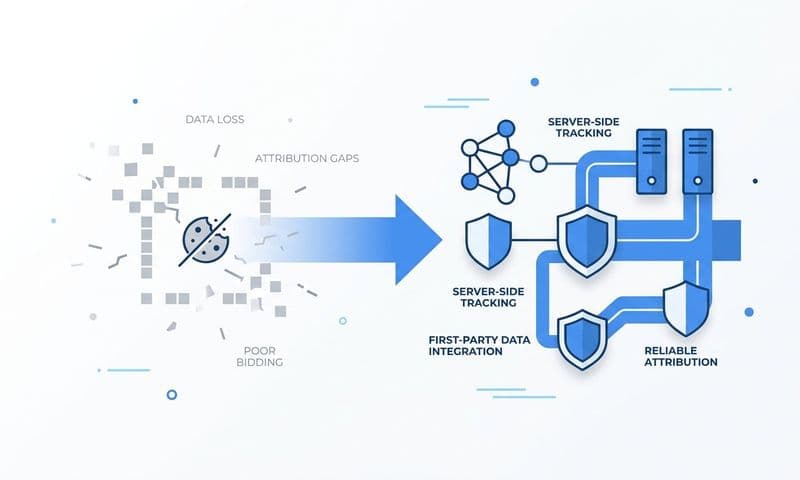
Here is the core problem with browser-based pixels. When a user clicks your ad and lands on your site, your pixel relies on the user's browser to fire the conversion event. But browsers are increasingly hostile to this process. Ad blockers prevent pixels from loading. Apple's App Tracking Transparency framework limits the data that can be collected on iOS devices. Browser-based cookies expire faster than they used to, and many browsers restrict third-party cookies entirely. The result is that a meaningful portion of your real conversions never get reported back to your ad platforms.
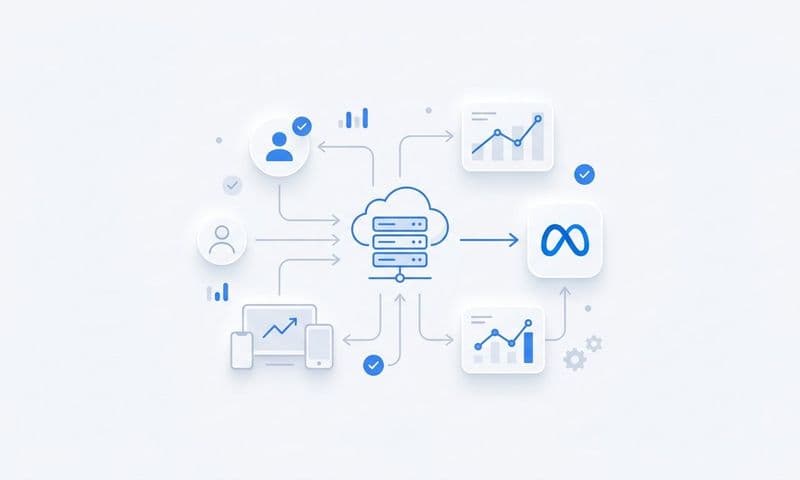
Server-side tracking solves this by moving the conversion event off the user's browser and onto your server. Instead of a pixel in the browser firing a conversion signal, your server sends that signal directly to the ad platform's API. Because it originates from your server rather than the user's browser, it bypasses ad blockers, cookie restrictions, and iOS limitations entirely. For a deeper dive into the advantages, read about why server-side tracking is more accurate.
To implement server-side tracking, you need to set up a server-side tagging container or use a platform that handles this for you. The general process involves:
1. Setting up a server-side container that receives events from your website and passes them to ad platforms via their conversion APIs, such as Meta's Conversions API or Google's Enhanced Conversions.
2. Configuring your site to send first-party event data, including purchase amounts, customer identifiers, and event timestamps, to your server-side container rather than relying solely on browser pixels.
3. Mapping those server-side events to the correct conversion actions in each ad platform so the data lands in the right place.
4. Running both client-side and server-side tracking in parallel initially, with deduplication logic in place to ensure the same conversion is not counted twice.
This last point matters a lot. If you add server-side tracking without deduplication, you will swing from under-reporting to over-reporting. Each conversion event needs a unique event ID so that when both the browser pixel and the server send the same event, the ad platform recognizes it as one conversion, not two. Our server-side tracking implementation guide walks through the technical details step by step.
Tools like Cometly handle server-side tracking setup and automate the connection between your website, CRM, and ad platforms. Rather than manually configuring server-to-server integrations for each platform, the system manages the data pipeline for you, ensuring that conversion events are captured completely and passed accurately to Meta, Google, and other platforms where your ads run.
Step 3: Connect Ad Spend and Revenue Data in One Place
Even with server-side tracking in place, you still have a fragmentation problem if your data lives in separate silos. Your Meta spend is in Meta. Your Google spend is in Google. Your TikTok spend is in TikTok. And your actual revenue is in your CRM or payment processor. None of these systems talk to each other by default, which means calculating a true cross-channel ROAS requires manually pulling data from multiple sources and hoping nothing gets lost in the process.
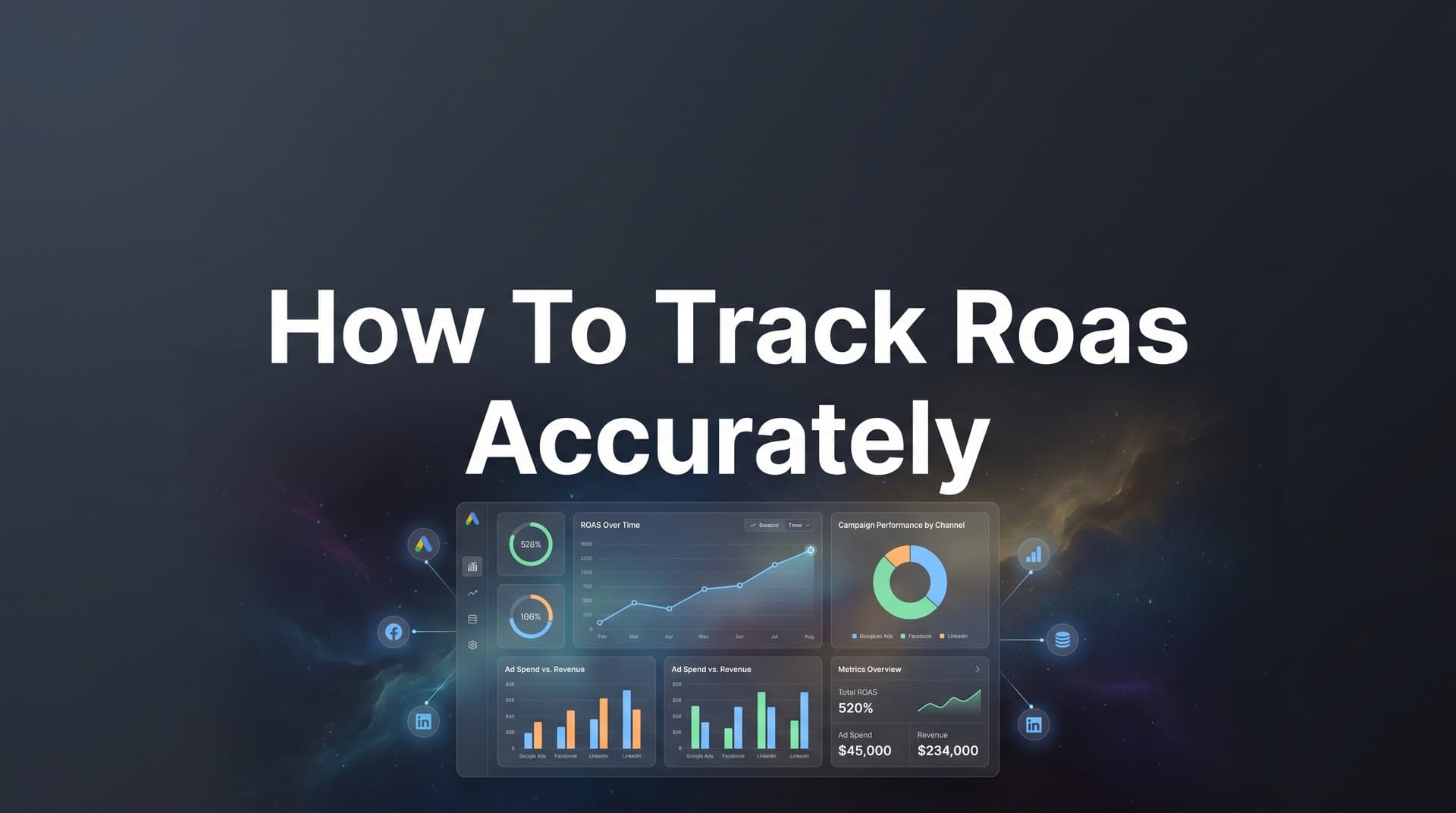
The fix is centralization. You need a single dashboard that pulls ad spend from every platform you run and ties it to verified revenue from your own backend systems. Implementing cross-channel tracking is the key to eliminating these data silos.
Start by connecting all your ad accounts. This typically means authorizing API connections from each platform to your attribution tool or analytics dashboard. Once connected, your total spend across Meta, Google, TikTok, LinkedIn, and any other channels you use should be visible in one place, broken down by campaign, ad set, and ad.
Then connect your revenue source. This is the critical piece that most marketers miss. Platform-reported revenue is an estimate based on each platform's own attribution model and tracking capabilities. Your actual revenue, the number that matters for business decisions, lives in your CRM, Shopify store, Stripe account, or whatever system processes your transactions. That is the number that should anchor your ROAS calculation.
Your ROAS formula should be: verified revenue from your own systems divided by verified ad spend from your platform connections. Not platform-estimated revenue. Not pixel-fired conversion values. Actual revenue from completed purchases or closed deals. If you need help understanding the math, our break-even ROAS calculator is a useful starting point.
Real-time data syncing matters here too. If your dashboard is pulling revenue data with a 24 or 48-hour lag, you are making optimization decisions based on yesterday's reality. Campaigns that are burning through budget right now might not show up as underperforming until it is too late to act. Look for a setup where revenue events flow into your centralized view as they happen, or as close to real time as your systems allow.
Cometly's analytics dashboard is built around this principle, connecting your ad platforms, CRM, and website into a single view where ROAS is calculated from real revenue data rather than platform estimates. When you can see total spend and verified revenue side by side across every channel, the budget decisions become much clearer.
Step 4: Choose the Right Attribution Model for Your Business
Here is where things get nuanced. Even with perfect tracking infrastructure, the attribution model you choose will significantly change the ROAS numbers you see for each channel. Understanding what each model measures, and where each one misleads, is essential for making smart budget decisions.
Let's walk through the main models:
Last-touch attribution: Gives 100% of the conversion credit to the final touchpoint before purchase. This is the default for most ad platforms and the reason your bottom-funnel channels almost always look like ROAS superstars. If a customer clicked a retargeting ad right before buying, that retargeting campaign gets all the credit, even if a prospecting campaign introduced them to your brand three weeks earlier.
First-touch attribution: Gives 100% of the credit to the first touchpoint. This is the opposite problem. It overstates the value of awareness channels and ignores everything that happened in between to move the customer toward purchase.
Linear attribution: Distributes credit equally across all touchpoints in the customer journey. This is more balanced but treats a quick homepage visit the same as a product page deep dive, which is not always accurate. Learning how to track the customer journey helps you understand which touchpoints truly matter.
Time-decay attribution: Gives more credit to touchpoints that happened closer to the conversion. This makes intuitive sense for shorter sales cycles where recency genuinely matters more.
Data-driven attribution: Uses machine learning to assign credit based on which touchpoints statistically correlate with conversion. This is the most sophisticated model but requires sufficient conversion volume to produce reliable results.
For businesses with short, simple purchase journeys, last-touch or time-decay attribution may be sufficient. For businesses with longer sales cycles, multiple touchpoints, and higher-value transactions, multi-touch models give you a far more honest picture of which channels are actually contributing to revenue. Choosing the right marketing attribution platform for revenue tracking makes this process significantly easier.
The most useful practice is comparing ROAS across multiple attribution models side by side. When a channel looks strong under last-touch but weak under linear or data-driven, that is a signal worth investigating. It often means the channel is benefiting from other channels' work rather than driving demand independently.
Cometly lets you compare attribution models in the same dashboard, so you can see how ROAS shifts for each campaign depending on which model you apply. That side-by-side view is where real budget clarity comes from.
Step 5: Sync Accurate Conversion Data Back to Ad Platforms
Tracking ROAS accurately is not just about what you see in your own dashboard. It also directly affects how well your ad platforms optimize your campaigns. This is a connection many marketers overlook, and it costs them real performance.
Meta's algorithm, Google's Smart Bidding, and similar systems on other platforms all rely on conversion signals to make targeting and bidding decisions. When those signals are incomplete or inaccurate, the algorithm optimizes toward the wrong outcomes. It might chase low-quality leads because those are the conversions it can see. It might underspend on your highest-value audience segments because it has no signal that those users convert. The quality of data you feed back to the platform directly determines the quality of optimization you get in return. This is exactly how ad tracking tools help you scale ads using accurate data.
This is where conversion syncing becomes a competitive advantage. Once you have accurate, verified conversion data in your attribution system, you can send that data back to your ad platforms through their conversion APIs. This means real purchase events, with real revenue values, flowing from your backend systems into Meta and Google rather than relying on whatever their pixels managed to capture on their own.
The practical impact is significant. Better conversion signals lead to better lookalike audiences built on your actual buyers rather than on proxy signals. They lead to smarter automated bidding that optimizes toward real revenue rather than estimated conversions. And they lead to more accurate campaign reporting within the ad platforms themselves, which reduces the gap between platform-reported ROAS and your verified ROAS.
Setting this up involves connecting your attribution system to each platform's conversion API, mapping your revenue events to the correct conversion action types, and ensuring that the data includes the customer signals, such as email addresses or phone numbers, that help platforms match events to their user profiles.
Cometly's Conversion Sync feature automates this feedback loop. Verified revenue events from your CRM and payment systems flow back into Meta, Google, and other platforms automatically, sharpening their AI with first-party data that reflects what actually happened rather than what a browser pixel managed to catch. Over time, this creates a compounding effect where better data inputs lead to better algorithmic performance, which leads to better actual ROAS.
Step 6: Build a ROAS Review Cadence and Optimization Workflow
You have solid tracking infrastructure, centralized data, and a clear attribution model. Now you need a consistent process for actually using that data to make better decisions. Without a structured review cadence, even the best attribution setup collects dust while budget keeps flowing to the wrong places.
Set up a weekly or biweekly review where you compare platform-reported ROAS against your centralized, attribution-verified ROAS for every active campaign. This comparison is the heart of the process. It tells you which campaigns are genuinely performing and which ones only look good because of how the platform counts credit. Tracking ROAS by day can help you spot performance trends and anomalies faster.
During each review, focus on three actions:
1. Identify your highest verified ROAS campaigns and reallocate budget toward them. These are your proven winners based on real revenue, not platform estimates. Scaling them is a data-backed decision, not a guess.
2. Flag campaigns where platform-reported ROAS looks strong but verified ROAS tells a different story. These are your budget drains. They look efficient in the platform dashboard but are not generating proportional revenue in your backend. Cutting or restructuring these campaigns frees up budget for campaigns that actually work.
3. Review creative and audience performance at the ad set and ad level. Verified ROAS at the campaign level can mask significant variation underneath. One ad might be carrying the entire campaign while others drain the budget. Surface that variation and act on it.
AI-powered tools can accelerate this process considerably. Rather than manually combing through dozens of campaigns and ad sets, platforms like Cometly use AI to surface scaling opportunities and flag underperforming spend automatically. The AI Ads Manager identifies which ads and campaigns are driving the most verified revenue across channels, so you can make reallocation decisions faster and with more confidence.
The goal of this cadence is not just reporting. It is creating a continuous loop where better data leads to better decisions, which leads to better performance, which generates better data. That loop, running consistently over weeks and months, is what separates marketers who scale with confidence from those who are always guessing.
Putting It All Together
Tracking ROAS accurately is not about finding one magic fix. It is about building a system where every layer of your tracking, attribution, and reporting works together to reflect reality.
Here is your quick-reference checklist for everything covered in this guide:
1. Audit your current tracking for gaps and discrepancies between platform-reported conversions and actual backend revenue.
2. Implement server-side tracking to capture conversions that browser pixels miss due to ad blockers, iOS restrictions, and cookie limitations.
3. Centralize ad spend and verified revenue data in one dashboard so your ROAS calculation uses real numbers from your own systems.
4. Select an attribution model that matches your customer journey length and touchpoint complexity, and compare models side by side to reveal true channel contribution.
5. Sync accurate conversion data back to your ad platforms so their algorithms optimize toward real revenue rather than incomplete signals.
6. Establish a regular review cadence to compare verified ROAS against platform-reported numbers and reallocate budget based on what the data actually shows.
When you trust your ROAS numbers, you can scale winning campaigns with confidence, cut wasteful spend without guessing, and make every marketing dollar work harder. The marketers who build this kind of infrastructure stop reacting to platform dashboards and start making decisions from a position of real clarity.
Platforms like Cometly are built to handle this entire workflow, from server-side tracking and multi-touch attribution to conversion syncing and AI-powered optimization recommendations. Instead of reconciling spreadsheets across five different platforms, you get one clear view of what is actually driving revenue.
Ready to stop guessing and start scaling with accurate data? Get your free demo today and see exactly how Cometly captures every touchpoint, verifies your ROAS, and helps you maximize the return on every dollar you spend.