If you have ever pulled up your Google Ads dashboard, then opened Meta, then checked your CRM, and walked away more confused than when you started, you are not alone. Platform-reported ROAS numbers rarely agree with each other, and they almost never match what your payment processor actually deposited. The result is a creeping lack of confidence in your data that leads to one of the most expensive problems in digital marketing: misallocated budget.
Accurate ROAS tracking is not a luxury or a "nice to have" for advanced teams. It is the foundation of every smart budget decision you make. When your numbers are reliable, you know which campaigns deserve more spend, which creatives are genuinely converting, and which channels are earning their place in your media mix. When they are unreliable, you are essentially placing educated guesses with real dollars.
The good news is that building an accurate ROAS tracking system is entirely achievable. It requires a methodical approach: auditing your current setup for gaps, implementing server-side tracking to capture what browser pixels miss, connecting your revenue sources into a unified pipeline, choosing the right attribution model, syncing conversion data back to the platforms, and building a validation cadence that keeps your numbers honest over time.
This guide walks you through each of those steps in order. Whether you are managing campaigns across two platforms or ten, by the end you will have a clear roadmap for moving from fragmented, conflicting reports to a single source of truth for your advertising performance.
Step 1: Audit Your Current Tracking Setup for Data Gaps
Before you can build something better, you need to understand exactly where your current setup is breaking down. Most teams skip this step and jump straight to adding new tools, which means they end up layering new tracking on top of the same underlying gaps. The audit comes first.
Start by pulling the conversion and revenue numbers reported by each of your ad platforms for the same time period. Then open your CRM or payment processor and pull the actual revenue attributed to paid traffic for that same window. Write these numbers down side by side. The gap between what the platforms claim and what your backend confirms is your discrepancy, and it is almost always larger than expected.
This gap exists for several well-documented reasons. Browser privacy restrictions in Safari and Firefox have significantly limited third-party cookie tracking, and Chrome has been moving in the same direction. Apple's App Tracking Transparency framework continues to restrict pixel-based conversion data from iOS users, which represents a substantial portion of mobile traffic for most advertisers. Ad blockers prevent pixels from firing entirely for a meaningful segment of your audience. And cross-device journeys, where a user sees an ad on mobile but converts on desktop, create blind spots that client-side pixels simply cannot bridge.
There is also a structural issue worth acknowledging: ad platforms have a built-in incentive to attribute conversions to their own ads. Meta's attribution window, Google's last-click model, and TikTok's view-through attribution all tend to claim credit for the same conversions. This is not a conspiracy; it is just how their default reporting works. It is a core reason why inaccurate conversion tracking is so widespread and why independent attribution tools exist.
To make your audit actionable, create a simple discrepancy log. For each platform, note the conversions or revenue it reports, the corresponding number your backend confirms, and the percentage gap between the two. A gap under ten percent is manageable. A gap of thirty percent or more signals a serious tracking problem that is actively distorting your budget decisions.
This audit gives you a baseline. You cannot fix what you have not measured, and you cannot know whether your new tracking setup is actually working unless you know how broken the old one was. Keep this log, because you will use it again in Step 6 to validate your improvements.
Step 2: Implement Server-Side Tracking to Capture What Pixels Miss
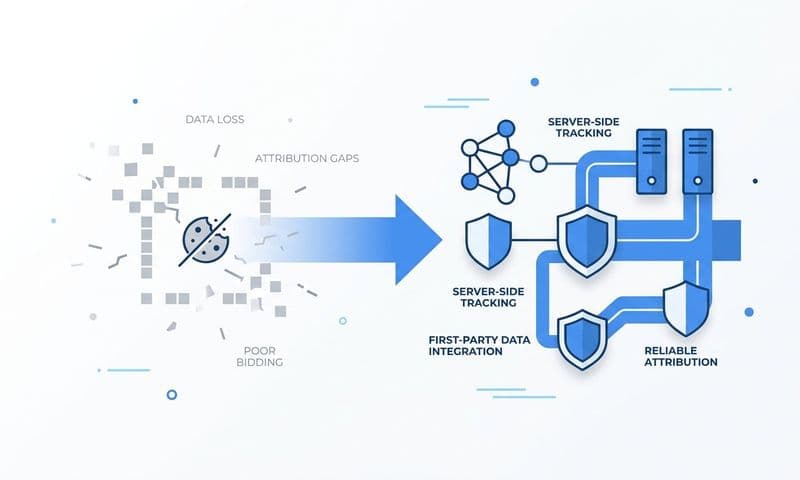
Once your audit reveals the size of the gap, the next question is: why is so much conversion data disappearing? The answer, in most cases, comes down to how traditional tracking works. Browser-based pixels fire from the visitor's browser, which means they are subject to every restriction that browser imposes. Ad blockers, privacy settings, cookie limitations, and iOS restrictions all sit between your pixel and the data you need.
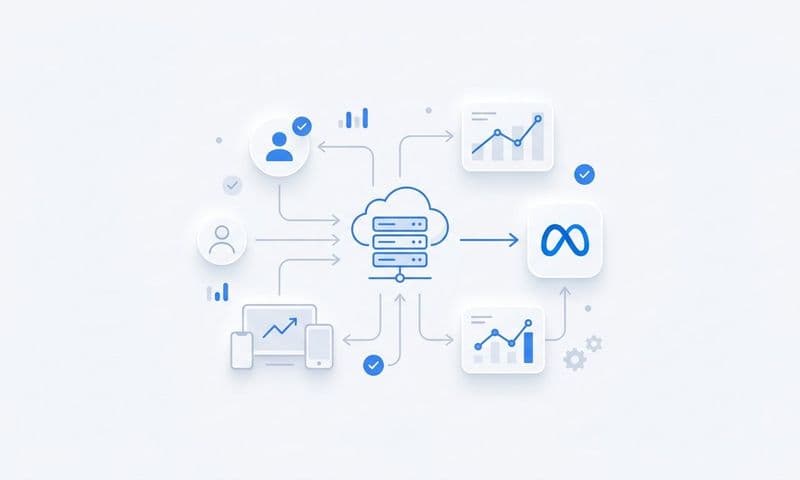
Server-side tracking works differently. Instead of relying on the visitor's browser to send conversion data to ad platforms, server-side tracking sends that data directly from your server to the platform's API. The browser's restrictions become irrelevant because the data never passes through it. This is the core technical distinction, and it is why server-side tracking is more accurate and has become essential for reliable data in 2026.
Meta's own documentation recommends using the Conversions API alongside the browser pixel for exactly this reason: the server-side signal captures events that the pixel misses, and together they give a more complete picture of conversion activity. Google has a similar server-side solution, and the principle applies across platforms.
Here is how to implement server-side tracking using a platform like Cometly:
1. Connect your ad accounts: Link your Meta, Google, TikTok, and any other active ad accounts to Cometly. This gives the platform visibility into your campaigns and ad spend data.
2. Install the Cometly tracking script on your website: This captures first-party data from your visitors, including UTM parameters, page views, and on-site behavior, without relying on third-party cookies.
3. Set up server-side event tracking: Configure Cometly to send your key conversion events, such as purchases, sign-ups, or qualified leads, directly from your server to each ad platform's API. This bypasses browser-level restrictions entirely.
4. Map your conversion events to actual revenue: Rather than firing a generic "purchase" event, pass the actual revenue value associated with each conversion. This is what turns your tracking data into real ROAS data.
One of the most valuable downstream effects of server-side tracking is improved event match quality. When Meta or Google receives a conversion signal with a strong match score, meaning it can confidently tie that conversion to a specific user, their algorithms use that data more effectively for optimization. Better data in means better targeting and delivery out.
After setting up server-side tracking, run a verification checkpoint. For a defined period, compare the events firing in your server-side setup against the corresponding records in your CRM or order management system. They should align closely. If you see significant discrepancies at this stage, investigate your event triggers before moving forward.
Step 3: Connect Your Revenue Sources to Create a Single Data Pipeline
Server-side tracking solves the data loss problem, but accurate ROAS tracking also requires that you are measuring the right thing. Most teams make the mistake of tracking a proxy metric, such as form fills, add-to-carts, or trial sign-ups, as their ROAS conversion event. These metrics have value, but they are not revenue. When you calculate ROAS against a proxy, you get an inflated and misleading number.
True ROAS accuracy depends on connecting your ad platforms to your actual revenue source. That might be Stripe, Shopify, your CRM, or a combination of systems. The goal is a single data pipeline where ad spend flows in from one side and actual closed revenue flows in from the other, with the customer journey connecting them in the middle. Understanding tracking closed won revenue is essential to making this pipeline work correctly.
Here is how to build that pipeline:
Connect your ad accounts: Pull in spend and impression data from every active platform. Meta, Google, TikTok, LinkedIn, and any others you run. Cometly connects to all major ad platforms and pulls this data automatically, so you are not manually exporting CSVs from five different dashboards.
Connect your website tracking: Your website is the bridge between ad clicks and conversions. Cometly's first-party tracking captures the full session data, including which ad or campaign drove the visit, so you can tie downstream revenue back to its source.
Connect your revenue source: This is the critical step most teams skip. By integrating your CRM, Shopify store, or payment processor, you move from tracking estimated conversions to tracking verified revenue. Cometly pulls in actual deal values, purchase amounts, and subscription revenue so your ROAS calculation reflects real money, not inferred value.
When all three layers are connected, you can trace a customer's journey from the first ad impression through every subsequent touchpoint to the moment they become paying revenue. This is what separates genuine ROAS data from platform-reported estimates. You are no longer asking the ad platforms how well they performed. You are telling them, based on your own verified revenue data. For a deeper look at how platforms handle this, explore how marketing attribution platforms enable revenue tracking.
A practical note: make sure your conversion events are mapped to the deepest point in your funnel that still happens quickly enough to be useful. For e-commerce, that is usually a completed purchase. For B2B SaaS, it might be a closed deal or a qualified opportunity with an assigned value. The further down the funnel your conversion event sits, the more accurate your ROAS will be.
Step 4: Choose the Right Attribution Model for Your Business
Even with perfect tracking in place, two marketers looking at the same campaign can report very different ROAS numbers if they are using different attribution models. This is not a bug; it is a feature of how attribution works. Each model answers a slightly different question, and understanding the differences helps you choose the right one for your business and interpret your data correctly.
Here is a quick breakdown of the most common models:
First-touch attribution gives full credit to the first ad or channel that introduced the customer to your brand. It is useful for understanding what drives awareness and top-of-funnel entry, but it will undervalue the touchpoints that actually closed the deal.
Last-touch attribution gives full credit to the final touchpoint before conversion. It is simple and easy to explain, but it systematically undervalues upper-funnel campaigns that warm up the audience before the final click.
Linear attribution distributes credit equally across every touchpoint in the journey. It is more balanced than first or last-touch, but it treats every interaction as equally valuable, which is rarely true in practice.
Time-decay attribution gives more credit to touchpoints that occurred closer to the conversion. This tends to work well for shorter sales cycles where recency is a meaningful signal.
Data-driven attribution uses your actual conversion data to assign credit based on which touchpoints statistically contributed most to conversions. It requires sufficient data volume to be reliable, but it is generally the most accurate model when conditions are met.
Choosing the right model depends primarily on your sales cycle. If your customers typically convert within a few days and have two or three touchpoints, last-touch or time-decay will give you a reasonably accurate picture. If you are running a longer B2B cycle with multiple decision-makers and weeks of nurturing, multi-touch models like linear or data-driven will reflect reality more honestly. A proper attribution tracking setup ensures you can compare models effectively.
The most powerful approach is not to pick one model and lock it in, but to compare ROAS across multiple models simultaneously. A campaign that looks strong under last-touch but collapses under first-touch is probably a retargeting campaign taking credit for work done upstream. A campaign that looks weak under last-touch but performs well under linear is probably doing important mid-funnel work that last-touch attribution is hiding. Cometly lets you toggle between attribution models within the same dashboard, so you can stress-test your campaigns across different views and make budget decisions with full context.
Step 5: Sync Enriched Conversion Data Back to Ad Platforms
Accurate ROAS tracking is not just about your internal reporting. It also has a direct impact on how well your ad platforms optimize your campaigns going forward. Meta, Google, and TikTok all use conversion signals to train their delivery algorithms. The quality of those signals determines how well those algorithms can find your next high-value customer.
When your tracking relies on browser pixels, the signals these platforms receive are noisy. They miss conversions from iOS users, blocked browsers, and cross-device journeys. As a result, the algorithm learns from an incomplete and skewed picture of who actually converts. This degrades targeting quality over time and suppresses your future ROAS. Learning how to improve ad tracking accuracy is critical to breaking this cycle.
Conversion sync solves this by sending verified, server-side conversion data directly back into each platform's learning system. Instead of the algorithm learning from whatever the pixel managed to capture, it learns from your actual revenue events, complete with match data that ties those conversions to real users. Meta documents this in their Conversions API guidance, and Google's enhanced conversions work on the same principle.
The compounding benefit here is significant. Better conversion data improves the algorithm's ability to find similar high-value users, which improves your targeting, which improves your conversion rate, which generates better conversion data. The loop reinforces itself over time.
Cometly's Conversion Sync feature automates this process. Once your revenue sources are connected and your server-side tracking is live, Cometly pushes enriched conversion events back to Meta, Google, and other platforms continuously. You do not have to manually upload offline conversion files or maintain separate data feeds. The pipeline runs automatically, keeping the ad platforms fed with the accurate signals they need to optimize effectively.
Step 6: Validate Your ROAS Data and Build a Review Cadence
Setting up accurate tracking is not a one-time event. Data quality drifts. Pixels break. New campaigns launch with misconfigured conversion events. Payment processor integrations occasionally hiccup. Without a regular validation process, you can go weeks without realizing your ROAS data has quietly become unreliable again.
Validation starts with a simple comparison. Take a defined time period, such as the previous month, and compare the revenue your attribution platform reports against your actual payment processor deposits or bank records for that same period. These numbers will not be identical, because attribution involves some estimation, but they should be close. A variance of five to ten percent is generally acceptable. If your numbers are off by more than that, something in your pipeline needs investigation.
When you find a significant variance, work backwards through the pipeline. Start by checking whether your server-side events are firing correctly. Then verify that your revenue source integration is pulling in complete data. Then check whether any new campaigns or conversion events were added without proper configuration. In most cases, the issue traces back to one of these three areas.
Beyond the monthly validation check, build a weekly or biweekly ROAS review cadence into your team's workflow. This does not need to be a lengthy meeting. A focused fifteen-minute review that covers the following is enough:
ROAS by channel: Which platforms are delivering above or below your target? Have any shifted significantly from the previous period? Implementing cross-channel tracking makes this comparison far more reliable.
ROAS by campaign: Which campaigns are genuinely driving revenue when you look at actual closed deals rather than platform-reported conversions?
Attribution model comparison: Do your top campaigns hold up across multiple attribution views, or does their performance depend heavily on which model you use?
AI-powered insights: Cometly's AI features surface which campaigns and individual ads are truly driving revenue, flagging underperformers and identifying scaling opportunities you might miss in a manual review. Using these recommendations as part of your cadence helps you reallocate budget with confidence rather than instinct.
The goal of this cadence is not to react to every fluctuation. It is to catch meaningful shifts early, validate that your data is still accurate, and make budget decisions based on a reliable, consistent view of performance. Leveraging marketing analytics data effectively is what separates reactive teams from proactive ones.
Your ROAS Tracking Checklist and Next Steps
Accurate ROAS tracking is a discipline, not a destination. Here is a quick-reference checklist summarizing everything covered in this guide:
1. Audit your current setup: Compare platform-reported conversions against your CRM or payment processor. Document the discrepancy for each platform and calculate the gap percentage.
2. Implement server-side tracking: Move beyond browser pixels by setting up server-side event tracking through a platform like Cometly. Verify that events are firing correctly against your backend records.
3. Connect your revenue sources: Link your ad accounts, website tracking, and actual revenue source into a single unified pipeline. Make sure your conversion events reflect real revenue, not proxy metrics.
4. Choose and compare attribution models: Select the model that fits your sales cycle, but do not rely on a single view. Compare ROAS across multiple models to get a complete picture of campaign performance.
5. Sync conversion data back to ad platforms: Use conversion sync to feed verified, enriched revenue events back into Meta, Google, and TikTok so their algorithms can optimize from real signals.
6. Validate regularly and build a review cadence: Compare your attribution platform's reported revenue against your payment processor monthly. Run a focused ROAS review weekly or biweekly to catch shifts and reallocate budget with confidence.
If you are just getting started, do not try to implement everything at once. Begin with the audit this week. Understanding the size of your current data gap is the most important first step, and it will give you the clarity and urgency to build from there.
The marketers who make the best budget decisions are not necessarily the ones with the biggest spend or the most sophisticated creative. They are the ones who trust their data. Building that trust starts with an accurate, unified ROAS tracking system.
Ready to stop guessing and start scaling with confidence? Get your free demo of Cometly and see how unified, server-side ROAS tracking across all your ad platforms can transform the way you make budget decisions.