You log into your ad platform, check the numbers, and something feels off. Your Meta dashboard shows 40 conversions, Google Analytics reports 25, and your CRM only recorded 18 actual sales. Sound familiar? Ad tracking issues are one of the most frustrating problems digital marketers face, and they are more common than ever.
Between browser privacy updates, iOS restrictions, ad blockers, and misconfigured pixels, the gap between what your ads actually drive and what gets reported keeps widening. Since Apple's iOS 14.5 App Tracking Transparency rollout, along with Safari's Intelligent Tracking Prevention and Firefox's Enhanced Tracking Protection, client-side pixels routinely miss a significant portion of conversions. The result is inaccurate reporting and degraded ad platform optimization.
The consequences go beyond messy dashboards. When tracking breaks, your ad platform algorithms receive incomplete data, which means they cannot optimize effectively. You end up making budget decisions based on flawed numbers, potentially scaling campaigns that are not actually working or cutting ones that are driving real results.
This guide walks you through a systematic process to diagnose and fix the most common ad tracking issues across platforms like Meta, Google, TikTok, and more. Whether you are dealing with pixel misfires, conversion discrepancies, or data loss from privacy restrictions, each step gives you a clear action to take and a way to verify it worked.
By the end, you will have a reliable tracking setup that gives you confidence in your data and helps your ad platforms optimize toward real results. Let's get into it.
Step 1: Audit Your Current Tracking Setup for Gaps
Before you can fix anything, you need a complete picture of what you are actually working with. Most tracking problems start with nobody knowing exactly which pixels, tags, and scripts are running where. A thorough audit changes that.
Start by creating a simple inventory document. List every ad platform you are running campaigns on (Meta, Google, TikTok, LinkedIn, Pinterest, and so on), then note the corresponding tracking mechanism for each: pixel ID, tag name, or script. This becomes your reference sheet throughout the entire process.
Check each platform's native diagnostics first. Meta Events Manager will show you which events are firing, when they last fired, and whether there are any configuration warnings. Google Tag Assistant is a Chrome extension that lets you inspect which Google tags are active on any page. TikTok has its own Pixel Helper extension that does the same. Open each of these tools and walk through your most important pages.
Focus your attention on these high-value pages. Your homepage, landing pages tied to active campaigns, checkout pages, and thank-you or confirmation pages are where tracking failures hurt the most. A pixel that fires correctly on your homepage but fails on your checkout page means you are missing your most valuable conversion signals. Understanding what a tracking pixel is and how it works is essential before diving into diagnostics.
Look for these common gap patterns as you audit. Pages missing pixels entirely are the most obvious issue. Duplicate tags firing on the same page inflate your numbers and confuse attribution. Outdated pixel versions can cause event parameters to fail silently. Tags that fire on every page when they should only fire on specific pages create noise in your data.
Use your browser's developer tools alongside the debugging extensions. Open the Network tab in Chrome DevTools, filter for your pixel domain names, and watch which requests fire as you navigate through your site. This tells you not just whether a tag fires, but what data it sends.
Document every discrepancy you find in your inventory sheet. Note the page, the issue type, and the platform affected. This list becomes your fix queue for the steps ahead. Going into the next phase with a clear written record of problems means you will not miss anything or fix the same issue twice.
Step 2: Diagnose the Root Cause of Data Discrepancies
Not all tracking problems look the same, and treating them all the same way wastes time. Once you have your audit list, the next move is to categorize each issue into one of three buckets: technical misconfigurations, privacy and browser restrictions, or platform attribution differences. Each category has a different fix path.
Technical Misconfigurations
These are errors in how your tags are set up or deployed. Common examples include incorrect event parameters being sent with conversion events, the wrong conversion event selected in your ad platform's campaign settings, errors in your Google Tag Manager container like broken triggers or misfired tags, and redirect chains that strip UTM parameters before the user lands on your page.
To spot technical issues, compare what your pixel is sending against what your platform expects. In Meta Events Manager, the Test Events tool shows you exactly what parameters arrive with each event. If a purchase event is firing but the value or currency parameter is missing, your data is incomplete even though the event technically fired. For a deeper dive into this specific problem, check out how to fix tracking pixel firing issues with step-by-step troubleshooting.
Privacy and Browser Restrictions
This is where things get more complex. Apple's App Tracking Transparency framework limits the data Meta and other platforms can collect from iOS users. Safari's Intelligent Tracking Prevention restricts how long cookies persist, effectively shortening attribution windows. Firefox's Enhanced Tracking Protection blocks many third-party tracking scripts outright. Ad blockers add another layer on top of all of this.
The result is that client-side pixels operating in browsers simply cannot see a meaningful portion of the conversions they should be capturing. You cannot fix this at the pixel level. This is a structural problem that requires a different approach, which we cover in Step 4. Understanding the full scope of pixel tracking problems on iOS helps you appreciate why server-side solutions are necessary.
Attribution Model Differences
Here is something that trips up even experienced marketers. Meta, Google, and TikTok all use different default attribution windows and models. Meta might use a 7-day click and 1-day view window by default. Google might attribute the same conversion to a search click that happened three days earlier. Your CRM records the actual transaction. All three are technically correct within their own frameworks, but they are measuring different things.
To pinpoint where your drop-off actually occurs, compare data across three levels: the ad platform dashboard, your analytics tool, and your CRM or backend order system. If your ad platform reports 40 conversions, your analytics reports 25, and your CRM shows 18, the gap between 40 and 25 is likely a combination of attribution model differences and some double-counting. The gap between 25 and 18 is more likely a tracking loss problem.
Writing down which gap is largest tells you where to focus your energy first. If the platform-to-analytics gap is small but the analytics-to-CRM gap is large, your tracking implementation is the priority. If the platform-to-analytics gap is large, attribution model alignment and privacy restrictions are the bigger issue.
Step 3: Fix Pixel and Tag Configuration Errors
With your diagnosis complete, it is time to start making fixes. Technical misconfigurations are the most straightforward to address, and solving them creates an immediate improvement in data quality.
Start with pixel reinstallation when needed. If your audit revealed outdated pixel versions or broken implementations, the cleanest fix is often a fresh install through Google Tag Manager rather than patching the existing code. Remove the old hardcoded pixel from your site, create a new tag in GTM using the official template for Meta, Google, or TikTok, and configure it with your current pixel or measurement ID. This eliminates legacy issues that can be hard to trace. If you are running Meta ads specifically, our guide on Facebook pixel tracking covers how to fix data loss and train Meta's AI correctly.
Map your events carefully and deliberately. Purchase events should fire only on order confirmation or thank-you pages, not on checkout initiation pages. Lead events should fire only after a form is successfully submitted, not when the form page loads. Add to cart events should fire on the actual add-to-cart action, not on the product page view. Incorrect event mapping is one of the most common sources of inflated conversion numbers, and fixing it often reveals that your actual conversion rate is different from what you thought.
Resolve duplicate tag issues in Google Tag Manager. Open your GTM container and review the triggers attached to each conversion tag. If you see the same event tag with multiple triggers that could both fire on the same page load, consolidate them. Use GTM's preview mode to walk through your conversion flow step by step and confirm that each tag fires exactly once at the right moment.
Audit your UTM parameters across every campaign. UTM parameters are the foundation of accurate attribution in analytics tools. Check that every ad, every ad set, and every campaign has consistent UTM naming conventions. Inconsistent capitalization, missing parameters, or URL encoding errors all create fragmented data in Google Analytics. Use a UTM builder and a shared naming convention document to standardize this across your team. Our detailed guide on UTM tracking and how it helps your marketing walks through best practices for getting this right.
Before pushing any changes to your live site, use the debugging tools available to you. Meta's Test Events tool lets you fire real events in a test environment and confirm what data arrives at Meta's servers. Google Tag Assistant's live mode shows tag firing in real time. Validate every fix in testing before it goes live, because a broken fix on a high-traffic page creates new problems faster than you can catch them.
Step 4: Implement Server-Side Tracking to Close Privacy Gaps
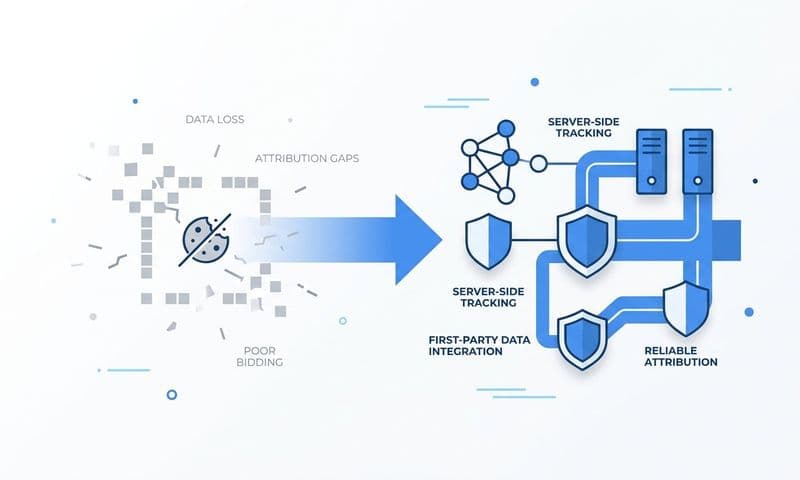
Here is the honest truth about browser-based tracking in the current environment: it is no longer sufficient on its own. Between iOS restrictions, cookie limitations, and ad blockers, client-side pixels operating in browsers miss a significant and growing share of conversions. Fixing your pixel configuration helps, but it does not solve the structural problem.
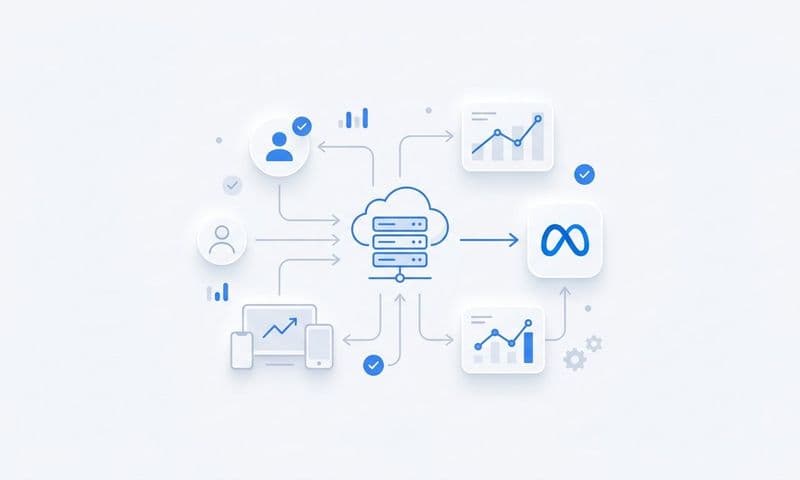
Server-side tracking is the solution to that structural problem. Instead of relying on a JavaScript pixel running in a user's browser, server-side tracking sends conversion data directly from your server to the ad platform's API. The browser's privacy settings, cookie restrictions, and ad blockers are entirely bypassed because the data never travels through the browser at all. Learn more about why server-side tracking is more accurate than traditional browser-based methods.
Meta's Conversions API and Google's Enhanced Conversions are the platform-native implementations of this approach. Both allow you to send conversion events from your server with first-party data like hashed email addresses and phone numbers, which dramatically improves the platform's ability to match conversions to the right users. Meta refers to this match quality as Event Match Quality, and it is a metric you can monitor directly in Events Manager to see how well your conversion data is being attributed.
The practical impact is meaningful. When a user converts on your site but their browser blocks the pixel, the server-side event still fires and reaches the platform. The ad algorithm receives a complete signal rather than a partial one. Over time, this translates to better audience targeting, more accurate optimization, and less wasted spend on audiences that are not converting.
Cometly's server-side tracking is built specifically for this challenge. It captures every touchpoint from ad click to CRM event, creating a complete and enriched view of the customer journey that browser-based pixels simply cannot replicate. Because the data flows through your own server infrastructure before being sent to ad platforms, it is more accurate, more complete, and more resistant to the browser-level restrictions that are only going to become more prevalent over time.
When implementing server-side tracking, focus on three key areas. First, ensure you are collecting first-party data at the point of conversion: email addresses, phone numbers, and other identifiers that help platforms match events to users. Second, connect your CRM and backend order management system so that server-side events reflect actual verified conversions, not just pixel fires. Third, validate that your server events and browser events are not both sending the same conversion to the platform, which would create duplication. Most platforms offer deduplication parameters for exactly this purpose. For a complete walkthrough, see our guide on how to set up server-side tracking.
Step 5: Sync Accurate Conversion Data Back to Ad Platforms
Fixing your tracking is only half the equation. The other half is making sure the accurate data you are now capturing actually reaches the ad platforms in a form they can use to optimize your campaigns.
Ad platform algorithms are only as good as the data you feed them. When a Meta or Google campaign receives incomplete or inaccurate conversion signals, its optimization model builds on a flawed foundation. It targets audiences that look like your reported converters, which may not reflect your actual buyers. Budgets flow toward placements and creatives that appear to be working based on incomplete data. The entire optimization loop is compromised.
Conversion syncing addresses this by taking your verified, enriched conversion data from your attribution source and sending it back to each ad platform through their respective APIs. This is different from just having server-side tracking active. Conversion syncing is a deliberate process of feeding your best, most complete conversion data to the platforms so their algorithms can learn from it. Accurate data is also the foundation for being able to scale ads using accurate data with confidence.
What enriched conversion data looks like in practice. Instead of sending a bare purchase event, you send a purchase event with a hashed email address, a hashed phone number, the order value, the product category, and any other first-party signals you have collected. Meta's Event Match Quality score goes up when you send more matching parameters. Google's Enhanced Conversions uses the same principle. More data means better matching, which means better optimization.
Cometly's Conversion Sync feature automates this process. It takes the enriched conversion data captured through Cometly's attribution tracking and feeds it back to Meta, Google, TikTok, and other platforms in real time. The result is that ad platform algorithms receive a more complete and accurate picture of who is actually converting, which improves their targeting and reduces wasted spend.
To verify that your conversion sync is working correctly, check three things. Review your Event Match Quality score in Meta Events Manager and look for an upward trend after implementing syncing. Check the Conversion API diagnostics to confirm events are arriving without errors. Finally, compare the synced event volume against your backend order records over the same time period. If the numbers align closely, your sync is working. If there is a significant gap, investigate whether all conversion types are being captured and synced.
Step 6: Validate Your Fix With Cross-Platform Attribution
You have audited, diagnosed, fixed, and synced. Now you need to verify that everything is actually working and that the improvements are real. This is where cross-platform attribution becomes essential.
The fundamental problem with trusting any single ad platform's self-reported numbers is that every platform has an incentive to claim credit for as many conversions as possible. Meta will count a conversion if someone saw your ad and then converted within its attribution window, even if they clicked a Google ad three days later. Google will claim the same conversion. Without an independent attribution layer, you are counting the same sales multiple times across different dashboards. Our guide on how to fix attribution discrepancies in data dives deeper into resolving these conflicts.
The three-source comparison method is your most reliable validation tool. Pull conversion data from your ad platform dashboards, your analytics tool, and your CRM or backend system for the same time period. These three numbers will never be perfectly identical because they measure different things. But after your fixes, the gaps should be smaller and more explainable than they were before.
Use multi-touch attribution to understand the full picture. Last-click attribution gives all credit to the final touchpoint before conversion, which systematically undervalues upper-funnel channels like display and social awareness campaigns. First-touch attribution overcredits the initial discovery channel. Linear attribution spreads credit equally across all touchpoints. Time-decay models give more credit to touchpoints closer to the conversion. Each model tells you something different about your customer journey, and comparing them reveals where each channel actually contributes.
Cometly connects your ad platforms, CRM, and website data into a single attribution view, letting you compare attribution models side by side and see which channels are driving revenue at each stage of the funnel. This is the independent layer you need to stop relying on platform-reported numbers and start making decisions based on the full customer journey.
As a benchmark for what good tracking accuracy looks like: after implementing server-side tracking and conversion syncing, your platform-reported conversions and your backend records should align much more closely than before. Perfect alignment is not realistic because attribution models will always create some differences, but the unexplained gaps should shrink substantially. If you are still seeing large unexplained discrepancies after completing all the previous steps, return to Step 2 and re-examine whether there are additional privacy or technical causes you missed.
Step 7: Build an Ongoing Monitoring System to Prevent Future Breakdowns
Tracking is not a set-it-and-forget-it system. Platforms update their APIs. Websites get redesigned and pixels get accidentally removed. Privacy regulations evolve. A tracking setup that works perfectly today can be broken tomorrow, and the longer it goes undetected, the more data you lose.
Set up weekly tracking audits as a standing routine. Every week, compare your ad platform conversion numbers against your CRM data for the same period. Define a threshold that triggers investigation: for example, if the gap between platform-reported conversions and CRM records widens beyond a certain percentage, it gets flagged for review. This simple check catches most tracking breaks before they become major data gaps. Using dedicated marketing campaign tracking software can streamline this process significantly.
Create alerts for early warning signals. A sudden drop in conversion volume when campaign spend has not changed is often the first sign of a tracking issue rather than a campaign performance issue. Drops in Event Match Quality scores in Meta Events Manager signal that your data signal has degraded. Set up notifications for these metrics so you catch problems in hours rather than weeks.
Stay ahead of platform changes. Subscribe to developer update emails from Meta, Google, and Apple. Follow the Google Ads developer blog and Meta for Developers. When platforms announce changes to their tracking APIs, cookie policies, or attribution models, you need to know about them before they affect your data. The shift away from third-party cookies and the expansion of privacy frameworks is ongoing, and the marketers who stay ahead of these changes maintain a data advantage over those who react after the fact.
Cometly's AI-powered analytics help you catch anomalies early by surfacing performance changes and providing proactive recommendations across your campaigns. Instead of manually checking every metric every week, you get intelligent alerts that point you toward what needs attention.
Finally, document your tracking architecture. Write down every pixel, tag, server-side integration, and data connection in your setup. Note who is responsible for each component and how to access it. When a tracking issue surfaces at 9 AM on a Monday, the last thing you want is for your team to spend two hours figuring out how everything is connected before they can even start diagnosing the problem.
Your Tracking Action Checklist
Fixing ad tracking issues is not a one-time project. It is an ongoing practice that directly impacts every dollar you spend on advertising. Here is a quick recap of everything you have covered in this guide.
1. Audit all pixels, tags, and tracking scripts across your site using platform diagnostic tools and browser extensions.
2. Diagnose whether issues stem from technical errors, privacy restrictions, or attribution model differences by comparing data across three sources.
3. Fix pixel and tag configuration problems, correct event mapping, resolve duplicate tags, and standardize UTM parameters. Test thoroughly before going live.
4. Implement server-side tracking to recover conversion data lost to browser restrictions, iOS limitations, and ad blockers.
5. Sync accurate, enriched conversion data back to your ad platforms so their algorithms can optimize toward real results.
6. Validate your fixes using cross-platform attribution and compare platform data against your backend records to confirm the gaps have closed.
7. Build a monitoring routine with weekly audits, automated alerts, and documented architecture to catch future issues early.
When your tracking is accurate, everything downstream improves. Your ad platform AI targets better audiences, your budget flows to campaigns that actually drive revenue, and you can scale with confidence instead of guessing.
Cometly helps marketers close the tracking gap by capturing every touchpoint from ad click to CRM event, connecting those touchpoints to real revenue, and feeding enriched conversion data back to the platforms that need it most. The result is a complete, accurate picture of your marketing performance that you can actually trust.
Ready to elevate your marketing game with precision and confidence? Discover how Cometly's AI-driven recommendations can transform your ad strategy. Get your free demo today and start capturing every touchpoint to maximize your conversions.