LinkedIn is one of the most powerful advertising platforms for B2B marketers, but tracking the true impact of your LinkedIn ad spend can be surprisingly difficult. Between long sales cycles, multiple decision-makers, and the gap between LinkedIn's native reporting and actual closed revenue, many marketing teams struggle to connect their LinkedIn campaigns to real business outcomes.
The result? Misallocated budgets, underperforming campaigns running too long, and high-performing ads getting cut too soon.
Improving your LinkedIn ads tracking is not just a technical exercise. It is a strategic move that gives you the clarity to scale what works and cut what does not. And if you have ever looked at LinkedIn Campaign Manager and wondered why your reported conversions do not match what your sales team is seeing in the CRM, you already know exactly why this matters.
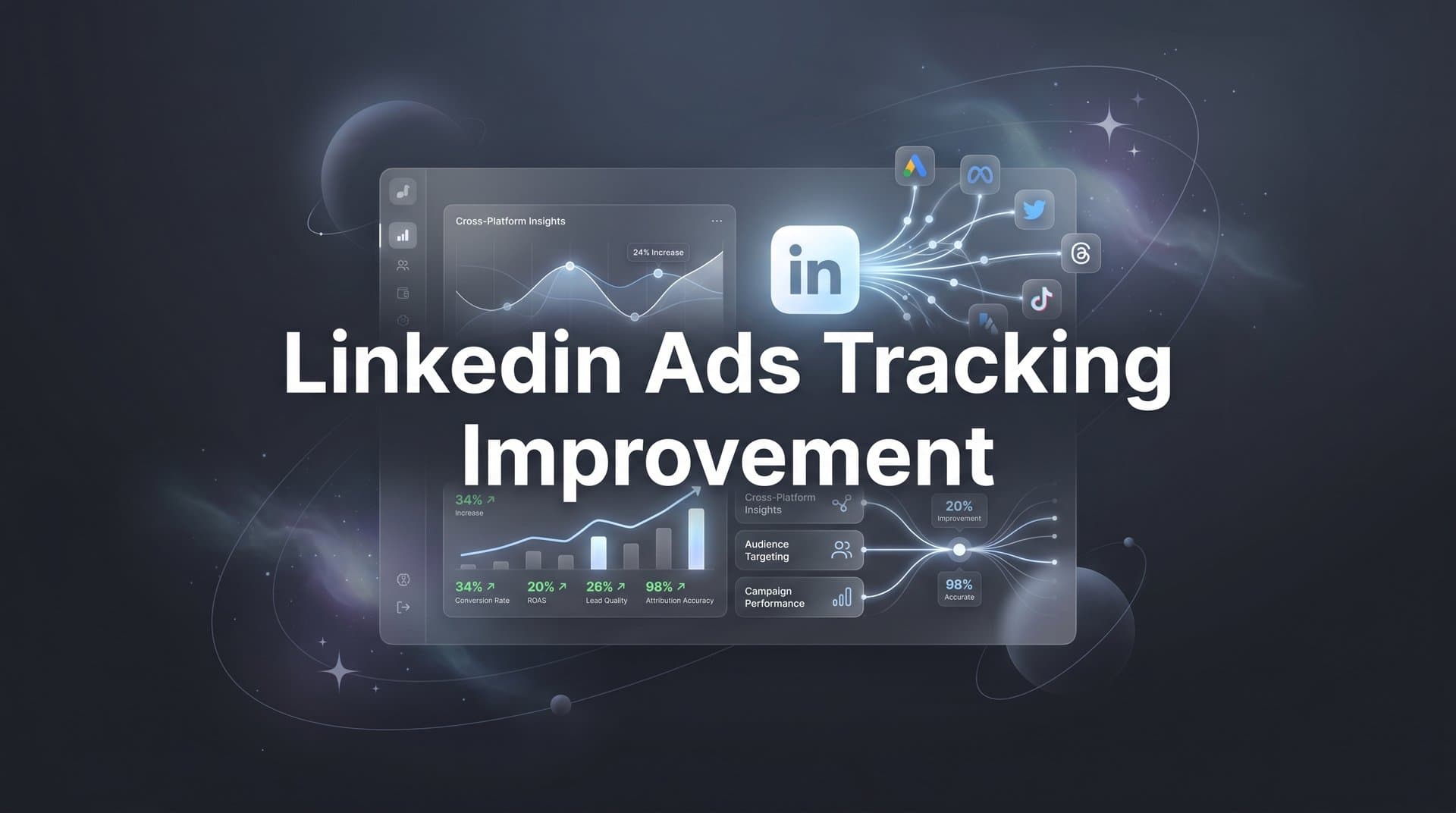
In this guide, you will walk through a clear, actionable process to improve LinkedIn ads tracking from the ground up. You will learn how to audit your current setup, implement server-side tracking, connect your CRM data to your ad performance, and use multi-touch attribution to understand the full customer journey.
Whether you are running lead gen forms, sponsored content, or conversation ads, these steps will help you move from guesswork to confident, data-driven decisions. By the end, you will have a tracking system that captures every meaningful touchpoint and ties your LinkedIn ad spend directly to pipeline and revenue.
Step 1: Audit Your Current LinkedIn Tracking Setup
Before you build anything new, you need to understand what you already have and where it is breaking down. A tracking audit is the foundation of every LinkedIn ads tracking improvement effort, and it is often where teams discover the biggest gaps.
Start with your LinkedIn Insight Tag. Open LinkedIn Campaign Manager, navigate to Account Assets, and verify that the Insight Tag is installed correctly on your website. More importantly, confirm that it is firing on every page that matters: your landing pages, thank you pages, pricing page, and any other high-intent destinations where prospects interact with your brand.
Use browser developer tools or a tag auditing extension like Tag Assistant to watch the pixel fire in real time as you navigate through your site. If the tag is missing from key pages or firing inconsistently, you are already working with incomplete data.
Next, review your existing conversion actions inside Campaign Manager. This is where many teams find a significant mismatch. You might have conversion events set up for page views or generic form submissions, but those metrics rarely tell you anything meaningful about business outcomes. Ask yourself: are you tracking demo bookings? Are you capturing contact form completions that route to your sales team? If you need a deeper walkthrough on setting up these events, our guide on how to track LinkedIn ads conversions covers the process in detail.
Document every conversion event you currently have and map each one to an actual business goal. If a conversion event does not connect to pipeline, revenue, or a qualified lead signal, it is probably creating noise rather than insight.
Then go deeper and identify your blind spots. Many teams track top-of-funnel events like lead form fills but miss the downstream signals that actually matter: demo completions, opportunities created in the CRM, or closed-won deals. These gaps mean you are optimizing LinkedIn campaigns based on incomplete information.
One common pitfall is that teams set up tracking once during a campaign launch and never revisit it. Site redesigns, CMS migrations, and new landing page builds frequently break existing pixels and conversion events. Build a habit of auditing your LinkedIn tracking setup at least quarterly, and always verify tracking after any significant website change.
By the end of this audit, you should have a clear picture of what is working, what is broken, and what is simply missing. That list becomes your roadmap for everything that follows.
Step 2: Implement Server-Side Tracking for Reliable Data Collection
Once you know where your tracking gaps are, the next priority is making sure the data you collect is actually reliable. And that is where server-side tracking becomes essential.
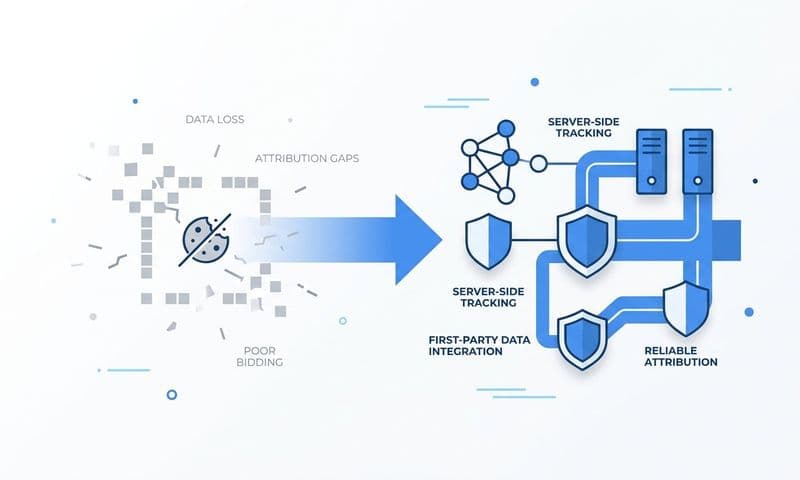
Here is the problem with browser-based tracking: it depends on a pixel firing inside a user's browser, and browsers are increasingly hostile to that process. Ad blockers prevent pixels from loading. iOS privacy updates limit cross-site tracking. Third-party cookie deprecation removes the identifiers that client-side pixels rely on. The result is that a meaningful portion of your LinkedIn conversions simply never get recorded, and you have no way of knowing exactly how much you are missing.
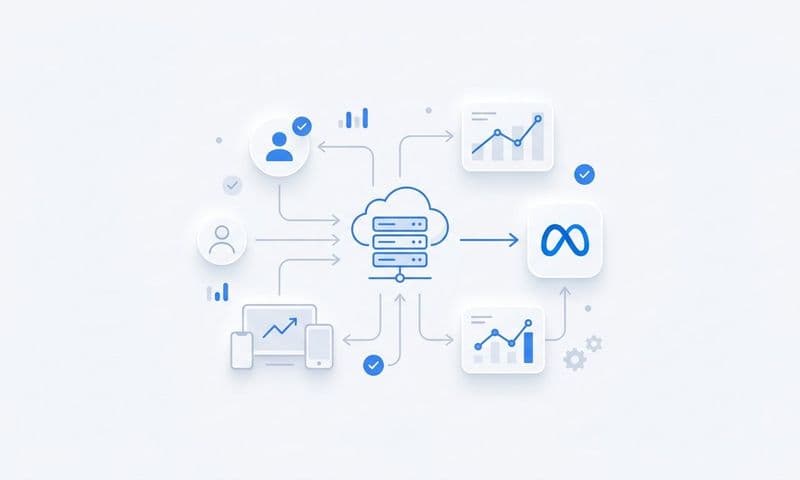
Server-side tracking solves this by changing where the data originates. Instead of relying on a pixel in the user's browser, your server sends conversion data directly to LinkedIn's Conversions API (CAPI). The data travels from your backend to LinkedIn's systems, completely bypassing browser-level restrictions. Ad blockers cannot intercept it. Cookie limitations do not apply. Leveraging first-party data tracking for ads ensures the signal gets through regardless of browser restrictions.
Setting up server-side tracking with LinkedIn's CAPI involves a few key steps. First, you need to configure your server environment to capture the conversion events you want to track. This typically means identifying the server-side events that correspond to your key conversion actions, such as a form submission confirmed on the backend or a demo booking recorded in your scheduling tool.
Next, you map those events to LinkedIn's conversion schema and establish the data flow between your backend and LinkedIn's API endpoint. LinkedIn requires specific parameters with each event, including user identifiers like email addresses or LinkedIn member IDs, along with event metadata like timestamp and conversion value where applicable.
Finally, validate the data flow. LinkedIn provides tools within Campaign Manager to verify that your CAPI events are being received correctly. Confirm that event counts look reasonable compared to your actual conversion volume, and watch for any error messages that indicate missing or malformed data.
The practical impact of getting this right is significant. Server-side tracking captures conversions that client-side pixels miss entirely, giving you a more complete and accurate dataset to work with. When your conversion numbers are closer to reality, your optimization decisions get sharper.
Cometly's server-side tracking integrates directly with LinkedIn to ensure every conversion event is captured and sent back accurately. Rather than building and maintaining a custom server-side implementation, Cometly handles the infrastructure so your team can focus on the insights, not the plumbing.
Step 3: Connect Your CRM to Close the Attribution Loop
Here is the critical gap that most LinkedIn advertisers live with for far too long: LinkedIn shows you leads, but your CRM shows you revenue. Without connecting the two, you are optimizing for the wrong outcomes.
Think about what that means in practice. Your LinkedIn campaigns might be generating plenty of form fills, but if those leads are not converting to qualified opportunities or closed deals, you are spending money on volume without visibility into quality. Conversely, a campaign that generates fewer but higher-value leads might look like a poor performer inside LinkedIn Campaign Manager when it is actually your best investment.
Connecting your CRM closes this loop. The goal is to map pipeline stages, deal values, and closed revenue back to the specific LinkedIn campaigns, ads, and audiences that influenced them.
Start with UTM parameters. Every LinkedIn ad should include properly structured UTM tags that carry campaign, source, medium, and content information. When a prospect clicks your ad and fills out a form, those UTM parameters should pass through the form and into the CRM record automatically. This gives you a source field on every lead that ties back to a specific LinkedIn campaign.
LinkedIn also provides its own click ID parameter, similar to Google's GCLID or Meta's FBCLID. Capturing this click ID and storing it in your CRM alongside the lead record enables even more precise attribution, particularly when used in combination with LinkedIn's CAPI for offline conversion tracking. Understanding how a dedicated LinkedIn ads tracking platform works can help you streamline this entire click-to-CRM data flow.
Offline conversion tracking is especially important in B2B contexts. A prospect might click a LinkedIn ad today, enter your CRM as a lead, and not become a closed deal for three months. Without a system that connects that original LinkedIn touchpoint to the eventual revenue event, you lose attribution entirely. LinkedIn's offline conversions feature lets you upload CRM data back to the platform so it can credit the original ad interaction.
This is where Cometly makes a meaningful difference. Cometly connects your ad platforms and CRM data so that revenue, pipeline value, and deal stages map back to the exact LinkedIn ad, campaign, or audience that drove them. Instead of looking at leads in one place and revenue in another, you see the full picture in one unified view. That is the foundation of making smart budget decisions on LinkedIn.
Step 4: Move Beyond Last-Click with Multi-Touch Attribution
LinkedIn's default reporting is built around last-touch attribution. That means the conversion credit goes to the final LinkedIn interaction before someone converts. The problem is that in B2B, the buying journey rarely works that way.
A prospect might see your sponsored content three times over two weeks before clicking a retargeting ad and booking a demo. Under last-click attribution, only that final retargeting ad gets credit. The awareness campaigns that built familiarity and trust are invisible in the data, which can lead you to cut exactly the campaigns that are doing the most important work.
Multi-touch attribution distributes credit across all the touchpoints that contributed to a conversion. There are several models to choose from, and each has a different use case.
Linear attribution: Distributes credit equally across all touchpoints in the customer journey. This is a good starting point when you want a balanced view of every interaction that contributed to a conversion, without overweighting any single step.
Time-decay attribution: Gives more credit to touchpoints that occurred closer to the conversion event. This model works well for shorter sales cycles where recent interactions are genuinely more influential.
Position-based attribution: Assigns the most credit to the first and last touchpoints, with the remaining credit distributed among interactions in between. This model is useful when you want to understand both what initiated the journey and what closed it, while still acknowledging the middle.
For LinkedIn specifically, multi-touch attribution is valuable because LinkedIn campaigns often play an awareness and consideration role. They introduce your brand, build credibility, and keep you top of mind during a long evaluation process. That contribution does not show up in last-click data, but it is real and it matters. If you run campaigns across multiple platforms, understanding how cross-platform attribution conflicts arise will help you avoid double-counting conversions.
When choosing a model, consider your average sales cycle length and the number of touchpoints your typical buyer goes through. Longer cycles with many interactions benefit from models that distribute credit more broadly. Shorter cycles might work fine with time-decay.
Cometly's multi-touch attribution lets you compare models side by side so you can see how LinkedIn contributes at every stage of the funnel, not just at the moment of conversion. That visibility changes how you evaluate campaign performance and where you allocate budget.
Step 5: Send Enriched Conversion Data Back to LinkedIn's Algorithm
Here is something many LinkedIn advertisers do not fully appreciate: the quality of the conversion signals you send to LinkedIn directly determines how well LinkedIn's algorithm performs for you. Better data means better targeting, lower cost per result, and more efficient spend over time.
LinkedIn's ad algorithm optimizes toward the conversion signals it receives. If you are only sending raw form fills back to LinkedIn, the algorithm learns to find more people who fill out forms. That sounds reasonable until you realize that not all form fills are equal. Some become qualified opportunities. Most do not.
When you send enriched, revenue-qualified conversion events back to LinkedIn instead, the algorithm learns to find prospects who look like your actual customers, not just anyone willing to click a button. This shift from optimizing for volume to optimizing for quality is one of the highest-leverage improvements you can make. The same principle applies across platforms — learning how ad tracking tools help you scale ads using accurate data reinforces why signal quality matters everywhere.
In practice, this means syncing downstream conversion events from your CRM back to LinkedIn. Instead of only sending "lead form submitted," you send signals like "qualified lead," "opportunity created," or "closed-won deal." Each of these signals carries more information about what a high-value prospect looks like, and LinkedIn's algorithm uses that information to refine its targeting.
The setup requires a connection between your CRM and LinkedIn's Conversions API so that as deals progress through your pipeline, the relevant conversion events are automatically sent back to LinkedIn with the appropriate attribution data attached.
The difference in outcomes can be substantial. Campaigns optimized toward revenue-qualified signals tend to attract higher-intent prospects, which improves not just conversion rates but the downstream quality of leads entering your sales pipeline.
Cometly's Conversion Sync feature automates this entire process. It sends enriched conversion data back to LinkedIn and other ad platforms continuously, so your campaigns are always optimizing toward your best customers rather than your most recent form fills. You set it up once, and the feedback loop runs on its own.
Step 6: Build a Reporting Dashboard That Ties LinkedIn Spend to Revenue
All of the tracking infrastructure you have built so far only creates value if you can actually see and act on the data. That requires a reporting setup that goes beyond what LinkedIn Campaign Manager offers by default.
LinkedIn's native reporting is useful for platform-level metrics: impressions, clicks, click-through rates, and conversion counts as LinkedIn defines them. But it does not show you cost per qualified lead, pipeline generated, or revenue attributed. For B2B companies with longer funnels, those are the numbers that actually matter.
Start by defining the metrics your dashboard needs to include. At a minimum, you want to track cost per qualified lead, cost per opportunity, pipeline value generated, revenue attributed to LinkedIn, and true return on ad spend (ROAS) calculated against actual closed revenue rather than reported conversions. If you also run campaigns on other channels, understanding Google Ads attribution tracking alongside LinkedIn helps you build a holistic cross-channel view.
Next, think about segmentation. A good LinkedIn reporting dashboard lets you slice performance by campaign type, audience segment, ad creative, and funnel stage. This level of detail reveals patterns that aggregate numbers hide. You might find that one audience segment generates a high volume of leads but a low close rate, while another segment generates fewer leads that close at a much higher rate. Without segmented reporting, you would never see that distinction.
Cadence matters too. Build a weekly review rhythm to catch underperforming campaigns early, before they drain budget. Use monthly reviews to evaluate broader trends, assess budget allocation across campaigns, and identify creative fatigue. Companies running SaaS LinkedIn ads especially benefit from this disciplined cadence given their typically longer sales cycles.
Cometly's analytics dashboard consolidates LinkedIn data alongside your other ad platforms into a single, revenue-focused view. Instead of toggling between Campaign Manager, your CRM, and a spreadsheet, you see everything in one place: ad performance, pipeline contribution, and revenue attribution across every channel. That unified view is what makes confident budget decisions possible.
Putting It All Together: Your LinkedIn Tracking Improvement Checklist
Improving your LinkedIn ads tracking is a process that builds on itself. Each step you complete gives you a clearer, more accurate picture of what is actually driving pipeline and revenue from your campaigns.
Use this checklist to stay on track as you work through the process:
1. Audit and fix your Insight Tag and conversion events so you are measuring what actually matters.
2. Implement server-side tracking via LinkedIn's Conversions API to capture the conversions that browser-based pixels miss.
3. Connect your CRM so you can attribute revenue, not just leads, back to specific LinkedIn campaigns and ads.
4. Apply multi-touch attribution to see LinkedIn's full-funnel impact, including the awareness and consideration work that last-click models ignore.
5. Send enriched conversion data back to LinkedIn so its algorithm optimizes toward your best customers, not just your most recent form fills.
6. Build a revenue-focused reporting dashboard and review it on a consistent cadence.
With the right tracking infrastructure in place, you stop guessing and start scaling with confidence. You know which campaigns are generating real pipeline. You know which audiences are worth paying more to reach. And you know exactly where to reallocate budget when something is not performing.
Platforms like Cometly make this entire process faster and more accurate by connecting your ad platforms, CRM, and website into one unified attribution system. The result is better data, smarter budget decisions, and more revenue from every LinkedIn dollar you spend.
Ready to build that kind of clarity into your LinkedIn advertising? Get your free demo today and start capturing every touchpoint to maximize your conversions.