You've just wrapped up a campaign review meeting. The data on your screen is 48 hours old. You're making budget decisions, shifting spend, pausing ad sets, and scaling what looks like a winner. But here's the problem: by the time that data reached your dashboard, the campaign landscape had already changed. Money was spent. Opportunities were missed. And the ad platform's algorithm was optimizing against signals that no longer reflected reality.
This is the daily reality for many growth marketers running paid campaigns without live conversion tracking. And for B2B SaaS teams managing complex funnels with multiple touchpoints, the cost of that lag is not just frustrating. It is measurable in wasted budget and missed pipeline.
Live conversion tracking changes the equation entirely. Instead of reacting to what happened yesterday, you see what is happening right now: which ads are driving form fills, which campaigns are generating qualified leads, and which conversion events are moving through your pipeline in real time. That shift from reactive to proactive is not a minor upgrade. It is a fundamental change in how growth teams operate.
This article walks through everything you need to understand about live conversion tracking: why delayed data is more costly than most teams realize, how real-time tracking actually works under the hood, how to act on live signals to make faster campaign decisions, and how to connect those signals all the way to closed-won revenue. Let's get into it.
Why Delayed Conversion Data Costs You More Than You Think
There is a window of time between when a conversion happens and when a marketer sees it in their reporting dashboard. Depending on your setup, that window could be a few hours. It could be a full day. For some teams relying on manual exports or weekly reporting cycles, it could be longer. And inside that window, budget keeps flowing.
Think about what happens in practice. A campaign starts underperforming. Conversion rates drop. Cost per lead climbs. But because your data is delayed, you do not see it yet. You are still allocating budget based on last week's numbers, which looked fine. By the time the problem surfaces in your dashboard, you have already overspent on a campaign that stopped working days ago.
The reverse is equally damaging. A new ad creative starts performing well. Conversions are coming in. But because you cannot see it in real time, you do not scale it. A competitor running live conversion tracking spots a similar opportunity in their data and scales their budget that same day. You find out two days later that you had a winner sitting there, underserved.
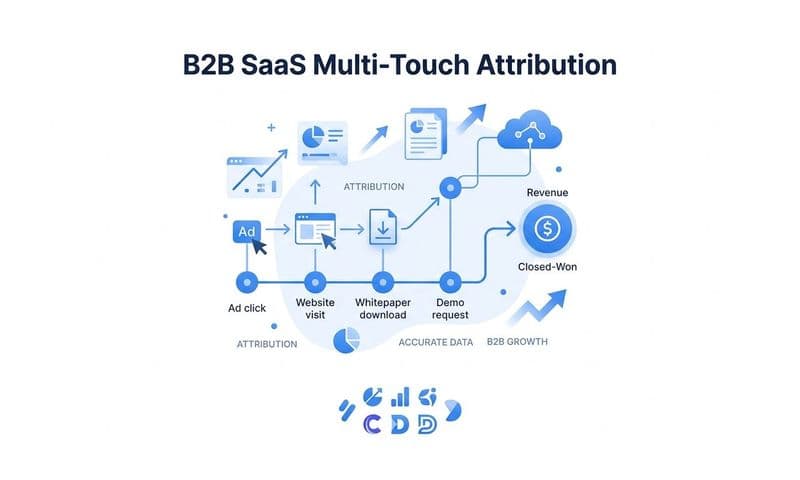
For B2B SaaS teams specifically, this problem is compounded by the nature of the buying cycle. A single conversion event rarely tells the whole story. Prospects interact with multiple ads, visit your site several times, attend a webinar, and then request a demo weeks later. When your conversion data is delayed, it becomes nearly impossible to connect those early-funnel touchpoints to the downstream pipeline activity that actually matters. You end up optimizing for surface-level signals while the real conversion story plays out invisibly in your CRM.
There is also a third dimension that many teams underestimate: the impact on ad platform algorithms. Meta, Google, and LinkedIn all rely on conversion signals to optimize bidding and targeting. These algorithms are designed to work with fresh data. When you feed them stale conversion events, their ability to find the right audiences and adjust bids in real time degrades. The algorithm is essentially flying blind, and you are paying for that inefficiency with every impression.
The gap between a conversion happening and a marketer acting on it is not just an analytics inconvenience. It is a structural disadvantage that compounds over time, eroding campaign efficiency and making it harder to scale what actually works.
Defining Real-Time Conversion Visibility
Live conversion tracking refers to the continuous, real-time capture and reporting of conversion events as they occur. Not batched. Not delayed. Not aggregated at the end of the day. Each event is captured, processed, and surfaced in your reporting the moment it happens.
For a B2B SaaS team, those events might include a form fill on a landing page, a demo request, a free trial signup, a product qualified action like a user completing onboarding, a sales stage update in your CRM, or a closed-won deal tied back to its original ad source. Live conversion tracking means all of these events are visible as they happen, not in a report you pull on Friday afternoon.
It is worth distinguishing this from standard pixel-based tracking, which is how most teams have historically measured conversions. A browser pixel fires when a user lands on a confirmation page or triggers a specific action in their browser. That signal then travels from the user's browser to the ad platform. The problem is that this process is vulnerable to disruption at every step. Ad blockers prevent the pixel from firing. iOS privacy restrictions limit tracking across apps and browsers. Browser-side delays mean the signal arrives late, if it arrives at all.
Server-side tracking and Conversion APIs solve this problem by moving the event capture from the user's browser to your server. When a conversion happens, your server sends the event data directly to the ad platform's API without relying on the browser as an intermediary. This means the signal is faster, more reliable, and significantly more complete. Meta's Conversion API and Google's Enhanced Conversions are the most widely used implementations of this approach.
The distinction matters because server-side tracking is what makes true live conversion tracking possible. Browser pixels were never designed for real-time precision. They were designed for convenience. Server-side APIs are designed for accuracy and speed, which is exactly what modern B2B SaaS campaigns require.
For growth teams, the practical implication is clear: if your conversion tracking still relies entirely on browser pixels, you are working with an incomplete and delayed picture of your campaign performance. Live conversion tracking requires a server-side foundation.
The Technical Foundation: How Real-Time Tracking Works
Understanding the mechanics of live conversion tracking helps you make better decisions about your setup and diagnose problems when they arise. The core concept is straightforward: instead of relying on a user's browser to fire a tracking pixel, your server captures the conversion event and sends it directly to the ad platform via an API connection.
Here is how that flow works in practice. A user clicks on your ad and lands on your website. They fill out a demo request form. Your server receives that form submission, processes it, and simultaneously sends a conversion event to Meta's Conversion API or Google's Enhanced Conversions endpoint. That event includes enriched data: the user's hashed email, the conversion type, the timestamp, and the value if applicable. The ad platform receives this signal within seconds and uses it to update its optimization models.
One technical challenge that comes with running both pixel and server-side tracking simultaneously is deduplication. If your browser pixel fires when the user hits the confirmation page and your server also sends the same event via API, the ad platform could count it as two conversions. Deduplication logic, typically implemented using a unique event ID that is shared between both signals, ensures that only one conversion is recorded even when both signals arrive. Getting this right is critical for maintaining data accuracy.
UTM parameters are the other essential piece of the live conversion tracking puzzle. Every ad click should carry UTM parameters that identify the campaign, ad set, and creative that generated the click. When a conversion happens, those UTM values are captured alongside the conversion event, creating a direct link between the conversion and the specific ad that drove it. This is what allows you to attribute a closed-won deal back to the LinkedIn ad a prospect clicked on three weeks earlier.
First-party data enrichment adds another layer of value. When your server sends a conversion event, it can include additional context that a browser pixel cannot: CRM data, customer attributes, deal values, and pipeline stage information. This enriched signal gives ad platform algorithms a much richer picture of what a high-quality conversion looks like, which in turn improves their ability to find similar users and optimize bidding toward outcomes that actually matter to your business.
The combination of server-side delivery, deduplication, UTM attribution, and first-party enrichment is what separates genuine live conversion tracking from a basic pixel setup. Each element plays a specific role in ensuring that your conversion data is complete, accurate, and actionable in real time.
From Conversion Signal to Campaign Decision: Acting on Real-Time Data
Capturing live conversion data is only valuable if it changes how you make decisions. The real payoff of real-time visibility is the ability to act on what you see the same day it happens, rather than waiting for a weekly reporting cycle to tell you what already occurred.
Consider budget reallocation. With delayed data, most teams review performance weekly and make adjustments based on aggregated results. With live conversion tracking, you can see which campaigns are generating conversions today and shift budget toward them before the day ends. That kind of agility compounds over time. Campaigns that are working get more fuel faster. Campaigns that are not working get paused before they drain more budget.
Real-time attribution data also changes how you evaluate channel performance. When you can see conversions as they happen and compare them across attribution models, patterns emerge that weekly reports often obscure. A channel that looks weak on a last-click basis might be a significant driver of first-touch conversions. A campaign that appears to have a low conversion rate might be generating the highest-value pipeline when you look at revenue attribution rather than lead volume. Live data makes these comparisons possible in near real time, not in a retrospective analysis two weeks later.
There is also a direct impact on ad platform performance. When you feed enriched, real-time conversion events back to Meta or Google, their algorithms update their optimization models faster. This means the platform can adjust bids, refine audience targeting, and shift delivery toward users who are more likely to convert, all based on fresh signals rather than stale data. Growth teams that prioritize real-time signal delivery often find that their campaigns become more efficient over time as the algorithm builds a more accurate picture of what a high-quality conversion looks like.
The practical workflow looks like this: live conversion data surfaces in your dashboard, you identify which campaigns are performing and which are not, you adjust budgets and bids, and you simultaneously push updated conversion signals back to the ad platforms. That feedback loop, running continuously rather than weekly, is what separates teams that scale efficiently from those that are always catching up to what already happened.
Acting on real-time data also reduces the emotional and organizational drag that comes with uncertainty. When your team can see what is working right now, decisions become faster and more confident. You are not debating whether last week's numbers are still relevant. You know what is happening today.
Connecting Live Conversions to Pipeline and Revenue
For B2B SaaS teams, a form fill or demo request is not a conversion in any meaningful business sense. It is the beginning of a process that may take weeks or months to result in actual revenue. Live conversion tracking that stops at the top of the funnel is only telling half the story, and often the less important half.
The more valuable version of live conversion tracking extends through the entire customer journey: from the first ad click through the demo, the trial, the sales cycle, and ultimately to closed-won revenue. This requires connecting your ad platform data with your CRM so that every pipeline stage update and deal closure can be traced back to its original ad source.
Revenue attribution is the concept that makes this possible. Instead of measuring marketing performance in terms of cost per lead, revenue attribution connects each deal's value back to the specific campaigns, channels, and touchpoints that influenced it. This means you can calculate a true return on ad spend based on actual revenue generated, not a proxy metric that may or may not correlate with business outcomes.
Many B2B SaaS teams operate with a persistent disconnect between what marketing reports and what sales sees. Marketing points to lead volume and cost per acquisition. Sales points to pipeline quality and close rates. These two views of the same funnel often tell completely different stories, and the gap between them creates organizational friction and poor resource allocation decisions.
A single source of truth that combines ad platform data, CRM pipeline data, and real-time conversion events eliminates that disconnect. When marketing and sales are looking at the same data, aligned on the same definitions of what counts as a conversion and what it is worth, the entire revenue operation becomes more coherent. Budget decisions are made based on what is actually driving revenue, not what looks good in a marketing dashboard that sales has never trusted.
This end-to-end view is the ultimate goal of live conversion tracking for B2B SaaS. Real-time visibility into top-of-funnel events is valuable. Real-time visibility into how those events translate to pipeline and revenue is transformative.
How Cometly Powers Live Conversion Tracking for B2B SaaS
Cometly is built specifically for B2B SaaS teams that need live conversion tracking to extend beyond the ad click and connect all the way to closed-won revenue. The platform captures every touchpoint in real time, from the first ad interaction through CRM events, giving its AI a complete and continuously updated view of the customer journey as it unfolds.
At the foundation is Cometly's server-side Conversion API integration, which sends real-time, first-party conversion events directly to Meta and Google without relying on browser pixels. This means your conversion signals arrive faster, with richer data, and without the data loss that comes from ad blockers or iOS tracking restrictions. The ad platforms receive better signals, and their algorithms optimize more effectively as a result.
Cometly also handles the attribution complexity that makes B2B SaaS tracking particularly challenging. Because buyer journeys involve multiple touchpoints across weeks, Cometly's multi-touch attribution models give you a clear view of which channels and campaigns are genuinely influencing conversion at each stage of the funnel. You can compare attribution models side by side and make budget decisions based on a complete picture rather than a single-touch approximation.
The AI layer is where Cometly turns live conversion data into actionable recommendations. Rather than presenting you with a dashboard full of numbers and leaving the interpretation to you, Cometly's AI analyzes live conversion data across all your channels to surface which ads and campaigns are driving actual revenue. It identifies patterns that are difficult to spot manually and provides specific recommendations for scaling what is working and cutting what is not.
Cometly's integration with Stripe and CRM platforms means that revenue attribution is built into the platform natively. Closed-won deals flow back into Cometly and are matched to their original ad sources, giving you a true return on ad spend calculation based on real revenue rather than estimated lead values. Marketing and sales finally see the same numbers, drawn from the same source.
For growth teams that have been managing attribution manually or relying on ad platform reporting that only shows last-click data, Cometly provides the unified, real-time view that makes confident scaling possible.
Putting It All Together: Building a Real-Time Conversion Strategy
Live conversion tracking is only as valuable as the decisions it enables. The technology matters, but the real advantage comes from building a system where real-time conversion data flows continuously from ad click to revenue, surfaces in a way that is immediately actionable, and feeds back into the ad platforms that are optimizing your campaigns.
The teams that scale paid media efficiently are not the ones with the biggest budgets. They are the ones with the clearest picture of what is working right now. That clarity comes from combining server-side tracking for reliable signal delivery, multi-touch attribution for accurate credit assignment, and AI-driven analysis that turns data into decisions rather than just reports.
If your current setup relies on delayed pixel data, last-click attribution, and weekly reporting cycles, you are operating with a structural disadvantage that compounds with every dollar you spend. The gap between when conversions happen and when you act on them is where budget gets wasted and growth opportunities get missed.
The path forward is connecting every piece of your conversion data into a single, real-time view: ad platforms, CRM, revenue data, and the attribution layer that ties them all together. That is the foundation of a paid media strategy that can scale with confidence rather than guesswork.
Ready to see what your campaigns are actually driving in real time? Get your free demo and discover how Cometly brings live conversion tracking, multi-touch attribution, and AI-powered insights together in one platform built for B2B SaaS growth teams.