
Finding the right marketing analytics software comes down to more than features. It comes down to whether the subscription plan actually fits your budget, team size, and growth trajectory. Some platforms offer generous free tiers that work for startups. Others bundle enterprise features at mid-tier prices. A few lock essential capabilities behind premium plans that may not make sense for your stage.
This guide breaks down nine marketing analytics platforms by their subscription structures, highlighting what you actually get at each price point and which plan delivers the best value for different business needs. Whether you need multi-touch attribution, real-time reporting, or AI-powered optimization, understanding subscription tiers helps you avoid overpaying for features you will not use or getting stuck without capabilities you need.
1. Cometly
Best for: Marketers running multi-channel paid campaigns who need accurate revenue attribution and AI-powered optimization.
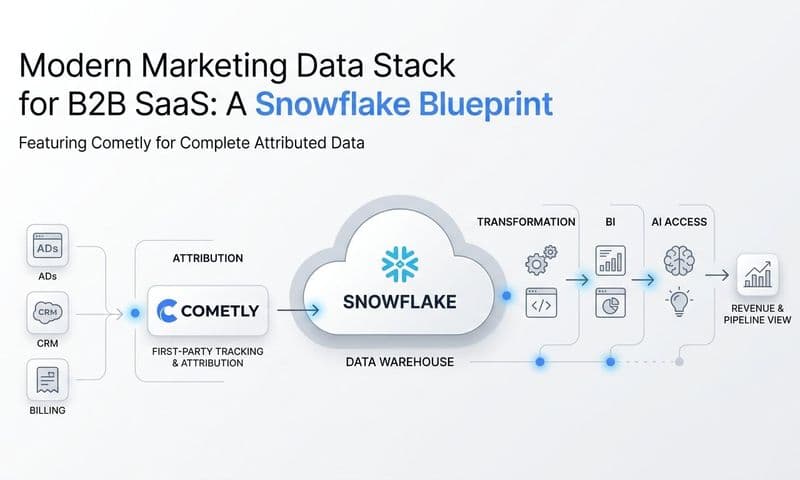
Cometly is a marketing attribution and analytics platform that tracks the complete customer journey from ad click to revenue, connecting ad platforms, CRM, and website data in real time.
 9 Best Marketing Analytics Software Subscription Plans in 2026
Where This Tool Shines
Cometly excels at solving the attribution puzzle that plagues most marketing teams. Instead of relying on platform-reported conversions that miss the full picture, it captures every touchpoint across your entire funnel. This means you can see which ads, channels, and campaigns actually drive revenue, not just clicks or form fills.
The AI-powered recommendations set it apart from traditional analytics tools. Rather than just showing you data, Cometly analyzes your campaigns and suggests specific optimizations. This turns insights into action without requiring a data science team.
Key Features
Multi-Touch Attribution: Track customer journeys across all marketing channels to understand which touchpoints contribute to conversions.
AI-Powered Optimization: Get specific recommendations on which ads and campaigns to scale based on actual revenue data.
Server-Side Tracking: Bypass browser limitations and ad blockers to capture more accurate conversion data.
Conversion Sync: Feed enriched conversion data back to Meta, Google, and other ad platforms to improve their AI targeting.
Real-Time Dashboard: Monitor campaign performance and attribution data as it happens, not hours or days later.
Best For
Cometly works best for marketing teams and agencies running significant paid advertising budgets across multiple platforms. If you are spending on Meta, Google, TikTok, or other channels and need to prove which campaigns drive actual revenue, this platform delivers the clarity you need. It is particularly valuable for businesses with longer sales cycles where attribution matters more than last-click metrics.
Pricing
Subscription plans are based on your monthly ad spend and required features, with transparent pricing tiers that scale as your marketing grows. This approach means you pay for the value you are getting rather than arbitrary user seats.
2. Google Analytics 4
Best for: Businesses needing free, comprehensive website and app analytics with basic attribution capabilities.
Google Analytics 4 is Google's event-based analytics platform offering web and app measurement with machine learning insights.
 11 Best Marketing Analytics Tools to Track and Optimize Campaign Performance in 2026
Where This Tool Shines
GA4's biggest advantage is simple: it is free for most businesses. You get robust website analytics, basic conversion tracking, and audience insights without paying a dollar. For startups or small businesses just beginning to track their marketing, this removes the barrier to entry entirely.
The cross-platform tracking between web and app is genuinely useful if you have both. GA4 connects user behavior across devices and platforms, giving you a more complete picture than the old Universal Analytics ever could.
Key Features
Free Core Analytics: Track unlimited users and events at no cost for standard business needs.
Cross-Platform Tracking: Connect web and mobile app data to understand the complete user journey.
Predictive Metrics: Machine learning models predict purchase probability and churn likelihood for your audiences.
BigQuery Integration: Export raw data to Google's data warehouse for custom analysis and reporting.
Attribution Modeling: Compare different attribution models to understand how credit is assigned across touchpoints.
Best For
GA4 makes sense for businesses that need website analytics but do not have budget for paid tools. It works well if your marketing is primarily organic or if you are just starting with paid advertising. Content publishers, bloggers, and early-stage companies get tremendous value from the free tier.
Pricing
The standard GA4 platform is completely free. Google Analytics 360, the enterprise version, requires custom pricing and is designed for businesses processing millions of events daily with advanced support needs.
3. Mixpanel
Best for: Product teams tracking user behavior, engagement, and retention within web or mobile applications.
Mixpanel is a product analytics platform focused on user behavior tracking, funnel analysis, and retention metrics.
 9 Best Marketing Analytics Software Subscription Plans in 2026
Where This Tool Shines
Mixpanel excels at answering product questions that traditional marketing analytics tools miss. Which features do your most engaged users interact with? Where do users drop off in your onboarding flow? How does retention differ between user segments? These are the questions Mixpanel was built to answer.
The event-based tracking model gives you granular control over what you measure. Instead of just pageviews, you track specific actions like "clicked upgrade button" or "completed tutorial step three." This precision helps product teams optimize experiences based on actual behavior.
Key Features
Event-Based Tracking: Monitor specific user actions rather than just page loads for deeper behavioral insights.
Funnel Analysis: Identify exactly where users drop off in multi-step processes like signups or checkouts.
Cohort Analysis: Group users by behavior or acquisition date to track retention and engagement over time.
A/B Testing Integration: Connect experiment results directly to user behavior and conversion metrics.
Custom Dashboards: Build role-specific views that surface the metrics each team member needs.
Best For
Mixpanel is ideal for SaaS companies, mobile apps, and digital products where understanding in-app behavior matters more than marketing attribution. Product managers, growth teams, and UX designers get the most value from its behavior-focused analytics.
Pricing
The free tier includes up to 20 million events per month, which covers many early-stage products. Growth plans start around $20 monthly and scale based on event volume. Enterprise pricing is custom-quoted for high-volume needs.
4. HubSpot Marketing Hub
Best for: Teams wanting integrated marketing automation, CRM, and analytics in a single platform.
HubSpot Marketing Hub is an all-in-one marketing platform with built-in analytics, CRM integration, and campaign management tools.
 9 Best Marketing Analytics Software Subscription Plans in 2026
Where This Tool Shines
HubSpot's real strength is integration. Your email campaigns, landing pages, social posts, and CRM data all live in one system. This eliminates the data fragmentation that plagues teams using separate tools for each function. When everything connects natively, attribution becomes significantly easier.
The reporting is surprisingly robust for a platform that does so much else. Multi-touch attribution shows how different campaigns work together to drive conversions. Custom dashboards let you build views for executives, campaign managers, or content teams without exporting to spreadsheets.
Key Features
Integrated CRM Analytics: Connect marketing performance directly to sales pipeline and revenue data.
Multi-Touch Attribution: See how email, content, ads, and social work together to generate leads and customers.
Campaign Performance Tracking: Monitor ROI across all marketing activities from a single dashboard.
Email and Content Analytics: Track opens, clicks, page performance, and engagement metrics in real time.
Custom Reporting: Build tailored reports that answer specific business questions without technical skills.
Best For
HubSpot works best for B2B companies that need marketing automation alongside analytics. If you are running email campaigns, creating content, and managing leads, the integrated approach saves time and provides better visibility than stitching together separate tools.
Pricing
Starter tier begins at $20 monthly for basic features. Professional tier at $890 monthly unlocks advanced automation and reporting. Enterprise tier at $3,600 monthly adds sophisticated attribution, custom objects, and premium support.
5. Adobe Analytics
Best for: Enterprise organizations requiring advanced segmentation, real-time processing, and predictive analytics capabilities.
Adobe Analytics is an enterprise analytics solution offering advanced segmentation, real-time analysis, and predictive intelligence.
 9 Best AI Marketing Analytics Tools in 2026
Where This Tool Shines
Adobe Analytics handles data complexity that would overwhelm simpler platforms. If you are processing millions of events daily across dozens of properties, this system was built for that scale. The real-time processing means you can react to trends as they happen, not when reports generate overnight.
The predictive analytics and anomaly detection use machine learning to surface insights you might miss manually. The system flags unusual traffic patterns, conversion rate changes, or revenue anomalies automatically. For large organizations with complex data, this intelligence layer adds significant value.
Key Features
Advanced Segmentation: Create sophisticated audience segments based on behavior, demographics, and custom variables.
Real-Time Processing: Access and analyze data as it arrives without waiting for batch processing.
Predictive Analytics: Machine learning models identify trends and anomalies before they become obvious in reports.
Cross-Channel Collection: Gather data from web, mobile, IoT devices, and offline sources in a unified system.
Experience Cloud Integration: Connect seamlessly with other Adobe tools for content, advertising, and personalization.
Best For
Adobe Analytics makes sense for large enterprises with significant digital properties, high traffic volumes, and dedicated analytics teams. Retailers, media companies, and financial services firms with complex customer journeys get the most value from its advanced capabilities.
Pricing
Pricing is custom-quoted based on server call volume, required features, and contract terms. Expect enterprise-level investment that reflects the platform's sophisticated capabilities and support structure.
6. Amplitude
Best for: Product and growth teams optimizing user experiences through behavioral analytics and experimentation.
Amplitude is a behavioral analytics platform designed for product teams to understand user journeys and optimize experiences.
 9 Best Marketing Analytics Software Subscription Plans in 2026
Where This Tool Shines
Amplitude's behavioral cohort analysis reveals patterns that traditional analytics miss. You can group users by any combination of actions and properties, then track how those cohorts behave over time. This helps you understand which acquisition channels bring the most valuable users, not just the most users.
The user journey mapping visualizes actual paths people take through your product. Instead of assuming a linear funnel, you see the messy reality of how people actually navigate. This often reveals optimization opportunities that would stay hidden in standard funnel reports.
Key Features
Behavioral Cohorts: Group users by actions and attributes to analyze retention and engagement patterns.
Journey Mapping: Visualize the actual paths users take through your product rather than assumed funnels.
Experiment Tracking: Connect A/B tests to long-term metrics like retention and lifetime value.
Data Governance: Control data quality, taxonomy, and access across your organization.
SQL Access: Query your event data directly for custom analysis beyond the standard interface.
Best For
Amplitude serves product-led growth companies, consumer apps, and SaaS platforms where user behavior drives business results. Growth teams, product managers, and data analysts use it to make evidence-based decisions about features and experiences.
Pricing
Free tier supports up to 10 million events monthly, suitable for many growing products. Growth and Enterprise tiers use custom pricing based on event volume and required features.
7. Heap
Best for: Teams wanting automatic event capture without manual tracking implementation or engineering resources.
Heap is a digital insights platform with automatic event capture that eliminates manual tracking implementation.
 9 Best Marketing Analytics SaaS Tools and Their Pricing in 2026
Where This Tool Shines
Heap's automatic capture is genuinely different from other analytics platforms. Install one snippet and it tracks every click, pageview, form submission, and interaction automatically. No tagging plan. No waiting for engineering to instrument events. You can retroactively analyze behavior that happened before you knew to track it.
The session replay capability adds context that raw numbers cannot provide. When you see a conversion rate drop, you can watch actual sessions to understand what changed. This combination of quantitative data and qualitative observation speeds up troubleshooting significantly.
Key Features
Automatic Event Tracking: Capture all user interactions without manual implementation or code changes.
Retroactive Analysis: Define events after the fact and analyze historical data you did not explicitly track.
Session Replay: Watch recordings of actual user sessions to understand behavior beyond metrics.
Funnel and Path Analysis: Visualize conversion funnels and user journeys through your product.
Data Science Integrations: Export data to tools like Python, R, or SQL for advanced analysis.
Best For
Heap works well for teams without dedicated analytics engineering resources or those moving fast and unable to wait for tracking implementation. Startups, lean product teams, and growth marketers benefit most from the automatic approach.
Pricing
Free tier available for qualifying startups. Growth tier serves scaling teams with moderate event volumes. Pro and Premier tiers offer enterprise features, higher limits, and advanced support.
8. Kissmetrics
Best for: E-commerce and SaaS businesses focused on revenue attribution and understanding complete buyer journeys.
Kissmetrics is a customer analytics platform focused on revenue attribution and understanding the complete buyer journey.
Where This Tool Shines
Kissmetrics connects marketing activities directly to revenue in a way that feels more natural than many enterprise platforms. The customer journey visualization shows the actual sequence of touchpoints that led to each purchase, making it easier to understand what is working without diving into complex attribution models.
The cohort and funnel reports are built specifically for revenue analysis. You can track how different acquisition channels perform not just on conversion rate, but on customer lifetime value and retention. This helps you optimize for profit, not just volume.
Key Features
Revenue Tracking: Connect marketing activities directly to dollars earned, not just conversions.
Customer Journey Visualization: See the sequence of touchpoints that led each customer to purchase.
Cohort Reports: Compare customer groups by acquisition source, behavior, or time period.
Funnel Analysis: Identify where potential customers drop off in your sales process.
Email Campaign Tracking: Measure how email marketing contributes to revenue across the customer lifecycle.
Best For
Kissmetrics serves e-commerce businesses, subscription services, and SaaS companies where revenue attribution matters more than traffic metrics. Marketing teams that need to justify spend based on actual returns find its revenue focus particularly valuable.
Pricing
Silver tier starts around $299 monthly for growing businesses. Gold and Platinum tiers scale pricing based on traffic volume, feature requirements, and support needs.
9. Supermetrics
Best for: Marketers and agencies consolidating data from multiple marketing platforms into centralized reporting tools.
Supermetrics is a data integration platform that pulls marketing data from multiple sources into spreadsheets, BI tools, and data warehouses.
Where This Tool Shines
Supermetrics solves the data consolidation problem without requiring a data engineering team. Instead of logging into five different platforms to pull campaign performance, you connect them once and data flows automatically to Google Sheets, Excel, Looker, or your data warehouse.
The breadth of connectors is impressive. Over 70 marketing platforms means you can probably pull data from whatever tools you are using. This makes it particularly valuable for agencies managing multiple clients across different ad platforms and analytics tools.
Key Features
70+ Data Connectors: Pull data from major marketing platforms including Meta, Google, LinkedIn, TikTok, and more.
Automated Refresh: Schedule data updates so reports stay current without manual exports.
Spreadsheet Integration: Send data directly to Google Sheets or Excel for familiar analysis environments.
Data Warehouse Destinations: Load marketing data into BigQuery, Snowflake, or Redshift for advanced analysis.
Custom Metrics: Calculate combined metrics across platforms that individual tools cannot provide.
Best For
Supermetrics works best for agencies managing multiple clients, marketing teams using various ad platforms, or analysts building custom dashboards. If you spend significant time manually exporting and combining data from different sources, this tool eliminates that work.
Pricing
Plans start around $39 monthly for basic connector packages. Pricing scales based on the number of data sources, destinations, and whether you need data warehouse connectors. Enterprise plans accommodate large agencies with extensive integration needs.
Making the Right Choice
Choosing the right marketing analytics subscription depends on three factors: your current data volume, the depth of attribution you need, and how quickly you expect to scale.
For teams running paid campaigns across multiple platforms and needing accurate revenue attribution, Cometly offers AI-powered insights at transparent price points. The platform captures every touchpoint from ad click to revenue, feeds better data back to ad platforms, and provides specific optimization recommendations. This combination of attribution accuracy and actionable AI makes it particularly valuable for performance marketers who need to prove ROI and scale what works.
If you need free website analytics to start, Google Analytics 4 remains the standard. It handles basic tracking and attribution without cost, making it accessible for startups and small businesses. The limitation comes when you need deeper attribution or want to connect ad platform data with CRM revenue.
Product-focused teams often find Mixpanel or Amplitude deliver better value than enterprise solutions. Their event-based models and behavioral analysis tools answer product questions that traditional marketing analytics miss. The generous free tiers let you start tracking without budget approval.
Agencies juggling multiple clients may benefit most from Supermetrics or platforms with multi-account structures. The ability to consolidate data from dozens of sources into unified reports saves hours of manual work each week.
Before committing to an annual plan, take advantage of free trials to test whether the platform handles your specific data sources and reporting needs. Check whether essential features live in the tier you can afford or require enterprise pricing. Verify that the platform integrates with your existing tools without custom development.
The best subscription is one that grows with you without forcing expensive tier jumps every time you add a channel or team member. Look for transparent pricing that scales with your actual usage rather than arbitrary limits that penalize success.
Ready to elevate your marketing game with precision and confidence? Discover how Cometly's AI-driven recommendations can transform your ad strategy. Get your free demo today and start capturing every touchpoint to maximize your conversions.