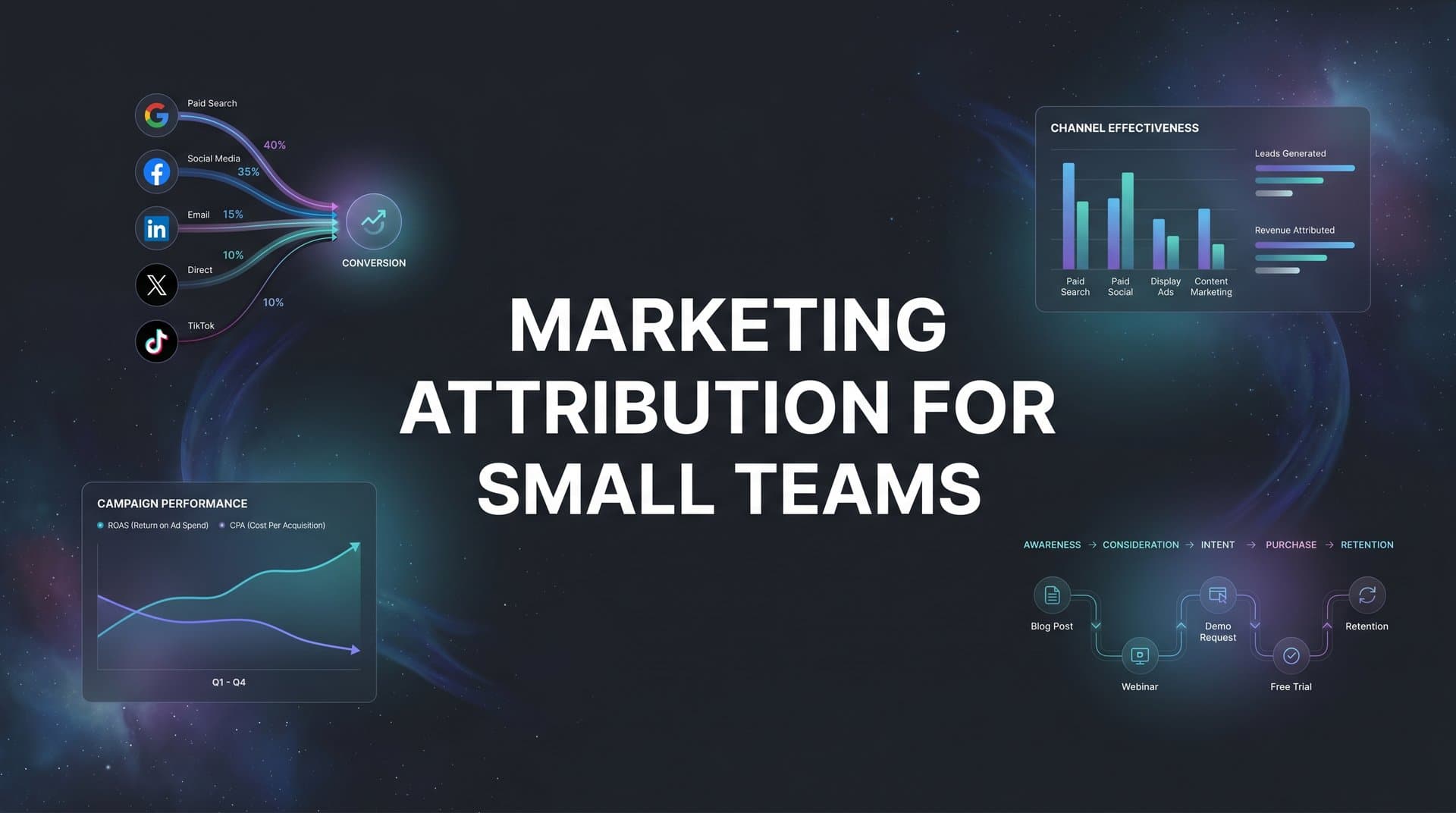
Small marketing teams face a unique paradox. You run campaigns across Meta, Google, TikTok, and email simultaneously, but you rarely have the bandwidth or budget for a dedicated analytics team to make sense of all that data. Without clear attribution, budget decisions become guesswork. You end up doubling down on channels that look good on the surface but may not actually drive revenue.
The good news is that marketing attribution does not require a large team or enterprise-level resources. With the right strategies and tools, even a lean team of two or three marketers can build a reliable attribution system that connects ad spend to actual revenue.
This article walks through seven practical strategies designed specifically for small teams that need accurate data without the complexity. Each strategy focuses on maximizing insight while minimizing the time and technical overhead required to maintain it. Whether you are a solo marketer juggling multiple ad platforms or a small agency team managing client campaigns, these approaches will help you track what matters, cut what does not work, and scale with confidence.
1. Consolidate Your Data Into a Single Source of Truth
The Challenge It Solves
When your attribution data lives in five different dashboards, you are not doing analysis. You are doing archaeology. Meta Ads Manager tells one story. Google Ads tells another. Your CRM tells a third. And none of them agree. For a small team, the time spent reconciling these discrepancies is time stolen from actually optimizing campaigns.
The Strategy Explained
The foundation of any working attribution system is a single platform where all your data lives together. That means pulling in ad performance data from every channel you run, connecting your website tracking, and integrating your CRM so you can see the full picture in one place.
When all your data flows into one attribution platform, you stop making decisions based on whichever dashboard you happened to open last. Instead, you make decisions based on a unified dashboard for marketing and sales attribution. Platforms like Cometly are built specifically to connect your ad platforms, CRM, and website into one analytics environment, so small teams can operate with the same clarity that larger teams get from dedicated data infrastructure.
Implementation Steps
1. Audit every data source you currently use: ad platforms, your website analytics tool, your CRM, and any email marketing platform you run campaigns through.
2. Choose a central attribution platform that supports native integrations with your existing tools so data flows automatically without manual exports.
3. Set a single platform as your reporting home base and commit to using it for all budget and performance decisions, even when individual platform dashboards show different numbers.
Pro Tips
Do not try to reconcile every discrepancy between your attribution platform and native ad platform dashboards. Some variance is expected due to attribution window differences. Focus on trends and relative performance rather than chasing perfect number alignment. Consistency matters more than precision when you are making directional budget calls.
2. Start With Last-Touch, Then Layer in Multi-Touch Models
The Challenge It Solves
Multi-touch attribution sounds powerful, and it is. But for a small team just getting started, jumping straight into linear or data-driven models before your data foundation is solid is a recipe for confusion. Analysis paralysis is a real risk when you have too many models to compare before you understand what you are looking at.
The Strategy Explained
Start with last-touch attribution. It is simple, easy to understand, and gives you an immediate baseline for which channels are closing conversions. Yes, it has limitations. It ignores earlier touchpoints that contributed to the journey. But it gives you a working foundation you can act on right away.
Once you have a few months of clean data and your team is comfortable reading attribution reports, layer in a multi-touch model alongside it. Run them in parallel and look for gaps. Where does last-touch undervalue a channel? Where does a multi-touch attribution model reveal that a top-of-funnel campaign is contributing to revenue even though it never gets the final click credit?
Modern platforms like Cometly make it straightforward to compare attribution models side by side, so you can graduate from last-touch to more sophisticated models without rebuilding your reporting from scratch.
Implementation Steps
1. Set up last-touch attribution across all your active channels and run it consistently for at least 60 to 90 days to establish a reliable baseline.
2. After your baseline is established, enable a secondary attribution model such as linear or time-decay and compare it against your last-touch data to identify discrepancies.
3. Use the gaps between models to inform budget reallocation decisions, particularly for channels that consistently appear in early touchpoints but rarely receive last-touch credit.
Pro Tips
Do not switch your primary attribution model every month. Consistency in how you measure performance is what allows you to spot genuine trends. Treat model comparisons as a periodic audit rather than a daily variable. When you do shift your primary model, document the change so you can contextualize any performance shifts that follow.
3. Use Server-Side Tracking to Close Data Gaps
The Challenge It Solves
Browser-based pixel tracking has become increasingly unreliable. Apple's App Tracking Transparency framework, browser-level cookie restrictions, and ad blockers all chip away at the conversion data your pixels can capture. For small teams, these gaps are dangerous because they create the illusion that campaigns are performing worse than they actually are, which can lead to cutting budget from channels that are genuinely working.
The Strategy Explained
Server-side tracking moves the data collection process from the user's browser to your server. Because the tracking happens on the backend, it is not affected by browser privacy settings, cookie blockers, or iOS restrictions. The result is a more complete and accurate picture of conversions across your campaigns.
This is not just about getting more data. It is about getting accurate data. When you address the problem of unreliable marketing performance data, your attribution platform can match conversion events to the correct ad touchpoints with much higher confidence. Cometly's server-side tracking is designed to capture exactly these conversions that browser-based methods miss, giving small teams a data foundation that holds up even as privacy restrictions continue to tighten.
Implementation Steps
1. Audit your current tracking setup to identify where you are relying solely on browser-based pixels, particularly for high-value conversion events like purchases, form submissions, and sign-ups.
2. Implement server-side tracking for your most critical conversion events first, then expand to secondary events once the primary implementation is validated.
3. Compare your server-side conversion data against your pixel data to quantify the gap you were previously missing, and adjust your attribution baselines accordingly.
Pro Tips
Server-side tracking is not a one-time setup. As your tech stack evolves and you add new conversion points, revisit your tracking implementation to make sure new events are captured server-side from the start. Building this habit early prevents the data gaps from creeping back in as your campaigns scale.
4. Automate Conversion Syncing Back to Ad Platforms
The Challenge It Solves
Ad platforms like Meta and Google use machine learning to optimize targeting and bidding. But those algorithms are only as good as the conversion data you feed them. When your pixel data is incomplete due to privacy restrictions, the platform's AI is working with a distorted picture of who is actually converting. The result is suboptimal targeting, higher costs, and lower returns.
The Strategy Explained
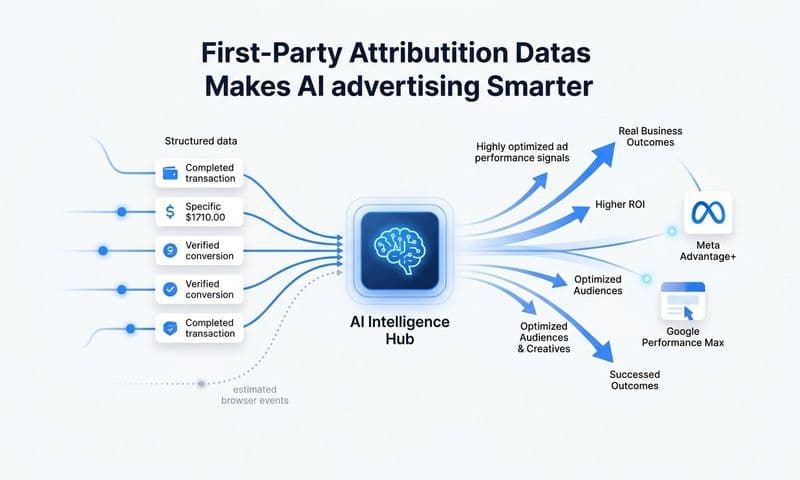
Conversion syncing solves this by automatically sending enriched conversion data from your attribution platform back to Meta, Google, and other ad channels. Instead of relying solely on the platform's native pixel, you are supplementing it with server-side conversion events that include richer data and cover the conversions the pixel missed.
This matters enormously for small teams because it means the ad platform's optimization algorithm is working harder for you without any additional manual effort on your part. Choosing the right tracking software for performance marketing is critical here. Cometly's Conversion Sync automates this process, sending enriched events back to Meta, Google, and more so their algorithms can optimize toward your actual revenue outcomes rather than incomplete proxy signals.
Implementation Steps
1. Identify the conversion events that matter most to your business outcomes, such as qualified leads, trials started, or purchases, and prioritize syncing those first.
2. Connect your attribution platform to each ad channel using their respective conversion API integrations, and verify that events are being received and matched correctly within each platform's reporting.
3. Monitor your campaign performance over the following weeks after enabling conversion syncing, watching for improvements in cost per result and audience quality as the platform algorithms recalibrate.
Pro Tips
The quality of the data you sync matters as much as the volume. Include customer identifiers like hashed email addresses where possible, as these improve the platform's ability to match conversion events to the right users and improve audience modeling for future campaigns.
5. Build a Weekly Attribution Review That Takes 30 Minutes
The Challenge It Solves
Attribution data only creates value when it drives decisions. Many small teams collect data consistently but review it inconsistently, which means insights pile up without ever translating into budget changes. Without a regular review rhythm, attribution becomes a reporting exercise rather than a decision-making tool.
The Strategy Explained
The fix is not more data. It is a structured weekly review habit with a fixed agenda that takes no more than 30 minutes. The goal is to answer three questions every week: Which channels are driving the most revenue? Which campaigns have cost efficiency that is trending in the wrong direction? And what is one budget or creative change to make before next week?
Keeping the review short and agenda-driven prevents it from turning into an open-ended analysis session that consumes half your day. Applying strategies for effective marketing measurement ensures that pulling these answers should take minutes, not hours. The discipline is in making at least one concrete decision at the end of every review, even a small one, so the habit stays connected to outcomes.
Implementation Steps
1. Block a recurring 30-minute slot on your calendar each week, ideally at the same time, so the review becomes a non-negotiable part of your workflow rather than something you get to when time allows.
2. Create a simple review template with three to five fixed questions you answer each week, such as top revenue-driving channel, worst cost-per-result campaign, and one optimization action to take.
3. Document your decisions and the reasoning behind them in a shared log so you can track whether your attribution-driven changes are producing the expected results over time.
Pro Tips
Resist the temptation to expand the review scope every time you have more time available. The power of this habit comes from its consistency and brevity. If you find yourself wanting to dig deeper into a specific question, schedule a separate focused session for it rather than letting it bleed into your weekly review.
6. Let AI Surface Insights Instead of Digging for Them
The Challenge It Solves
Small teams cannot afford to spend hours building custom reports or manually cross-referencing data to find optimization opportunities. The time cost of deep manual analysis is simply too high when you are also responsible for campaign management, creative, and strategy. The result is that many insights never get acted on because they take too long to find.
The Strategy Explained
AI-powered attribution tools flip this dynamic. Instead of you digging through data to find patterns, the AI surfaces recommendations proactively. Which campaigns are underperforming relative to their budget? Which audience segments are converting at a higher rate? These are questions that used to require hours of manual analysis. Leveraging tools for data-driven marketing strategies means the answers come to you.
Conversational AI tools take this even further. Rather than navigating dashboards and building custom reports, you can ask plain-language questions about your data and get immediate answers. Cometly's AI Chat lets you interact with your attribution data conversationally, so you can get the insights you need without needing to be a data analyst. For small teams, this is the difference between having attribution data and actually using it.
Implementation Steps
1. Identify the three to five questions you find yourself asking most often about your campaign performance, and check whether your attribution platform's AI features can answer them automatically.
2. Set up automated alerts or recommendations within your attribution platform so you are notified when performance shifts significantly, rather than discovering issues days later during a manual review.
3. Use conversational AI features to explore your data on an ad hoc basis when you need quick answers, reserving your structured weekly review for decision-making rather than discovery.
Pro Tips
Treat AI recommendations as starting points for decisions, not final verdicts. The best use of AI insights is to accelerate your analysis and direct your attention, not to replace your judgment. When the AI flags an opportunity or a problem, your job is to validate it quickly and act on it with confidence.
7. Track the Full Journey From Click to CRM Event
The Challenge It Solves
Most attribution setups stop at the lead or form fill. That means you are optimizing for the front end of your funnel without knowing what happens after someone enters your pipeline. This is a significant blind spot. Many marketers discover, once they connect their CRM data, that their highest-volume lead sources are not their highest-revenue sources. Optimizing for lead volume without this context can actively hurt your business.
The Strategy Explained
Extending attribution through your CRM means you can tie every ad click to the downstream revenue it generated. You can see not just which campaigns drove the most leads, but which campaigns drove the most qualified leads, the most opportunities, and the most closed revenue. Understanding tracking attribution for lead generation is what separates surface-level marketing analytics from attribution that actually informs business strategy.
For small teams, this level of visibility is especially valuable because it allows you to make fewer, smarter bets with your budget. When you know that a specific campaign or audience segment consistently produces high-value customers rather than just high lead volume, you can concentrate your resources there with confidence. Cometly connects your ad platforms, website, and CRM into a single customer journey view, so you can track every touchpoint from the first ad impression through to a closed deal in your pipeline.
Implementation Steps
1. Integrate your CRM with your attribution platform and map the key pipeline stages you want to track, such as lead, qualified lead, opportunity, and closed revenue.
2. Tag your CRM records with the original ad source data so you can trace each customer back to the campaign, ad set, and creative that first engaged them.
3. Run a comparison between your top lead-generating campaigns and your top revenue-generating campaigns to identify any misalignment, and use that data to inform your next budget allocation decision.
Pro Tips
If your sales cycle is longer than a few weeks, make sure your attribution windows are set to accommodate the full journey. A 7-day attribution window will misrepresent performance for businesses where leads take 30 to 60 days to close. Align your attribution windows with your actual sales cycle to get an accurate picture of which campaigns are genuinely driving revenue.
Your Implementation Roadmap
Implementing all seven strategies at once is not the goal. For small teams, the best approach is to start where you will see the fastest impact.
Begin by consolidating your data into a single platform and connecting your CRM so you can see revenue-level attribution from day one. This single step eliminates the dashboard-switching problem and gives you a foundation everything else builds on.
Next, layer in server-side tracking and conversion syncing. These two strategies work together: server-side tracking closes the data gaps that privacy restrictions create, and conversion syncing feeds that enriched data back to your ad platforms so their algorithms can optimize more effectively. Both are largely set-and-forget once implemented.
Once your data foundation is solid, build your weekly review habit and start using AI-powered features to surface insights you would otherwise miss. The combination of a structured review process and proactive AI recommendations means attribution insights consistently translate into budget decisions rather than sitting in a dashboard no one checks.
The entire point of these strategies is to give small teams the same attribution clarity that enterprise teams get, without requiring enterprise-level headcount. Platforms like Cometly are built specifically for this: connecting your ad platforms, CRM, and website into one place where you can analyze performance, compare attribution models, and make confident budget decisions.
When your attribution data is accurate and accessible, every dollar you spend on ads works harder. And for a small team, that is the difference between scaling profitably and flying blind.
Ready to elevate your marketing game with precision and confidence? Discover how Cometly's AI-driven recommendations can transform your ad strategy. Get your free demo today and start capturing every touchpoint to maximize your conversions.