
For B2B SaaS companies running paid ads, phone calls are often where high-intent leads convert. A prospect clicks your Google ad, spends time on your pricing page, and then picks up the phone to speak with someone before committing. That call is a direct result of your ad spend, but without phone call attribution tracking, it disappears from your data entirely.
You know the call happened. Your sales team knows it happened. But your attribution model has no idea, which means the campaign that drove it looks underperforming, and you might cut budget from your best-converting channel without realizing it.
This is one of the most common and costly blind spots in B2B marketing data. When calls go untracked, your cost-per-acquisition numbers are distorted, your ad platform algorithms are optimizing on incomplete signals, and your budget decisions are built on a partial picture of reality.
Phone call attribution tracking solves this by connecting inbound calls back to the specific marketing touchpoints that generated them. When set up correctly, it lets you see exactly which campaigns are driving calls, how those calls convert into pipeline, and how call-driven revenue compares to other conversion paths across your customer journey.
This guide walks you through the full setup process, from defining what a trackable call looks like for your business to feeding enriched call data back into your ad platforms and attribution reports. Whether you are running Google Ads, Meta campaigns, or a mix of paid and organic channels, these steps will give you a complete picture of how phone calls fit into your marketing funnel.
By the end, you will have a working phone call attribution system that captures every call, ties it to the right ad and campaign, and surfaces insights you can act on immediately.
Step 1: Define What a Trackable Call Looks Like for Your Business
Before you install a single snippet or configure a tracking number, you need to get clear on what you are actually trying to measure. Not all inbound calls carry the same attribution value, and tracking everything without a filter will create noisy data that distorts your reports.
Start by identifying which call types matter for attribution. For most B2B SaaS companies, the calls worth tracking are inbound sales calls, demo requests, and calls from high-intent prospects who found you through paid channels. Support escalations or billing inquiries may be worth monitoring for operational reasons, but mixing them into your attribution data will skew your cost-per-call metrics and make it harder to optimize campaigns.
Set a minimum call duration threshold. This is one of the most important filters you can apply. A two-second call is almost certainly a wrong number or a hang-up. A call lasting 90 seconds or more is far more likely to represent a genuine prospect interaction. Most call tracking platforms let you define this threshold so that only calls meeting the minimum duration are logged as conversion events. A common starting point for B2B SaaS is 60 to 90 seconds, though you should adjust this based on your typical sales call patterns.
Map call outcomes to business goals. Think through what qualifies as a converted call versus an unqualified inquiry. If your call tracking platform supports call tagging or outcome logging, define those categories upfront. This allows your sales team to mark calls as qualified, unqualified, or demo-booked, giving you richer data to feed into your attribution model later.
Identify which channels and campaigns need call data. If you are running paid search, paid social, and organic content simultaneously, you need to decide which of those sources require tracking numbers. This shapes your entire infrastructure. Paid search almost always warrants DNI-based tracking because keyword-level attribution is highly valuable for bid optimization. Organic and direct traffic may need tracking too, depending on your call volume from those sources.
Document your call volume baseline. Pull your current call data from your phone system or CRM before going live with tracking. Knowing your baseline call volume by channel gives you a benchmark to measure against once tracking is active. If your numbers look dramatically different after setup, you will know whether that reflects better visibility or a configuration issue.
Skipping this step and tracking every call indiscriminately is a common pitfall. Clean definitions at the start mean cleaner data throughout the entire system.
Step 2: Choose Your Call Tracking Method
Once you know what you are tracking and why, the next decision is how. There are several call tracking approaches available, and the right choice depends on your channel mix, technical setup, and how your attribution platform ingests conversion data.
Dynamic Number Insertion (DNI) is the industry standard for digital call attribution. A JavaScript snippet detects the UTM parameters or referral source associated with a visitor's session and swaps the phone number displayed on your website to a unique tracking number tied to that source. When the visitor calls, the tracking platform logs the source data alongside the call record. This gives you session-level and, in many cases, keyword-level attribution for every call. For B2B SaaS companies running paid search, DNI is essential.
Static tracking numbers assign a unique phone number to a specific channel or campaign permanently. These are best suited for offline assets like print ads, direct mail, or trade show materials where DNI is not applicable. They are simpler to set up but provide less granular data than DNI since they cannot capture session-level context.
Google Ads native call tracking through call extensions and call-only ads ties calls directly to ad clicks within the Google Ads platform. This is useful for measuring call volume from Google campaigns specifically, but it operates within Google's ecosystem and does not easily connect to your CRM or broader attribution model without additional configuration.
Third-party call tracking platforms provide the most complete solution. These platforms offer DNI, call recording, caller data enrichment, call tagging, and integrations with ad platforms, CRMs, and attribution tools. They sit as a layer between your phone system and your marketing stack, capturing and routing call data to wherever it needs to go. Popular options in this category provide robust API access and webhook support, which is important when you need to push call events into a broader attribution platform. If you are evaluating your options, reviewing CallTrackingMetrics alternatives can help you identify the right fit for your stack.
For most B2B SaaS companies running multi-channel paid campaigns, combining DNI with a third-party call tracking platform gives the most granular and actionable attribution data. DNI handles the session-level source identification, and the platform handles the data routing and integrations.
One critical consideration: your call tracking method must align with how your attribution platform ingests conversion data. Before committing to a specific tool, confirm that it can export call events in a format your attribution platform accepts, whether that is via webhook, API, or a native integration. Discovering an incompatibility after setup means rebuilding your configuration from scratch.
Step 3: Set Up Dynamic Number Insertion on Your Website
With your call tracking method selected, it is time to get DNI live on your website. This step requires some technical coordination, but it is straightforward if you follow the right sequence.
Install the DNI JavaScript snippet. Your call tracking platform will provide a snippet to place in the header of your website. The recommended approach is to deploy it via Google Tag Manager rather than hardcoding it directly into your site. Using a tag manager gives you more flexibility to update swap rules, pause tracking, or troubleshoot without touching your site's codebase. Create a new tag in Google Tag Manager, paste the snippet, and set the trigger to fire on all pages where your phone number appears.
Configure your swap rules. This is where you define the logic that determines which tracking number displays for each traffic source. Most platforms let you set rules based on UTM parameters, referral domains, or traffic categories. For example, you might configure one number to display for visitors arriving via Google Ads (identified by UTM source and medium), a separate number for Meta traffic, and another for organic search. Be specific with your rules to avoid overlap, which can cause the wrong number to display for a given session.
Test number swapping across multiple traffic scenarios. Before pushing this live to real visitors, simulate different traffic sources and verify that the correct number appears in each case. Test paid search, paid social, organic, and direct traffic conditions. You can do this by manually appending UTM parameters to your URL and loading the page, or by using your tag manager's preview mode to walk through different scenarios. Confirm that the number displayed matches the rule you configured for that source.
Verify your default number. The default number is what displays for visitors who arrive via direct traffic or any source not covered by your swap rules. Make sure this is a valid business number that routes correctly. It should still be a tracking number so you capture call data from unattributed sessions rather than losing it entirely.
Check mobile rendering carefully. A significant share of B2B calls originate from mobile ad clicks, particularly from paid search. Make sure the swapped number renders correctly on mobile devices and that click-to-call functionality works as expected. A number that displays correctly on desktop but breaks on mobile will create a gap in your most valuable call attribution data.
One common pitfall to watch for: caching. If your website or CDN aggressively caches page content, visitors may see a cached version of your page that still shows the original hardcoded number instead of the swapped tracking number. Configure your cache settings to allow dynamic JavaScript content to load on every page visit, or set your cache to exclude pages containing phone numbers from full-page caching.
Step 4: Connect Call Data to Your Ad Platforms
Getting DNI live on your website is a major step, but the data only becomes actionable when it flows back into the ad platforms driving your traffic. This is where call attribution starts influencing your actual campaign performance.
Import call conversions into Google Ads. Google Ads supports a conversion import feature that lets you upload offline conversion data, including calls, and attribute them back to specific ad clicks. To set this up, configure your call tracking platform to export qualified calls (those meeting your duration threshold) as conversion events, then map them to a Google Ads conversion action via the conversion import. The key is including the Google Click ID (GCLID) captured at the time of the call, which is what Google uses to match the conversion back to the originating ad click. Set the conversion window to match your typical sales cycle length.
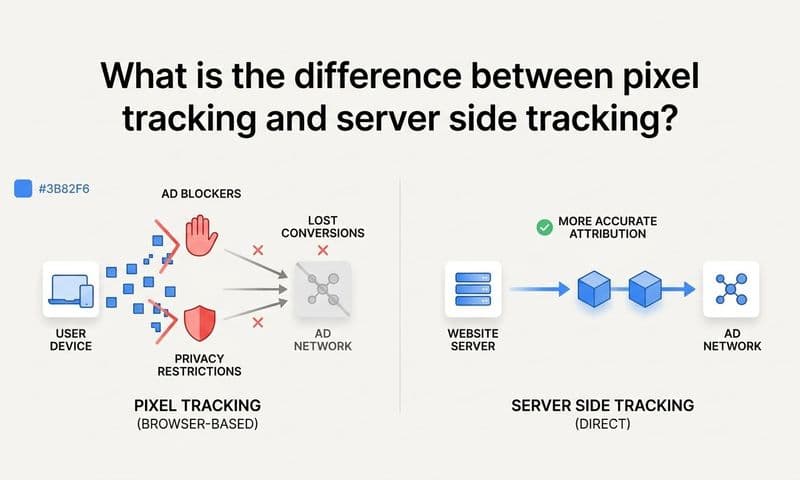
Send call conversions to Meta via the Conversions API. For Meta campaigns, pixel-based tracking is increasingly unreliable due to browser restrictions and ad blockers. The Meta Conversions API lets you send call conversion events server-side, which improves match rates and provides more reliable attribution data. Configure your call tracking platform or attribution tool to send a custom event to CAPI when a qualified call occurs, including any available customer data parameters (hashed email, phone number, or IP address) to improve the match rate. Server-side event sending is more reliable than pixel-based tracking for call events, and it gives Meta's algorithm better signal data to work with.
Tag each call conversion with campaign-level identifiers. When you send call conversion events to your ad platforms, include the originating campaign ID, ad set ID, and ad ID where possible. This allows your ad platforms to optimize toward calls at the campaign and ad level, not just at the account level. Without this granularity, your bidding strategies cannot distinguish between a campaign that generates ten qualified calls and one that generates ten hang-ups.
Set call conversion values if you have the data. If you know your average deal size or average revenue per converted call, assign a conversion value to your call events. This enables value-based bidding strategies in both Google and Meta, which tend to outperform target CPA bidding when conversion values are available. Even a rough estimate is better than leaving conversion value blank, since it gives the algorithm a signal about which calls are worth more.
After completing this configuration, verify that call conversion data appears in your ad platform dashboards within 24 to 48 hours. If it does not, check that the GCLID or Meta pixel ID is being captured correctly at the session level and passed through to the conversion event. Missing identifiers are the most common reason call conversions fail to attribute correctly in ad platforms.
Step 5: Integrate Call Tracking with Your CRM and Attribution Platform
Connecting call data to your ad platforms improves campaign optimization, but connecting it to your CRM and attribution platform is what closes the loop between marketing activity and actual revenue. This integration is what transforms call tracking from a reporting tool into a true attribution input.
Connect your call tracking platform to your CRM. Most third-party call tracking tools offer native integrations or webhook support for major CRMs. When a call occurs, the integration should automatically create or update a contact record, log the call details (duration, timestamp, caller number, and source attribution), and associate the call with the correct deal or opportunity. This gives your sales team full context on where a prospect came from before they even speak, and it gives your marketing team visibility into which calls progress through the pipeline.
Map call touchpoints into your multi-touch attribution model. This is the step that most teams skip, and it is the most important one. A phone call is a conversion event just like a form fill or a demo booking. If your attribution model only sees clicks and form submissions, it is missing a significant portion of your customer journey. Work with your multi-touch attribution platform to ensure that call events are ingested as touchpoints and weighted appropriately alongside other conversion events.
Use UTM data to tie calls back to campaigns. Your call tracking platform captures the UTM parameters associated with the session that generated the call. Pass this UTM data into your attribution platform as part of the call conversion event. This is what allows your attribution model to credit the correct campaign and ad for each call, rather than attributing calls to a generic "phone" source with no campaign context.
In Cometly, call conversions can be ingested alongside other touchpoint data, giving your attribution model a complete view of the customer journey from first ad click through to closed revenue. When call data flows into Cometly alongside your ad platform data and CRM events, you can see exactly how calls fit into your pipeline, which campaigns are driving call-to-close revenue, and how call attribution compares to form-based or chat-based conversion paths. This is the kind of complete picture that makes budget decisions straightforward rather than speculative.
Implement deduplication logic. In B2B SaaS, it is common for the same prospect to submit a form and also call your team, sometimes within the same session or within a short window. Without deduplication, that prospect gets counted twice in your conversion data, which inflates your attributed conversions and distorts your cost-per-acquisition metrics. Configure your attribution platform to identify duplicate conversions from the same contact within a defined time window and consolidate them into a single customer journey rather than two separate conversion events.
This integration layer is what separates teams that have call tracking from teams that have call attribution. The data is only as valuable as the decisions it informs, and it can only inform decisions when it is connected to the rest of your marketing and revenue data.
Step 6: Analyze Call Attribution Data and Optimize Campaigns
With your tracking live, your ad platforms connected, and your CRM and attribution platform receiving call data, you now have something most B2B marketing teams lack: a complete view of how phone calls contribute to pipeline and revenue. The next step is using that data to make smarter decisions.
Focus on qualified calls, not total call volume. Your duration threshold and outcome filters exist precisely for this reason. When reviewing attribution reports, segment by qualified calls rather than all calls. A campaign that generates 50 calls with an average duration of 25 seconds is performing worse than one generating 20 calls with an average duration of four minutes, even though the first looks better on raw volume. Your attribution model should reflect this distinction. Reviewing your call tracking metrics regularly helps you identify these patterns before they affect budget decisions.
Compare cost per qualified call across channels. Once you have a few weeks of data, calculate the cost per qualified call for each channel and campaign. Compare this to your cost per form fill or cost per demo booking from the same channels. In many B2B SaaS contexts, call-driven leads close at higher rates than form-based leads because the prospect has already invested time in a conversation. Understanding this relationship helps you allocate budget more intelligently.
Look at call attribution within the full customer journey. Do not evaluate call conversions in isolation. Use your attribution platform to see where calls fit within the broader customer journey. Are calls typically the first touch, the last touch, or a middle touchpoint? Do prospects who call tend to have visited multiple pages or engaged with multiple campaigns before calling? This context tells you whether calls are a discovery mechanism or a closing mechanism, which shapes how you optimize toward them. Understanding cross-channel attribution is essential for interpreting this data accurately.
Identify messaging patterns in high-performing campaigns. If certain ad copy consistently drives calls from high-intent prospects, that is a signal worth acting on. Review the creative and messaging in your top call-generating campaigns and look for patterns: specific value propositions, urgency triggers, or audience segments that correlate with qualified call volume. Replicate those elements in new campaigns and test them against your current controls.
Feed enriched call data back to your ad platforms continuously. This is not a one-time setup task. As qualified call conversions accumulate, the enriched signal data you send back to Meta and Google improves their machine learning models over time. Ad platform algorithms get better at finding prospects likely to call when they have more examples of what those prospects look like. Set a regular cadence, weekly or bi-weekly, to review your call attribution reports, check that data is flowing correctly, and adjust bids, budgets, and targeting based on what the data shows.
Putting It All Together
Phone call attribution tracking closes one of the most common and costly gaps in B2B marketing data. When calls go untracked, you are making budget and campaign decisions without a full picture of what is actually driving revenue. The six steps above give you a complete system: defined call criteria, the right tracking method, DNI live on your site, call data flowing into your ad platforms, and a fully integrated attribution model that treats calls as first-class conversion events.
Here is a quick checklist to confirm your setup is complete before you move into optimization mode.
Call definitions are documented: You have defined which call types matter, set a minimum duration threshold, and mapped call outcomes to business goals.
DNI is live and tested: Your tracking snippet is deployed via tag manager, swap rules are configured, and you have verified correct number display across all major traffic sources including mobile.
Ad platform connections are active: Call conversions are being imported into Google Ads with GCLID matching, and call events are being sent server-side to Meta via the Conversions API.
CRM and attribution platform are receiving call data: Call records are logging against contact and deal records in your CRM, and call touchpoints are flowing into your attribution model with UTM context intact.
Deduplication logic is in place: Your attribution platform is consolidating duplicate conversion events from the same contact so your data remains clean.
A reporting cadence is established: You have a regular schedule to review call attribution data and act on what it shows.
For B2B SaaS companies, accurate attribution across every conversion type, including calls, is what separates teams that scale confidently from those that guess. Cometly brings all of this data together in one place, connecting ad spend to pipeline and revenue so you always know what is working. Ready to see the full picture of your marketing performance? Get your free demo today and start capturing every touchpoint to maximize your conversions.