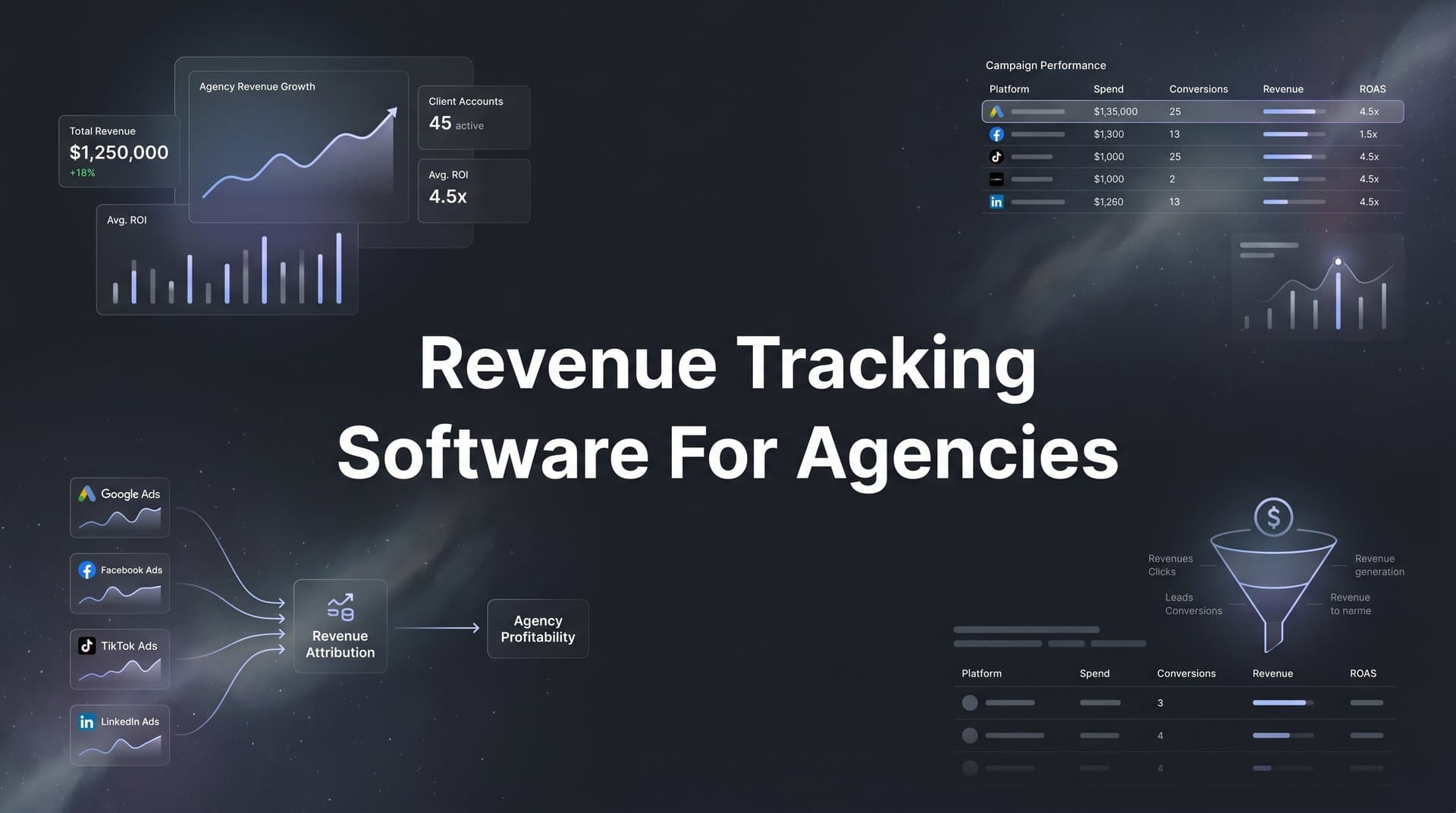
Agencies juggle dozens of client accounts, ad platforms, and conversion events at any given time. Without a reliable way to connect marketing spend to actual revenue, you are left guessing which campaigns deserve more budget and which ones are quietly draining it.
Revenue tracking software solves this by tying every click, lead, and closed deal back to the source that created it, giving agencies the clarity they need to prove ROI, retain clients, and scale profitably. But not every tool is built the same. Some focus on attribution modeling, others on financial forecasting, and a few try to do it all.
Here are the top revenue tracking software options for agencies in 2026, covering what each tool does best, who it is ideal for, and what it costs so you can find the right fit for your team.
1. Cometly
Best for: Agencies that need accurate, AI-powered attribution across multiple ad platforms and client accounts.
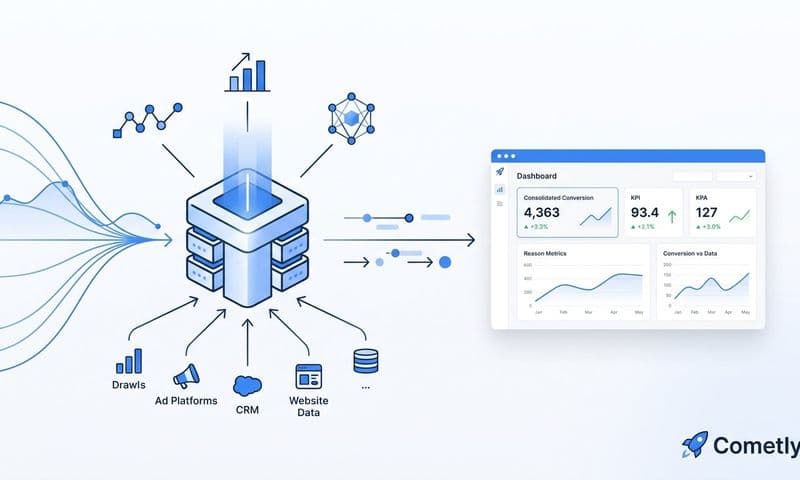
Cometly is an AI-powered marketing attribution platform that tracks the full customer journey from ad click to closed revenue, with server-side tracking and conversion sync built for modern privacy constraints.
 9 Best Marketing Attribution Platforms to Compare in 2026
Where This Tool Shines
Cometly stands out because it does not just report on what happened. It connects every touchpoint across the customer journey and uses AI to surface which campaigns and ad creatives are actually driving revenue. For agencies managing multiple clients across Meta, Google, TikTok, and LinkedIn simultaneously, this level of cross-platform clarity is genuinely hard to replicate.
The server-side tracking infrastructure is particularly valuable in a world where browser-based cookies continue to become less reliable. Cometly captures conversion data accurately even when iOS restrictions and ad blockers would otherwise create gaps, which means the data you present to clients is trustworthy rather than estimated.
Key Features
Multi-Touch Attribution: Tracks every touchpoint across all ad platforms and channels to show the complete path to revenue, not just the last click.
Server-Side Tracking: Captures conversion data server-side to maintain accuracy despite cookie deprecation and iOS privacy changes.
Conversion Sync: Feeds enriched, first-party conversion data back to Meta, Google, TikTok, and other platforms to improve their ad algorithms and targeting performance.
AI-Powered Recommendations: Analyzes campaign performance and provides actionable budget allocation and scaling recommendations so agencies can act on data faster.
AI Chat for Reporting: Lets you query your marketing data conversationally, making it faster to pull insights and build client-ready reports without digging through dashboards manually.
Best For
Cometly is built for performance-focused agencies running paid advertising across multiple platforms who need accurate attribution at scale. It is especially valuable for teams managing significant ad budgets where data accuracy directly impacts campaign decisions and client retention.
Pricing
Custom pricing based on ad spend and agency needs. A demo is available on request directly through the Cometly website.
2. HubSpot Marketing Hub + CRM
Best for: Agencies managing inbound marketing programs where leads flow through a structured CRM pipeline.
HubSpot Marketing Hub is an inbound marketing and CRM platform with native revenue attribution that connects marketing touchpoints to deal pipeline and closed revenue.
 9 Best Attribution Software for B2B SaaS in 2026
Where This Tool Shines
HubSpot's biggest advantage is the native connection between marketing activity and CRM data. Because the marketing and sales data live in the same system, you can trace a contact's journey from their first blog visit or ad click all the way through to a closed deal without stitching together separate tools.
For agencies that run both marketing and sales enablement for clients, this unified view is genuinely powerful. The reporting dashboards are polished and client-friendly, and the automated workflows make it easier to manage nurture sequences at scale.
Key Features
Native CRM Integration: Deal tracking and revenue reporting are built directly into the same platform as your marketing tools, eliminating data silos.
Multi-Touch Revenue Attribution: Available at the Enterprise tier, this connects specific marketing interactions to pipeline and closed revenue across the full funnel.
Contact-Level Journey Tracking: Follows individual contacts from first touch to closed deal, giving granular visibility into what influenced each conversion.
Custom Dashboards: Flexible reporting dashboards with automated delivery make it straightforward to build client-facing performance summaries.
Best For
Agencies running inbound marketing, content, or email programs for B2B clients that already use or are open to adopting HubSpot as their CRM. The value compounds significantly when the full HubSpot stack is in place.
Pricing
Free CRM available. Marketing Hub starts at $20/month, but multi-touch attribution reporting requires the Enterprise tier at $3,600/month.
3. Triple Whale
Best for: Agencies managing DTC and ecommerce brands, particularly those running on Shopify.
Triple Whale is an ecommerce-focused analytics and attribution platform built for direct-to-consumer brands and the agencies that manage their advertising.
 9 Best Revenue Tracking Software for Agencies in 2026
Where This Tool Shines
Triple Whale was built specifically for the ecommerce world, and that focus shows. The platform connects Shopify order data directly to ad spend, giving you a real-time profit and loss view that most general attribution tools cannot match. Agencies managing DTC brands will find the creative analytics feature particularly useful, as it surfaces which specific ad creatives are generating the most revenue rather than just clicks.
The first-party pixel handles server-side attribution to compensate for the signal loss that has made Facebook and Instagram reporting increasingly unreliable since iOS 14. This makes Triple Whale a practical solution for agencies whose clients depend heavily on Meta advertising.
Key Features
First-Party Pixel: Collects server-side attribution data to maintain accuracy despite browser tracking limitations and iOS restrictions.
Real-Time P&L Dashboard: Connects ad spend to gross profit in real time, giving agencies and clients a live view of campaign profitability.
Creative Analytics: Identifies top-performing ad assets by revenue contribution, helping agencies make faster creative optimization decisions.
Shopify-Native Integration: Order-level attribution ties directly to Shopify data, making revenue reporting precise rather than estimated.
Best For
Agencies that specialize in ecommerce and DTC clients, particularly those running Shopify stores with active paid social and search campaigns. Less suited for B2B or service-based client portfolios.
Pricing
Starts around $100/month and scales based on revenue volume and the features included in the plan.
4. Ruler Analytics
Best for: Agencies tracking leads from multiple sources including calls, forms, and live chat, and connecting them to CRM revenue.
Ruler Analytics is a closed-loop marketing attribution platform that connects lead sources across multiple channels back to actual revenue recorded in your CRM.
 8 Best Attribution Tools with Onboarding Support in 2026
Where This Tool Shines
Ruler Analytics fills a gap that many attribution tools miss: offline and assisted conversions. While most platforms focus on digital click-to-conversion tracking, Ruler captures leads from phone calls, form submissions, and live chat interactions, then follows those leads through to revenue in the CRM. This closed-loop approach means agencies can report on revenue, not just lead volume.
The integration depth with tools like Salesforce, HubSpot, Google Ads, and Meta makes it a strong choice for agencies with complex tech stacks where data currently lives in disconnected silos.
Key Features
Closed-Loop Attribution: Links every marketing source directly to CRM revenue, closing the gap between top-of-funnel activity and bottom-of-funnel results.
Multi-Channel Lead Tracking: Captures calls, form submissions, and live chat conversations alongside digital click data for a complete conversion picture.
Multiple Attribution Models: Supports first click, last click, linear, time decay, and other models so agencies can choose the approach that best fits each client's reporting needs.
CRM and Ad Platform Integrations: Connects with Salesforce, HubSpot, Google Ads, and Meta to push attribution data where it is most useful.
Best For
Agencies working with B2B or service-based clients where leads come through multiple offline and online touchpoints and revenue is tracked inside a CRM rather than at the point of a digital transaction.
Pricing
Starts at approximately £199/month, with pricing scaling based on tracked sessions and features.
5. Supermetrics
Best for: Agencies that need to consolidate data from many platforms into custom dashboards, spreadsheets, or data warehouses.
Supermetrics is a data pipeline tool that pulls marketing, ad, and revenue data from over 100 platforms into the reporting and analysis environment of your choice.
 9 Best Revenue Tracking Software for Agencies in 2026
Where This Tool Shines
Supermetrics is not an attribution platform in the traditional sense. Instead, it acts as the connective tissue between your data sources and wherever you want to analyze that data. For agencies that have already built custom reporting workflows in Google Sheets, Looker Studio, or a data warehouse, Supermetrics dramatically reduces the manual work of pulling and refreshing data from dozens of platforms.
The breadth of connectors is a genuine differentiator. Agencies managing clients across multiple ad platforms, CRMs, and analytics tools can centralize everything without building custom API integrations from scratch.
Key Features
100+ Data Connectors: Pulls data from ad platforms, CRMs, analytics tools, and more into a single pipeline for unified analysis.
Flexible Destinations: Sends data to Google Sheets, Looker Studio, BigQuery, Snowflake, and other destinations depending on where your team works.
Automated Data Refresh: Keeps dashboards and reports current without manual exports, saving significant time for agencies managing large client portfolios.
Custom Query Builder: Allows granular data pulls with filters and custom dimensions for agencies that need more than standard out-of-the-box reports.
Best For
Agencies with strong internal analytics capabilities that want to build custom reporting environments rather than rely on a pre-built dashboard tool. Works best when paired with a BI tool or custom dashboard layer.
Pricing
Starts at $39/month per connector. Agency plans are available for teams managing multiple data sources and destinations.
6. Databox
Best for: Agencies that need real-time performance dashboards with automated reporting across multiple client accounts.
Databox is a performance dashboard platform that aggregates data from over 100 tools into real-time, shareable dashboards with automated reporting and goal tracking.
 9 Best Ad Platform Reporting Tools to Sharpen Your Campaign Insights in 2026
Where This Tool Shines
Databox is built for speed and accessibility. The pre-built dashboard templates cover the most common agency reporting scenarios, meaning you can get a client dashboard live in minutes rather than hours. The interface is clean and intuitive enough that clients can log in and review their own performance without needing a walkthrough.
The goal tracking and automated alert features add a layer of proactive account management. Agencies can set performance benchmarks and receive notifications when metrics fall outside expected ranges, making it easier to catch issues before clients do.
Key Features
Pre-Built Templates: Ready-made dashboard layouts for common agency reporting needs reduce setup time significantly.
100+ Native Integrations: Connects with ad platforms, CRMs, SEO tools, and analytics platforms to pull data into a unified view.
Automated Alerts: Sends performance notifications when metrics hit thresholds, enabling faster response to campaign changes.
Goal Tracking and Benchmarking: Lets agencies set targets and compare performance against historical baselines or industry benchmarks.
Best For
Agencies that prioritize client-facing reporting and want a tool that is fast to set up, easy for clients to navigate, and capable of handling multiple accounts without heavy configuration.
Pricing
Free plan available for basic use. Paid plans start at $59/month and scale with the number of data sources and users.
7. Whatagraph
Best for: Agencies that need visually polished, white-label reports combining data from multiple marketing channels.
Whatagraph is a cross-channel reporting platform designed specifically for agencies, with data blending from multiple sources and branded, client-ready report templates.
 10 Best Ad Performance Analytics Platforms in 2026
Where This Tool Shines
Whatagraph prioritizes presentation without sacrificing substance. The platform is built around the idea that agency reports should look as professional as the work they represent. The white-label capabilities let agencies put their own branding on every report, reinforcing their value to clients rather than advertising the tool they use.
The data blending feature is particularly useful for agencies that need to combine metrics from different platforms into a single unified view. Instead of sending clients separate reports for paid search, paid social, and organic, you can blend everything into one coherent narrative.
Key Features
Multi-Source Data Blending: Combines data from different platforms into unified cross-channel reports without manual data manipulation.
White-Label Reporting: Fully branded templates and client-facing reports that carry the agency's identity, not Whatagraph's.
40+ Integrations: Covers popular marketing platforms including Google Ads, Meta, LinkedIn, Google Analytics, and more.
Automated Report Delivery: Schedules and sends reports automatically on custom timelines, reducing the manual overhead of monthly reporting cycles.
Best For
Agencies that place high value on client communication and presentation, and want reporting to be a visible differentiator in their service offering. Particularly strong for full-service agencies managing multiple channels per client.
Pricing
Starts at approximately $249/month. Agency pricing scales with the number of users and connected data sources.
8. CallRail
Best for: Agencies with clients in industries where phone calls are a primary conversion channel, such as home services, legal, or local businesses.
CallRail is a call tracking and analytics platform that attributes phone calls, form submissions, and text messages to specific marketing campaigns, keywords, and ads.
Where This Tool Shines
For agencies whose clients rely on phone calls to generate revenue, CallRail fills a critical attribution gap that most digital tracking tools ignore entirely. Dynamic number insertion assigns unique phone numbers to different campaigns, keywords, and traffic sources, making it possible to trace exactly which ad or search term prompted a call.
The AI-powered conversation intelligence layer adds depth beyond simple call counting. Agencies can analyze call content to understand lead quality, identify common objections, and score calls automatically, which makes it easier to demonstrate the revenue impact of campaigns that convert offline.
Key Features
Dynamic Number Insertion: Assigns unique tracking numbers to campaigns and keywords for precise call attribution at the source level.
Conversation Intelligence: AI-powered call scoring and analysis surfaces lead quality insights without requiring manual call review.
Multi-Channel Attribution: Ties calls and form submissions to Google Ads, Meta, Bing, and organic sources for a complete conversion picture.
Multi-Account Management: Agency-level account structure supports managing multiple clients from a single interface.
Best For
Agencies serving local businesses, service industries, or any client where phone calls represent a meaningful share of conversions. Less relevant for purely ecommerce or SaaS-focused client portfolios.
Pricing
Starts at $50/month and scales based on call volume, features, and the number of tracking numbers used.
9. AgencyAnalytics
Best for: Agencies that want an all-in-one client reporting platform with white-label capabilities and broad integration coverage.
AgencyAnalytics is a client reporting platform built specifically for agencies, combining white-label dashboards, automated reports, and over 80 marketing integrations in one place.
Where This Tool Shines
AgencyAnalytics was designed from the ground up for the agency model, and that context shows in every feature. The platform handles the operational side of client reporting efficiently, from automated monthly reports to client-facing logins where stakeholders can check their own dashboards without emailing the account manager.
The built-in SEO auditing and rank tracking tools make it particularly useful for agencies that offer SEO services alongside paid media. Having both performance reporting and SEO diagnostics in one platform reduces the number of tools agencies need to manage and pay for separately.
Key Features
80+ Integrations: Spans SEO, PPC, social media, email marketing, and call tracking platforms for comprehensive data coverage.
White-Label Dashboards: Fully branded client-facing dashboards and reports that present data under the agency's identity.
Automated Report Scheduling: Delivers reports to clients on custom schedules without manual intervention from the account team.
Built-In SEO Tools: Includes site auditing and keyword rank tracking, reducing reliance on separate SEO platforms for agencies that offer organic services.
Best For
Full-service agencies managing a mix of SEO, paid media, and social campaigns across multiple clients who want a single reporting hub with strong white-label capabilities and broad platform coverage.
Pricing
Starts at $79/month for up to five client campaigns, with pricing scaling based on the number of client accounts.
Which Revenue Tracking Tool Is Right for Your Agency
The right tool depends heavily on what kind of agency you run and where your biggest tracking gaps currently exist.
If your agency manages paid advertising across Meta, Google, TikTok, or other platforms and you need accurate, AI-driven attribution that connects ad spend to real revenue, Cometly is the strongest starting point. Its server-side tracking, Conversion Sync, and AI-powered recommendations address the core challenges that performance agencies face in 2026, particularly around data accuracy and cross-platform visibility.
For ecommerce-focused agencies working primarily with Shopify brands, Triple Whale delivers a level of order-level attribution and profitability reporting that general tools cannot match. If your clients rely heavily on phone calls as a conversion channel, CallRail fills the attribution gap that most digital tools leave open.
Agencies that need polished, branded client reporting should look at Whatagraph or AgencyAnalytics depending on whether they also want built-in SEO tools. For teams that already have strong internal analytics capabilities and want to build custom reporting environments, Supermetrics provides the data pipeline infrastructure to make that possible.
B2B agencies running inbound programs through HubSpot will find the native CRM attribution compelling, while Ruler Analytics serves agencies that need closed-loop tracking across both digital and offline lead sources. Databox rounds out the list as a fast, accessible dashboard solution for agencies prioritizing real-time client visibility.
The common thread across all of these tools is the shift toward first-party data and server-side tracking as browser-based methods become less reliable. Whichever platform you choose, prioritizing data accuracy at the foundation will make every other reporting and optimization decision more trustworthy.
If accurate, AI-driven attribution across your ad platforms is the priority, Get your free demo of Cometly today and see exactly which campaigns are driving revenue for your clients.