You have a product that solves a real problem. You have a team ready to grow. And you have a marketing budget that needs to produce results. But somewhere between launching your first ad campaign and trying to explain to leadership why pipeline is up but revenue feels flat, something breaks down. That something is almost always attribution.
SaaS startup marketing is genuinely different from selling a physical product or running an e-commerce store. There is no single moment of purchase. There is no clean, direct line from ad click to credit card charge. Instead, there are trials, demos, sales conversations, follow-up sequences, and a buyer who may have touched your brand six different ways before ever booking a call. That complexity is not a bug in your funnel. It is the nature of the business model.
The problem is that most growth teams are still trying to navigate this complexity with tools and frameworks designed for simpler buying journeys. They are optimizing for cost-per-click on campaigns that may or may not produce revenue. They are crediting the last channel a prospect touched while ignoring the five that came before it. And they are making budget decisions based on data that is incomplete at best and misleading at worst.
This guide is for growth teams who want to stop guessing. Whether you are building your first channel mix or trying to scale what is already working, the foundation is the same: you need to know which marketing activities actually drive paying customers. Everything else follows from that.
Why SaaS Marketing Demands a Different Playbook
Think about how most transactional businesses measure marketing success. Someone sees an ad, clicks it, buys the product. The attribution is clean. The ROI calculation is straightforward. SaaS does not work that way, and trying to apply the same logic will consistently lead you to wrong conclusions.
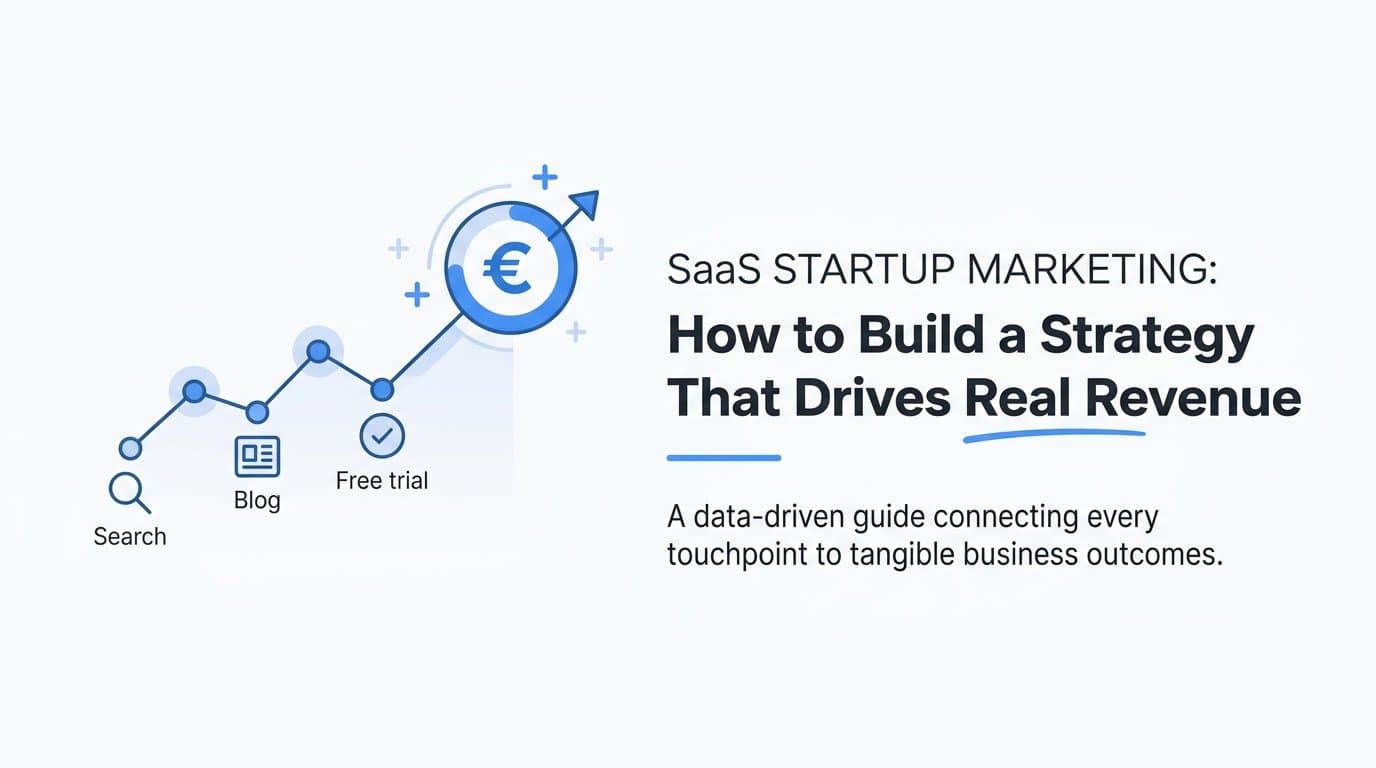
B2B SaaS buyers rarely convert on the first touch. A typical journey might start with a branded search, move through a few blog posts, include a visit to a review site like G2 or Capterra, and eventually lead to a free trial or demo request. That process might unfold over days or weeks. By the time a deal closes, the buyer has interacted with your brand across multiple channels, multiple devices, and multiple messages. Crediting any single touchpoint with that conversion is an oversimplification that distorts your understanding of what is actually working.
The subscription revenue model adds another layer of complexity. In SaaS, the true value of a customer is not realized at the moment of conversion. It accumulates over months and years through recurring revenue. This means your customer acquisition cost and lifetime value calculations have to drive every channel decision, not just short-term conversion rates. A channel that produces a high volume of trials might look great in your ad platform dashboard while quietly delivering customers who churn in 60 days. That is not a win. It is a slow drain on your growth budget.
There is also a timing problem that SaaS marketers face that most other industries do not. The gap between a marketing touchpoint and the actual revenue event can be significant. A prospect might click a LinkedIn ad, start a free trial two weeks later, go through a sales process, and close 45 days after first contact. Standard platform analytics are not built to connect those dots. Meta Ads Manager will either misattribute that conversion or miss it entirely. Google Ads will do the same. Without a system that bridges the gap between your ad platforms and your CRM, you are flying blind on the decisions that matter most.
Finally, SaaS marketing is not a campaign. It is a continuous motion. Unlike a product launch that has a defined start and end, SaaS marketing requires ongoing alignment between demand generation, product-led growth, and retention marketing. These are not separate functions. They are interconnected systems that feed each other. A growth team that optimizes them in isolation will consistently underperform compared to one that treats them as a unified strategy.
Building Your Channel Mix: Where SaaS Startups Actually Win
There is no universal answer to which channels work best for SaaS startups. The right mix depends on your audience, your ACV, your sales motion, and your stage of growth. But there are patterns that hold across most B2B SaaS businesses, and understanding them helps you allocate budget with more confidence.
Paid search is typically the highest-intent acquisition lever available to SaaS marketers. When a buyer types a specific search query into Google, they are telling you exactly what problem they are trying to solve. Capturing that intent with well-structured campaigns and relevant landing pages can drive qualified pipeline efficiently, especially in categories where buyers are actively comparing solutions. The trade-off is that paid search scales with budget and rarely compounds over time the way organic does.
LinkedIn is the go-to channel for reaching decision-makers in B2B contexts. Its professional targeting allows you to reach specific job titles, company sizes, industries, and even individual accounts, making it particularly powerful for ABM-style campaigns or when you are selling to a narrow persona. The cost-per-click is typically higher than other platforms, which means your messaging and offer need to be sharp. LinkedIn works best when you are building awareness and nurturing prospects who are not yet in active buying mode.
Meta and Instagram ads function differently in the B2B SaaS context. They are less precise for professional targeting but can be highly effective for top-of-funnel awareness and retargeting audiences who have already engaged with your brand. Many SaaS teams underestimate Meta as a B2B channel, but for companies with a broad addressable market or a strong visual brand, it can drive meaningful pipeline at competitive costs.
Content marketing and SEO deserve a place in nearly every SaaS startup's channel mix, even early on. The compounding nature of organic traffic means that investment made today continues to generate returns for years. A well-executed content strategy reduces your dependence on paid spend over time and builds brand authority in your category. The challenge is patience. SEO rarely produces results in the first 90 days, which makes it a harder sell internally when leadership is focused on near-term pipeline. The teams that invest early consistently end up with a structural cost advantage over competitors who rely entirely on paid acquisition.
Product-led growth tactics deserve recognition as a marketing channel in their own right. Free trials and freemium tiers do more than give prospects a chance to evaluate your product. They shorten sales cycles, improve conversion quality, and generate powerful behavioral data that your sales team can use to prioritize outreach. When a prospect has already experienced value inside your product before ever speaking to a salesperson, the conversation is fundamentally different. PLG is not a fit for every SaaS business, but for those where it works, it is one of the most efficient acquisition motions available.
The Attribution Problem Every SaaS Startup Runs Into
Here is a scenario that will feel familiar to many growth teams. You run campaigns across Google, LinkedIn, and Meta. Your lead volume looks healthy. Your cost-per-lead seems reasonable. You report these numbers to leadership, budget gets approved, and you scale up. Then, three months later, you realize that a significant portion of those leads never became paying customers. The channel that produced the most leads was not the channel that produced the most revenue. And you have no clean way to explain which one actually did.
This is the attribution problem, and it is not a minor inconvenience. It is the core reason why so many SaaS marketing teams end up misallocating budget and scaling channels that do not actually close deals.
The root of the problem is that most growth teams are still relying on single-touch attribution models. Last-click attribution credits the final touchpoint before conversion. First-touch attribution credits the first. Both are simple to implement and easy to report on. Both are also deeply misleading when your buyers are taking multi-touch journeys across weeks or months. If a prospect first discovered you through a LinkedIn ad, engaged with three blog posts, attended a webinar, and then converted after clicking a branded search ad, last-click attribution gives all the credit to Google and zero to LinkedIn. You cut your LinkedIn budget. You lose a channel that was doing meaningful work at the top of your funnel. Your pipeline quietly suffers.
SaaS trials and demos create an additional gap that standard platform analytics cannot bridge. When a prospect clicks an ad and then starts a free trial two weeks later, most ad platforms will not connect those two events. The trial start happens outside the platform's attribution window, or on a different device, or after cookies have been cleared. The result is that ad platforms see only a fraction of the conversion signals they need to optimize effectively. Their algorithms make worse decisions. Your cost-per-acquisition climbs. And you have no visibility into why.
The deepest version of this problem is the disconnect between marketing data and revenue data. Your ad platforms show you clicks, impressions, and reported conversions. Your CRM holds the actual truth about which leads became opportunities, which opportunities closed, and at what value. Without a system that connects these two data sources, you are optimizing for signals that do not reflect business outcomes. You might be scaling a channel that produces high trial volume but attracts buyers with low ACV or high churn. You will not know until it shows up in your revenue numbers, and by then you have already spent the budget.
How to Track the Full Customer Journey from Ad Click to Closed Deal
Solving the attribution problem requires building a system, not just installing a tool. The goal is to create a unified view of every touchpoint across the entire funnel, from the first ad impression to the closed-won opportunity in your CRM. This is achievable, but it requires connecting infrastructure that most SaaS startups have not yet integrated.
The foundation of modern attribution is server-side tracking. Browser-based pixels have become increasingly unreliable due to iOS privacy changes, ad blockers, and browser-level tracking restrictions. Server-side tracking and Conversion API integrations bypass these limitations by sending conversion data directly from your server to ad platforms. This means that when a prospect completes a meaningful action, such as starting a trial, booking a demo, or upgrading to a paid plan, that signal reaches Meta, Google, and LinkedIn with far greater accuracy than a pixel alone could provide. The result is richer data for ad platform algorithms to learn from, which translates into better targeting and more efficient spend over time.
The next layer is connecting your ad platforms, CRM, and website into a single attribution system. This is where most SaaS startups have a gap. Their ad data lives in one place, their CRM data lives in another, and their website analytics live somewhere else entirely. Bringing these together requires a platform designed to ingest data from all three sources and map it to individual customer journeys. When you can see that a specific LinkedIn campaign influenced five opportunities that collectively represent a defined amount of pipeline, you have moved from reporting on activity to reporting on impact.
Pipeline and revenue attribution changes the conversation marketing teams can have with leadership. Instead of presenting cost-per-lead and click-through rates, you can present influenced pipeline by channel, cost per qualified opportunity, and closed-won revenue attributed to specific campaigns. These are the metrics that leadership actually cares about. They are also the metrics that allow you to make defensible budget allocation decisions rather than educated guesses.
Platforms like Cometly are built specifically to solve this integration challenge for B2B SaaS companies. By connecting your ad platforms, CRM, and website into a single attribution layer, Cometly gives growth teams a complete view of every customer journey, from first ad click to closed deal. It sends enriched, first-party conversion data back to ad platforms through Conversion API integrations, improving signal quality and enabling smarter algorithmic optimization. And it surfaces pipeline and revenue attribution at the campaign level, so you always know which marketing activities are actually driving business outcomes.
Key Metrics SaaS Marketers Should Actually Optimize For
One of the most common mistakes SaaS marketing teams make is optimizing for metrics that feel meaningful but do not connect to revenue. Click-through rates, cost-per-click, and even cost-per-lead are easy to measure and easy to improve. They are also easy to game in ways that look good on a dashboard while quietly degrading the quality of your pipeline.
The metrics that actually matter in SaaS marketing are the ones that reflect business outcomes. Here are the ones worth building your reporting around.
Cost per qualified opportunity: This is a more meaningful signal than cost-per-lead because it filters out the volume that never had a realistic chance of converting. A channel that produces leads at low cost but rarely generates qualified opportunities is not actually efficient. It is just cheap at the top of the funnel.
Pipeline influenced by channel: This metric tells you how much revenue potential each channel has touched, regardless of whether it was the first or last touchpoint. It is particularly useful for channels like LinkedIn or content that tend to operate earlier in the buyer journey and rarely get credit in last-click models.
Closed-won revenue by source: This is the ultimate marketing metric. It requires connecting your CRM data to your ad platform data, but once you have it, it removes all ambiguity about which channels are actually driving the business forward.
Cohort analysis by acquisition source: Not all customers are created equal. A cohort analysis that breaks down retention, expansion revenue, and time-to-close by acquisition source will often reveal that your highest-volume channel is not your highest-value channel. This insight can fundamentally reshape your channel strategy.
CAC payback period: This is the metric that gives leadership a clear signal about whether to accelerate or pull back spend. It measures how long it takes to recover the cost of acquiring a customer through their generated revenue. A short payback period indicates a healthy, scalable acquisition motion. A long one signals that you need to either reduce CAC, increase ACV, or improve retention before scaling further.
Scaling SaaS Marketing with Confidence Using Data and AI
Once you have the right attribution infrastructure in place, scaling becomes a fundamentally different exercise. Instead of making bets based on incomplete data, you are making decisions based on a clear picture of what is working. That shift changes everything about how you approach growth.
AI-powered campaign analysis is increasingly central to how high-performing SaaS marketing teams operate. Rather than manually reviewing performance data across dozens of campaigns and ad sets, AI can surface which ads and audiences are driving the highest-quality pipeline, identify patterns that human analysts would miss, and flag underperforming spend before it compounds. This removes a significant amount of guesswork from scaling decisions and allows growth teams to move faster with greater confidence.
The quality of the data you feed to AI matters enormously, both your own tools and the ad platform algorithms themselves. Meta Advantage+, Google Performance Max, and LinkedIn's optimization algorithms all rely on conversion signal quality to make good decisions. When you are only sending pixel-based signals, you are giving these systems an incomplete picture. When you send enriched, server-side conversion events that include downstream data like opportunity stage and closed-won revenue, these algorithms can optimize toward the outcomes that actually matter. Over time, this compounds into meaningfully better targeting and lower acquisition costs.
A single source of truth for marketing data is what makes dynamic budget reallocation possible. When all of your channel data, CRM data, and conversion data flows into one place, you can see in near real time which channels are producing pipeline and which are not. This allows you to shift budget toward what is working without waiting for a monthly reporting cycle. In competitive SaaS markets, that speed of decision-making is a genuine advantage.
Cometly brings these capabilities together in a platform built specifically for B2B SaaS marketing teams. Its AI surfaces recommendations across ad channels, its Conversion API integrations feed enriched data back to Meta, Google, and LinkedIn, and its unified attribution layer gives teams a single view of marketing performance from first touch to closed revenue. For growth teams that are serious about scaling efficiently, this kind of infrastructure is not optional. It is the foundation everything else is built on.
Putting It All Together
SaaS startup marketing success is not about being everywhere at once. It is not about running the most campaigns or generating the most leads. It is about knowing, with confidence, which channels are driving revenue and having the discipline to double down on them while cutting what does not work.
That clarity starts with attribution. Without an accurate picture of how your buyers move from first touch to closed deal, every channel decision is a guess. With it, you can allocate budget based on evidence, scale what is working, and build a marketing motion that compounds over time rather than one that resets every quarter.
The teams that win in SaaS marketing are not necessarily the ones with the biggest budgets. They are the ones who understand their data well enough to spend efficiently, optimize intelligently, and grow with conviction.
Ready to stop guessing and start making marketing decisions backed by real revenue data? Discover how Cometly connects your ad spend to pipeline and closed-won revenue, giving your growth team the clarity it needs to scale with confidence. Get your free demo today and start capturing every touchpoint that drives your business forward.