Most B2B SaaS marketing teams spend significant budget on paid ads, but far fewer can tell you which specific creatives are actually driving pipeline and revenue. Tracking ad creative performance goes beyond click-through rates and impressions. It means understanding which headlines, visuals, formats, and messages move prospects through the full funnel, from first touch to closed-won deal.
Without this visibility, teams make creative decisions based on gut instinct rather than data, leading to wasted spend and missed growth opportunities. Sound familiar? You refresh a campaign, swap out a visual, change the headline, and hope for the best. That is not a strategy. That is guesswork with a budget attached.
This article breaks down eight actionable strategies for ad creative performance tracking that go beyond vanity metrics. Whether you are running campaigns on Meta, Google, LinkedIn, or TikTok, these approaches will help you build a systematic framework for measuring what your creatives actually do, not just what they look like on the surface. Each strategy is designed for marketing teams that want to connect creative decisions directly to revenue outcomes.
1. Define Creative-Level KPIs Before You Launch
The Challenge It Solves
Most teams evaluate creative performance using campaign-level metrics, which blend the results of multiple creatives together and make it nearly impossible to identify what is actually working. Without creative-specific benchmarks set in advance, you end up comparing apples to oranges and making decisions based on blended data that obscures individual creative contribution.
The Strategy Explained
Before any campaign goes live, define the specific metrics that will determine success at the creative level. These should go well beyond impressions and clicks. Think about hook rate, which measures the percentage of viewers who engage past the first few seconds of a video. Consider engagement-to-click ratio, scroll-stop rate, and cost per qualified lead broken down by individual creative.
For B2B SaaS teams, downstream metrics matter just as much as top-of-funnel signals. A creative that drives high click volume but generates zero pipeline is not a winner. Connecting creative KPIs to digital marketing performance metrics like cost per SQL and pipeline influenced gives you a much clearer picture of creative value.
Implementation Steps
1. List the specific metrics you will track for each creative format, separating video KPIs from static image KPIs from carousel KPIs.
2. Set baseline benchmarks using historical campaign data or industry reference points before launch.
3. Document your KPI definitions in a shared creative brief so every stakeholder evaluates performance using the same criteria.
Pro Tips
Resist the temptation to add too many KPIs. Pick two to three primary metrics per creative and stick to them. Overloading your measurement framework makes it harder to act on insights quickly. Clarity at the KPI level translates directly into faster, more confident creative decisions.
2. Use UTM Parameters to Tag Every Creative Variant
The Challenge It Solves
Platform-native reporting tells you how a campaign performed, but it rarely tells you how a specific creative variant performed across different audiences, placements, or channels. Without structured UTM tagging, your analytics tools receive traffic with no context attached, making creative comparison unreliable and cross-platform analysis almost impossible.
The Strategy Explained
UTM parameters are the foundational layer of any serious creative tracking system. By building a consistent naming convention that captures creative type, format, message angle, and audience segment, every variant becomes uniquely identifiable in your attribution and analytics tools.
A well-structured UTM might look like this: utm_campaign=q3-awareness | utm_content=video-painpoint-cto | utm_medium=paid-social | utm_source=linkedin. This level of specificity allows you to filter and compare creative performance in any tool without losing context. Understanding what UTM tracking is and how it helps your marketing is essential before building out your naming convention.
Implementation Steps
1. Create a UTM taxonomy document that defines the exact values to use for each parameter across your team.
2. Build a UTM generator spreadsheet or use a dedicated tool to ensure consistent formatting and eliminate manual errors.
We break down the leading options in our UGC video generator guide.
3. Audit existing campaigns to identify untagged or inconsistently tagged creatives and retroactively apply your naming convention where possible.
Pro Tips
Consistency is more important than complexity. A simple, well-enforced naming convention beats an elaborate system that people apply inconsistently. Make UTM creation part of your creative launch checklist so it never gets skipped under deadline pressure.
3. Implement Multi-Touch Attribution to Evaluate Creative Influence
The Challenge It Solves
Last-click attribution gives all conversion credit to the final touchpoint, which systematically undervalues the awareness and consideration creatives that do the heavy lifting earlier in the buyer journey. In B2B SaaS, where sales cycles can span weeks or months and involve multiple decision-makers, this creates a distorted picture of creative contribution and leads teams to over-invest in bottom-of-funnel ads while starving top-of-funnel creative.
The Strategy Explained
Multi-touch attribution models distribute conversion credit across all the touchpoints that influenced a prospect before they converted. Models like linear attribution, time decay, and data-driven attribution each tell a different story about creative influence. Exploring performance marketing attribution in depth helps you choose the right lens for evaluating your creative mix.
For B2B SaaS, a data-driven or position-based model often reveals that educational video content and thought leadership ads play a significant role in pipeline generation, even when they never appear as the last click before a demo request. This insight changes how you allocate creative budget and which formats you prioritize.
Implementation Steps
1. Audit your current attribution setup and identify whether you are relying on last-click or a more sophisticated model.
2. Map your creative types to funnel stages and assess whether your current model is giving them appropriate credit.
3. Implement a marketing attribution tracking tool that can ingest data from all your ad platforms and connect creative exposure to downstream pipeline events.
Pro Tips
Do not switch attribution models without first documenting your current baseline. Changing models mid-flight without a reference point makes it impossible to compare before and after performance. Run both models in parallel for a period before making the full transition.
4. Leverage Server-Side Tracking for Accurate Creative Data
The Challenge It Solves
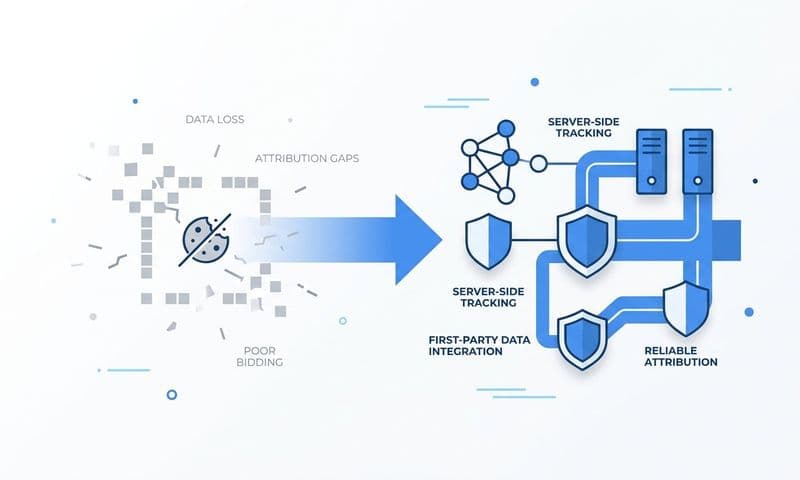
Browser-based pixel tracking has become increasingly unreliable. Ad blockers, browser privacy restrictions, and iOS privacy changes all contribute to signal loss that distorts your creative performance data. When conversion events are missed or misattributed, the creative performance signals you rely on for optimization decisions become inaccurate, and ad platform algorithms receive incomplete data that degrades their targeting and bidding performance.
The Strategy Explained
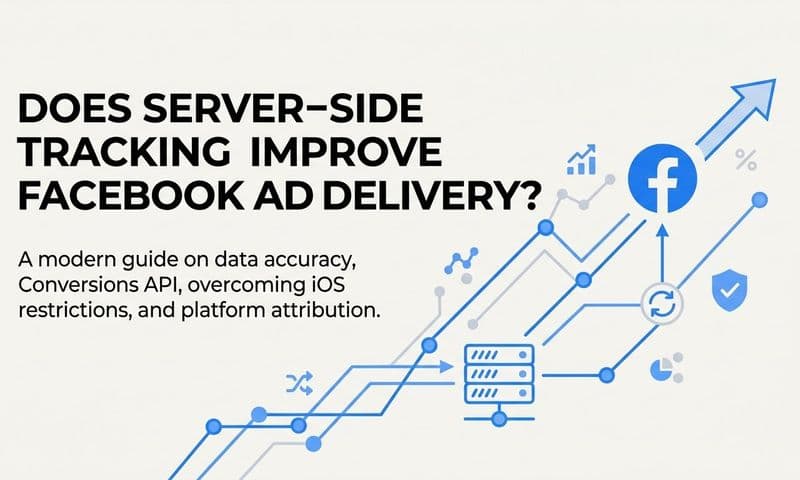
Server-side tracking using Conversion APIs, such as Meta's CAPI and Google's Enhanced Conversions, transmits event data directly from your server to the ad platform rather than relying on a browser pixel. This approach captures conversions that would otherwise be lost to privacy restrictions and improves the accuracy of the data feeding back into your attribution system.
Better event data means more reliable creative performance signals. When your platform receives complete, accurate conversion data, it can optimize delivery toward the audiences and placements where your best-performing creatives resonate most. Understanding why server-side tracking is more accurate is a useful starting point for diagnosing how well your current tracking setup is performing.
Implementation Steps
1. Audit your current pixel setup to identify where signal loss is occurring, using tools like Meta's Events Manager or Google's Tag Diagnostics.
2. Implement server-side event tracking through your CRM, CDP, or a dedicated conversion tracking platform that supports Conversion API integration.
3. Validate that server-side events are firing correctly and that deduplication is configured to prevent double-counting alongside any remaining browser-side pixels.
Pro Tips
Prioritize your highest-value conversion events first. Getting server-side tracking live for demo requests, trial signups, and qualified lead events will have the most immediate impact on your creative optimization data quality. Expand to additional events once your core setup is stable.
5. Build a Creative Testing Framework with Structured Experiments
The Challenge It Solves
Many teams run creative tests, but few run them in a way that generates reliable, actionable signals. Testing multiple variables simultaneously, running tests without sufficient data, or comparing creatives across different audiences and time periods all introduce noise that makes it impossible to know what actually caused a performance difference. The result is a library of inconclusive tests and creative decisions that still rely on intuition.
The Strategy Explained
A structured creative testing framework isolates one variable at a time, whether that is headline, visual, format, or call to action, and runs experiments with enough budget and duration to reach statistical significance. This discipline transforms creative testing from a guessing game into a repeatable process for building a library of winning creative patterns.
Think of it like running a scientific experiment. The control group is your current best performer. The treatment group changes exactly one element. Everything else stays constant. Over time, this approach surfaces reliable insights about what drives performance in your specific market and audience, insights that compound as you build more tests on top of previous learnings. Reviewing best practices for tracking conversions accurately ensures your test results reflect true performance rather than measurement gaps.
Implementation Steps
1. Create a creative testing calendar that schedules experiments in advance and assigns clear hypotheses to each test, for example: "We believe a pain-point headline will outperform a benefit-led headline for our mid-market ICP."
2. Define minimum sample sizes and test durations before launch to avoid calling tests early based on preliminary data.
3. Document results in a shared creative learnings library that captures what was tested, what won, and what the insight means for future creative strategy.
Pro Tips
Ad fatigue is a real and measurable phenomenon. Even your best-performing creatives will decline over time as audiences see them repeatedly. Build fatigue monitoring into your testing framework so you are proactively rotating creatives before performance drops significantly rather than reacting after the fact.
6. Track Creative Performance Across the Full Customer Journey
The Challenge It Solves
Measuring creative performance at the click level tells you very little about actual business impact. A creative might drive high click volume from early-stage prospects who are months away from buying, while another creative with fewer clicks consistently influences late-stage deals. Without connecting creative data to CRM and revenue events, you cannot distinguish between creatives that generate noise and creatives that generate pipeline.
The Strategy Explained
Mapping creative touchpoints to specific funnel stages and connecting that exposure data to CRM and revenue events gives you a complete picture of creative influence. This means tracking not just when someone clicked an ad, but which creative they saw at each stage of their journey, from first awareness through to closed-won revenue.
Awareness-stage creatives, typically video and educational content, serve a fundamentally different function than conversion-stage creatives like testimonials, demos, and offers. Evaluating them against the same metrics misses the point entirely. Each creative type should be measured against the outcomes it is designed to influence at its specific stage, which is why understanding customer attribution tracking across the full journey is so critical for B2B marketing teams.
Related reading: our complete guide to free AI UGC video generator.
Implementation Steps
1. Work with your CRM and revenue operations team to define the pipeline milestones you want to connect to creative exposure data, such as MQL, SQL, opportunity created, and closed-won.
2. Implement lead attribution tracking that captures the creative touchpoints associated with each contact record from first touch through conversion.
3. Build reports that show creative performance by funnel stage, so you can evaluate awareness creatives on assisted pipeline influence and conversion creatives on direct revenue contribution.
Pro Tips
Do not expect every creative to perform well at every funnel stage. The goal is to build a creative portfolio where different formats and messages work together across the journey. When you can see how creatives hand off from one stage to the next, you can design more intentional sequences rather than isolated campaigns.
7. Use AI-Driven Insights to Identify Creative Fatigue and Opportunities
The Challenge It Solves
As your creative library grows and your campaigns scale across multiple platforms and audiences, manual analysis becomes a bottleneck. Reviewing performance data across dozens of creatives, spotting early fatigue signals before they become costly, and identifying patterns in what makes top performers successful all require processing more data than most teams can handle efficiently through spreadsheets and dashboards alone.
The Strategy Explained
AI-driven analysis applied to your creative performance data can surface insights that would take hours to find manually. This includes detecting early fatigue signals, such as declining engagement rates or rising frequency metrics, before they cause significant performance drops. It also means identifying attributes that top-performing creatives share, whether that is a specific message angle, visual style, or format, and using those patterns to inform your next creative cycle.
Modern attribution platforms increasingly embed AI capabilities directly into their analytics workflows. Rather than waiting for a weekly review meeting to catch a declining creative, AI can flag it in real time and recommend whether to pause, refresh, or scale based on current performance trajectories. Learning how to improve campaign performance with analytics provides a strong foundation for getting the most out of AI-driven creative insights.
Implementation Steps
1. Ensure your creative performance data is centralized and consistently tagged so AI analysis has clean, complete data to work with.
2. Configure automated alerts for key fatigue signals, such as frequency thresholds, declining click-through rates, or rising cost per conversion, so your team is notified before performance deteriorates significantly.
3. Use AI-generated creative recommendations to build your next test hypotheses, letting pattern recognition in historical data guide where you experiment next.
Pro Tips
AI insights are only as good as the data they analyze. Before investing in AI-driven creative analysis, make sure your UTM tagging is consistent, your attribution model is accurate, and your conversion events are firing reliably. Garbage in means garbage out, regardless of how sophisticated the AI layer is.
8. Centralize Creative Data in a Single Attribution Dashboard
The Challenge It Solves
When creative performance data lives in separate platform dashboards, Meta Ads Manager, Google Ads, LinkedIn Campaign Manager, and others, cross-channel comparison becomes a manual, error-prone process. Each platform reports differently, applies different attribution windows, and shows you only its own slice of the customer journey. This siloed view makes it nearly impossible to make informed decisions about where to invest creative resources across your entire paid media mix.
The Strategy Explained
Centralizing creative performance data from all ad platforms into a single attribution dashboard eliminates the need to toggle between tools and reconcile conflicting numbers. A unified view enables true apples-to-apples creative comparison across channels, so you can see whether a specific message angle performs better on LinkedIn than on Meta, or whether video outperforms static across all platforms for a given audience segment.
A unified dashboard built on a proper attribution foundation also connects creative performance to pipeline and revenue data, giving you the full picture from first ad impression to closed-won deal. This is where marketing attribution platforms add significant value: they bridge the gap between your ad platforms and your CRM so creative decisions can be made with complete business context. Exploring cross-channel tracking implementation strategies can further sharpen how you interpret and act on the data across your entire paid media mix.
Implementation Steps
1. Audit your current reporting stack and identify all the platforms and data sources that contain creative performance data relevant to your campaigns.
2. Select an attribution platform that supports native integrations with your ad platforms, CRM, and website tracking so data flows automatically rather than requiring manual exports.
3. Build standardized creative performance views in your dashboard that surface the KPIs you defined in Strategy 1, making it easy for your team to review cross-channel creative performance in a single workflow.
Pro Tips
Resist the urge to build a dashboard that shows everything. Start with the five to seven metrics that directly inform creative decisions and budget allocation. A focused dashboard that your team actually uses consistently will deliver more value than a comprehensive one that overwhelms and gets ignored.
Putting It All Together
Ad creative performance tracking is not a one-time setup. It is an ongoing system that connects your creative decisions to real business outcomes. The strategies in this article build on each other in a deliberate sequence.
Start with the foundations: clean UTM tagging and clearly defined creative-level KPIs. These two steps alone will dramatically improve the quality of the creative data you are working with. From there, layer in multi-touch attribution and server-side tracking to ensure your data is both accurate and complete, capturing the full picture of how creatives influence buyers across a long B2B sales cycle.
Once your data infrastructure is solid, structured testing and AI-driven insights allow you to move faster and make better creative decisions at scale. And centralizing everything in a single attribution dashboard transforms individual data points into a coherent, actionable view of what is driving growth.
Cometly is built to support exactly this kind of data-driven creative strategy. By connecting your ad platforms, CRM, and website into a single attribution view, Cometly gives marketing teams the visibility they need to know which creatives are driving pipeline and revenue, not just clicks. From server-side Conversion API integration to AI-powered recommendations and 70+ native integrations, it provides the infrastructure that serious B2B SaaS marketing teams need to move beyond platform-native reporting.
If your team is ready to build a true creative performance tracking system, Get your free demo today and start capturing every touchpoint to maximize your conversions.