
Advertising intelligence platforms have become essential for marketing teams that need more than vanity metrics. When ad spend is spread across Meta, Google, LinkedIn, TikTok, and beyond, the challenge is not running campaigns. It is knowing which ones actually drive pipeline and revenue.
The right advertising intelligence platform connects your ad data to real business outcomes, giving you a single source of truth instead of scattered dashboards. This guide covers the best platforms available in 2026, evaluated on attribution depth, cross-channel visibility, AI capabilities, and how well they connect ad spend to revenue.
Whether you are a B2B SaaS growth team, a performance marketer, or an agency managing multiple clients, there is a platform here built for your workflow. Each tool has been selected based on its ability to deliver actionable advertising intelligence, not just data.
1. Cometly
Best for: B2B SaaS teams that need to tie ad spend directly to pipeline and closed-won revenue.
Cometly is a marketing attribution and analytics platform built specifically for B2B SaaS companies, connecting ad platforms, CRM data, and website behavior into a single, revenue-focused view.
 9 Best Attribution Platforms for Agencies in 2026
Where This Tool Shines
Most attribution tools stop at the lead. Cometly goes further, linking every ad touchpoint to what actually happens in your CRM and Stripe account. That means you can see which campaigns generate pipeline, which ones close deals, and which ones burn budget on leads that never convert.
The AI ads manager adds another layer of intelligence, surfacing cross-channel performance recommendations so your team knows where to scale and where to cut. It also sends enriched conversion events back to Meta, Google, and other ad platforms, improving their targeting algorithms with your actual revenue data rather than proxy signals.
Key Features
Multi-Touch Attribution: Compare multiple attribution models side by side to understand how each channel contributes across the full buyer journey.
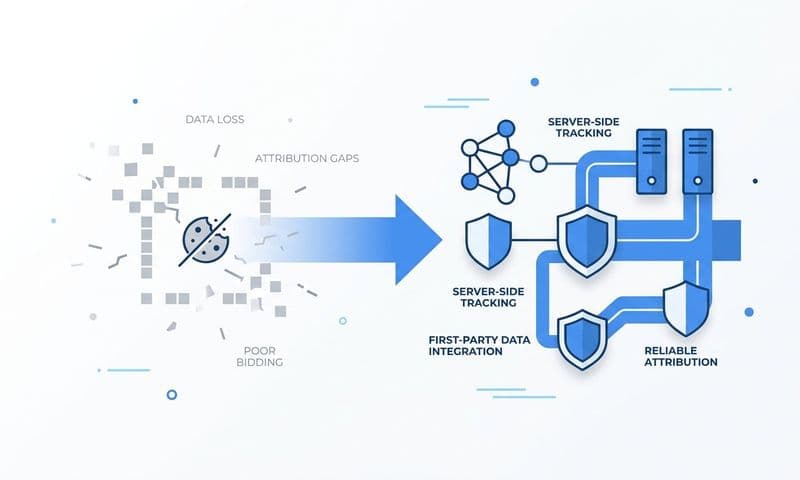
Server-Side Conversion Tracking: Bypass browser-based pixel limitations with server-side tracking and Conversion API integration for more accurate, complete data.
AI Ads Manager: Get AI-powered recommendations that identify high-performing ads and campaigns across every channel so you can scale with confidence.
Pipeline and Revenue Attribution: Connect ad spend directly to CRM and Stripe data, attributing pipeline and closed-won revenue back to the campaigns that drove them.
Customer Journey Analytics: Visualize every touchpoint across the buyer journey with 70+ native integrations covering ad platforms, CRMs, and revenue tools.
Best For
Cometly is the strongest fit for B2B SaaS growth teams and performance marketers who need revenue attribution, not just lead attribution. If your sales cycle spans multiple touchpoints and you need to prove which campaigns drive actual revenue, this is the platform built for that exact problem.
Pricing
Pricing is available on request via cometly.com. Given its focus on B2B SaaS companies, pricing is tailored based on data volume and team needs.
2. Triple Whale
Best for: DTC and ecommerce brands needing blended ROAS reporting and creative analytics.
Triple Whale is an advertising intelligence platform built for direct-to-consumer brands, offering multi-touch attribution, creative performance scoring, and cohort-level analysis across Meta and Google.
 9 Best Advertising Intelligence Platforms in 2026
Where This Tool Shines
Triple Whale has carved out a strong position in the ecommerce space by making blended ROAS reporting simple and visual. The summary dashboard gives founders and performance marketers a quick daily pulse on what is working across paid channels without needing to dig through platform-native reports.
The creative analytics feature is a genuine differentiator for DTC teams running high-volume ad creative tests. It scores creative performance and helps teams identify which visuals and copy combinations are driving the most efficient spend, cutting the guesswork out of creative iteration.
Key Features
Blended ROAS Dashboard: Aggregate performance data across all paid channels into a single blended view for a true picture of ad efficiency.
Creative Analytics: Score and compare ad creative performance to identify top-performing visuals and copy across campaigns.
Cohort Reporting: Analyze customer lifetime value by cohort to understand long-term returns from paid acquisition.
Pixel and Server-Side Tracking: Supports both pixel-based and server-side tracking options to maintain data accuracy as browser privacy restrictions increase.
Summary Dashboard: A high-level snapshot of daily performance metrics across all channels for fast, informed decision-making.
Best For
Triple Whale is purpose-built for ecommerce and DTC brands. It is less suited for B2B SaaS teams with long sales cycles, CRM-dependent pipelines, or offline conversion events. If you are running a product-based brand with high ad volume on Meta and Google, it is a strong fit.
Pricing
Usage-based pricing tied to monthly ad spend. Plans start around $129 per month for smaller accounts, with costs scaling as spend increases.
3. Rockerbox
Best for: Mid-market brands combining online and offline channel attribution with media mix modeling.
Rockerbox is a multi-channel attribution platform that pairs rule-based attribution with media mix modeling, giving marketing teams a more complete picture across both digital and traditional channels.
 9 Best Advertising Intelligence Platforms in 2026
Where This Tool Shines
Rockerbox stands out for its ability to handle attribution across channels that most platforms ignore, including TV, podcasts, and direct mail. For brands running integrated campaigns that span digital and offline, this breadth of coverage is hard to find in a single platform.
The unified marketing data layer is another strength. Rather than forcing teams to reconcile data from multiple sources manually, Rockerbox centralizes all spend data into a consistent structure, making cross-channel comparison more reliable and less time-consuming.
Key Features
Multi-Touch Attribution: Configure attribution models to reflect your specific channel mix and buyer journey length.
Media Mix Modeling: Apply statistical modeling to understand the contribution of offline and hard-to-track channels alongside digital spend.
Unified Marketing Data Layer: Centralize all marketing spend into a single, normalized data structure for consistent cross-channel analysis.
TV and Podcast Attribution: Extend attribution beyond digital to include broadcast and audio channels, a capability most competitors lack.
CRM and Ad Platform Integrations: Direct connections to major ad platforms and CRMs ensure data flows cleanly between systems.
Best For
Rockerbox works well for mid-market brands running integrated campaigns across digital and offline channels. It is a particularly strong choice for direct response brands that invest in TV, podcast, or out-of-home alongside paid digital.
Pricing
Custom pricing based on data volume and the number of channels tracked. Contact Rockerbox directly for a quote.
4. Northbeam
Best for: High-volume performance marketing teams that need near real-time attribution data.
Northbeam is a machine learning-powered advertising intelligence platform offering near real-time multi-touch attribution, built for teams that optimize campaigns continuously throughout the day.
 9 Best Advertising Intelligence Platforms in 2026
Where This Tool Shines
The near real-time data refresh is Northbeam's most cited differentiator. For performance marketers making intraday budget decisions, waiting 24 to 48 hours for attribution data is a real cost. Northbeam reduces that lag significantly, giving teams faster feedback loops for campaign optimization.
The machine learning attribution engine also goes beyond simple rule-based models, weighting touchpoints dynamically based on observed conversion patterns. This makes it more adaptive than platforms relying on static first-touch or last-touch logic.
Key Features
ML-Based Attribution: Machine learning models dynamically attribute credit across touchpoints based on actual conversion patterns rather than fixed rules.
Near Real-Time Refresh: Data updates frequently throughout the day, enabling faster optimization decisions compared to platforms with daily data lags.
Paid Social Coverage: Strong integration depth across Meta, TikTok, Snapchat, and other paid social platforms commonly used by performance teams.
Custom Attribution Windows: Configure attribution lookback windows and model parameters to match your specific campaign structure.
Media Planning Tools: Budget forecasting and media planning features help teams project outcomes before committing spend.
Best For
Northbeam is a strong fit for performance marketing teams running high-frequency paid social campaigns where speed of insight is critical. It is less focused on B2B sales cycle attribution and CRM revenue tracking.
Pricing
Custom pricing based on ad spend volume. Contact Northbeam directly for pricing details.
5. Ruler Analytics
Best for: B2B companies needing visitor-level journey tracking tied directly to CRM revenue.
Ruler Analytics is a B2B-focused revenue attribution platform that tracks individual visitor journeys across multiple sessions and connects those journeys to closed revenue inside your CRM.
 8 Best Attribution Tools with Onboarding Support in 2026
Where This Tool Shines
Ruler Analytics takes a visitor-level approach to attribution, stitching together touchpoints across multiple sessions before a lead is even created. Once a conversion happens, it retrospectively attributes that revenue back through the full journey, giving marketers a clear view of which channels and campaigns influenced the deal.
Phone call and offline conversion tracking is another area where Ruler differentiates itself. For B2B businesses where deals often progress through calls and offline meetings, this capability fills a gap that most digital-only attribution tools leave open.
Key Features
Multi-Touch Revenue Attribution: Tie every marketing touchpoint to actual CRM revenue, not just lead volume, for a true picture of marketing ROI.
Phone Call Tracking: Attribute inbound phone calls back to the marketing source that drove them, capturing offline conversion data.
Visitor Journey Tracking: Follow individual visitors across multiple sessions before and after conversion to build complete journey maps.
CRM Integrations: Native integrations with Salesforce, HubSpot, and other major CRMs ensure revenue data flows cleanly into attribution reporting.
Pipeline Reporting: View pipeline value and closed revenue by marketing source to prioritize spend on channels that drive deals.
Best For
Ruler Analytics is a strong option for B2B companies with longer sales cycles, phone-heavy conversion paths, and a need to connect marketing spend to CRM-tracked revenue. It works well alongside existing CRM and analytics stacks.
Pricing
Plans start at approximately $199 per month, with pricing scaling based on the number of tracked visitors.
6. HockeyStack
Best for: B2B SaaS demand gen teams running ABM strategies and tracking dark funnel activity.
HockeyStack is a cookieless B2B analytics and attribution platform that connects revenue, product usage, and marketing touchpoints, including channels that traditional attribution tools cannot see.
 9 Best Advertising Intelligence Platforms in 2026
Where This Tool Shines
HockeyStack's cookieless architecture makes it resilient to the ongoing erosion of third-party tracking. Rather than relying on browser-based identifiers, it builds attribution using first-party signals, making its data more durable as privacy restrictions continue to tighten.
The dark funnel coverage is particularly valuable for B2B demand gen teams. HockeyStack can surface attribution credit for organic content, community engagement, and other channels that influence buyers before they ever fill out a form, giving a more honest picture of what is actually driving pipeline.
Key Features
Cookieless Tracking: First-party attribution approach that maintains accuracy without relying on third-party cookies or browser-based identifiers.
Account-Level Attribution: Track and attribute revenue at the account level, essential for ABM strategies where multiple stakeholders are involved in a deal.
Dark Funnel Coverage: Capture attribution credit for organic, content, and community channels that influence buyers before direct engagement.
Product Usage Attribution: Connect product usage data to revenue attribution to understand how in-product behavior correlates with conversion and expansion.
Custom Dashboard Builder: Build tailored revenue and pipeline reporting views without relying on a fixed template structure.
Best For
HockeyStack is well-suited for B2B SaaS demand gen and revenue teams running account-based strategies, investing in content and organic channels, or looking for a privacy-resilient attribution approach that goes beyond paid media.
Pricing
Custom pricing based on company size and data volume. Contact HockeyStack directly for a quote.
7. Improvado
Best for: Enterprise marketing ops teams that need a centralized data pipeline feeding existing BI infrastructure.
Improvado is an enterprise marketing data aggregation platform that centralizes data from 500+ sources into a single pipeline, designed for marketing operations and data engineering teams with existing analytics infrastructure.
Where This Tool Shines
Improvado is not trying to be your analytics layer. It is the data infrastructure underneath it. For enterprise teams with established BI tools and data warehouses, Improvado provides the connectors, transformation logic, and data quality monitoring needed to keep those systems fed with clean, consistent marketing data.
The warehouse-native architecture is a key strength for teams already running on BigQuery, Snowflake, or Redshift. Rather than locking data inside a proprietary interface, Improvado routes it directly into the warehouse where your data team can model it however they need.
Key Features
500+ Data Connectors: Pre-built integrations covering paid, owned, and earned channels across the full marketing stack.
Automated Data Transformation: Normalize and standardize data from disparate sources automatically, reducing manual data prep work.
Warehouse-Native Architecture: Route clean data directly into BigQuery, Snowflake, or Redshift for modeling and analysis within your existing infrastructure.
Dashboard Templates: Pre-built marketing reporting templates to accelerate time to insight for common reporting use cases.
Anomaly Detection: Automated data quality monitoring flags issues in the pipeline before they surface as errors in downstream reports.
Best For
Improvado is the right choice for enterprise marketing ops and data engineering teams that have existing BI infrastructure and need a reliable, scalable data pipeline layer rather than a standalone analytics platform.
Pricing
Enterprise pricing available on request. Contact Improvado for a custom quote based on data volume and connector requirements.
8. Adverity
Best for: Enterprise marketing analytics teams that need AI-powered data harmonization and governance at scale.
Adverity is an AI-powered marketing data platform built for enterprise teams, offering automated data harmonization, anomaly detection, and governance controls across complex multi-channel stacks.
Where This Tool Shines
Adverity's strength is in making complex, messy marketing data clean and usable at scale. The AI-powered harmonization engine automatically maps and normalizes fields across hundreds of data sources, reducing the manual effort typically required to align naming conventions and metrics across platforms.
The governance and access control features are particularly relevant for large organizations with multiple teams, regions, or agencies accessing marketing data. Adverity provides the controls needed to ensure data consistency and appropriate access without sacrificing flexibility.
Key Features
AI-Powered Data Harmonization: Automatically map, normalize, and standardize data across 600+ sources to create a consistent marketing data layer.
Anomaly Detection: Automated alerts flag unexpected changes in data patterns, helping teams catch tracking issues or performance anomalies early.
Data Governance Controls: Role-based access controls and data lineage tracking support enterprise governance requirements across large teams.
600+ Data Connectors: Broad coverage across paid, owned, and earned channels ensures comprehensive data collection across the full marketing mix.
BI Tool Integration: Direct connections to major BI tools and data warehouses allow teams to use Adverity as a clean data layer feeding existing analytics environments.
Best For
Adverity is best suited for enterprise marketing analytics teams managing large, complex data environments across multiple markets, agencies, or business units where data governance and consistency are as important as analytical capability.
Pricing
Enterprise pricing available on request. Contact Adverity for a custom quote.
9. Funnel.io
Best for: Data-mature marketing teams that want clean, normalized data flowing into existing BI tools.
Funnel.io is a marketing data collection and normalization platform that connects, cleans, and routes data from 500+ sources into BI tools like Looker, Tableau, and Google Looker Studio.
Where This Tool Shines
Funnel.io is deliberately not an analytics platform. It is a data connector and normalization layer that makes your existing BI tools better. For teams that have already invested in Looker, Tableau, or a custom data warehouse setup, Funnel.io removes the painful work of collecting and cleaning data from dozens of ad platforms and marketing tools.
The automated field mapping and normalization capabilities are where Funnel.io earns its place in the stack. Keeping naming conventions consistent across Meta, Google, LinkedIn, and TikTok is a surprisingly time-intensive task, and Funnel.io handles it automatically, freeing up analytics teams to focus on actual analysis.
Key Features
500+ Data Source Connectors: Broad coverage across paid and organic channels ensures all marketing data can be collected in one place.
Automated Data Normalization: Standardize field names, metrics, and dimensions across disparate sources automatically for consistent downstream reporting.
BI Tool Integrations: Direct connections to Looker, Tableau, and Google Looker Studio route clean data into the tools your team already uses.
Google Sheets Integration: Share data directly to Google Sheets for lightweight reporting use cases without requiring a full BI environment.
Cost Data Aggregation: Consolidate ad spend data across all paid channels into a single view for unified cost reporting.
Best For
Funnel.io is the right fit for data-mature marketing teams that have existing BI infrastructure and want a reliable, low-maintenance data pipeline rather than a self-contained analytics platform. It is not designed for teams looking for built-in attribution or AI-powered insights.
Pricing
Plans start at approximately $400 per month, with pricing scaling based on the number of data connectors and overall data volume.
Choosing the Right Platform for Your Team
The best advertising intelligence platform is the one that connects your ad spend to actual revenue, not just clicks, impressions, or lead volume. Every tool on this list does something well, but the right choice depends on your team's specific needs, data maturity, and what you are trying to measure.
Here is a quick breakdown by use case to help you decide:
B2B SaaS growth teams: Cometly is the standout choice. It is purpose-built for the B2B SaaS motion, connecting ad spend to pipeline and closed-won revenue through CRM and Stripe integrations. The AI ads manager and server-side tracking make it a complete solution for teams that need attribution depth alongside actionable recommendations.
DTC and ecommerce brands: Triple Whale and Northbeam are the strongest options. Triple Whale wins on creative analytics and blended ROAS simplicity, while Northbeam offers faster data refresh for teams making intraday optimization decisions.
B2B teams with complex sales cycles and offline conversions: Ruler Analytics and HockeyStack both serve this segment well. Ruler is stronger on phone call tracking and CRM revenue attribution, while HockeyStack brings cookieless tracking and dark funnel coverage for teams investing heavily in content and ABM.
Enterprise teams with existing data infrastructure: Improvado, Adverity, and Funnel.io all operate as data pipeline and normalization layers rather than standalone analytics platforms. Improvado and Funnel.io are strong for warehouse-native teams, while Adverity adds governance and AI-powered harmonization for more complex environments.
If you are a B2B SaaS marketing team ready to move beyond surface-level reporting and connect every ad dollar to real revenue outcomes, Cometly is built for exactly that. Get your free demo today and start capturing every touchpoint to maximize your conversions.