Your Shopify store is stuck in the creator bottleneck. You need fresh UGC content to feed your Meta and TikTok campaigns, but the traditional process is draining your resources. Finding creators, negotiating rates, shipping products, waiting weeks for content, requesting revisions—all while your competitors are already testing new ads. By the time you finally get that polished creator video, the market has moved on, and you're left wondering if it will even convert.
AI-generated UGC has fundamentally changed this equation in 2026. What used to take weeks and hundreds of dollars per video now takes minutes and costs a fraction of the price. More importantly, AI UGC lets you test dozens of creative variations in the time it would take to produce a single traditional piece. This isn't about cutting corners—it's about removing the friction that prevents you from finding winning ads faster.
The Shopify stores scaling profitably right now aren't necessarily spending more on ads. They're producing more creative variations, testing systematically, and using performance data to double down on what actually drives revenue. This guide walks through seven proven strategies for implementing AI UGC in your Shopify marketing stack, from platform selection to performance optimization. Whether you're spending $500 or $50,000 monthly on ads, these approaches will help you test faster, reduce production costs, and identify winners before your budget runs dry.
1. Choose an AI UGC Platform Built for Ecommerce Speed
The Challenge It Solves
Most AI content tools force you into a fragmented workflow: generate creative in one platform, export it, upload to your ad manager, manually set up campaigns, then switch to another tool to track performance. This multi-platform juggling act introduces delays, increases error rates, and makes rapid testing nearly impossible. For Shopify stores running aggressive testing schedules, these workflow gaps become the limiting factor in how fast you can iterate.
The Strategy Explained
Select an integrated platform that handles the entire creative-to-conversion pipeline without requiring you to leave the interface. AdStellar exemplifies this approach by combining AI creative generation with direct Meta campaign launching and real-time performance tracking. You create scroll-stopping image ads, video ads, and UGC-style creatives using AI, then launch campaigns directly to Meta with AI-optimized audiences, headlines, and ad copy—all from the same dashboard.
 7 Proven AI UGC Strategies to Boost Your Shopify Store's Ad Performance
The platform automatically tests every combination of creative, audience, and messaging, then surfaces top performers with actionable insights. This eliminates the export/upload workflow that traditionally slows testing cycles from days to hours. When your AI-generated UGC is ready, it can be live in your ad account within minutes rather than requiring manual campaign setup.
Implementation Steps
1. Evaluate platforms based on integration depth, not just creative quality—prioritize tools that connect directly to your ad accounts and automate campaign launching.
2. Test the platform's workflow speed by timing how long it takes to go from concept to live ad, including all setup and optimization steps.
3. Verify that the platform provides unified reporting that connects creative performance to actual Shopify conversions, not just ad platform metrics.
Pro Tips
Look for platforms that offer AI-optimized targeting suggestions based on your product and customer data. The best AI tools for UGC ads don't just create content—they recommend which audiences to test it against and surface winning combinations automatically. This intelligence layer is what separates workflow automation from true performance optimization.
2. Build a Diverse AI Avatar Library That Matches Your Audience
The Challenge It Solves
Generic AI avatars that don't reflect your actual customer demographics create an immediate trust gap. When your Shopify store sells to women in their 30s but your AI UGC features a generic male avatar, the disconnect is obvious. This misalignment reduces engagement and conversion rates because viewers can't see themselves in the content. The challenge is creating avatar diversity that authentically represents your customer segments without the cost of hiring multiple real creators.
The Strategy Explained
Develop a strategic avatar library that mirrors your customer demographics across age, gender, ethnicity, and style preferences. Start by analyzing your Shopify customer data to identify your top-performing segments, then create AI avatars that represent each group. For stores with multiple product lines, build avatar sets tailored to each category—fitness products might use athletic-looking avatars, while skincare products benefit from avatars with visible skin concerns your products address.
The key is variety with purpose. Don't just create random avatars—map each one to a specific customer persona and product category. This allows you to match the right avatar to the right audience in your ad targeting, increasing relevance and trust.
Implementation Steps
1. Analyze your Shopify customer data to identify demographic patterns in your highest-value customer segments and most popular product categories.
2. Create 5-8 core avatars that represent these key segments, ensuring diversity in age, gender, ethnicity, and visual style that aligns with your brand positioning.
3. Test each avatar against its target demographic using small-budget campaigns, tracking engagement and conversion rates to validate which avatars resonate strongest with specific audiences.
Pro Tips
Rotate avatars regularly in your creative testing to prevent audience fatigue. Even high-performing avatars lose effectiveness when viewers see them repeatedly. Maintain a rotation schedule that introduces fresh faces while keeping your best performers in circulation. Also consider creating avatars with subtle variations—the same person in different settings or outfits—to extend their usable lifespan.
3. Script AI UGC for Authenticity, Not Perfection
The Challenge It Solves
Overly polished AI scripts sound like advertisements, not authentic customer testimonials. When every sentence is grammatically perfect and every transition is smooth, viewers immediately recognize it as scripted content rather than genuine user experience. This polish paradoxically reduces trust and engagement because real people don't speak in perfectly structured paragraphs. Your AI UGC needs to sound like actual customers talking about your products, complete with the natural imperfections that signal authenticity.
For a deeper dive into this space, see our AI UGC ad maker guide.
The Strategy Explained
Write scripts that embrace conversational language, natural pauses, and the slight imperfections that characterize real customer testimonials. Include phrases like "honestly," "I wasn't sure at first," and "the thing I love most is" that signal genuine experience rather than scripted advertising. Structure your scripts around a simple problem-solution-result framework, but tell it like a friend sharing a discovery rather than a marketer making a pitch.
Start with the relatable problem your customer faced, transition to discovering your product with some initial skepticism, then land on the specific results they experienced. Include concrete details—"I noticed a difference after about a week" rather than vague claims like "it changed everything." These specific, modest claims feel more believable than hyperbolic promises.
Implementation Steps
1. Review actual customer reviews and testimonials from your Shopify store to identify common phrases, concerns, and language patterns your real customers use.
2. Write scripts in first person using conversational language, including natural fillers like "so," "honestly," and "actually" that make the delivery sound spontaneous.
3. Test scripts with varying levels of polish—some slightly rough around the edges, others more refined—to identify which authenticity level resonates best with your audience.
Pro Tips
Record yourself or team members reading the script out loud before using it for AI generation. If it sounds unnatural when spoken, rewrite it. The best UGC scripts sound like something you'd actually say to a friend, not something you'd read in an advertisement. Also consider creating multiple script variations for the same product that approach it from different angles—the skeptic who was pleasantly surprised, the repeat customer who can't live without it, the gift-giver who discovered it for someone else.
4. Implement Rapid Creative Testing at Scale
The Challenge It Solves
Traditional creative testing is limited by production capacity. When each piece of UGC takes weeks and significant budget to produce, you can only test a handful of variations before exhausting resources. This forces you to make educated guesses about which creative approaches will work rather than letting data determine winners. The result is betting your ad budget on a few creative concepts that may or may not resonate with your audience.
The Strategy Explained
Establish a systematic testing framework that produces dozens of AI UGC variations and uses automated performance tracking to surface winners quickly. Create a testing matrix that varies hooks, avatars, script angles, and calls-to-action across your AI-generated content. Rather than testing one variable at a time, generate multiple complete variations and let ad platform algorithms determine which combinations perform best.
Set up your testing structure with clear success metrics tied to actual revenue, not just engagement. A video with high view rates but poor conversion rates isn't a winner—it's a distraction. Use platforms that automatically test every combination and provide real-time insights about which specific elements drive conversions, allowing you to quickly identify patterns and scale what works.
Implementation Steps
1. Create a testing matrix that identifies your key variables: 3-5 different hooks, 3-5 avatars, 2-3 script angles, and 2-3 CTAs, which can generate dozens of unique combinations.
2. Set up automated testing campaigns that run all variations simultaneously with equal initial budget allocation, allowing performance data to emerge naturally.
3. Establish kill criteria for underperformers and scaling criteria for winners, reviewing performance daily during the first week and adjusting budget allocation toward top performers.
Pro Tips
Focus your testing energy on hooks and avatars first—these visual elements typically have the biggest impact on stopping the scroll and driving initial engagement. Once you identify winning combinations, then refine script variations and CTAs. Also maintain a creative refresh schedule that introduces new variations every 7-10 days to combat ad fatigue, using your established winners as the baseline to beat. Understanding how to scale Facebook ads for your Shopify store becomes much easier when you have a systematic testing process in place.
5. Optimize AI UGC for Each Ad Platform's Algorithm
The Challenge It Solves
Creating one-size-fits-all AI UGC and distributing it across Meta, TikTok, and Google yields mediocre results because each platform's algorithm rewards different content characteristics. Meta prioritizes engagement signals like comments and shares, TikTok rewards content that keeps viewers watching through completion, and Google values relevance to search intent. Using identical creative across all platforms means you're optimizing for none of them effectively.
For a deeper dive into this space, see our AI UGC for TikTok guide.
The Strategy Explained
Tailor your AI UGC format, pacing, and messaging to match each platform's unique algorithm preferences and user behavior patterns. For Meta, create UGC that encourages interaction—ask questions, include surprising reveals, and structure content to generate comments. For TikTok, focus on immediate hooks that capture attention in the first second and maintain fast pacing throughout to maximize watch time. For Google's video campaigns, prioritize clear product demonstration and value proposition delivery that aligns with search intent.
Beyond content structure, optimize technical specifications for each platform. Meta performs best with square or vertical video formats, TikTok requires vertical-only content, and Google's display network benefits from multiple aspect ratios. Your AI UGC platform should allow you to generate these variations efficiently rather than manually reformatting each piece.
Implementation Steps
1. Study top-performing organic content on each platform in your niche to identify format patterns, pacing preferences, and content structures that drive engagement.
2. Create platform-specific AI UGC templates that incorporate these learnings—different hooks, pacing, and CTAs optimized for Meta versus TikTok versus Google.
3. Test platform-specific variations against generic cross-platform content to quantify the performance difference and validate your optimization approach.
Pro Tips
Don't just optimize the creative—optimize the targeting and campaign structure for each platform's strengths. Meta excels at interest and behavior targeting, TikTok performs well with broad targeting that lets the algorithm find your audience, and Google works best with intent-based targeting. Match your AI UGC creative optimization with platform-appropriate targeting strategies for maximum impact. Mastering ad performance tracking across platforms helps you identify which platform-specific optimizations are actually driving results.
6. Create Product-Specific UGC Variations for Your Catalog
The Challenge It Solves
Shopify stores with large product catalogs face a scaling challenge: creating unique UGC for every product using traditional methods is prohibitively expensive and time-consuming. The result is either generic content that tries to cover multiple products poorly, or only creating UGC for your top sellers while leaving the rest of your catalog without engaging creative. This limits your ability to test new products and scale winners across your entire inventory.
The Strategy Explained
Develop template systems that allow you to rapidly generate product-specific AI UGC while maintaining brand consistency and quality standards. Create modular script frameworks where you can swap in product-specific benefits, use cases, and results while keeping the overall structure and authenticity intact. Pair these scripts with your avatar library to generate dozens of product-specific variations efficiently.
The key is building systems rather than creating one-off content. Establish category-level templates for product types—supplements, apparel, accessories, home goods—that share common customer concerns and decision factors. Then customize the specific product details within these proven frameworks rather than starting from scratch for each item.
Implementation Steps
1. Group your Shopify products into categories that share similar customer problems, use cases, and decision criteria, allowing you to create category-level UGC templates.
2. Build modular script templates for each category with clearly marked sections where product-specific details can be inserted without disrupting the overall narrative flow.
3. Create a production schedule that generates AI UGC for 5-10 products weekly, prioritizing new launches and products showing early sales momentum that warrant creative investment.
Pro Tips
Use your best-performing AI UGC as templates for similar products. If a specific hook, avatar, and script structure drove strong results for one product, adapt that winning formula for related items rather than reinventing your approach. Also consider creating combo UGC that features multiple complementary products from your catalog, increasing average order value while reducing the per-product creative cost. Leveraging marketing analytics for ecommerce stores helps you identify which products deserve the most creative investment based on actual performance data.
We compare the leading options in our AI UGC for ecommerce roundup.
7. Track Performance and Feed Better Data Back to Ad Platforms
The Challenge It Solves
Most Shopify stores track AI UGC performance using only ad platform metrics—clicks, impressions, cost per click—without connecting these metrics to actual revenue. This creates a blind spot where you're optimizing for engagement rather than profitability. You might scale a high-engagement AI UGC ad that generates clicks but poor conversion rates, wasting budget on creative that doesn't drive sales. Without proper attribution, you can't identify which specific AI UGC variations produce profitable customers.
The Strategy Explained
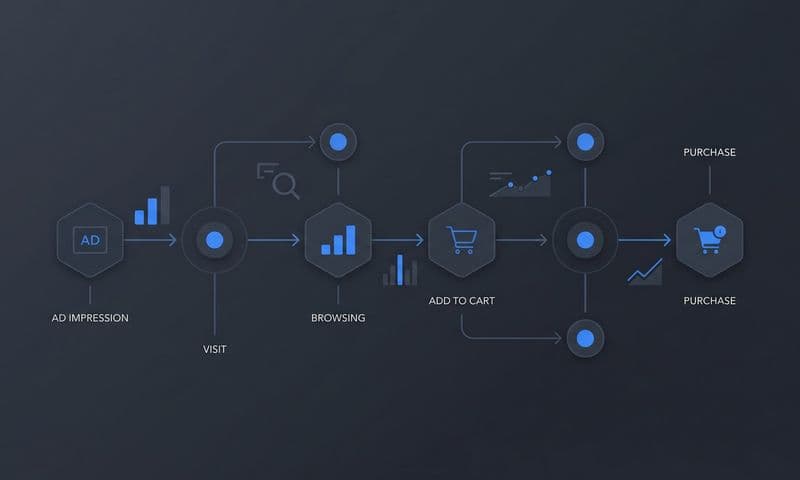
Implement comprehensive attribution tracking that connects every AI UGC ad to actual Shopify revenue, allowing you to make scaling decisions based on profitability rather than vanity metrics. Use attribution software for Shopify stores that tracks the complete customer journey from ad click through purchase, accounting for multi-touch interactions across channels. This reveals which AI UGC variations not only generate clicks but drive actual conversions and customer lifetime value.
More importantly, use these insights to feed better conversion data back to ad platform algorithms. When you send enriched, conversion-ready events to Meta, Google, and TikTok, their algorithms optimize more effectively for the outcomes you actually want—purchases, not just clicks. This creates a virtuous cycle where better data leads to better algorithm optimization, which leads to better results, which generates more data to improve further.
Implementation Steps
1. Set up server-side tracking for Shopify that captures accurate conversion data despite iOS limitations and browser restrictions that degrade pixel-based tracking accuracy.
2. Configure attribution tracking that assigns revenue credit to specific AI UGC ads and creative variations, not just campaigns or ad sets, allowing creative-level optimization decisions.
3. Implement conversion sync that feeds your enriched attribution data back to ad platforms, improving their ad platform algorithm performance over time.
Pro Tips
Review AI UGC performance across multiple attribution windows—1-day, 7-day, and 28-day—to understand both immediate converters and longer consideration cycles. Some AI UGC variations might show poor 1-day performance but strong 7-day results as customers research and return to purchase. Also segment performance by new versus returning customers to identify which AI UGC works best for acquisition versus retention campaigns.
Putting It All Together
Implementing AI UGC for your Shopify store isn't about replacing human creativity—it's about removing the bottlenecks that prevent you from testing and scaling winning creative fast enough to stay competitive. The stores winning in 2026 aren't necessarily those with the biggest ad budgets. They're the ones producing more creative variations, testing systematically, and using performance data to double down on what actually drives revenue.
Start with strategy one: selecting a platform that integrates creative generation with campaign management. AdStellar handles everything from AI video creation to Meta campaign launching to performance tracking in one unified workflow, eliminating the friction that slows traditional testing cycles. Build your avatar library next, ensuring you have diverse representation that matches your customer segments. Then develop authentic scripts that sound like real customers rather than polished advertisements.
Once your foundation is set, implement rapid testing at scale. Generate dozens of variations, let performance data determine winners, and kill underperformers quickly. Optimize your AI UGC for each platform's unique algorithm requirements rather than using generic cross-platform content. Scale across your product catalog using template systems that maintain quality while increasing production speed. Finally, connect everything to proper attribution tracking so you're optimizing for revenue, not vanity metrics.
The competitive advantage in ecommerce advertising has shifted from who can spend the most to who can test the fastest and scale the smartest. AI UGC tools have democratized creative production, making sophisticated testing accessible to stores of all sizes. The question isn't whether to implement these strategies—it's how quickly you can execute them before your competitors do.
Ready to elevate your marketing game with precision and confidence? Discover how Cometly's AI-driven recommendations can transform your ad strategy—Get your free demo today and start capturing every touchpoint to maximize your conversions.