
Third-party cookies are disappearing from the modern web, and marketers who still depend on them are already losing data they cannot get back. Safari and Firefox have blocked third-party cookies for years. The broader industry shift toward privacy-first tracking is not a future concern; it is happening right now, and its effects show up in your attribution reports every single day.
For B2B SaaS marketing teams, the consequences are concrete. Cookie-dependent tracking means you are likely missing attribution data on a meaningful portion of your pipeline. That translates into inflated cost-per-acquisition numbers, misattributed revenue, and ad platform algorithms optimizing on incomplete signals. Your campaigns look less efficient than they actually are, and budget decisions get made on flawed data.
The good news is that cookieless tracking for marketers is not just a workaround. When implemented correctly, it produces more accurate attribution than cookie-based methods ever could. Server-side events capture conversions that browser pixels miss entirely. First-party data creates a durable foundation that no browser update can take away. And when your ad platforms receive richer, more complete conversion signals, their algorithms perform better, not worse.
This guide walks you through the complete implementation process, step by step. You will learn how to audit your current tracking setup, implement server-side event tracking, activate Conversion APIs on your key ad platforms, build a first-party data strategy, configure multi-touch attribution, and validate that your data is accurate. Each step builds on the last, moving you from a fragile, cookie-dependent infrastructure to a resilient, first-party foundation.
Whether you are a marketing leader overseeing a team or a hands-on growth marketer managing campaigns directly, this guide gives you a clear, actionable path to maintaining full visibility into your customer journey, from the first ad click to closed-won revenue, regardless of what browsers or privacy regulations do next.
Step 1: Audit Your Current Tracking Infrastructure
Before you can fix your tracking, you need to understand exactly what you have. Most marketing teams are surprised by how much of their conversion data depends on third-party cookies once they actually map it out. Start here, and start with honesty.
Begin by identifying every tracking method currently in use across your stack. This includes browser-based pixels (Meta Pixel, Google Tag, LinkedIn Insight Tag), client-side JavaScript tags fired through your tag manager, UTM parameters in your URLs, and any event tracking configured inside your CRM. Write all of it down in one place.
Next, map each tracking method to its data dependency. Ask a simple question for each one: does this rely on third-party cookie storage in the visitor's browser, or does it use a first-party data source? Browser pixels that store click IDs and user identifiers in third-party cookies are high-risk. UTM parameters captured server-side or stored in your CRM are low-risk. This mapping exercise reveals where your attribution is genuinely vulnerable.
Use your browser's developer tools to inspect which tags are firing on key pages, particularly your landing pages, demo request forms, and trial signup flows. Look at what data each tag is reading and writing. A tag auditing tool or your existing tag manager's preview mode can make this faster. The goal is to identify which client-side tags are reading cookie data that may not exist for a growing portion of your visitors.
Document the gap explicitly. Create a list of every conversion event that would break or degrade if third-party cookies were fully blocked for all visitors. Form submission confirmations, trial activations, purchase completions, and demo bookings all need to be on this list if they rely on pixel-based tracking. Flag ad platform pixels as high-priority migration items.
What to prioritize: Any conversion event that feeds directly into your ad platform optimization should be treated as critical. If Meta or Google cannot see a conversion because the pixel was blocked, that deal never gets credited to the campaign that drove it. Your bidding algorithms suffer, and your reporting misleads you.
Success indicator: You have a complete inventory of your tracking dependencies, annotated by risk level, with a prioritized list of what needs to be replaced or upgraded before you move to the next step.
Step 2: Implement Server-Side Event Tracking
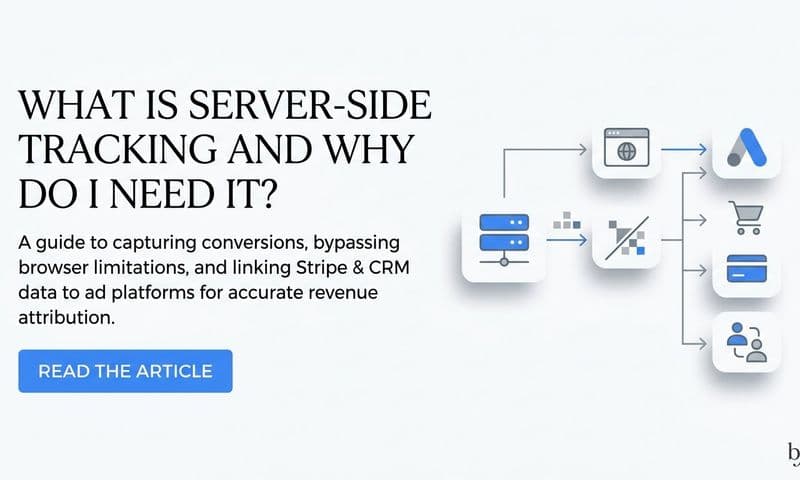
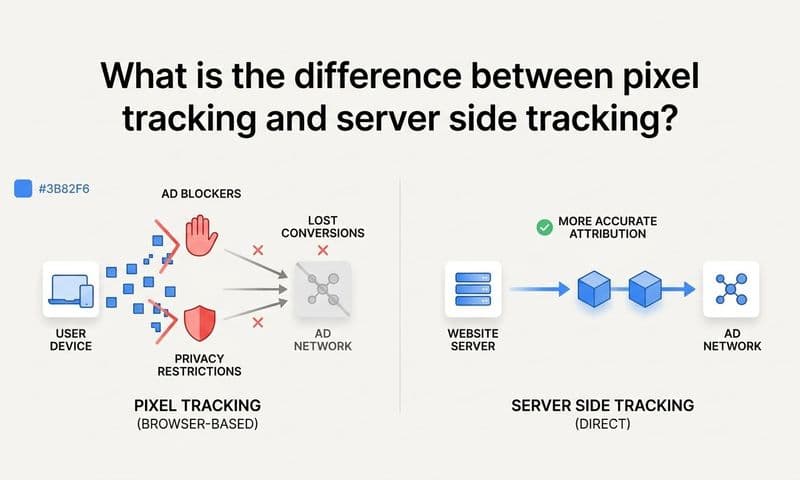
Server-side tracking is the technical backbone of cookieless attribution. Instead of relying on a visitor's browser to fire a pixel and store a cookie, your server captures the conversion event and sends it directly to the ad platform. Browser restrictions, ad blockers, and privacy settings become irrelevant because the event never touches the browser at all.
The first decision is which approach to use. You have three main options. A server-side container in Google Tag Manager lets you route events through your own server infrastructure while still using a familiar tag management interface. A custom API integration gives you maximum control but requires more engineering resources. A purpose-built attribution platform like Cometly handles the server-side infrastructure for you, with pre-built integrations to major ad platforms and CRMs, which dramatically reduces implementation time.
Whichever approach you choose, the next step is configuring your server to capture key conversion events at the source. For B2B SaaS, this typically means form submissions, trial signups, demo requests, and purchase or subscription events from your payment processor. These events should be captured where they originate: your application backend, your CRM, or your payment system, not from the browser.
The quality of the data you send with each event matters enormously. Ad platforms use the information you provide to match the event to a known user in their database. Pass as many matching parameters as you can with each event: hashed email address, hashed phone number, IP address, and user agent. More matching data means higher event match quality, which directly improves attribution accuracy and the performance of your lookalike audiences and bidding algorithms.
One critical technical requirement: event deduplication. If you are running both a browser pixel and server-side events simultaneously (which is a reasonable transition strategy), the same conversion can fire twice. Ad platforms provide deduplication mechanisms, typically using a shared event ID that you generate and pass with both the browser event and the server event. Set this up correctly from day one, or your reported conversion volume will be inflated and your data will be unreliable. A thorough server-side tracking implementation guide can help you avoid the most common configuration mistakes.
Common pitfall to avoid: Sending server-side events without proper event IDs for deduplication. This is one of the most frequent mistakes teams make during implementation, and it creates data quality problems that are harder to fix retroactively.
Success indicator: Server-side events are firing correctly and confirmed via your ad platform's event testing tools, with no duplicate events recorded. Your event match quality score in each platform should be visible and measurable from this point forward.
Step 3: Activate Conversion APIs on Your Ad Platforms
With server-side tracking in place, you are ready to connect directly to each ad platform's Conversion API. This is where cookieless tracking for marketers becomes real: you are sending conversion data from your server to the platform's API, completely independent of what happens in the browser.
Meta Conversion API (CAPI): Connect your server directly to Meta's API to send conversion events with hashed customer data. CAPI allows you to send events like Lead, CompleteRegistration, and Purchase with user parameters (hashed email, phone, IP, user agent) that Meta uses to match the event to a profile in its system. Higher match rates mean better attribution and better algorithm performance for your campaigns. Configure your event names to match the standard Meta event taxonomy so they map cleanly to your campaign objectives.
Google Enhanced Conversions: This feature allows you to send hashed first-party data (primarily email addresses collected from form fills) to Google Ads to recover conversions that would otherwise go untracked. When a user submits a form on your site, you capture their email, hash it using SHA-256, and send it to Google. Google matches it against signed-in Google accounts to attribute the conversion to the correct campaign, even if the Google click ID cookie was blocked or expired.
LinkedIn Conversions API: LinkedIn's Conversions API lets you send offline and CRM-based conversion events directly to the platform. For B2B SaaS teams running LinkedIn campaigns, this is particularly valuable because LinkedIn's standard Insight Tag is subject to the same browser restrictions as other pixels. Sending CRM milestones like MQL or opportunity created back to LinkedIn via the Conversions API gives you a much cleaner picture of which campaigns are driving pipeline.
For each platform, take time to verify that your event names and parameters map correctly to your campaign optimization goals. A mismatch between what you send and what the platform expects can result in events being ignored or miscategorized, which defeats the purpose of the integration. Reviewing best practices for tracking conversions accurately before finalizing your configuration can save significant troubleshooting time later.
Use each platform's native diagnostic tools to validate your setup: Meta's Events Manager shows event match quality scores and real-time event activity; Google's Tag Diagnostics highlights configuration issues; LinkedIn's Insight Tag helper confirms event receipt. These tools are your first line of quality assurance.
Why this matters for algorithm performance: Ad platform bidding algorithms are only as good as the conversion signals they receive. When you send richer, more complete data via Conversion API, the algorithm has more to work with. It can find better audiences, bid more efficiently, and optimize toward outcomes that actually matter to your business.
Success indicator: Each ad platform shows a healthy event match quality score, and conversion volume is consistent with or higher than what you were seeing with pixel-only tracking. Discrepancies between platforms should be minimal.
Step 4: Build a First-Party Data Collection Strategy
Server-side tracking and Conversion APIs are powerful, but they depend on having good first-party data to send. First-party data is information you collect directly from your users with their consent, on your own properties. It is not subject to third-party cookie restrictions, and it is the most durable foundation you can build your attribution on.
Start with UTM parameters. Every ad, every email, every organic social post that links to your site should carry properly structured UTM parameters. When a visitor lands on your site, capture those UTM values immediately and store them in your CRM at the contact level from the very first interaction. Understanding what UTM tracking is and how it helps your marketing gives you a reliable, cookie-independent record of acquisition source that persists through your entire sales cycle, regardless of how long it takes to close.
Implement a unique identifier strategy. A user ID or lead ID that persists across your website, CRM, and ad platforms allows you to stitch together the customer journey without relying on third-party cookies. When a visitor submits a form, assign them an ID and store it in a first-party cookie (which is not subject to the same restrictions as third-party cookies) as well as in your CRM. Use this ID to connect anonymous browsing behavior to known contact records as the relationship develops.
Collect email addresses as early in the funnel as possible. Gated content, demo requests, and free trial signups are natural collection points. The email address becomes your primary matching key for Conversion API events. When you send a conversion to Meta or Google with a hashed email, the platform can match it to a user profile with high confidence, even if no cookie was ever set.
Configure your CRM to pass conversion milestones back to your attribution system. For B2B SaaS, the conversion events that matter most are not just form submissions. MQL status, SQL qualification, opportunity created, and closed-won are the milestones that represent real business value. Your customer attribution tracking platform needs to see these events to give you accurate pipeline and revenue attribution.
The role of data enrichment: Appending firmographic data (company size, industry, job title) and behavioral data to your first-party records improves both segmentation and attribution accuracy. When you know that a particular campaign is generating leads from companies that match your ideal customer profile, you can make smarter budget decisions, not just count conversions.
Success indicator: Every contact in your CRM has a tracked acquisition source tied to a specific campaign, ad set, or keyword from their first interaction. No contact should have an unknown source if they came through a paid channel.
Step 5: Configure Multi-Touch Attribution Across the Full Funnel
With server-side tracking, Conversion APIs, and a first-party data strategy in place, you now have the infrastructure to attribute revenue across every touchpoint in the B2B buyer journey. This is where the real insight begins.
The first decision is attribution model selection. Different models tell different stories about which channels deserve credit for a conversion. First-touch attribution gives all credit to the channel that first brought the prospect to your site. Last-touch gives all credit to the final interaction before conversion. Linear distributes credit equally across all touchpoints. Time-decay gives more credit to touchpoints closer to the conversion. Data-driven attribution uses algorithmic analysis to assign credit based on observed patterns in your actual data. A detailed comparison of attribution models for marketers can help you determine which approach fits your sales cycle.
For B2B SaaS with long sales cycles, no single model tells the complete story. A prospect might discover you through a LinkedIn ad, research you via organic search across multiple sessions, attend a webinar, and then convert after clicking a retargeting ad. Each of those touchpoints played a role. This is why multi-touch attribution is particularly valuable in this context: it shows you the full sequence, not just the first or last step.
Connect your ad platform data, CRM pipeline stages, and payment or revenue data into a single attribution view. This is the "single source of truth" that eliminates the need to reconcile conflicting numbers across multiple dashboards. When your ad spend, lead data, opportunity data, and closed-won revenue all live in the same attribution layer, you can answer the questions that actually matter: which campaigns generate pipeline, which generate revenue, and which generate noise.
For B2B SaaS specifically, pipeline attribution matters as much as conversion attribution. A campaign that generates a high volume of low-quality leads looks great in a leads-based report but terrible in a pipeline report. Tracking which campaigns generate qualified opportunities and closed-won revenue gives you a fundamentally different and more accurate view of marketing performance. Exploring multi-touch attribution models for data helps you understand how to weight each touchpoint appropriately across long B2B sales cycles.
Use your attribution platform to compare models side by side. This comparison often reveals channels that are systematically undervalued or overvalued in your current reporting. Paid search, for example, frequently gets over-credited in last-touch models because it captures intent that was built by earlier touchpoints in other channels.
An important insight about cookieless tracking: Server-side event tracking actually improves attribution accuracy compared to cookie-based methods. Browser pixels miss conversions that happen after cookies expire or are blocked. Server-side events capture those conversions reliably. The result is a more complete picture of your funnel, not a less complete one.
Success indicator: You can trace a closed-won deal back to the specific campaign, ad set, and creative that drove the first touch, without any data gaps caused by cookie blocking or browser restrictions.
Step 6: Validate Data Accuracy and Close Attribution Gaps
Implementation is not complete until you have verified that the data is accurate. A tracking setup that fires events but produces unreliable data is worse than no tracking at all, because it creates false confidence in flawed numbers.
Start with a data reconciliation check. Compare conversion counts in your ad platforms against CRM records for the same time period. If Meta reports 50 leads from a campaign but your CRM shows 35 contacts from that source, you have a discrepancy that needs an explanation. Common causes include duplicate events from overlapping pixel and server-side tracking, attribution window mismatches, or events being assigned to the wrong campaign.
Review your deduplication logic. If you are running both browser pixels and server-side events (a common transition approach), confirm that your event IDs are being generated correctly and passed consistently to both the browser and server events. Check your ad platform's event manager for any signals that duplicate events are being recorded.
Set up ongoing monitoring so you catch tracking breaks before they damage your data. Create alerts or dashboards that flag unusual drops in event volume. A sudden drop in form submission events, for example, could indicate a tracking break caused by a site update that removed or altered the relevant code. Catching this quickly limits the data loss. Following an established attribution tracking setup process gives you a repeatable framework for auditing your configuration whenever changes are deployed.
Test your setup regularly by submitting test conversions through your actual funnel and verifying that they appear correctly in both your attribution platform and each ad platform's event manager. Make this a standard part of your QA process whenever you deploy site changes or update your CRM configuration.
Address the last-mile problem: For B2B SaaS with longer sales cycles, many conversions happen offline, through sales calls, proposals, and negotiations that never touch a browser. Use offline conversion imports to bring these outcomes back into your ad platforms. Upload closed-won data from your CRM to Google Ads and Meta on a regular cadence, so the algorithms receive credit for deals that closed outside the digital funnel.
Success indicator: Conversion data in your attribution platform matches CRM records within an acceptable variance, and you have a documented process for catching and fixing tracking breaks before they compound into larger data quality problems.
Putting It All Together: Your Cookieless Tracking Checklist
Here is a quick-reference summary of the six steps you have just completed. Use this as an ongoing reference as you maintain and evolve your tracking infrastructure.
1. Audit your current tracking infrastructure and identify every cookie-dependent touchpoint.
2. Implement server-side event tracking to capture conversions independent of browser behavior.
3. Activate Conversion APIs on Meta, Google, and LinkedIn with proper event mapping and match parameters.
4. Build a first-party data collection strategy using UTM capture, unique identifiers, and CRM event tracking.
5. Configure multi-touch attribution to connect ad spend to pipeline and closed-won revenue.
6. Validate data accuracy through reconciliation, deduplication checks, and ongoing monitoring.
Completing this implementation is not just a compliance exercise. It is a genuine competitive advantage. Marketing teams with better, more complete data make smarter budget decisions, scale winning campaigns faster, and extract more performance from their ad spend. While competitors are flying blind on a growing share of their conversions, your team will have full visibility into what is actually driving revenue.
Cometly is built to make this entire stack practical for B2B SaaS teams. It combines server-side conversion tracking, Conversion API integration for major ad platforms, multi-touch attribution, and 70+ native integrations covering ad platforms, CRMs, and payment processors. Instead of stitching together multiple tools and custom integrations, you get a single platform that connects every piece of your attribution infrastructure, from the first ad click to closed-won revenue.
If you are ready to move from fragile, cookie-dependent tracking to a resilient, first-party data foundation, Get your free demo today and see how Cometly can accelerate your cookieless tracking implementation and give your ad platform AI better data to optimize against.