You are spending real money on Google Ads every single day. But if your conversion data is unreliable, every optimization decision you make is built on sand. Duplicate conversions inflate your numbers. iOS privacy changes quietly swallow attribution data. Your CRM shows 35 closed deals while Google confidently reports 50 conversions. The result is predictable: budget flows toward campaigns that look good on paper but underperform in reality, while your actual top performers get starved of spend because they never received proper credit.
This is not a niche problem. It is the default state for most Google Ads accounts that have not been deliberately set up for accuracy.
Accurate conversion tracking changes everything. When your numbers reflect reality, you can optimize bids with confidence, allocate budget to the channels that genuinely convert, and feed Google's algorithm the clean signals it needs to find more customers like your best ones. Smart Bidding is only as good as the data you give it. Garbage in, garbage out.
This guide walks you through six concrete steps to build a conversion tracking setup that you can actually trust. Whether you are starting from scratch or auditing a setup that has been running for years, each step builds on the last. By the end, you will have a reliable, end-to-end system where the numbers in your Google Ads dashboard align with the revenue hitting your bank account.
Let's get into it.
Step 1: Define Your Conversion Actions and Assign Real Values
Before you touch a single tag or line of code, you need to get clear on what you are actually trying to measure. This sounds obvious, but it is where most tracking setups go wrong from the start.
The first thing to do is separate your primary conversions from your secondary ones. Primary conversions are the actions that directly represent revenue or qualified pipeline: purchases, demo bookings, qualified lead form submissions, and phone calls from high-intent pages. Secondary or micro-conversions are supporting signals: add-to-cart events, PDF downloads, newsletter sign-ups, or time-on-site thresholds.
Here is why this distinction matters so much. If you lump every action into a single conversion bucket and use that number to guide Smart Bidding, Google optimizes toward the easiest actions to generate, not the most valuable ones. You end up paying for traffic that downloads your PDF but never buys anything.
Setting conversion values: For e-commerce, this is straightforward. Pass the actual transaction value dynamically so each purchase reflects its real revenue. For lead generation, use an average deal value or a weighted value based on lead quality. If your average closed deal is worth a certain amount and you close roughly one in five leads, your lead conversion value should reflect that math. Even an estimated value is far more useful than leaving the field blank. Understanding how to calculate marketing ROI accurately can help you determine these values with confidence.
Choosing the right counting method: Set the counting method to "One" for lead generation goals. If someone submits a form twice, you do not want that counted as two conversions. Set it to "Every" for purchases, where each transaction is a separate revenue event that deserves individual credit.
Attribution window considerations: Match your attribution window to your actual sales cycle. If your typical customer takes three weeks from first click to purchase, a seven-day click attribution window will miss a significant portion of your conversions. Extend it to 30 or 90 days where appropriate.
Before moving to Step 2, you should have a written list of two to four primary conversion actions, each with an assigned monetary value and the correct counting method selected. This list is your tracking blueprint. Every technical decision that follows should serve it.
Step 2: Install the Google Ads Tag and Configure Conversion Linker
With your conversion actions defined, it is time to get the tracking infrastructure in place. You have two main options for deploying the Google Ads tracking tag: adding the global site tag (gtag.js) directly to your website's code, or using Google Tag Manager. For most teams, Google Tag Manager is the right choice. It keeps your tag management centralized, reduces developer dependency for future changes, and makes auditing significantly easier.
Here is how to set this up through Google Tag Manager:
1. In your Google Ads account, navigate to Tools and Settings, then Conversions. Select the conversion action you created in Step 1 and choose "Google Tag Manager" as your installation method. Google Ads will provide you with a Conversion ID and a Conversion Label for each action.
2. In Google Tag Manager, create a new tag and select "Google Ads Conversion Tracking" as the tag type. Enter your Conversion ID and Conversion Label. For dynamic values (like purchase amounts), configure a Data Layer Variable to pull the transaction value from your site's data layer rather than using a static number. For a deeper walkthrough of the full Google Ads conversion tracking setup process, our dedicated guide covers each configuration step in detail.
3. Set your trigger to fire on the specific confirmation or thank-you page that only loads after a successful conversion. This is critical. If your trigger fires on a page that can be revisited or refreshed, you will generate duplicate conversions that inflate your data.
The Conversion Linker tag is non-negotiable: This tag captures the GCLID (Google Click Identifier) from the URL when someone arrives from a Google Ad and stores it in a first-party cookie. Without it, your conversion tracking cannot link conversions back to the original ad click. Create a Conversion Linker tag in GTM, set it to fire on all pages, and make sure it loads before your conversion tags.
Cross-domain tracking: If your user journey spans multiple domains (for example, your main site and a separate checkout domain), configure the Conversion Linker to pass the GCLID across domains. Failing to do this creates a break in the attribution chain and conversions will appear unattributed.
Verify before going live: Use GTM's Preview mode to walk through a conversion flow and confirm your tags fire exactly once on the correct page. Google Tag Assistant is another useful tool for spotting misfires or missing tags. Do not skip this verification step. A tag that fires on the wrong page or fires multiple times will corrupt your data from day one.
Once your tags are verified and published, check your Google Ads conversion dashboard. Within a day or two of live traffic, you should see the status change from "Unverified" to "Recording."
Step 3: Enable Enhanced Conversions to Close Data Gaps
Here is the reality of tracking in 2026: a well-installed standard conversion tag is no longer enough. Safari and Firefox block third-party cookies by default. Chrome has moved toward user-choice mechanisms that reduce cross-site tracking. iOS App Tracking Transparency continues to limit attribution across apps and browsers. The practical result is that a meaningful portion of your conversions simply go unrecorded with a standard setup.
Enhanced Conversions is Google's answer to this problem, and it is one of the most impactful improvements you can make to your tracking setup.
The way it works is straightforward. When a customer converts on your site, you capture first-party data they have already provided, such as their email address or phone number. That data is hashed (encrypted using a one-way SHA-256 algorithm) before it ever leaves your site, then sent to Google. Google uses that hashed data to match the conversion back to a signed-in Google user, even when cookies are unavailable. The result is that conversions which would otherwise be lost to browser restrictions get recovered and attributed correctly.
You have two setup paths:
Automatic via Google tag: If you are using gtag.js directly on your site, you can enable Enhanced Conversions automatically. Google's tag will attempt to detect and hash customer data from your confirmation page. This is the simpler path but gives you less control over exactly what data is captured.
Manual via Google Tag Manager with data layer variables: This approach gives you more precision. You push the customer's email (and optionally phone number, name, or address) into the data layer on your confirmation page, then configure GTM to read those variables and pass them with the conversion event. This is the recommended approach for teams that want reliable, consistent data capture.
To enable it, go to your Google Ads account, navigate to Tools and Settings, then Conversions, and select "Enhanced Conversions for Web." Follow the setup wizard for your chosen implementation method.
One important note: Enhanced Conversions requires that the customer data you capture is data the user has actively provided to you during the conversion flow. You are not collecting new data; you are using data that already exists on your confirmation page to improve match rates.
Once active, check your Google Ads conversion settings. The Enhanced Conversions status column should show "Active." You will typically see a gradual improvement in reported conversions over the following weeks as Google matches more events back to ad clicks.
Step 4: Implement Server-Side Tracking for Maximum Data Accuracy
Even with Enhanced Conversions in place, client-side tracking has a structural vulnerability. Every tag that fires in a user's browser is subject to that browser's rules. Ad blockers prevent tags from loading. Consent management platforms delay or block tag execution. Browser-level restrictions limit cookie lifespans and cross-site data sharing. For high-traffic accounts or businesses where every conversion matters, these gaps add up.
Server-side tracking solves this at the architecture level. Instead of relying on a tag in the user's browser to send conversion data to Google, you send that data directly from your server to Google's API. Our guide on how to set up server-side tracking walks through the full implementation process. The browser's restrictions simply do not apply to a server-to-server communication.
Here is what that means in practice. When a purchase is completed on your site, your server records that event and sends it directly to Google Ads via the Google Ads API or through a server-side Google Tag Manager container. The user's browser settings, ad blocker status, or cookie preferences do not interfere with that signal reaching Google.
Implementation options:
Google Tag Manager server-side container: Google offers a server-side container option within GTM. You deploy a tagging server (typically hosted on Google Cloud, AWS, or another provider), route your tags through it, and send data to ad platforms from the server rather than the browser. This requires more technical setup than standard GTM but gives you significant control.
Dedicated attribution platforms: Tools like Cometly offer built-in server-side tracking that captures conversion events from your site and syncs them back to ad platforms including Google Ads. This approach is particularly efficient for teams that want the data accuracy benefits of server-side tracking without managing their own server infrastructure. Cometly connects your ad platforms, website, and CRM into a single data pipeline, ensuring that conversion signals reach Google with the completeness and accuracy that Smart Bidding needs to perform.
The deduplication requirement: If you run both client-side and server-side tracking simultaneously (which is common during transitions), you must implement deduplication logic. Without it, the same conversion will be recorded twice: once from the browser tag and once from the server. Use a unique event ID to match and deduplicate events so Google only counts each conversion once.
Server-side tracking is not optional for teams serious about ad tracking accuracy in the current privacy landscape. It is the foundation that makes everything else in your tracking stack more reliable.
Step 5: Connect Your CRM to Validate Conversions Against Actual Revenue
There is a gap that almost every lead generation business runs into eventually. Google Ads reports 50 conversions for the month. You open your CRM and count 35 closed deals. The discrepancy is frustrating, but it is also deeply informative once you understand what is causing it.
The gap exists because Google Ads is tracking form submissions or phone calls, not closed revenue. Some of those leads were unqualified. Some went dark. Some are still in your pipeline. The conversion Google recorded and the revenue your business actually earned are two different things, and optimizing toward the former can actively hurt the latter.
Offline conversion imports are how you close this gap within Google Ads itself.
Here is how the process works. When someone clicks your Google Ad, Google assigns them a GCLID (Google Click Identifier) that gets appended to the landing page URL. Your form or CRM captures that GCLID alongside the lead's contact information. When that lead eventually closes as a customer, you export a file from your CRM containing the GCLID and the revenue value, then upload it to Google Ads as an offline conversion.
Google matches the GCLID to the original ad click and records the revenue as a conversion attributed to the correct campaign, ad group, and keyword. Now Smart Bidding has a real revenue signal to optimize toward, not just a form fill proxy.
Why this matters for Smart Bidding: Google's bidding algorithms are designed to maximize the conversion signal you give them. If you feed them form fills, they optimize for form fills. If you feed them closed revenue, they optimize for closed revenue. The difference in campaign performance can be substantial over time. Knowing how to track sales leads through your entire funnel is what makes this possible.
Platforms like Cometly streamline this entire process by connecting your ad platforms, website, and CRM into a unified data pipeline. Rather than manually exporting and uploading GCLID files, Cometly tracks the full customer journey from first ad click through to CRM events and syncs conversion data back to Google Ads automatically. You get a clear view of which campaigns, ad groups, and individual ads are actually driving revenue, not just leads.
Your success check for this step: your Google Ads conversion numbers should align within a reasonable margin of your CRM's closed revenue data. Perfect alignment is not the goal; directional accuracy is. If Google shows 50 conversions and your CRM shows 35 closed deals, that delta should be explainable by pipeline stage, not by tracking failures.
Step 6: Audit, Test, and Continuously Optimize Your Tracking Setup
Tracking is not a one-time project. It is an ongoing discipline. Sites get updated. Tags break. New conversion actions get added without proper QA. Attribution windows get changed without documentation. Over time, these small failures compound into data that is quietly unreliable without anyone noticing until a major budget decision goes wrong.
Building a regular audit cadence is how you prevent that.
Monthly audit checklist:
Check for duplicate conversions: In Google Ads, segment your conversions by conversion action and look for unusual spikes in volume. Cross-reference with your actual business data. If Google shows 200 purchases in a week when you processed 100 orders, you have a duplication problem.
Verify conversion values are passing correctly: Pull a sample of recent conversions and check that the values recorded in Google Ads match your actual transaction or lead values. A common issue is that dynamic value variables break after a site update, causing all conversions to record as zero or a static fallback number.
Confirm attribution windows match your sales cycle: Review your attribution window settings at least quarterly. If your sales cycle has lengthened or shortened, your windows should reflect that change.
Use Google Ads Diagnostics: The Diagnostics tab in your Conversions section flags common issues like tags that have stopped firing or conversion actions with no recent data. Make it a habit to check this during your monthly review.
Compare attribution models: Google Ads now defaults to data-driven attribution, which distributes credit across multiple touchpoints based on actual conversion path data. Comparing data-driven attribution to last-click within the same account often reveals that certain keywords or ad types are undervalued under last-click. Understanding this helps you make better bidding and budget decisions. For a complete walkthrough, our guide on attribution tracking setup covers how to build a system that shows which ads truly drive revenue.
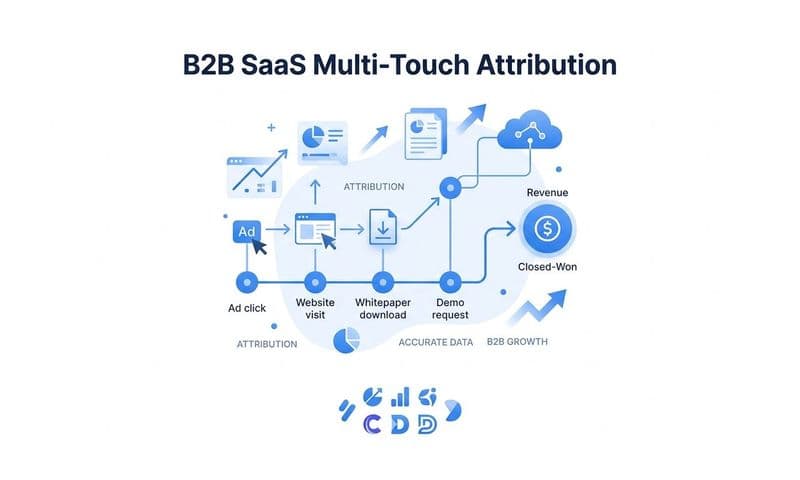
Zoom out to multi-touch attribution: Google Ads attribution only tells you what happened within Google's ecosystem. To understand how Google Ads interacts with your other channels, you need a broader view. A platform like Cometly provides multi-touch attribution across all your marketing channels, so you can see how Google Ads contributes to conversions that also involved email, organic search, or paid social. Learning how to track the customer journey across all touchpoints is essential for accurate budget allocation across your entire marketing mix.
Set a recurring calendar reminder for a monthly tracking audit. It takes less than an hour when done consistently, and it protects the integrity of every data-driven decision your team makes.
Putting It All Together: Your Accurate Tracking Checklist
Accurate Google Ads conversion tracking is not a single setup task. It is a system, and every component of that system needs to work together for the data to be trustworthy.
Here is your quick-reference checklist covering all six steps:
Step 1 - Define conversion actions: Identify two to four primary conversion actions with assigned monetary values and correct counting methods. Separate primary conversions from micro-conversions.
Step 2 - Install tags correctly: Deploy the Google Ads conversion tag and Conversion Linker through Google Tag Manager. Verify tags fire once on the correct page using Preview mode before going live.
Step 3 - Enable Enhanced Conversions: Set up Enhanced Conversions via GTM with data layer variables to recover conversions lost to cookie restrictions and iOS privacy changes. Confirm status shows "Active."
Step 4 - Add server-side tracking: Implement server-side tracking to bypass browser-level restrictions and ad blockers. Deduplicate events if running alongside client-side tags.
Step 5 - Connect your CRM: Use offline conversion imports or a platform like Cometly to feed real revenue data back to Google Ads. Validate that Google's conversion numbers align reasonably with your CRM data.
Step 6 - Audit monthly: Run a monthly audit covering duplicate tags, conversion values, attribution windows, and anomalies flagged by Google Ads Diagnostics.
When all six steps are working together, Google Ads stops being a guessing game. It becomes a predictable growth engine where every optimization decision is grounded in accurate data.
Cometly is built for exactly this kind of rigor. It captures every touchpoint from ad click to CRM event, validates conversions against real revenue, and feeds enriched conversion signals back to Google's algorithm so Smart Bidding has the data it needs to perform. Whether you are running Google Ads alongside Meta, LinkedIn, or any other channel, Cometly gives you a single platform to see what is actually driving revenue and scale it with confidence.
If you are ready to stop guessing and start scaling on accurate data, Get your free demo and see how Cometly can bring clarity to your entire marketing attribution setup.