Tracking marketing performance has never been more complex. With campaigns running across paid search, social, email, and display, getting a clear picture of what's actually driving revenue can feel impossible. The problem isn't a lack of data; it's having the right tools to make sense of it all.
The best marketing analytics software packages do more than count clicks and sessions. They connect ad spend to actual revenue, surface actionable insights, and help you make faster, smarter decisions. To build this list, we evaluated tools on five criteria: attribution capabilities, cross-platform tracking, AI-powered insights, ease of integration, and pricing flexibility.
Whether you're a lean in-house team or a growing agency, there's a tool here for you. You can also explore Cometly's full feature set and analytics capabilities if you want to see how a dedicated attribution platform fits into the mix. Let's get into the list.
1. Cometly
Best for: Marketing teams that need accurate multi-touch attribution and AI-powered ad optimization.
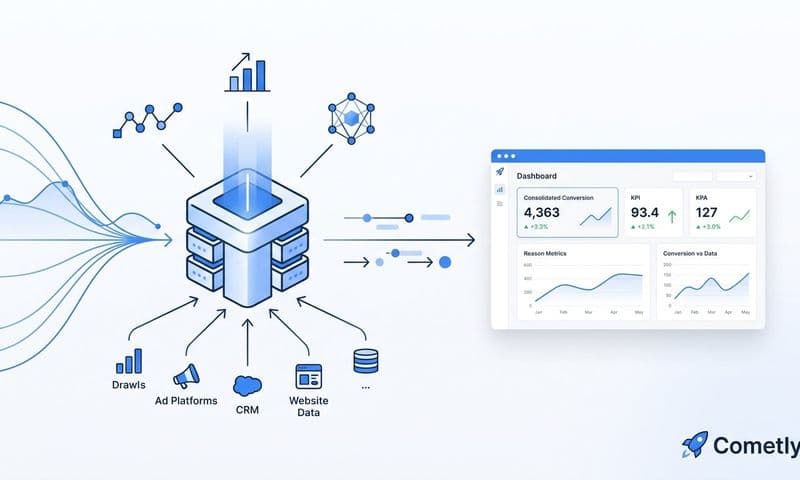
Cometly is an AI-powered marketing attribution and analytics platform that connects your ad platforms, CRM, and website to track every touchpoint from the first ad click through to closed revenue.
 10 Best Marketing Analytics Software Packages in 2026
Where This Tool Shines
Cometly was built specifically for the attribution problem that most analytics tools only partially solve. Rather than reporting on surface-level metrics, it maps the complete customer journey in real time, giving you a clear view of which campaigns, channels, and creatives are actually generating revenue.
What sets it apart is how it closes the loop between your analytics and your ad platforms. Through Conversion Sync, Cometly feeds enriched event data back to Meta, Google, and other platforms, improving the quality of signals those algorithms use to optimize your campaigns. The result is better targeting, smarter spend, and more accurate reporting all in one place.
Key Features
Multi-Touch Attribution: Tracks every paid channel touchpoint in real time, giving you a complete view of the customer journey across all campaigns.
AI Ads Manager: Delivers automated optimization recommendations so you can identify high-performing ads and scale with confidence.
Server-Side Tracking: Captures accurate conversion data even when browser limitations, ad blockers, or iOS privacy changes would otherwise cause data loss.
Conversion Sync: Sends enriched, conversion-ready events back to Meta, Google, and other ad platforms to improve algorithmic targeting and ad ROI.
AI Chat: Lets you query your marketing data in plain language, making analysis and reporting accessible without needing a data team.
Best For
Cometly is ideal for performance marketers, growth teams, and agencies managing paid campaigns across multiple channels who need accurate attribution data and AI-powered recommendations to optimize ad spend and connect marketing activity directly to revenue.
Pricing
Custom pricing based on ad spend volume. Request a demo directly through the Cometly website to get a quote tailored to your team's needs.
2. Google Analytics 4
Best for: Businesses that want free, powerful web and app analytics with Google Ads integration.
Google Analytics 4 is Google's event-based analytics platform for tracking user behavior across websites and mobile apps, with predictive capabilities built in.
 11 Best Marketing Analytics Tools to Track and Optimize Campaign Performance in 2026
Where This Tool Shines
GA4's biggest strength is its depth of integration with the Google ecosystem. If you're running Google Ads campaigns, the connection between GA4 and your ad account gives you audience insights, conversion tracking, and remarketing capabilities that are hard to replicate elsewhere.
The shift to an event-based data model also makes GA4 significantly more flexible than its predecessor. You can track virtually any interaction on your site or app, and the machine learning layer surfaces predictive audiences and churn probabilities without requiring a data science background.
Key Features
Event-Based Data Model: Replaces the old session-based approach, allowing granular tracking of any user interaction across web and app.
Predictive Audiences: Machine learning models surface users likely to convert or churn, enabling smarter remarketing campaigns.
Cross-Platform Tracking: Unifies web and mobile app data into a single property for a more complete view of user behavior.
Free Tier: The standard version is free with data limits that work well for most small to mid-sized businesses.
Best For
GA4 is a strong fit for businesses of any size that rely heavily on Google Ads, want free analytics with solid depth, or need cross-platform web and app tracking without a large budget commitment.
Pricing
Free for the standard version. GA4 360, the enterprise tier, is available at custom pricing on request and includes higher data limits and SLA guarantees.
3. Adobe Analytics
Best for: Large enterprises needing real-time data processing and advanced customer journey analysis.
Adobe Analytics is an enterprise-grade digital analytics platform offering real-time reporting, advanced segmentation, and deep integration with the Adobe Experience Cloud.
 9 Best AI Marketing Analytics Tools in 2026
Where This Tool Shines
Adobe Analytics is built for scale. Its Analysis Workspace environment gives analysts a drag-and-drop interface for building complex, ad hoc reports without writing a single line of code. The platform handles massive data volumes in real time, making it a natural fit for enterprise teams with high-traffic properties and sophisticated reporting needs.
The integration with the broader Adobe Experience Cloud, including Target, Campaign, and Audience Manager, is a genuine differentiator for organizations already invested in that ecosystem. When your analytics, personalization, and campaign tools share a common data layer, the workflow efficiencies compound quickly.
Key Features
Analysis Workspace: A flexible, drag-and-drop reporting environment for building custom visualizations and ad hoc analyses.
Real-Time Data Processing: Handles enterprise-scale data volumes with minimal latency, supporting fast decision-making.
Advanced Segmentation: Supports unlimited breakdown dimensions for granular audience and behavior analysis.
Adobe Experience Cloud Integration: Connects natively with Adobe's personalization, campaign, and data management tools.
Best For
Adobe Analytics is best suited for large enterprises with dedicated analytics teams, complex reporting requirements, and existing investment in the Adobe Experience Cloud ecosystem.
Pricing
Enterprise pricing is available on request. Adobe Analytics is generally positioned for larger organizations with significant analytics budgets.
4. HubSpot Marketing Analytics
Best for: Teams that want marketing, sales, and CRM analytics unified in a single platform.
HubSpot Marketing Analytics provides built-in reporting tools within the HubSpot Marketing Hub, connecting campaign performance data directly to CRM and sales outcomes.
 10 Best Marketing Analytics Software Packages in 2026
Where This Tool Shines
HubSpot's analytics stand out because they don't exist in isolation. Every report you build sits alongside your contact database, deal pipeline, and sales activity. That means you can trace a lead from the first marketing touchpoint all the way through to a closed deal without stitching together data from separate systems.
For teams that already use HubSpot as their CRM, the marketing analytics layer is a natural extension. Revenue attribution reporting is particularly useful: you can see which campaigns, emails, or landing pages contributed to actual closed revenue, not just leads generated.
Key Features
Unified Marketing and CRM Analytics: Combines campaign data with contact records and deal activity for end-to-end visibility.
Revenue Attribution Reporting: Connects marketing campaigns directly to closed revenue within the HubSpot CRM.
Custom Dashboards: Build and automate reports tailored to your team's specific KPIs and reporting cadence.
Contact-Level Journey Tracking: Tracks individual contact behavior tied to CRM records, giving sales teams full context on each lead.
Best For
HubSpot Marketing Analytics works best for B2B marketing teams already using HubSpot CRM who want to close the loop between marketing activity and sales outcomes without adding another tool to their stack.
Pricing
Included with Marketing Hub. Professional tier starts at $800/month; Enterprise starts at $3,600/month. Pricing scales with contact volume and feature access.
5. Mixpanel
Best for: Product and growth teams focused on user behavior, funnels, and retention analysis.
Mixpanel is a product analytics platform built for understanding how users engage with digital products, with powerful funnel, cohort, and retention reporting.
 9 Best AI Marketing Analytics Tools in 2026
Where This Tool Shines
Mixpanel is purpose-built for product analytics, which means it goes far deeper into user behavior than most general-purpose web analytics tools. You can track exactly where users drop off in a signup flow, which features drive long-term retention, and how different cohorts behave over time, all without needing SQL.
The interactive data exploration experience is genuinely fast. You can slice and filter data in real time, which makes it easy to go from a broad hypothesis to a specific, actionable insight in a single session. For growth teams running experiments and iterating quickly, that speed matters.
Key Features
Event-Based Tracking: Captures granular user actions across your product for detailed behavioral analysis.
Funnel and Retention Reports: Visualizes where users drop off and how retention curves look across different user segments.
Cohort Analysis: Groups users by shared behaviors or attributes to compare how different segments perform over time.
No-Code Data Exploration: Lets non-technical team members query and visualize data without SQL or engineering support.
Best For
Mixpanel is the right choice for SaaS companies, app developers, and product-led growth teams that need deep behavioral analytics and want to understand what drives activation, engagement, and retention.
Pricing
Free plan covers up to 20 million events per month. Growth plan starts at $28/month, with enterprise pricing available for higher volumes.
6. Supermetrics
Best for: Marketing teams that need to centralize data from dozens of ad platforms into one reporting environment.
Supermetrics is a marketing data pipeline tool that pulls data from 150+ advertising and analytics sources into spreadsheets, BI tools, and data warehouses.
 10 Best Marketing Analytics Software Packages in 2026
Where This Tool Shines
Supermetrics solves a very specific and very common problem: your data is spread across Google Ads, Meta, LinkedIn, TikTok, and a dozen other platforms, and manually pulling it together for reporting is eating hours of your week. Supermetrics automates that process, connecting all your sources and delivering clean, refreshed data wherever you need it.
The flexibility of output destinations is a key strength. Whether your team prefers Google Sheets, Looker Studio, Power BI, or a cloud data warehouse like BigQuery or Snowflake, Supermetrics can route data there on an automated schedule. It's less of an analytics tool and more of a data plumbing layer that makes everything else work better.
Key Features
150+ Platform Connectors: Pulls data from ad platforms, social media, SEO tools, and analytics platforms into a single pipeline.
Automated Data Refresh: Keeps your reports current with scheduled data pulls on custom intervals.
Flexible Destinations: Sends data to Google Sheets, Excel, Looker Studio, BigQuery, Snowflake, and more.
Pre-Built Templates: Includes ready-made reporting templates for common marketing use cases to speed up setup.
Best For
Supermetrics is ideal for agencies and marketing teams managing campaigns across many platforms who want to automate data collection and build centralized reports without engineering resources.
Pricing
Starts at around $39/month per destination. Pricing scales based on the number of connectors and data volume. Enterprise plans are available for larger teams.
7. Tableau
Best for: Teams that need powerful, interactive data visualization across complex marketing datasets.
Tableau is a leading business intelligence and data visualization platform that helps marketing teams build interactive dashboards and explore data visually at any scale.
 10 Best Marketing Analytics Software Packages in 2026
Where This Tool Shines
Tableau's visualization capabilities are genuinely best-in-class. The drag-and-drop dashboard builder supports a wide range of chart types and allows for deep interactivity, so stakeholders can explore data themselves rather than waiting for analysts to run new queries. That self-service element is a big deal in fast-moving marketing environments.
The platform connects to virtually any data source, from spreadsheets and databases to cloud services and data warehouses. For marketing teams that have already invested in centralizing their data, Tableau becomes a powerful presentation and exploration layer on top of that foundation.
Key Features
Drag-and-Drop Dashboard Builder: Creates interactive, visually rich dashboards without requiring coding or database expertise.
Universal Data Connectivity: Connects to databases, cloud platforms, spreadsheets, and data warehouses for flexible data access.
AI-Powered Insights: Tableau Pulse and Ask Data surface automated insights and allow natural language queries of your data.
Enterprise Scalability: Supports deployments ranging from individual analysts to organization-wide data platforms.
Best For
Tableau works best for data-mature marketing teams and analysts who need sophisticated visualization, cross-functional reporting, and the ability to explore large, complex datasets interactively.
Pricing
Tableau Creator licenses start at $75/user/month. Viewer licenses are available at $15/user/month. Enterprise pricing is available for larger deployments.
8. Funnel.io
Best for: Marketing teams that want clean, analysis-ready data from 500+ sources without manual data wrangling.
Funnel.io is an automated marketing data hub that collects, transforms, and normalizes data from hundreds of sources, making it ready for analysis without manual intervention.
Where This Tool Shines
Where Funnel.io earns its place is in the normalization step that most data pipeline tools skip. Pulling data from 500+ sources is one thing; making sure that a "click" in Google Ads means the same thing as a "click" in Meta Ads is another challenge entirely. Funnel.io handles that translation automatically, so your reports are comparing apples to apples.
The no-code transformation rules let marketing ops teams define how data should be mapped and standardized without writing SQL or calling in engineering. Features like automatic currency conversion and metric standardization are small details that save significant time when you're reporting across international campaigns.
Key Features
500+ Data Source Connectors: Pulls marketing data from ad platforms, social channels, CRMs, and more into a unified hub.
Automatic Data Normalization: Standardizes metrics and dimensions across sources so data is consistent and comparable.
No-Code Transformation Rules: Lets non-technical users define data mapping and transformation logic without engineering support.
Flexible Output Options: Connects to data warehouses and BI tools for analysis in your preferred environment.
Best For
Funnel.io is a strong fit for mid-market and enterprise marketing teams managing large, multi-platform campaigns who need clean, consistent data flowing into their reporting and BI tools reliably.
Pricing
Starts at approximately $1,000/month. Pricing scales with data volume and the number of connectors. Best suited for teams with a meaningful analytics budget.
9. Kissmetrics
Best for: Revenue-focused teams that want to tie marketing activity to individual customer value and conversions.
Kissmetrics is a revenue-focused analytics platform that tracks individual customer journeys and connects marketing activity to conversions, revenue, and lifetime value.
Where This Tool Shines
Kissmetrics takes a person-centric approach to analytics. Rather than tracking anonymous sessions, it ties behavior to individual users across devices and sessions, giving you a persistent view of each customer's journey from first touch to purchase and beyond. That makes it particularly useful for understanding which marketing channels are attracting your most valuable customers, not just your most frequent visitors.
The revenue and LTV reporting is where Kissmetrics differentiates itself from general-purpose analytics tools. You can segment customers by the channel that acquired them and compare their long-term value, which gives you a much more nuanced picture of marketing ROI than conversion rate alone.
Key Features
Person-Level Tracking: Ties behavior to individual users across devices and sessions for persistent customer journey visibility.
Revenue and LTV Reporting: Connects marketing channel attribution to customer lifetime value and revenue outcomes.
A/B Testing Analytics: Measures test outcomes based on revenue impact rather than just conversion rate.
Funnel and Cohort Analysis: Identifies where customers drop off and how different acquisition cohorts perform over time.
Best For
Kissmetrics is well suited for e-commerce brands and subscription businesses that want to understand the long-term revenue impact of their marketing channels and optimize for customer quality, not just volume.
Pricing
Plans start at approximately $299/month. Custom pricing is available for higher data volumes and enterprise needs.
10. Looker Studio
Best for: Teams that need free, flexible reporting dashboards connected to Google and third-party data sources.
Looker Studio is Google's free data visualization and reporting platform that turns marketing data into customizable, shareable interactive dashboards.
Where This Tool Shines
The most obvious strength of Looker Studio is that it costs nothing. For teams that want professional-looking, shareable dashboards without a BI tool budget, it's a genuinely capable option. Native connectors for Google Ads, GA4, Search Console, YouTube, and BigQuery mean you can build a solid Google-ecosystem reporting setup in an afternoon.
Community connectors extend its reach to hundreds of third-party platforms, and the scheduled email delivery feature means stakeholders can receive updated reports automatically without logging in. It won't replace a full BI platform for complex analysis, but as a reporting and visualization layer, especially for Google-centric marketing teams, it punches well above its price point.
Key Features
Completely Free: No usage limits or paywalled features, making it accessible for teams of any size or budget.
Native Google Integrations: Connects directly to Google Ads, GA4, Search Console, YouTube, and BigQuery without additional connectors.
Community Connectors: Extends data access to hundreds of third-party platforms through community-built integrations.
Shareable Reports with Scheduled Delivery: Creates interactive, embeddable reports that can be emailed automatically on a set schedule.
Best For
Looker Studio is ideal for small to mid-sized marketing teams, freelancers, and agencies that want polished, shareable dashboards built primarily on Google data without spending on a dedicated BI tool.
Pricing
Completely free with no usage limits or premium tiers for the core product.
Which Tool Is Right for Your Team?
Every tool on this list solves a real problem, but the right choice depends entirely on where your biggest analytics gap is right now.
For attribution and ad optimization: Cometly is the standout choice. If you're running paid campaigns across multiple channels and struggling to connect ad spend to actual revenue, it's built precisely for that problem. The combination of server-side tracking, multi-touch attribution, and AI-powered recommendations makes it the most complete solution for performance marketers.
For free web analytics: GA4 remains the default starting point for most businesses. Pair it with Looker Studio for free reporting dashboards and you have a solid, zero-cost analytics foundation.
For enterprise-scale analytics: Adobe Analytics is the natural fit for large organizations with dedicated analytics teams and complex reporting requirements, particularly those already in the Adobe ecosystem.
For product and behavioral analytics: Mixpanel is the specialist. No other tool on this list goes as deep into user behavior, funnels, and retention for digital products.
For data centralization: Supermetrics and Funnel.io both solve the aggregation problem well. Supermetrics is more accessible for smaller teams; Funnel.io offers more sophisticated normalization for larger operations.
For visualization: Tableau is the most powerful option for teams that need to explore and present complex datasets interactively.
For CRM-connected analytics: HubSpot Marketing Analytics is the clear winner for teams already using HubSpot, where marketing and sales data live in the same system.
For revenue-focused customer tracking: Kissmetrics fills a specific niche for brands that want to tie acquisition channels to long-term customer value rather than just initial conversions.
The most effective approach is to start by identifying your primary gap. Are you struggling to understand which ads are driving revenue? Do you need better product analytics? Or do you simply need a way to pull fragmented data into one place? Let that answer guide your selection.
If accurate attribution and AI-powered ad optimization are your priority, Cometly was built for exactly that. Get your free demo and see how it connects every touchpoint to revenue, feeds better data to your ad platforms, and helps you scale the campaigns that are actually working.